By Suzanne Spellen (aka Montrose Morris)
Red Hook’s Enduring Legacy: From Industrial Giant to Waterfront Gem
Today, a stroll along the piers of Red Hook offers a panoramic spectacle: the tranquil harbor, the majestic Statue of Liberty standing sentinel, and the expansive Lower Manhattan skyline. The air is often filled with the serene sounds of seagulls, the gentle lapping of water against the shore, and perhaps the distant, joyful echoes of children playing. This relatively secluded corner of Brooklyn offers a unique escape from the urban hustle. As you turn from the water’s edge to gaze inland, you’re greeted by a distinctive architectural landscape: the iconic warehouses, historically known as “stores,” which once defined Red Hook’s formidable industrial might. These colossal structures, now meticulously repurposed into enviable apartments, artists’ lofts, and innovative workspaces, stand as a testament to the neighborhood’s remarkable journey of transformation. Red Hook is not just a place; it’s a living narrative, a vibrant mosaic of history, resilience, and contemporary charm.
The Golden Age of Red Hook: A Bustling Maritime Hub
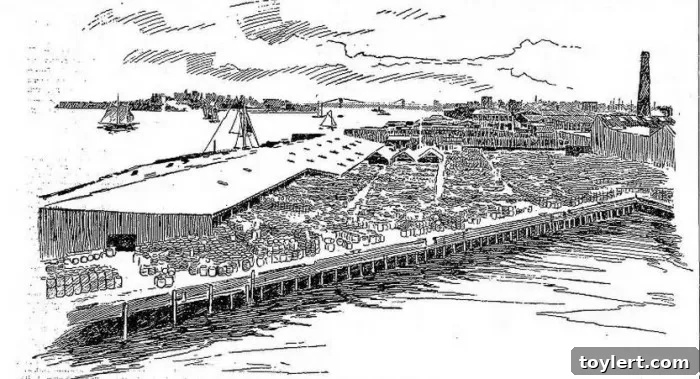
To truly appreciate modern Red Hook, one must first delve into its illustrious past. During the 19th century, Red Hook emerged as a powerhouse of maritime commerce, a bustling nerve center that played a crucial role in New York City’s economic dominance. Its naturally deep-water port made it an ideal location for docking large cargo ships, facilitating the rapid transfer of goods between sea and land. This strategic advantage spurred the construction of vast industrial infrastructure: colossal warehouses, bustling docks, and intricate rail lines that interconnected the district with the wider commercial networks of Brooklyn and beyond. These “stores” were not mere buildings; they were titans of industry, designed to house immense quantities of diverse goods, from grains and cotton to exotic spices and manufactured products, awaiting distribution across the nation and the world. Red Hook became synonymous with trade, innovation, and an unrelenting work ethic.
The prosperity of Red Hook attracted a diverse wave of immigrants, each group contributing to the vibrant tapestry of the growing community. Among them, a significant German-American population played a pivotal role in shaping the commercial landscape. German immigrants, known for their strong entrepreneurial spirit and meticulous craftsmanship, established numerous businesses, including import-export firms, manufacturing operations, and mercantile enterprises. It was within this context that the “German-American Stores” gained prominence. While the exact ownership and specific goods stored varied, these warehouses were undoubtedly substantial, reflecting the economic influence and integration of the German-American community within Red Hook’s bustling port operations. They stood as symbols of success, industry, and the interwoven destinies of the community and its commerce.
The Great Fire of 1898: A Catastrophe that Defined an Era
The year 1898 brought with it a cataclysmic event that etched itself into the annals of Red Hook’s history: the devastating fire that engulfed the German-American Stores. While the precise spark remains debated by some historians, the inferno that erupted on that fateful day was anything but small. Fueled by the highly combustible materials stored within the massive timber and brick warehouses – bales of cotton, barrels of spirits, lumber, and other highly flammable commodities – the fire quickly escalated into an uncontrollable conflagration. Eyewitness accounts from the Brooklyn Eagle and other contemporary newspapers painted a vivid picture of a raging inferno, its towering flames casting an eerie, orange glow across the night sky, visible for miles across the harbor.
The sheer scale of the fire presented an insurmountable challenge to the firefighting efforts of the time. Fire departments from across Brooklyn, and even Manhattan, were summoned, their horse-drawn pumpers racing against time to contain the blaze. Yet, the intense heat, the rapid spread of flames across interconnected structures, and the limited water pressure in certain areas made their task arduous and perilous. Brave firefighters battled tirelessly, but the fire consumed everything in its path, reducing once-proud structures to smoldering ruins. The loss was immense, not just in terms of physical property, but also in the substantial value of the goods destroyed. The economic ripple effect was felt throughout the community, impacting merchants, dockworkers, and the ancillary businesses that depended on the thriving port. The fire of 1898 served as a stark, dramatic reminder of the inherent risks associated with a dense industrial waterfront and the ever-present threat of disaster.
From Ashes to Renaissance: Red Hook’s Unfolding Story
In the aftermath of the 1898 fire, Red Hook, like a phoenix, began the slow and arduous process of rebuilding. Some of the German-American Stores were eventually repaired or reconstructed, albeit with lessons learned regarding fire safety and structural resilience. However, the early 20th century brought new challenges to Red Hook’s maritime supremacy. The advent of containerization in the mid-20th century revolutionized shipping, rendering many of Red Hook’s traditional piers and warehouses obsolete. Larger, more modern port facilities were developed elsewhere, leading to a gradual decline in Red Hook’s industrial activity. What was once a bustling hub of global commerce slowly transitioned into a quieter, often overlooked, industrial backwater, struggling with economic stagnation and urban blight.
For decades, Red Hook remained a hidden gem, its historic streetscapes and waterfront views largely undiscovered by the broader public. But the unique character and formidable structures of its past proved to be its salvation. Beginning in the late 20th and early 21st centuries, a new wave of pioneers – artists, small business owners, and adventurous residents – began to rediscover Red Hook. They recognized the immense potential in its historic warehouses, its stunning waterfront vistas, and its distinct sense of community. The very “stores” that once housed commodities and witnessed the fury of the 1898 fire are now reimagined spaces, embodying a vibrant blend of historical preservation and contemporary living.
Today, Red Hook stands as a powerful testament to urban revitalization, a neighborhood that has honored its gritty industrial roots while embracing a future defined by creativity, community, and charm. The echo of the seagulls, the gentle slap of water against the rocks, and the distant laughter of children still fill the air, just as they did a century ago. But now, these sounds are accompanied by the hum of creative enterprises, the clinking of glasses in waterfront eateries, and the vibrant conversations of a diverse community. Red Hook’s journey, punctuated by transformative events like the German-American Stores fire, underscores its enduring spirit. It remains a truly unique Brooklyn enclave, offering a captivating blend of history, breathtaking views, and an undeniable sense of place that continues to evolve, yet always remembers its profound past.