East Flatbush Community Prevails: Pesticide Facility Replaced by DHS Storage Depot on Ralph Avenue
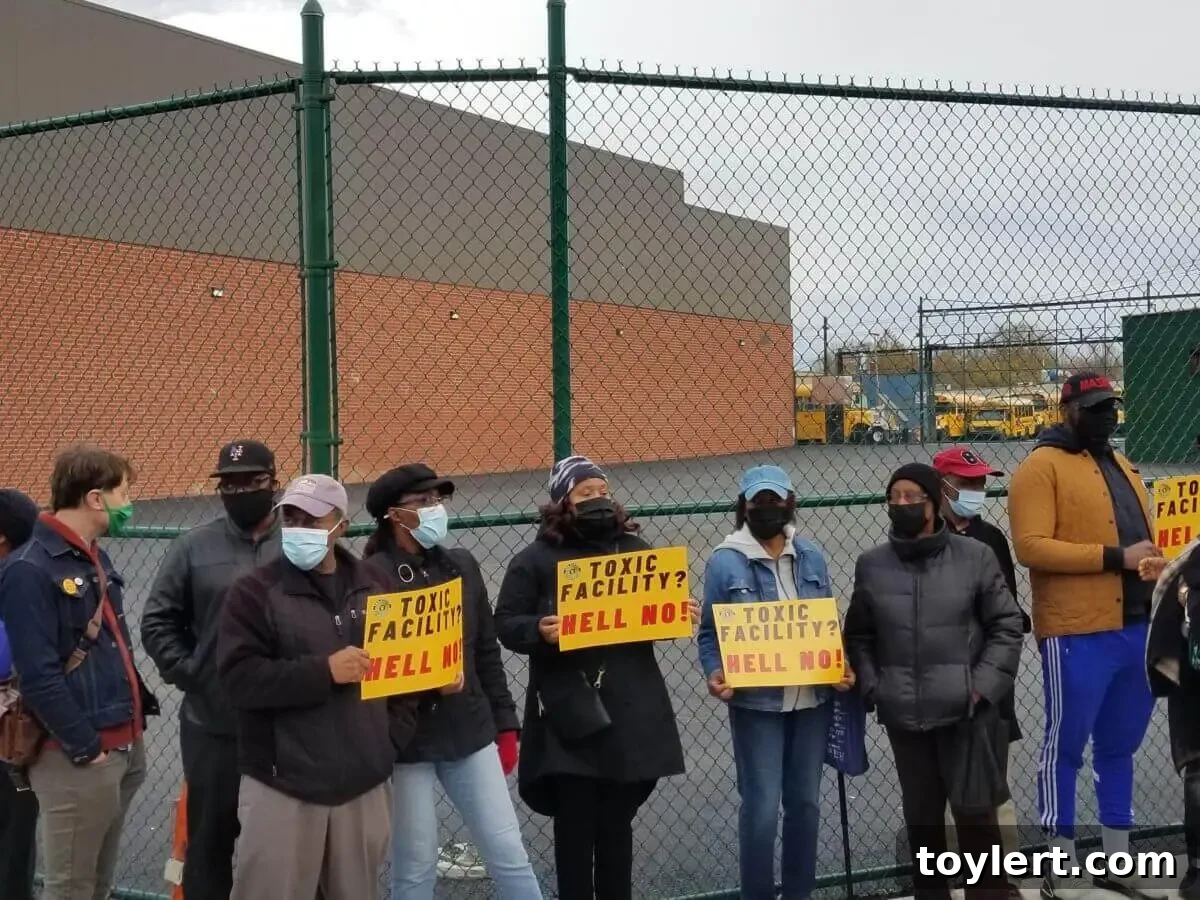
The vibrant community of East Flatbush, Brooklyn, has once again demonstrated the formidable power of organized local opposition, successfully thwarting a contentious proposal to establish a pesticide storage facility on Ralph Avenue. Following an intense and protracted battle, the city has instead announced plans to repurpose the substantial 50,000 square-foot warehouse into a storage depot for the Department of Homeless Services (DHS). This outcome marks a significant victory for residents who raised profound concerns about public health, environmental safety, and the equitable distribution of urban facilities.
The saga surrounding 1427 Ralph Avenue, a property strategically located between Chase and Preston courts and straddling the border between East Flatbush and Canarsie, has been a testament to the community’s unwavering vigilance. What began as a seemingly routine bureaucratic filing quickly escalated into a high-stakes confrontation, underscoring critical issues of urban planning, transparency, and environmental justice within New York City’s diverse neighborhoods.
The Genesis of Conflict: A Pesticide Storage Proposal
The initial proposition, which ignited widespread alarm among East Flatbush residents, emerged in September 2020. The Department of Health and Mental Hygiene (DOHMH) submitted plans to convert the 1427 Ralph Avenue site into a facility dedicated to storing pesticides. For many, the very notion of housing potentially hazardous chemicals in such close proximity to residential areas, schools, and community hubs was deeply unsettling. The immediate reaction from local groups and concerned citizens was one of skepticism and outright opposition, fueled by legitimate fears regarding potential health risks and environmental contamination.
Community Board 18’s Pivotal Role and Initial Confusion
The formal review process commenced with Community Board 18 (CB18), which held a vote on the proposal in March 2021. In a turn of events that would later become a focal point of contention, the proposal was initially approved unanimously. However, this unanimous approval soon unraveled as many CB18 members expressed profound confusion over the mechanics of the vote and the implications of their decision. This ambiguity sparked accusations of procedural missteps and a lack of clarity in how such a critical land-use decision was handled. The chair of CB18, Michael Ien, publicly denied that the initial approval was a mistake, yet the sentiment among a significant portion of the board, and certainly the community, suggested otherwise. This internal confusion within the very body tasked with representing local interests only intensified the public’s distrust and resolve to fight the proposal.
The sustained pressure from the community and the growing clarity among CB18 members about the potential adverse impacts ultimately led to a dramatic reversal. In May 2021, just two months after its initial vote, Community Board 18 officially switched its position to one of disapproval. This shift underscored the importance of diligent community engagement and the power of constituents to demand accountability from their local representatives. The board’s reevaluation reflected a deeper understanding of the community’s concerns and the potential long-term consequences of the proposed facility.
Escalating Opposition and the City’s Reluctant Retreat
The community’s efforts were significantly bolstered by the vocal intervention of local elected officials who swiftly aligned themselves with the residents. City Councilmember Farah Louis and then-Borough President Eric Adams emerged as prominent advocates, amplifying the concerns of their constituents on a larger political stage. Their involvement transformed the local outcry into a city-wide political issue, compelling city authorities to take serious notice. The pressure exerted by these elected representatives, combined with sustained grassroots activism, proved instrumental in forcing the city’s hand.
Following this widespread uproar, the city officially pulled the plug on the pesticide storage proposal. This initial victory in May 2021 was met with relief, yet it proved to be a temporary reprieve. The community’s vigilance was tested once more in November of the same year when the city informally initiated a new “community outreach process” to potentially site the chemical warehouse again on the same lot. This informal revival, notably without filing a new land use application, was perceived by many as an attempt to circumvent established procedures and bypass renewed public scrutiny. The community responded with immediate and renewed protests, demonstrating their unwavering determination to protect their neighborhood from what they viewed as an unacceptable hazard.
Understanding the Community’s Concerns: Health, Environment, and Equity
The passionate opposition to the pesticide storage facility was rooted in deeply held concerns about public health, environmental safety, and broader principles of environmental justice. Residents articulated a clear understanding of the potential dangers associated with storing large quantities of pesticides in a densely populated urban area. These concerns extended beyond immediate risks to encompass the long-term well-being of the East Flatbush and Canarsie communities.
Health and Safety Implications
The primary fear centered on the health implications for local residents, particularly children, the elderly, and those with pre-existing medical conditions. Pesticides, by their very nature, are designed to be toxic, and their improper storage or accidental release could lead to severe health consequences. Residents worried about potential air contamination from volatile organic compounds, groundwater pollution affecting local water sources, and direct exposure risks in the event of spills or accidents. The thought of chronic low-level exposure, which could contribute to respiratory issues, neurological disorders, developmental problems, and even increased cancer risks, was a major driving force behind the opposition.
The proximity of the 1427 Ralph Avenue site to homes, schools, and parks heightened these anxieties. An emergency involving hazardous materials in such a crowded urban setting would pose significant challenges for evacuation and containment, placing thousands of lives at risk. The community also questioned the adequacy of emergency preparedness plans for a facility of this nature in a residential area, demanding assurances that could not be satisfactorily provided.
Environmental and Environmental Justice Considerations
Beyond human health, environmental concerns played a crucial role. The possibility of soil and water contamination, even from minor leaks or runoff, threatened local ecosystems and the overall quality of the urban environment. Residents sought to protect their neighborhood from becoming a dumping ground for hazardous materials, arguing that such facilities disproportionately affect communities that are often marginalized or overlooked in city planning decisions. This sentiment aligns with the core tenets of environmental justice, which advocates for the fair treatment and meaningful involvement of all people regardless of race, color, national origin, or income, with respect to the development, implementation, and enforcement of environmental laws, regulations, and policies.
The repeated attempts to site the pesticide facility in East Flatbush, despite strong and consistent community feedback, highlighted what many perceived as a lack of equitable planning. Why, residents questioned, was this hazardous facility repeatedly proposed for their neighborhood, rather than in more industrial or less populated zones? This questioning formed the ethical backbone of their resistance, transforming a local land-use dispute into a broader discussion about fairness and social equity in urban development.
A New Direction: The DHS Storage Depot
Ultimately, the collective voice of East Flatbush proved undeniable. After sustained community pressure, legislative intervention, and a clear demonstration of local resolve, the city announced a significant change of plans for the 1427 Ralph Avenue site. Instead of a controversial pesticide facility, the 50,000 square-foot warehouse will now serve as a storage depot for the Department of Homeless Services (DHS). This alternative use represents a dramatic shift and is largely perceived as a victory for community advocacy.
While any large-scale municipal facility will inevitably bring some level of traffic and activity to a neighborhood, a DHS storage depot carries significantly different implications compared to a pesticide warehouse. A DHS depot would typically be used to store essential supplies, furniture, and equipment needed to support homeless shelters and services across the city. This type of operation, while requiring logistical planning, poses minimal to no direct health risks from hazardous materials to the surrounding community. It reflects a more service-oriented municipal function that, while still requiring careful integration, is far less contentious than the initial proposal.
This resolution underscores the city’s eventual responsiveness to community concerns and demonstrates the impact that persistent public engagement can have on urban planning decisions. It highlights a critical balance that city planners must strike: fulfilling municipal needs while respecting the well-being and input of the communities most directly affected by development projects. For East Flatbush, this outcome signals that their voices were heard and that their collective action successfully redirected a potentially harmful project towards a more benign use.
Lessons Learned: Community Empowerment and Urban Planning
The prolonged struggle over 1427 Ralph Avenue offers valuable lessons for both urban planners and community activists across New York City and beyond. Foremost among these is the undeniable power of an organized and informed community. The residents of East Flatbush, supported by their elected officials, demonstrated that sustained advocacy, when combined with clear articulation of concerns, can indeed alter the course of significant city projects.
This case also brought into sharp focus the need for greater transparency and improved processes in city planning. The initial confusion surrounding Community Board 18’s vote and the informal attempt to revive the pesticide proposal without a new application highlighted deficiencies in communication and procedural adherence. Such instances can erode public trust and necessitate more robust mechanisms for public consultation and accountability in land-use decisions. Ensuring that community boards are fully equipped and clear on the implications of their votes is paramount, as is preventing attempts to bypass formal review processes that are designed to protect public interest.
Finally, the resolution in East Flatbush reinforces the importance of balancing essential city services with the imperative to safeguard community health and environmental quality. While the city needs storage facilities and logistical hubs, the location of such facilities, particularly those involving potentially hazardous materials, must be carefully considered through an equitable lens. This victory serves as a potent reminder that effective urban planning must be a collaborative endeavor, deeply rooted in respectful dialogue and genuine partnership between city authorities and the neighborhoods they serve.