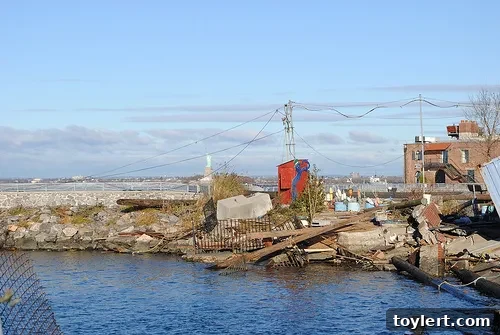
New York City’s $20 Billion Shield: A Blueprint for Coastal Resilience
In the wake of the devastating Hurricane Sandy, New York City faced an undeniable reckoning with its vulnerability to coastal storms. The city, surrounded by water and with an expansive shoreline, experienced unprecedented flooding, power outages, and economic disruption. It was against this backdrop that then-Mayor Michael Bloomberg unveiled an ambitious and comprehensive $20 billion plan to fortify the city’s waterfront, promising a future where New York could stand resilient against the increasing threat of climate change and extreme weather events. This monumental initiative, detailed in a 438-page report, laid out a long-term vision for protecting the metropolis, encompassing a wide array of engineering marvels and nature-based solutions.
The urgency of Bloomberg’s proposal was underscored by the scenes of devastation witnessed across the city. The Brooklyn Navy Yard, a vital industrial and cultural hub, was submerged under four-and-a-half feet of water during Sandy, bringing operations to a standstill and causing extensive damage. This was just one example of the widespread impact that highlighted the immediate need for robust protective measures. The plan, though conceptualized and presented during Bloomberg’s final year in office, was designed for implementation over many years, requiring sustained commitment and collaboration from successive administrations and various levels of government.
The Unavoidable Threat: Climate Change and Rising Sea Levels
New York City, a global beacon of commerce and culture, is particularly exposed to the impacts of climate change. Scientific consensus projects a significant rise in sea levels, with estimates suggesting an increase of 12 to 29 inches higher by 2050. This alarming forecast means that future storm surges, even those less powerful than Sandy, could have far more catastrophic consequences. Without proactive measures, the city’s low-lying areas, critical infrastructure, and dense populations would face recurrent flooding, property damage, and potential loss of life. The $20 billion plan, therefore, isn’t just a response to a past disaster; it’s a critical investment in the city’s future survival and prosperity, acknowledging the undeniable reality of an evolving climate.
Beyond sea-level rise, the frequency and intensity of extreme weather events are also projected to increase. This means New York cannot afford to merely rebuild; it must reimagine its relationship with its waterfront. The plan embraces a multi-layered defense strategy, acknowledging that no single solution can fully protect a city of New York’s scale and complexity. It represents a paradigm shift from reactive disaster response to proactive climate adaptation, integrating resilience directly into the fabric of urban planning and infrastructure development.
A Multi-Layered Defense: Deconstructing the $20 Billion Blueprint
Bloomberg’s plan called for a comprehensive system of protective measures, blending traditional engineering with innovative, nature-based approaches. This holistic strategy aimed to create a robust and adaptable defense system across New York City’s extensive coastline. The proposals ranged from massive physical barriers to subtle environmental enhancements, each playing a crucial role in safeguarding different parts of the urban landscape.
Engineered Solutions: Walls, Gates, and Breakwaters
A significant portion of the proposed investment focused on engineered structures designed to directly block or mitigate the force of storm surges. This included the construction of permanent levees and portable flood walls. Permanent levees, similar to those found along major rivers, would create enduring physical barriers in critical low-lying areas, offering a high level of protection. Portable flood walls, on the other hand, provide flexibility, allowing communities to deploy defenses only when a storm threat is imminent, thus preserving waterfront access and views during normal conditions. These walls would be strategically stored and rapidly deployable, offering targeted protection for specific vulnerable stretches.
The plan also outlined the installation of bulkheads and tide gates. Bulkheads are robust retaining walls constructed along shorelines to prevent erosion and resist the force of waves, often providing a stable edge for development. Tide gates, sophisticated hydraulic structures, would be installed at the mouths of sensitive waterways, such as the Gowanus Canal. These gates could be closed during storm surges to prevent floodwaters from entering inland areas, while remaining open at other times to allow for normal tidal flow and navigation. This dual functionality is vital for balancing protection with urban functionality.
Further offshore, the plan proposed the development of breakwaters. These structures, often made of large rocks or engineered materials, are placed parallel to the shoreline to dissipate wave energy before it reaches the coast. By reducing the force of incoming waves, breakwaters minimize erosion and lessen the impact of storm surges on coastal infrastructure. For areas like Red Hook, these offshore breakwaters, combined with portable flood walls, would form a formidable line of defense, reflecting a tailored approach to specific geographical vulnerabilities.
Nature-Based Defenses: The Power of Wetlands and Dunes
Recognizing the immense protective capacity of natural ecosystems, Bloomberg’s plan also heavily emphasized nature-based solutions. The restoration and creation of dunes along coastal stretches, for instance, offer a natural and aesthetically pleasing form of protection. Dunes act as natural buffers, absorbing wave energy, preventing erosion, and storing sand that can replenish beaches. They also provide vital habitats for coastal flora and fauna, enhancing biodiversity.
Perhaps one of the most innovative aspects of the plan was the fostering of wetlands, particularly in the Bay Ridge flats and other shore areas in southern Brooklyn. Wetlands are incredibly effective natural sponges, capable of absorbing vast quantities of storm surge water, thereby reducing inland flooding. Beyond their hydrological benefits, wetlands filter pollutants, improve water quality, and create rich ecosystems that support diverse wildlife. Investing in wetlands is a long-term, sustainable strategy that not only enhances coastal resilience but also provides significant ecological co-benefits, making urban areas greener and healthier. These “living shorelines” represent a shift towards working with nature rather than against it.
Targeting Vulnerability: Specific NYC Communities
The diverse geography of New York City necessitates tailored solutions for each community. The $20 billion plan carefully considered the unique challenges and characteristics of different waterfront neighborhoods, proposing specific interventions designed to maximize effectiveness and minimize disruption.
Red Hook’s Resilience
Red Hook, a historic and vibrant Brooklyn neighborhood, was particularly hard-hit by Hurricane Sandy. Its low elevation and proximity to the water made it highly susceptible to flooding, crippling businesses and residential areas. The plan proposed a two-pronged defense for Red Hook: portable flood walls that could be erected before a storm, and offshore breakwaters constructed of rocks. These breakwaters would buffer the direct impact of ocean waves, while the flood walls would prevent inundation from the bay, collectively shielding the community and its vital port infrastructure.
Gowanus Canal’s Future
The Gowanus Canal, a federally designated Superfund site, presented a unique set of challenges. Its industrial past and current environmental issues meant that floodwaters could potentially spread pollutants further inland. For Gowanus, the plan called for the installation of movable gates. These gates, likely positioned at the mouth of the canal, would allow for normal waterway activities but could be swiftly closed during storm events, preventing surges from pushing contaminated waters deep into the surrounding neighborhoods of Gowanus and Carroll Gardens.
Southern Brooklyn’s Coastal Evolution
In the Bay Ridge flats and other southern Brooklyn shore areas, the emphasis was placed on nature-based solutions. These areas, often characterized by more open shorelines, are ideal for the development and restoration of wetlands. By fostering these natural ecosystems, the city aims to create resilient coastal landscapes that can absorb storm surges, protect against erosion, and enhance biodiversity, offering a sustainable and aesthetically pleasing defense for these residential communities.
The Brooklyn Navy Yard: A Symbol of Recovery
The Brooklyn Navy Yard, as a prime example of critical infrastructure that suffered extensive flooding, stood as a stark reminder of the city’s vulnerabilities. While the plan didn’t detail specific measures for every inch of its perimeter, the broader strategies of barriers, levees, and localized flood protection systems would undoubtedly extend to safeguarding such vital economic and historical assets. Protecting the Navy Yard ensures the continuity of its diverse businesses and its role as a key employment center.
The Urgency of Action: Balancing Development and Protection
Mayor Bloomberg’s emphasis on enacting these changes “sooner, rather than later” was not merely a rhetorical flourish. It reflected a deep understanding of the city’s growth trajectory and the accelerating pace of climate change. New York City’s waterfront development boom shows no signs of slowing, with new residential towers, commercial spaces, and public parks continually emerging along the coastline. This ongoing development, while vital for urban growth, simultaneously increases the population and assets at risk from future storms. The plan sought to integrate resilience directly into this development, ensuring that expansion doesn does not come at the cost of increased vulnerability.
The window for effective action is narrowing. Every year of delay in implementing these protective measures increases the potential for more catastrophic damages, higher recovery costs, and greater risks to human life. The economic argument alone for investing in resilience is compelling: studies consistently show that every dollar invested in mitigation and adaptation saves multiple dollars in future disaster recovery and economic losses. This urgency propelled the ambitious scope and scale of Bloomberg’s blueprint.
Financing Resilience: A Shared Investment
The staggering $20 billion price tag, acknowledged as likely to grow over time, raised immediate questions about funding. Bloomberg outlined a multi-source financing strategy, drawing from federal and city money already allocated, anticipated aid from Congress, and an additional commitment of $5 billion directly from the City itself. This diversified funding approach underscored the sheer magnitude of the project and the shared responsibility across governmental levels.
The “wise way to spend taxpayer money” question is central to any large-scale public infrastructure project. However, the costs of inaction are far greater. Hurricane Sandy alone inflicted an estimated $19 billion in damages across New York City, not to mention the immense human suffering and disruption. Investing $20 billion (or more) now can prevent exponentially higher costs in future disasters, safeguard the city’s economy, protect its residents, and preserve its status as a global leader. It represents a proactive investment in preventative care rather than reactive emergency treatment, a strategy that is financially prudent in the long run.
Beyond Bloomberg: A Legacy of Long-Term Vision
One of the critical aspects of Bloomberg’s plan was its long-term nature; many of its proposals would not be fully implemented until well after his departure from office. This highlights the inherent challenge and necessity of sustained political will and commitment across successive administrations. Coastal resilience projects are not quick fixes; they require decades of planning, construction, maintenance, and adaptation.
The plan serves as a foundational legacy, pushing New York City towards a future where climate adaptation is not an afterthought but a central tenet of urban planning. It demands continuous investment, innovative thinking, and collaborative governance. The question, “Will it work?” hinges not only on the efficacy of the proposed engineering and natural solutions but also on the enduring dedication of the city and its partners to see this ambitious vision through to completion. It’s a testament to New York’s enduring spirit of innovation and its commitment to protecting its future for generations to come.
Conclusion: A Call for Collective Resolve
New York City’s $20 billion coastal protection plan is more than just an infrastructure project; it is a declaration of intent. It signifies a collective commitment to confront the realities of climate change head-on, transforming vulnerability into resilience. While the financial investment is substantial and the implementation complex, the cost of inaction is simply too high. By integrating robust engineering with nature-based solutions, and by fostering a long-term vision that transcends political cycles, New York aims to secure its iconic waterfront and ensure its vibrant future. The question for its citizens and leaders remains: will this bold investment truly safeguard the city against the rising tides, proving itself a wise and necessary expenditure for a more secure tomorrow?
Bloomberg Outlines $20 Billion Storm Protection Plan [NY Times]
Photo by lazzo51