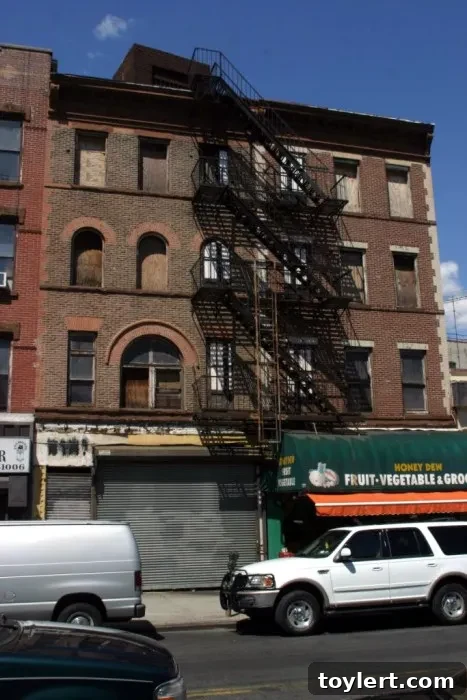
Unearthing the Legacy: The Historic Elephant Club at 1409-1411 Fulton Street, Brooklyn
Brooklyn, a borough renowned for its rich history, diverse culture, and captivating architecture, tells its story one building at a time. Each structure, whether a grand brownstone or a humble commercial storefront, holds layers of memory, transformation, and enduring character. Among these silent narrators stands the building at 1409-1411 Fulton Street, a remarkable edifice that once housed the prominent Elephant Club and now serves as a vibrant ground-floor retail space. This building is more than just bricks and mortar; it’s a living testament to Brooklyn’s evolving urban landscape, reflecting shifts in community life, commerce, and architectural trends over more than a century.
Exploring this structure offers a unique window into the past, present, and future of one of New York City’s most dynamic boroughs. Its story is a microcosm of Brooklyn’s broader narrative – a place of constant reinvention, where echoes of a bygone era blend seamlessly with the pulse of modern urban living. From its origins as a hub for social gathering to its current role supporting local businesses, 1409-1411 Fulton Street embodies the spirit of resilience and adaptation that defines Brooklyn.
The Elephant Club: A Glimpse into Brooklyn’s Social Past
Originally known as the Elephant Club, the establishment that once occupied 1409-1411 Fulton Street played a significant role in the social fabric of its era. While specific historical records about the Elephant Club can be elusive, its very name conjures images of turn-of-the-century social organizations – fraternal orders, political clubs, or community meeting places that were integral to daily life in bustling neighborhoods like Fulton Street. In the late 19th and early 20th centuries, such clubs provided spaces for camaraderie, networking, and cultural exchange, serving as anchors for local communities long before the advent of widespread digital communication.
These clubs often mirrored the socio-economic conditions and aspirations of their members. The Elephant Club, likely a private institution, would have been a place where residents of the surrounding Bedford-Stuyvesant or Crown Heights neighborhoods gathered, discussed current events, forged business connections, and perhaps even engaged in leisure activities. The choice of “Elephant” for its name could have signified strength, wisdom, or even political affiliation, as animal mascots were common for various organizations. Such establishments were cornerstones of civic engagement and social cohesion, contributing to a sense of identity and belonging among local populations.
The building itself would have been designed to accommodate these functions, perhaps featuring large meeting halls, smaller parlors, and administrative offices. Its facade, even then, would have been a public declaration of its presence and purpose, inviting members while presenting a distinct face to the bustling thoroughfare of Fulton Street. The transition from such a specific social function to a general retail space speaks volumes about the changing dynamics of urban society and the imperative for buildings to adapt to new needs.
Architectural Significance: A Fragment of Brooklyn’s Heritage
The edifice at 1409-1411 Fulton Street, much like many of its neighbors, is a testament to the architectural styles prevalent in Brooklyn during its period of rapid growth. While details about its original architect might be lost to time, the building likely exhibits characteristics of late 19th or early 20th-century commercial or mixed-use design. These often included robust masonry construction, ornate detailing, and a clear distinction between the commercial ground floor and the upper stories that might have housed the club facilities or residential units.
Typical architectural elements found in such Brooklyn buildings might include:
- Brickwork: Often red brick, laid in intricate patterns, sometimes complemented by stone or terra cotta accents.
- Fenestration: Regularly spaced windows, perhaps with arched tops or decorative lintels, designed to bring ample light into the interior.
- Cornice Details: Elaborate cornices, often metal or stone, crowning the building and adding a touch of grandeur. These sometimes feature dentil courses, modillions, or other classical motifs.
- Ground Floor Presentation: A strong emphasis on the storefront, designed to attract passersby with large display windows and a prominent entrance, even when it served a private club with a public-facing entrance.
The image provided gives a glimpse of a sturdy, multi-story structure with a classic urban presence. Its enduring quality speaks to the craftsmanship of its builders and the robust materials used. Preserving such buildings is crucial not just for their aesthetic value but also for the tangible link they provide to Brooklyn’s past, allowing us to trace the evolution of design and urban planning. The continuity of its physical form, even as its function changes, grounds the street in its own history.
Fulton Street: A Thoroughfare Through Time
Fulton Street itself is one of Brooklyn’s most historically significant and enduring commercial corridors. Stretching from the ferry docks in DUMBO/Downtown Brooklyn eastward through various neighborhoods, it has consistently served as a vital artery for commerce, transportation, and community life. The building at 1409-1411 Fulton Street benefits from its location on this dynamic street, reflecting and contributing to its vibrant character.
Throughout its history, Fulton Street has been a microcosm of Brooklyn’s economic shifts:
- 19th Century: A bustling hub for horse-drawn streetcars, bustling markets, and burgeoning retail, connecting downtown with growing residential areas.
- Early 20th Century: The advent of elevated trains and then subways further solidified its role as a major shopping and transit destination, attracting department stores, theaters, and a wide array of businesses.
- Mid-20th Century: Facing challenges with suburbanization and changing retail patterns, yet maintaining its core function as a neighborhood commercial center.
- 21st Century: Experiencing a resurgence, with new businesses, residential developments, and renewed interest in its historic fabric.
The presence of a building like 1409-1411 Fulton Street, with its history as the Elephant Club and its current retail iteration, underscores the street’s adaptability and enduring importance. It’s a reminder that even as the city evolves, certain foundational elements – like key commercial arteries and their architectural components – remain central to its identity. The energy of Fulton Street continuously breathes new life into its historic structures, ensuring their relevance for future generations.
Adaptive Reuse and Modern Rebirth
The transformation of the Elephant Club building into a ground-floor retail space is a prime example of “adaptive reuse” – a sustainable and increasingly popular practice in urban development. Adaptive reuse involves repurposing existing buildings for new functions while largely preserving their historical character. This approach is beneficial for several reasons:
- Sustainability: It reduces waste associated with demolition and new construction, and often utilizes the embedded energy in existing materials.
- Historical Preservation: It safeguards architectural heritage, maintaining the aesthetic and cultural continuity of a neighborhood.
- Economic Viability: Often, renovating an existing structure can be more cost-effective than building from scratch, and it contributes to the unique character that attracts businesses and consumers.
- Community Identity: Retaining historic buildings helps preserve a neighborhood’s distinct identity and sense of place, fostering community pride.
For 1409-1411 Fulton Street, this adaptation means that while the specific social club is gone, the building itself continues to contribute to the economic and visual vitality of the street. The ground-floor retail provides essential services or desirable goods to local residents and visitors, integrating the historic structure into the daily rhythm of contemporary Brooklyn life. It’s a symbiotic relationship: the building provides a unique, character-filled space, and the retail business brings activity and economic function.
The shift from a private social club to public retail reflects broader societal changes, moving towards more open, commercially driven spaces that cater to a wider audience. This evolution ensures that historic structures, rather than becoming relics, remain dynamic and relevant parts of the urban fabric, continuously telling new chapters of their stories while honoring their past.
The Enduring Legacy: Brooklyn’s Architectural Tapestry
“Brooklyn, one building at a time” is more than just a catchy phrase; it’s a philosophy that underscores the deep appreciation for the borough’s unique architectural heritage. Every building, from a grand public library to a modest corner shop, contributes to the rich, layered tapestry that defines Brooklyn’s distinct charm. The story of 1409-1411 Fulton Street, from its days as the Elephant Club to its modern role, highlights the importance of recognizing and valuing these individual structures.
Preserving and thoughtfully adapting buildings like this helps to maintain the authenticity and character that draw people to Brooklyn. It prevents the homogenization of urban spaces, offering a visual and historical depth that new constructions often lack. As Brooklyn continues to grow and evolve at an unprecedented pace, the commitment to honoring its past through its architecture becomes even more critical. Each renovation, each new use, and each restoration project for a historic building adds another thread to this intricate tapestry, ensuring that the borough’s narrative continues to be told with richness and integrity.
The building stands as a quiet yet powerful reminder of the layers of history beneath our feet and above our heads. It encourages us to look beyond the immediate function of a structure and consider its journey, its transformations, and its enduring place in the collective memory of a vibrant city. It is a testament to the idea that true urban development is not just about building new, but also about respectfully reinventing and cherishing what already exists.
Conclusion: A Building Continues Its Journey
The building at 1409-1411 Fulton Street, once the esteemed Elephant Club and now a thriving retail space, perfectly encapsulates the spirit of Brooklyn’s architectural legacy. Its journey reflects the dynamic interplay between history, community, and commerce that shapes this iconic borough. As we walk past its enduring facade today, we are invited to appreciate not only its current function but also the echoes of its past, understanding that each brick holds a piece of Brooklyn’s continuing story.
In a city constantly reinventing itself, the preservation and adaptive reuse of historic buildings like this are crucial. They provide a tangible connection to the generations that came before us, ensuring that Brooklyn’s unique character and deep historical roots remain vibrant and visible. The Elephant Club building is a powerful symbol of how individual structures contribute to the grand, unfolding narrative of Brooklyn – truly, one building at a time.