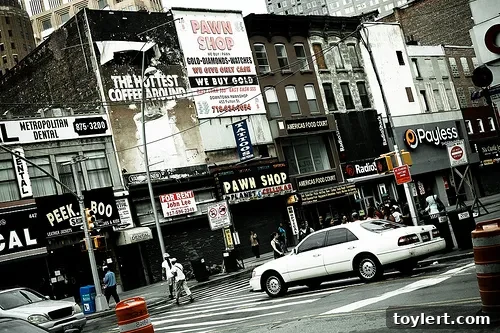
The Evolving Face of Fulton Mall: Brooklyn’s Retail Crossroads
Downtown Brooklyn’s Fulton Mall has long stood as more than just a retail strip; it’s a dynamic artery pulsating with the rhythms of one of New York City’s most vibrant boroughs. For decades, it has served as a crucial commercial hub and a cultural touchstone for diverse communities. However, recent years have seen this venerable mall become the focal point of an intense, ongoing discussion about urban development, gentrification, and the ever-shifting retail landscape of New York City. The introduction of new “middlebrow retailers” to this historic corridor has ignited a critical debate: will these transformations successfully broaden its appeal to new demographics, or do they risk eroding the unique character and alienating the very communities that have sustained its remarkable success for generations?
A significant piece, originally featured in The Observer, shed light on these much-talked-about changes. It meticulously examined the potential impact of new tenants—including international fashion giants like H&M and other establishments targeting a “design and price conscious” consumer—on the mall’s identity. The overarching strategy behind these changes is to draw in a more diverse clientele, effectively bridging the gap between the long-standing shoppers, a demographic that has predominantly defined the mall since a perceived decline decades ago, and newer residents, often described as “white bohemians and businessmen” or “brownstone babies,” who are increasingly making Brooklyn their home. Despite these ambitious goals, a palpable skepticism persists among many observers and long-time residents regarding the true efficacy and desirability of these new retail additions.
The Vision of a ‘Revitalized’ Retail Experience
The modernization efforts underway at Fulton Mall are driven by a clear strategic vision: to elevate its overall appeal, attract a demographic with higher spending power, and significantly diversify its retail offerings. This strategy typically involves integrating national and regional chain stores renowned for their broad market appeal, consistent brand identity, and standardized shopping experiences. In the context of Fulton Mall, this has translated into the arrival of brands that resonate with a specific market segment. Shake Shack, the widely popular purveyor of burgers and shakes, is frequently highlighted as a prime example of a desirable new tenant, introducing a contemporary, curated casual dining option to the area. However, the enthusiasm for other new additions is notably less universal, highlighting a nuanced perception among the public.
The Observer’s insightful analysis captured this ambivalence with a pointed critique:
“Sure, there is Shake Shack, but besides that, literally and figuratively, the new eateries consist of a barbecue place from Vegas, a candy store called Sugar and Plumm, and a Paneras? These are precisely the kinds of establishments people moved to New York, and now Brooklyn, since they have colonized so much of Manhattan, to get away from. They are fleeing middle American malls, not craving them.”
This powerful statement encapsulates a fundamental tension inherent in many urban redevelopment projects: the pursuit of “progress” often collides head-on with the preservation of local character and the unique identities that initially draw people to a specific place. The argument suggests that many residents, particularly those who consciously chose Brooklyn for its distinct charm and as an alternative to suburban homogeneity, perceive these chain establishments not as genuine improvements but as unwelcome, generic intrusions. For these individuals, such stores represent the very commercial landscape—the “middle American malls”—that New Yorkers traditionally sought to escape. This raises critical questions about whether these new additions genuinely align with Brooklyn’s evolving ethos or if they constitute a profound misstep in understanding the borough’s authentic appeal.
Fulton Mall’s Enduring Success: A Story Beyond Appearances
Despite the prevailing narratives of “decline” that have frequently colored historical discussions of Fulton Mall, and the subsequent push for “revitalization,” it is absolutely vital to recognize its extraordinary and sustained commercial success. Long before the recent wave of national retailers began to appear, Fulton Mall was, and continues to be, a powerhouse within the city’s dynamic retail sector. Consistent statistics powerfully underscore its immense significance: it proudly holds the distinction of being the third busiest commercial street in all of New York City, surpassed only by the globally recognized Fifth Avenue and the endlessly bustling Times Square. This impressive ranking speaks volumes about its inherent and undeniable value as a premier shopping destination, consistently attracting an immense volume of foot traffic on a daily basis.
Moreover, the robust economic vibrancy of Fulton Mall is vividly reflected in its real estate market dynamics. Commercial rents commanded along this particular strip are demonstrably higher than those found on neighboring, often highly desirable, streets such as Atlantic Avenue or Smith Street. This crucial detail effectively dispels any preconceived notions that the mall might have been struggling or lacking in commercial viability prior to the influx of these new tenants. Instead, it strongly indicates the presence of a thriving, albeit distinct, retail ecosystem, one that adeptly caters to the specific needs and preferences of its established customer base. This demographic, though frequently overlooked in broader retail narratives, represents a formidable and consistent purchasing power, thereby generating substantial and reliable economic activity.
The Paradox of “Revitalization”: A Deeper Look
The inherent paradox lies squarely within the very term “revitalization” itself. If a commercial district is already functioning as one of the busiest in a global metropolis and consistently commands premium rental rates, what precisely is it that requires “revitalizing”? For a growing number of observers and community members, the answer points less towards an absolute economic necessity and more distinctly towards a deliberate shift in the targeted demographic. The changes being implemented appear to be less about bolstering a struggling economy and more fundamentally about reshaping the mall’s identity to align with the changing demographics and the perceived tastes of a newer, often wealthier, resident base that has moved into Downtown Brooklyn. This strategic repositioning, while potentially successful in attracting new consumer segments, carries an inherent risk: the displacement or alienation of the loyal shoppers who have historically defined Fulton Mall’s unique character and underpinned its enduring success for generations.
Gentrification and the Shifting Retail Landscape of Brooklyn
The profound transformation of Fulton Mall is intricately interwoven with the broader phenomenon of gentrification that continues to sweep across Brooklyn. As the borough experiences a sustained influx of new residents, drawn by its burgeoning cultural vibrancy, distinctive historic architecture, and evolving urban appeal, its commercial landscape has naturally begun a process of adaptation. This adaptation frequently manifests as the gradual replacement of local, independent businesses or long-standing, community-focused establishments with national chains. These chains are typically designed to cater to a more homogenized, and often more affluent, consumer taste, reflecting a broader shift in market demands.
While proponents of such development frequently argue that it brings invaluable investment, creates new job opportunities, and introduces a wider array of goods and services, critics lament a different set of consequences. They mourn the erosion of local character, the displacement of beloved small businesses, and the emergence of retail environments that increasingly feel generic and indistinguishable from those found in countless other cities. Fulton Mall, with its rich history as a bustling hub for diverse communities, thus emerges as a potent and deeply symbolic focal point in this ongoing and often contentious debate. A critical question arises: Can a place truly maintain its unique identity and simultaneously appeal to its deeply rooted, long-standing base while also striving to capture the attention of a newly arrived demographic that may harbor fundamentally different shopping preferences and expectations?
Finding Balance: A Challenging and Complex Endeavor
The formidable challenge confronting Fulton Mall, a challenge echoed in numerous urban retail districts undergoing similar profound transformations, is to achieve a delicate and sustainable balance. This endeavor necessitates acknowledging and actively preserving the intrinsic value and existing commercial success of the area, while simultaneously and thoughtfully integrating new elements that genuinely enhance the overall experience for *all* residents and visitors, not just a select few. The central question extends far beyond merely introducing “new” stores; it delves into whether these additions are truly complementary to the existing fabric of the community or, conversely, if they are fundamentally contradictory to its established identity and needs.
The ongoing debate surrounding Fulton Mall profoundly highlights a critical, overarching question in urban planning: Can a bustling commercial center truly “have it both ways”? Is it genuinely possible for it to simultaneously cater to a long-established, diverse clientele and successfully attract a newly emergent, distinct demographic without ultimately sacrificing its authentic soul and unique character in the process? The ultimate outcome of Fulton Mall’s current evolution will provide invaluable insights into the intricate complexities of urban retail transformation. It will serve as a significant and closely watched case study for how cities attempt to deftly manage growth, diligently preserve identity, and skillfully navigate the intricate social and economic dynamics that inevitably accompany profound change.
The Future of Fulton Mall: A Journey in Progress
As Downtown Brooklyn continues its upward trajectory as a major commercial, residential, and cultural hub, the ongoing evolution of Fulton Mall will undoubtedly remain a crucial focal point. The strategic choices made today, encompassing the retail mix, urban planning decisions, and the extent of community engagement, will collectively determine its future trajectory. Will it flourish as an inclusive, vibrant, and authentic destination that truly caters to everyone, or will it become yet another example of a once-unique urban space that eventually succumbs to the powerful pressures of homogenization? The true measure of its success will not simply be quantifiable in terms of raw foot traffic figures or rising rent prices, but more profoundly, in its enduring ability to foster a deep sense of belonging, relevance, and community for all who walk its busy, historic thoroughfares.