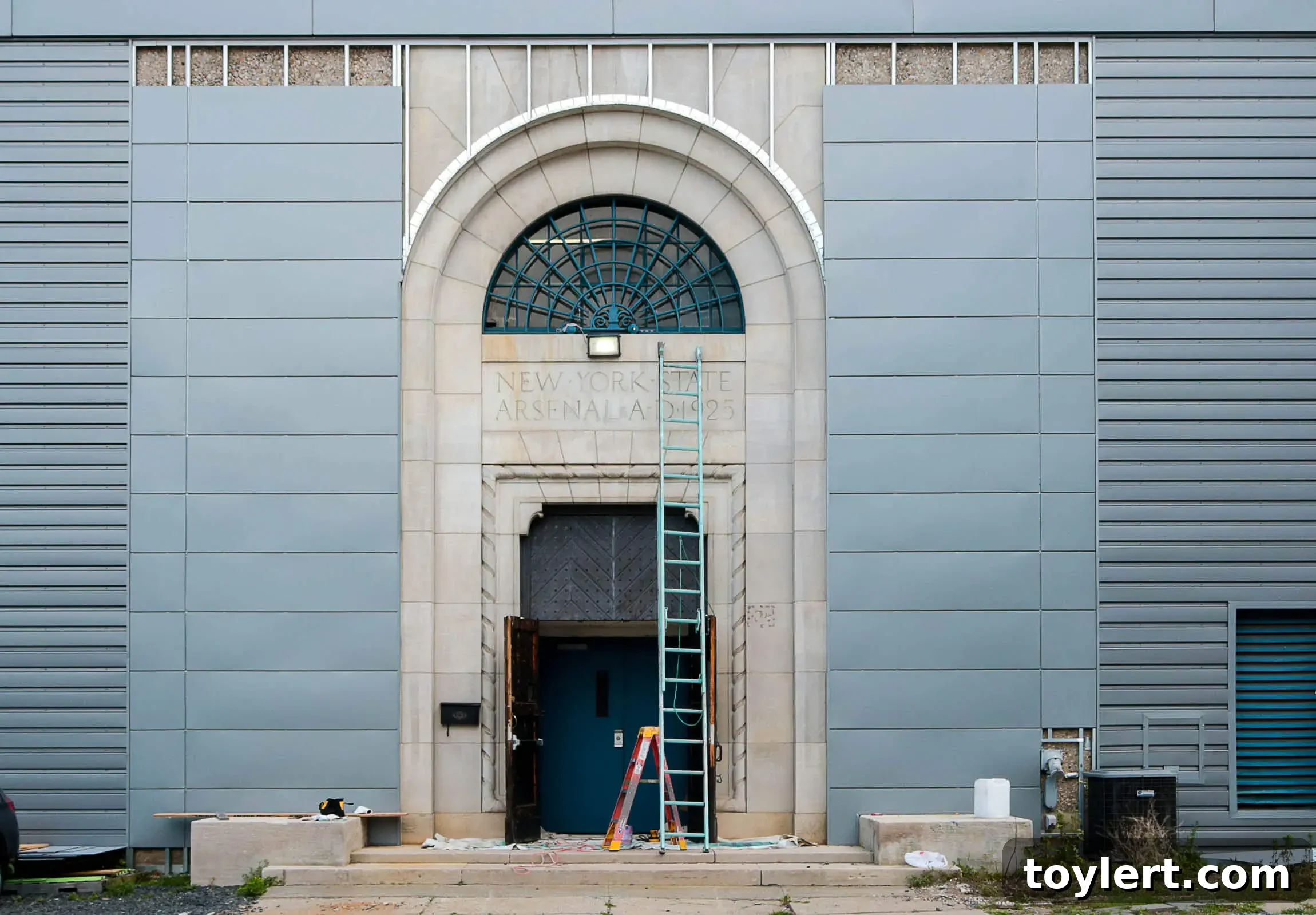
In the vibrant and ever-evolving landscape of Sunset Park, Brooklyn, an architectural anomaly stands at 6301 2nd Avenue. From a distance, its sleek, modern facade, adorned with shiny new cladding, speaks of contemporary utility and forward-thinking design. Yet, upon closer inspection, a solitary, unassuming doorway emerges from the polished surface – a poignant, lone relic that refuses to be completely erased by the relentless march of progress. This preserved detail is more than just an architectural feature; it is the last exposed vestige of what was once the formidable New York State Arsenal, a silent sentinel bridging nearly a century of Brooklyn’s industrial heritage and its ongoing transformation. Its story is a microcosm of Sunset Park itself, a tale of reinvention, adaptive reuse, and the enduring power of history in a rapidly changing urban environment.
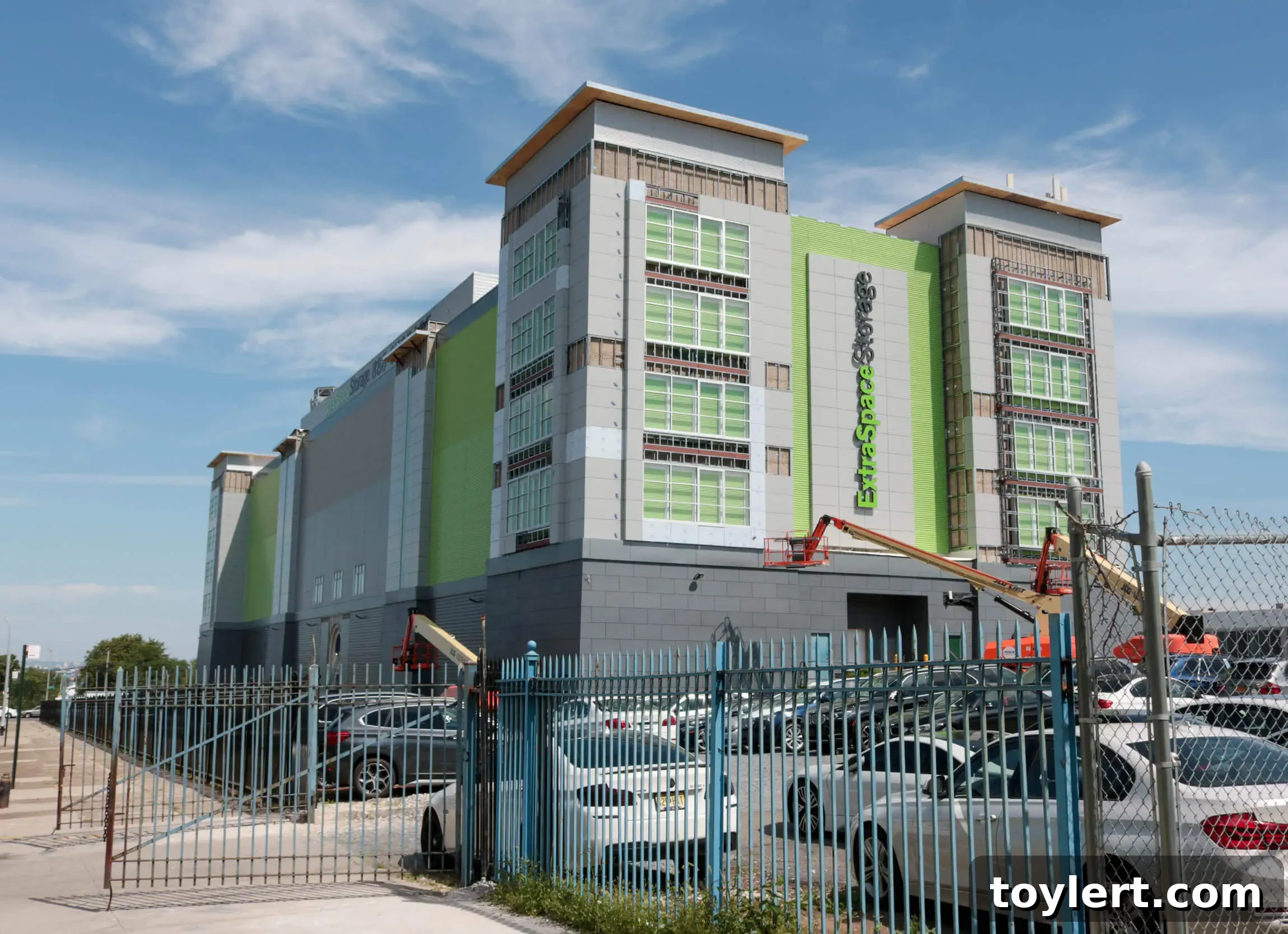
Unveiling History: The New York State Arsenal at 6301 2nd Avenue, Sunset Park
The journey of 6301 2nd Avenue began in an era marked by burgeoning industry and strategic logistical needs. Originally conceived as the New York State Arsenal, this colossal structure was designed to serve as a critical storage and distribution hub for military supplies and equipment. Construction commenced in 1925 and was completed with remarkable efficiency by 1926, reflecting the era’s drive for robust and functional infrastructure. The choice of Sunset Park for such a vital facility was no accident; its strategic waterfront access and proximity to burgeoning transportation networks made it an ideal location for an arsenal, allowing for the efficient movement of goods via sea and land. This building was not merely a warehouse; it was a testament to the state’s preparedness and an integral part of its logistical backbone during a pivotal period in American history, preceding the challenges of the Great Depression and the subsequent global conflicts.
Sullivan W. Jones: Architect of State and Visionary Design
The architectural genius behind the New York State Arsenal was Sullivan W. Jones, who held the esteemed position of New York State Architect from 1923 to 1928. During his tenure, Jones was responsible for overseeing the design and construction of numerous public buildings across the state, ranging from hospitals and educational institutions to vital governmental and industrial facilities like the arsenal. His work often blended practicality with an understated dignity, reflecting the functionalist aesthetics prevalent in early 20th-century American architecture, particularly for civic and industrial projects. While details of the original arsenal’s specific architectural style are largely subsumed by its modern transformation, it can be inferred that Jones would have prioritized durability, security, and efficiency in its design. These were the hallmarks of an arsenal – a building built to last, to protect, and to serve a critical state function. His legacy is etched into the very foundations of many New York State properties, making 6301 2nd Avenue a significant, if largely transformed, piece of his professional oeuvre and the state’s architectural history.
The Echoes of Industrial Grandeur in Sunset Park
Sunset Park, situated along Brooklyn’s working waterfront, boasts a rich and storied industrial past. From its early days as a bustling port and manufacturing hub, the neighborhood has always been a crucible of activity and innovation. The construction of the New York State Arsenal further cemented Sunset Park’s role as a vital industrial district. The area was characterized by massive warehouses, factories, and shipping terminals, all contributing to New York City’s economic might. Buildings like the arsenal were not just isolated structures; they were part of an intricate network that powered the city and the state. They provided jobs, supported trade, and formed the very fabric of the community. This deep-rooted industrial heritage continues to define much of Sunset Park’s character, even as modern developments bring new industries and residents to its shores. Understanding the arsenal’s original purpose within this context helps appreciate the sheer scale of the historical change it represents.
A Striking Transformation: Old Meets New
Today, the landscape of 6301 2nd Avenue tells a compelling story of architectural evolution and adaptive reuse. The “shiny new cladding” that now envelops the structure symbolizes a complete metamorphosis, updating the building to meet contemporary demands while striving for energy efficiency and a modern aesthetic. This type of renovation is a common sight in Brooklyn, where industrial behemoths of the past are increasingly given new leases on life, repurposed for a myriad of commercial, creative, or storage functions. The goal is often to honor the building’s robust bones while injecting it with 21st-century functionality and appeal. However, the most captivating aspect of this transformation at 6301 2nd Avenue is undoubtedly the “lone doorway.” It serves as a deliberate or perhaps serendipitous window into the building’s former self, a tangible link to the past that the new facade respectfully frames rather than obliterates entirely. This solitary detail is a powerful reminder that beneath the modern veneer lies a deeply historical core, a testament to the enduring presence of the past.
The Adaptive Reuse Imperative in Urban Development
The extensive redevelopment of the former New York State Arsenal at 6301 2nd Avenue perfectly exemplifies the principles of adaptive reuse, a crucial strategy in modern urban planning. Rather than demolishing historically significant but functionally obsolete structures, adaptive reuse seeks to transform them into vibrant, useful spaces that meet current needs. This approach offers numerous benefits: it preserves architectural heritage, reduces construction waste, leverages existing infrastructure, and often injects unique character into new developments. In Brooklyn, especially in areas like Sunset Park, DUMBO, and Bushwick, countless industrial buildings have undergone similar transformations, evolving from factories and warehouses into art studios, tech offices, retail spaces, or innovative storage facilities. These projects are not merely about aesthetics; they are about sustainability, economic revitalization, and maintaining a connection to the city’s rich narrative. The arsenal’s journey from a military storage facility to its current, modern incarnation is a testament to the value and potential of such sensitive yet comprehensive urban redevelopment.
Sunset Park’s Dynamic Future: Bridging Heritage and Innovation
The ongoing narrative of 6301 2nd Avenue is inextricably linked to the broader story of Sunset Park itself. This vibrant Brooklyn neighborhood is a testament to resilience and continuous evolution. Once a predominantly industrial and working-class area, Sunset Park is now experiencing a significant renaissance, attracting new businesses, residents, and cultural initiatives. The waterfront, in particular, has seen massive investment and redevelopment, transforming old shipping terminals and factories into innovation hubs like Industry City. Amidst this rapid change, the former New York State Arsenal stands as a quiet observer and active participant. Its updated facade signifies the neighborhood’s embrace of modernity, while its preserved doorway acts as a constant, subtle nod to the foundational history that anchors the community. This balance between honoring the past and embracing innovation is crucial for neighborhoods like Sunset Park, ensuring that their growth is not at the expense of their unique identity. The building at 6301 2nd Avenue serves as a compelling symbol of this delicate but vital equilibrium.
The Enduring Symbolism of a Lone Doorway
What makes the lone doorway at 6301 2nd Avenue so compelling? It’s more than just an entrance; it’s a profound symbol. In a world constantly striving for the new, this solitary detail champions the value of what came before. It speaks to intentionality – a choice, whether by design or happy accident, to let a piece of the original structure breathe and tell its story. It evokes curiosity, prompting passersby to ponder the building’s origins and its journey through time. This doorway represents a tangible link to Sullivan W. Jones’s original vision, to the strategic importance of the New York State Arsenal, and to the countless individuals who once passed through its threshold. It’s a powerful metaphor for Brooklyn itself: a borough that steadfastly retains elements of its rugged, historical character even as it relentlessly innovates and reshapes its skyline. The doorway reminds us that even when buildings undergo drastic transformations, their foundational narratives can persist, offering depth and character to their modern incarnations.
The former New York State Arsenal at 6301 2nd Avenue in Sunset Park is far more than just a renovated building. It is a living artifact, a testament to Brooklyn’s enduring capacity for reinvention and its deep respect for its industrial past. From its origins as a vital state arsenal in the 1920s, designed by the notable Sullivan W. Jones, to its contemporary manifestation cloaked in sleek cladding, the structure embodies the dynamic spirit of its neighborhood. The solitary doorway, a silent witness to decades of change, remains a powerful emblem of history carefully woven into the fabric of the present. As Sunset Park continues its trajectory of growth and modernization, buildings like this stand as crucial reminders of where it came from, offering a tangible connection between a storied past and a promising future. This edifice serves not only as a functional space but also as an inspiring narrative of resilience, adaptation, and the timeless interplay between heritage and progress in the heart of Brooklyn.