Williamsburg’s River Ring Project: A Shifting Tide in Waterfront Development
After a prolonged period marked by intense community opposition, a contentious waterfront development in Williamsburg, Brooklyn, appears to have found a crucial new ally. The proposed River Ring Project, spearheaded by Two Trees Management, has garnered preliminary support from a powerful coalition of three established local nonprofits: Los Sures, El Puente, and St. Nicks Alliance. This endorsement marks a significant turning point, potentially providing the developer with much-needed momentum as the project navigates the complex and often adversarial rezoning process, a critical hurdle for any large-scale urban development in New York City.
The developer, Two Trees Management, has been working on this ambitious vision for a considerable time, facing an uphill battle against deeply rooted community concerns. The newly voiced support from these organizations, which collectively form “The Coalition,” injects a powerful new dynamic into the ongoing dialogue. Their endorsement highlights a potential path forward where community needs and development goals might converge, offering a glimpse into how large-scale projects can evolve through persistent negotiation and engagement.
The River Ring Project: Ambitious Vision for the Brooklyn Waterfront
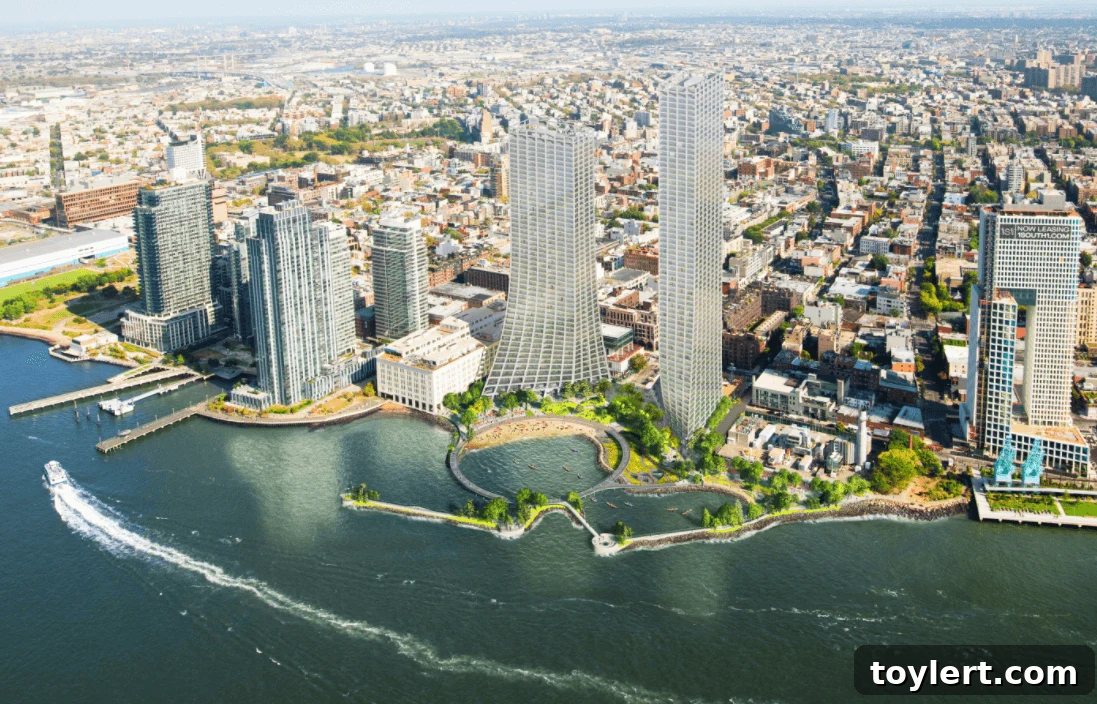
The River Ring Project envisions transforming a significant stretch of the Williamsburg waterfront into a mixed-use development, primarily featuring two towering residential structures. Beyond the residential component, a cornerstone of Two Trees’ proposal has always been the creation of an extensive public park and accessible waterfront space, an increasingly valuable commodity in a densely populated city like New York. The project aims to integrate residential living with expanded public amenities, a design philosophy that developers often use to mitigate the impact of increased density.
Strategically located in a rapidly evolving section of Williamsburg, the project’s scale and design have naturally attracted considerable attention. Two Trees Management, a developer with a notable track record in Brooklyn, including the revitalization of the Domino Sugar Factory site, frames the River Ring as a comprehensive plan that not only provides housing but also addresses pressing community needs for green space, economic opportunity, and resilience against climate change. The sheer size of the proposed towers and the scope of the public amenities underscore the project’s potential to significantly reshape the visual and functional landscape of the North Brooklyn waterfront.
Understanding the Initial Community Outcry
For months leading up to this recent development, the River Ring Project faced a torrent of “loud community criticism,” a phrase that barely captures the depth of concern and organized opposition. Many local residents and advocacy groups expressed profound apprehension regarding the potential impacts of such a massive development. Key worries revolved around the exacerbation of gentrification, leading to the displacement of long-time residents and small businesses. The rapid transformation of Williamsburg from a working-class neighborhood to a luxury enclave has been a source of ongoing tension, and new large-scale projects often ignite these fears.
Concerns also extended to the physical and infrastructural implications. Residents questioned the capacity of existing infrastructure—schools, public transport, sanitation—to absorb thousands of new residents. The visual impact of two tall towers on the relatively low-rise neighborhood skyline, the potential for increased shadows, and issues of equitable access to the new public spaces were frequently cited. Furthermore, many voiced skepticism about the authenticity of the proposed community benefits, fearing that promised amenities might not adequately serve the existing community or might only cater to new, more affluent residents.
Two Trees Management’s Decade of Community Engagement
In the face of persistent community pushback, Two Trees Management has been engaged in an extensive and protracted period of outreach. The letter of support from The Coalition specifically acknowledges “the efforts of Two Trees community engagement over the last nine years.” This long-term commitment underscores the intricate and often arduous process developers must undertake to gain local consensus, especially for projects requiring significant zoning changes. This engagement included countless public meetings, workshops, design charettes, and direct consultations with community boards, local elected officials, and a myriad of neighborhood organizations.
Such sustained engagement is not merely a formality; it is an essential component of navigating New York City’s Uniform Land Use Review Procedure (ULURP) and gaining the social license necessary for a project of this magnitude. Through these interactions, developers aim to understand local priorities, address specific criticisms, and, ideally, integrate community feedback into the project’s design and programming. For Two Trees, this long-term dialogue was crucial in attempting to bridge the gap between their development ambitions and the community’s desire for preservation, equity, and sustainable growth.
A Pivotal Endorsement: The Coalition’s Role
The preliminary support from Los Sures, El Puente, and St. Nicks Alliance represents a critical turning point for the River Ring Project. These three organizations are not merely local groups; they are deeply entrenched institutions with decades of experience advocating for the most vulnerable populations in North Brooklyn. Their collective influence and credibility within the community are immense, particularly on issues concerning affordable housing, local employment, and environmental justice.
Los Sures, for instance, has a long history of providing affordable housing and social services to the Latino community in South Williamsburg. El Puente is renowned for its work in youth development, environmental justice, and human rights. St. Nicks Alliance has been a powerhouse in affordable housing development, economic development, and community planning across North Brooklyn. Their endorsement signals that, for these key stakeholders, the developer has presented a proposal that, at least preliminarily, addresses their core advocacy principles. This collective backing sends a powerful message that the project, despite its complexities, has made tangible commitments to community benefits.
The Foundations of Support: Affordable Housing, Jobs, and Environmental Equity
The letter from The Coalition articulates specific reasons for their support, rooted in their long-standing missions. “Los Sures, El Puente, and St. Nicks Alliance, the Coalition, have long been advocates for affordable housing, jobs and environmental justice,” the letter states, emphasizing their core priorities. The project’s alignment with these pillars appears to be the driving force behind their endorsement. They appreciate Two Trees’ efforts and their commitment to the River Ring Project, particularly regarding its contributions to affordable housing, local job creation, and environmental equity.
Addressing the Affordable Housing Crisis
One of the most pressing issues in Brooklyn, and indeed across New York City, is the severe shortage of affordable housing. The Coalition’s support hinges significantly on the project’s capacity to genuinely contribute to this need. Large developments requiring rezoning often trigger inclusionary housing requirements, mandating a percentage of units be set aside for lower and middle-income residents. For organizations dedicated to housing equity, robust and verifiable commitments in this area are non-negotiable. Their endorsement suggests that Two Trees has offered, or agreed to negotiate, a substantial and impactful affordable housing component that goes beyond mere compliance, reflecting the community’s urgent demands.
Fostering Local Job Creation
Beyond housing, the economic impact of major developments is always a critical point of discussion. The promise of “local job creation” is a powerful incentive, particularly for organizations focused on economic justice. The construction phase of the River Ring Project alone would generate numerous jobs, from skilled trades to entry-level positions. More enduringly, the completed development—with its retail spaces, public amenities, and operational needs—would create permanent jobs. The Coalition’s focus is likely on ensuring that these opportunities are accessible to existing residents, potentially through hiring agreements or training programs that prioritize local workforce development.
Advancing Environmental Justice and Public Access
Environmental justice and equity are increasingly vital considerations in urban planning, especially for waterfront developments. The River Ring Project’s proposed public park and enhanced waterfront access resonate with these principles. For The Coalition, environmental equity likely encompasses not just the provision of green space but also resilience measures against climate change (e.g., flood protection), improved air and water quality, and ensuring that these amenities are truly public and accessible to all, not just the new residents. Their support indicates that the project’s environmental components are seen as a net positive, contributing to a healthier and more equitable public realm along the Brooklyn waterfront.
Implications for the Contentious Rezoning Process
The formal rezoning process for the River Ring Project is known as ULURP (Uniform Land Use Review Procedure), a multi-step public review that involves the Community Board, Borough President, City Planning Commission, and ultimately, the City Council. The preliminary support from Los Sures, El Puente, and St. Nicks Alliance carries significant weight within this process. Community Board 1, which represents Williamsburg, will be among the first bodies to review the proposal, and the input of these powerful local groups will strongly influence its recommendation.
Crucially, the ultimate decision on a rezoning often rests with the local City Council member. A project lacking robust community support, particularly from influential organizations like these, faces an almost insurmountable challenge. Their endorsement significantly bolsters Two Trees’ standing, signaling to the City Council that a segment of the community’s core advocates are now on board. This shift moves the narrative from outright rejection to one of negotiated compromise and community benefits, making a favorable vote far more plausible than before.
Navigating Remaining Challenges and the Future Outlook
While the support from The Coalition is a major win for Two Trees Management, it does not signify an end to all opposition. Other community groups and residents may continue to voice concerns, particularly those focused on the broader implications of scale, gentrification, and the pace of development in Williamsburg. The project will likely continue to be a subject of intense debate, as the trade-offs between new development and existing community character are rarely simple.
The path forward will require continued transparency and accountability from both the developer and the city. Monitoring the implementation of promised community benefits, ensuring that affordable housing units are truly accessible, and guaranteeing equitable access to public spaces will be ongoing tasks. The River Ring Project’s journey through ULURP will serve as a high-profile case study, demonstrating the delicate balance developers must strike between ambitious urban design, economic viability, and the imperative to serve and protect existing communities. Its eventual outcome will undoubtedly shape future development discussions across New York City.
Conclusion: A New Chapter for Williamsburg’s Waterfront
The preliminary backing of three prominent Williamsburg nonprofits for the River Ring Project represents a pivotal moment in the ongoing saga of waterfront development in Brooklyn. It signals a potential reconciliation between a developer’s vision for growth and a community’s urgent demands for equity, affordability, and justice. This shift doesn’t erase past criticisms or guarantee smooth sailing, but it certainly strengthens the project’s legitimacy as it moves through the final, decisive stages of the rezoning process. Ultimately, the River Ring Project’s success will be measured not just by its architectural grandeur, but by its ability to genuinely integrate into, and benefit, the diverse and dynamic community it seeks to transform.