Innovative Brooklyn Rowhouse Renovation: Blending Structure with Style
Brooklyn’s historic rowhouses, revered for their distinctive charm and architectural heritage, often present unique challenges during modern renovations. A fundamental aspect of their original construction involves interior structural columns, essential for bearing the substantial loads of the floors above. In an era where open-concept living reigns supreme, the desire to remove these load-bearing walls and columns for expansive, fluid spaces is common. Traditionally, this ambition necessitates the installation of robust steel I-beams, meticulously integrated along the ceiling lines to redistribute and support the structural weight, a process often costly and aesthetically intrusive.
Architectural Ingenuity: A Fresh Perspective on Structural Challenges
When faced with the conventional dilemma of structural integrity versus open design, architect Alexandra Barker, principal of Barker Freeman Design Office (BFDO) in Downtown Brooklyn, conceived a remarkably innovative and elegant solution. Her clients, avid book collectors with a profound appreciation for literature, sought not just an open layout but also a space that would celebrate their passion. This unique client profile inspired a design approach that transcended mere structural reinforcement, transforming a functional necessity into a focal point of interior design.
The Bookshelf Solution: Integrating Form and Function
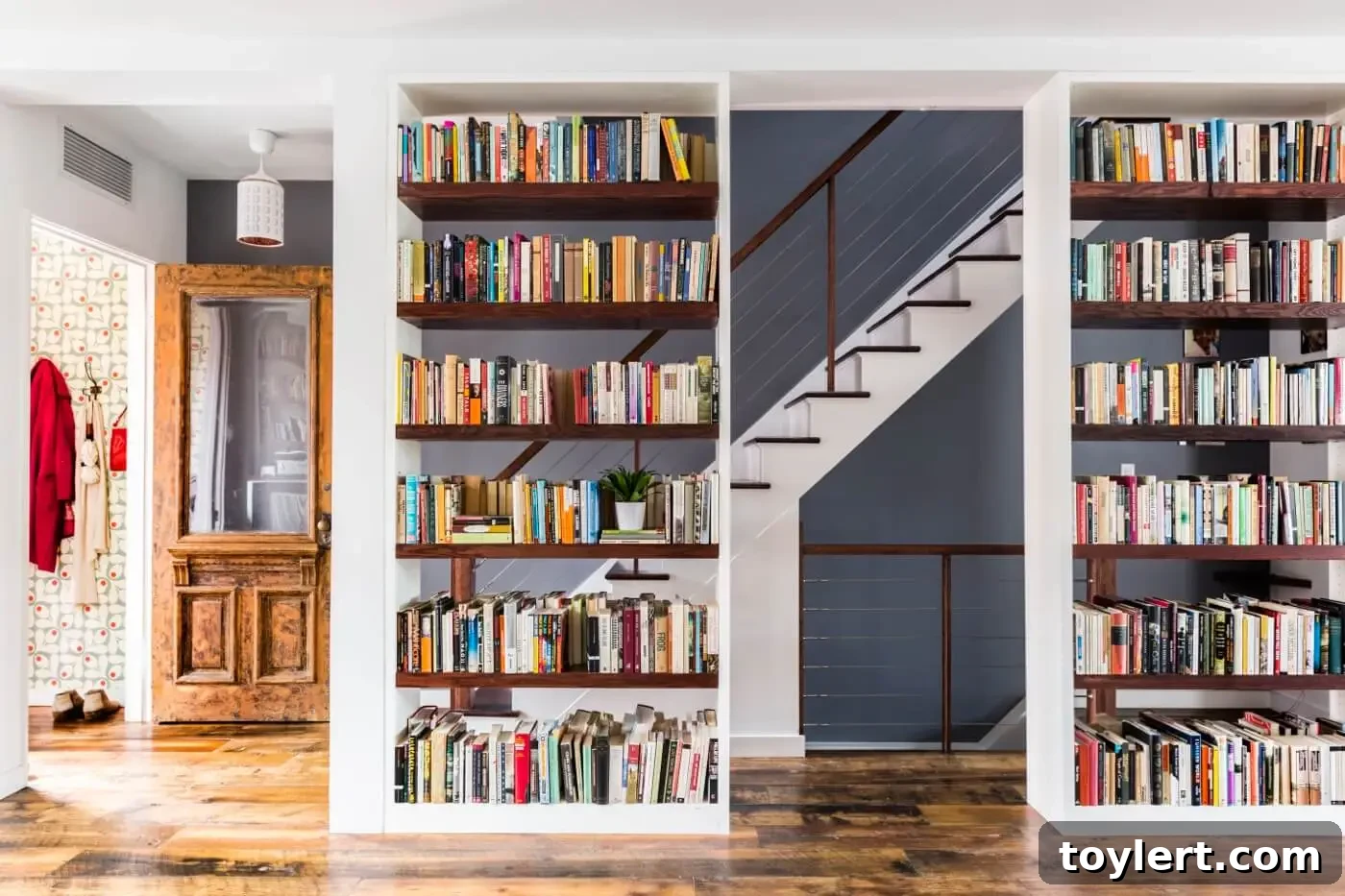
Barker’s brilliant strategy involved a clever repurposing of the existing structural columns. Instead of concealing them entirely or replacing them with obtrusive steel, she proposed cladding these essential pillars with sheetrock. This simple yet effective step instantly transformed the columns into clean, architectural elements. The true stroke of genius, however, lay in utilizing these newly finished columns as the robust, foundational sides of custom-designed, open bookshelves on the main floor of their 20-foot-wide wood-frame house. This design decision not only addressed the structural requirements but also created bespoke storage tailored perfectly for her clients’ extensive book collection.
“They’re also a low-cost design feature,” Barker highlighted, emphasizing the economic advantages of her approach. By working with the existing framework rather than against it, the project sidestepped the significant expenses often associated with complex structural overhauls. Furthermore, she noted, “They add visual interest using something most people already have.” This speaks to the sustainable and resourceful nature of the design, where inherent elements of the house are elevated to become key aesthetic components, enriching the space with character and functionality.
The integrated bookshelves achieve several crucial objectives simultaneously. Aesthetically, they introduce a sense of architectural rhythm and warmth to the main living area, defining zones without creating rigid barriers. Functionally, they provide ample, easily accessible storage for books, personal artifacts, and decorative items, effectively decluttering the space while making a strong personal statement about the homeowners’ interests. This seamless blend of structural necessity with personalized design is a hallmark of truly thoughtful architectural practice, setting a new standard for modern Brooklyn home renovations.
A Holistic Renovation: Transforming the Heart of the Home
The innovative bookshelf design was merely one facet of a much broader, comprehensive overhaul undertaken by BFDO. The project encompassed a full-scale renovation of the entire main level of the three-story residence, breathing new life into the core living spaces and enhancing the overall flow and functionality of the home. This ambitious undertaking aimed to modernize the interior while preserving the intrinsic character of the wood-frame house, a common goal in historic Brooklyn neighborhoods where heritage meets contemporary living needs.
The Modern L-Shaped Kitchen: A Hub of Activity
Central to the main level transformation was the creation of a new L-shaped kitchen. This configuration is highly coveted in modern home design for its exceptional efficiency and ergonomic benefits. The L-shape optimizes the “work triangle” – the path between the sink, refrigerator, and stove – minimizing steps and maximizing productivity. In this Brooklyn rowhouse, the new kitchen seamlessly integrates into the open-concept main floor, fostering a sense of connectivity between cooking, dining, and living areas. High-quality materials, contemporary appliances, and intelligent lighting solutions were likely incorporated, ensuring the kitchen is not only visually appealing but also a highly practical and inviting space for culinary exploration and social gatherings. It serves as a testament to how modern kitchen design can enhance the daily lives of residents, transforming a functional space into a vibrant heart of the home.
Redefining Family Space: The Newly Finished Lower Level
Beyond the main floor, the renovation extended to a newly finished lower level, specifically designed and purposed for the homeowners’ children. This strategic allocation of space addresses a common challenge in urban homes: providing dedicated areas for family members to relax, play, and grow. Transforming a basement or lower level into a vibrant, functional children’s zone offers numerous advantages. It creates an insulated environment for boisterous play, minimizes clutter in shared living spaces, and provides a personal sanctuary for younger residents. Design considerations for such a space would typically include durable, easy-to-clean surfaces, ample storage for toys and games, and flexible layouts that can adapt as children grow. This focus on family-centric design underscores BFDO’s commitment to creating homes that truly cater to the lifestyle and needs of their occupants, enhancing both comfort and quality of life.
It is important to note that while the main and lower levels underwent extensive redesign, the bedrooms on the second floor were not included in this particular renovation project. This targeted approach allowed the architects and homeowners to concentrate resources and creative energy on the areas most central to daily living and family interaction, delivering maximum impact where it was most desired.
The Art of Renovation: Blending Historic Charm with Modern Functionality
This Brooklyn rowhouse renovation exemplifies the intricate art of blending historic architectural integrity with the demands of contemporary living. The careful consideration of structural elements, turning them into design assets rather than obstacles, showcases a profound understanding of both engineering principles and aesthetic sensibilities. Alexandra Barker’s approach highlights that successful renovation is not just about updating surfaces; it’s about reimagining space, optimizing functionality, and infusing personality into every corner of a home.
The project serves as an inspiring case study for homeowners in dense urban environments like Brooklyn, where space is a premium and architectural constraints are common. It demonstrates that with creative vision and expert architectural guidance, even the most entrenched structural limitations can be transformed into opportunities for unique, cost-effective, and visually striking design solutions. From the ingenious bookshelf-clad columns that anchor the main floor, celebrating a love for books, to the efficient L-shaped kitchen facilitating family life, and the dedicated children’s haven in the lower level, every element of this renovation speaks to a thoughtful and client-focused design philosophy. This holistic transformation not only enhances the daily experience of the residents but also adds significant value and enduring appeal to the property, truly making it a modern urban sanctuary.