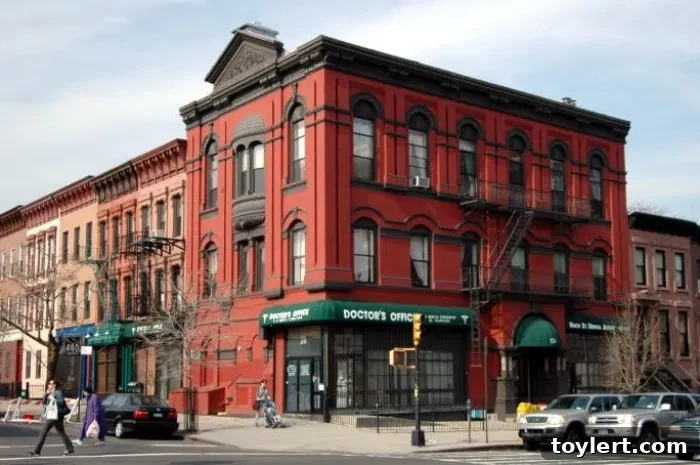
Unveiling Brooklyn’s Past: The Enduring Legacy of 370-372 9th Street in Park Slope
Brooklyn, a borough renowned for its rich history and captivating architecture, stands as a living museum where every street corner tells a story. Amidst its iconic brownstones and bustling avenues, buildings like 370-372 9th Street in the vibrant Park Slope neighborhood offer a compelling glimpse into the past, embodying the spirit of a bygone era while gracefully adapting to the demands of modern urban life. Once known as Day’s Avena Hall, this distinctive Queen Anne style structure, built in 1892, has transitioned from a bustling community hub to a dynamic space housing both commercial enterprises and residential units. Its story is a microcosm of Brooklyn’s own evolution, a testament to resilience, architectural beauty, and the enduring human need for gathering and connection.
Building Profile: 370-372 9th Street
- Former Name: Day’s Avena Hall
- Current Use: Commercial and Residential Space
- Address: 370-372 9th Street
- Cross Streets: Corner 6th Avenue
- Neighborhood: Park Slope, Brooklyn
- Year Built: 1892
- Architectural Style: Queen Anne
- Architect: Walter H.C. Hornum
- Notable Works by Architect: Prolific designer of row houses, tenements, and flats buildings across Brooklyn and Manhattan, contributing significantly to the urban fabric of late 19th-century New York.
- Landmarked Status: No
The Golden Age of Community Halls: More Than Just Buildings
In the late 19th and early 20th centuries, long before the advent of widespread television, cinema complexes, or the internet, community halls were the beating heart of social life in growing urban centers like Brooklyn. These weren’t merely structures; they were vital crucibles where communities were forged, ideas were exchanged, and culture thrived. Day’s Avena Hall at 370-372 9th Street exemplifies this pivotal role, serving as a versatile assembly space for an incredible array of activities that catered to the diverse needs of Park Slope residents.
Imagine the bustling scene within its walls: elegant dance halls hosting soirées and social gatherings, lecture series educating and inspiring citizens on pressing issues of the day, impassioned political rallies shaping local and national discourse, and solemn church services providing spiritual solace. Fraternal organizations, which played a far more central role in community life back then, would have used Avena Hall for their regular meetings and ceremonial events. Beyond public functions, the hall also accommodated private parties, family celebrations, and myriad other events that brought people together, fostering a strong sense of belonging and collective identity.
The strategic placement of these halls, particularly on corner lots, was no accident. Architects and developers understood the value of visibility and accessibility. A corner location offered abundant natural light from two street-facing sides, creating brighter, more inviting interiors. Furthermore, such prominence made the halls easier to locate and served as natural meeting points, enhancing their function as central community hubs. Park Slope, known for its vibrant social fabric, was home to several such halls, including the notable Avon Hall on 7th Avenue and the majestic Grand Prospect Hall. Day’s Avena Hall stood proudly among these, each contributing to the rich tapestry of the neighborhood’s social infrastructure.
Architectural Grandeur: The Queen Anne Legacy of Walter H.C. Hornum
The building at 370-372 9th Street is a magnificent example of the Queen Anne architectural style, a popular choice for public and residential buildings in the late 19th century. Emerging in England and rapidly adopted in America, the Queen Anne style is characterized by its delightful asymmetry, a rich interplay of textures, and an embrace of varied materials. This eclectic approach allowed architects to create visually dynamic and often whimsical facades that stood in stark contrast to the more rigid classical styles.
Key features often found in Queen Anne buildings, and likely present in Day’s Avena Hall during its original construction, include elaborate gables, projecting bay windows, turrets and towers, intricate brickwork, decorative terra cotta panels, and a mix of materials such as brick, stone, and patterned wood shingles. The style celebrated craftsmanship and individuality, making each building a unique work of art. For a prominent community hall, the Queen Anne style would have projected an image of sophistication, welcoming grandeur, and a touch of Victorian whimsy, perfectly suiting its role as a vibrant social center.
The architect behind this distinguished structure was Walter H.C. Hornum, a name synonymous with the proliferation of residential and mixed-use buildings across Brooklyn and Manhattan in the late 1800s. Hornum was a prolific designer, responsible for countless row houses, tenements, and flats buildings that helped shape the rapidly expanding urban landscape of New York City. While much of his work focused on practical, multi-unit dwellings, Day’s Avena Hall represented an opportunity for him to apply his expertise to a more public and architecturally expressive project. His ability to blend functional design with the ornate aesthetics of the Queen Anne style is evident in this building, showcasing his versatility and significant contribution to Brooklyn’s architectural heritage. His buildings, though perhaps not individually landmarked, collectively form a crucial part of the city’s historical character.
A Glimpse Into the Past: Day’s Avena Hall in its Prime
To truly appreciate 370-372 9th Street, one must close their eyes and imagine Day’s Avena Hall buzzing with life. Picture the clatter of horse-drawn carriages outside, the gas lamps illuminating the entrance, and the excited chatter spilling onto 6th Avenue. Inside, the grand hall would have transformed to suit each occasion. On one evening, perhaps a grand ball, with ladies in voluminous gowns and gentlemen in tailored suits waltzing across a polished floor, the air filled with the strains of a live orchestra. Another evening might see a fervent debate on local politics, with citizens packed into rows, hanging on every word of a charismatic speaker, their voices rising in applause or dissent.
The building would have been a hub for the neighborhood’s numerous immigrant communities, providing a space for cultural events, language classes, and mutual aid society meetings, helping new arrivals integrate and maintain their traditions. It might have hosted children’s recitals, charity bazaars, or even early cinema screenings. The sheer versatility of the space was its greatest asset, reflecting the multifaceted needs of a rapidly growing and diversifying urban population. Day’s Avena Hall was not just a venue; it was a stage upon which the daily dramas and celebrations of Park Slope unfolded, a place where memories were made and community bonds were strengthened.
From Public Hub to Private Quarters: Transformation and Modern Relevance
The turn of the 20th century brought significant shifts in urban life, eventually leading to a decline in the prominence of grand community halls like Day’s Avena Hall. The rise of new forms of entertainment, the changing structure of social organizations, and evolving economic landscapes meant that many of these magnificent buildings had to adapt or face demolition. Fortunately, 370-372 9th Street proved resilient, undergoing a transformation from its original purpose as a dedicated assembly hall to its current configuration as commercial and residential units.
This adaptive reuse is a common narrative for historic buildings in Brooklyn. The robust construction and flexible interior spaces of many late 19th-century structures lent themselves well to such conversions. While the grand ballroom or lecture hall might have been subdivided into apartments or commercial storefronts, the building’s exterior often retains much of its original character, serving as a constant reminder of its storied past. The challenge in such transformations lies in preserving the architectural integrity and historical echoes while ensuring modern functionality and comfort. It’s a delicate balance between honoring the past and embracing the future.
Today, 370-372 9th Street continues its active life, contributing to the economic and residential vibrancy of Park Slope. Its ground floor likely houses local businesses, while the upper levels provide homes for residents, all within a building steeped in history. The fact that it is not landmarked offers both flexibility for current owners regarding modifications and a continuous responsibility to maintain its historical essence without mandated preservation guidelines. This situation often sparks debate among preservationists and property owners, highlighting the ongoing tension between development and heritage in dynamic neighborhoods like Park Slope.
Park Slope: A Tapestry of History and Modernity
Park Slope is widely celebrated for its stunning brownstone architecture, picturesque tree-lined streets, and a vibrant community spirit. Buildings like 370-372 9th Street are integral to this identity, each brick and cornice telling a part of the neighborhood’s larger narrative. They stand as silent witnesses to the generations who have lived, worked, and gathered within their walls and on the streets outside.
The neighborhood successfully marries its rich historical character with a contemporary, family-friendly atmosphere. Independent boutiques, acclaimed restaurants, and green spaces like Prospect Park are all part of its allure. The presence of architecturally significant buildings such as the former Day’s Avena Hall reinforces Park Slope’s unique charm and its commitment to preserving the echoes of its past, even as it continues to evolve. These structures are not just old buildings; they are anchors of identity, providing a tangible link to the industrious and socially conscious Brooklynites who shaped the borough.
Conclusion: A Living Landmark of Brooklyn’s Enduring Story
The journey of 370-372 9th Street, from Day’s Avena Hall to its present-day incarnation, is a powerful narrative of architectural endurance and urban transformation. It stands as a testament to the importance of community gathering spaces in the development of a thriving city and the genius of architects like Walter H.C. Hornum. More than just a building, it is a living landmark, a silent storyteller of Park Slope’s past, and a vibrant participant in its present.
As we walk the historic streets of Brooklyn, these structures invite us to pause, reflect, and appreciate the layers of history embedded within the urban fabric. 370-372 9th Street reminds us that while functions may change and facades may evolve, the spirit of community and the legacy of craftsmanship continue to resonate, ensuring that Brooklyn’s captivating story is retold, one building at a time.