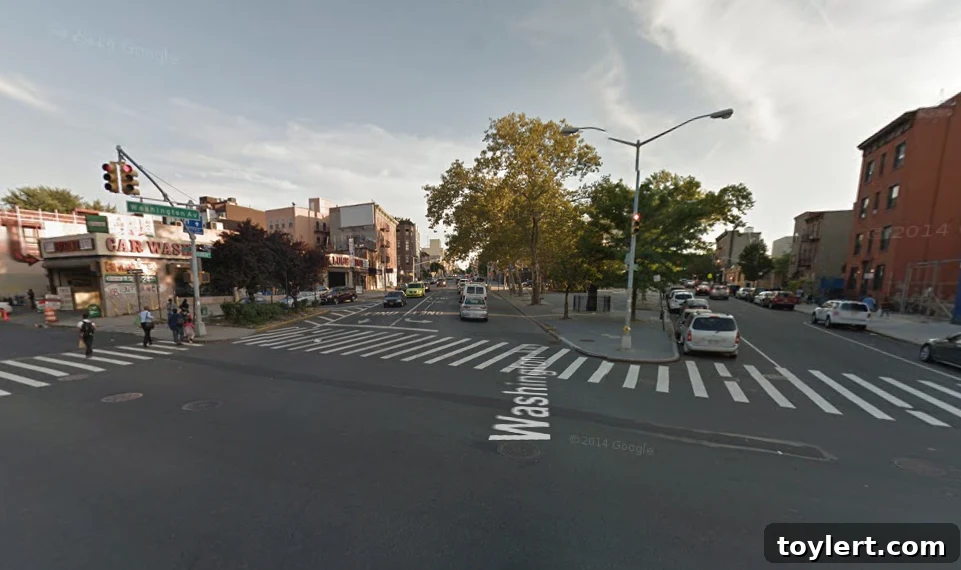
Pioneering Pedestrian Safety: Vision Zero Transforms Atlantic Avenue Intersection
In a significant stride towards enhancing urban safety, the New York City Department of Transportation (NYC DOT) recently unveiled a suite of crucial improvements designed to bolster pedestrian safety along Atlantic Avenue. These enhancements are specifically targeted at the complex, three-way intersection where Atlantic, Washington, and Underhill Avenues converge – a vital junction that serves as a meeting point for the vibrant Brooklyn neighborhoods of Clinton Hill, Prospect Heights, and Crown Heights. This initiative marks a pivotal moment in the city’s ongoing commitment to its Vision Zero program, aiming to eliminate traffic fatalities and serious injuries on its streets.
The Genesis of Vision Zero: A Commitment to Lifesaving Urban Design
The Vision Zero philosophy, originating in Sweden in the 1990s, fundamentally redefines how we approach traffic safety. Unlike traditional approaches that often attribute accidents solely to human error, Vision Zero posits that traffic deaths and severe injuries are preventable and unacceptable. It shifts the responsibility from individual road users to system designers, emphasizing that roads, vehicles, and traffic policies should be designed to forgive human mistakes and prevent crashes from resulting in fatal or life-altering outcomes. In New York City, this transformative initiative was embraced by Mayor Bill de Blasio, making NYC one of the first major American cities to adopt Vision Zero as a cornerstone of its urban planning strategy. The overarching goal is clear: no loss of life on our streets is acceptable.
Vision Zero is not merely about enforcement or public awareness campaigns; it’s about a comprehensive, multi-faceted strategy that includes data-driven analyses, engineering interventions, education, and targeted enforcement. It acknowledges that human beings will inevitably make errors, and thus the traffic system must be resilient enough to mitigate the consequences of those errors. By focusing on design and infrastructure, Vision Zero aims to create a truly safe environment for all road users – pedestrians, cyclists, and motorists alike.
Atlantic Avenue: A Hotspot for Intervention
The choice of the Atlantic, Washington, and Underhill Avenues intersection for these significant safety upgrades was not arbitrary. For years, this particular crossroads has been identified as a high-risk area for traffic incidents. A grim statistical analysis revealed a pressing need for intervention: between 2009 and 2013, a harrowing total of 99 traffic crashes occurred at this single intersection. Such a high concentration of incidents made the spot a prime candidate for immediate action under the aggressive goals of the Vision Zero initiative. These aren’t just numbers; they represent countless stories of personal injury, property damage, and the constant fear experienced by residents and commuters navigating this perilous junction.
The intersection’s unique geometry, where three major avenues converge, combined with high traffic volumes and diverse road user types, historically created a challenging environment. Pedestrians often faced long crossing distances and complex signal phasing, while drivers contended with multiple turning movements and potential confusion. The confluence of these factors created a recipe for frequent collisions, making it imperative for the city to step in with substantial, data-backed design modifications.
Engineering for Empathy: The Nature of the Improvements
While the initial announcement highlighted “significant improvements” for pedestrian safety, typical Vision Zero interventions at such critical intersections often involve a range of innovative engineering solutions. These commonly include:
- Curb Extensions (Bulb-outs): Extending the curb into the parking lane effectively shortens crossing distances for pedestrians, reduces the time they are exposed to traffic, and improves visibility between pedestrians and turning drivers.
- Leading Pedestrian Intervals (LPIs): Giving pedestrians a few seconds head start to enter the crosswalk before vehicles get a green light. This makes pedestrians more visible and establishes their presence in the intersection.
- Enhanced Crosswalks and Markings: Repainting and even elevating crosswalks can significantly improve their visibility, especially for drivers approaching from a distance. High-visibility markings, often in distinct colors or patterns, reinforce pedestrian priority.
- Signal Timing Optimization: Adjusting traffic signal cycles to provide more dedicated time for pedestrian crossings or to better synchronize traffic flow, reducing conflicts between turning vehicles and pedestrians.
- Refuge Islands: Creating medians or islands in wide intersections allows pedestrians to cross in two stages, providing a safe waiting area if they cannot cross the entire width of the street in one signal cycle.
- Improved Signage and Lighting: Clearer directional signs, warning signs, and enhanced street lighting can drastically improve awareness for all road users, particularly during nighttime hours or adverse weather conditions.
- Dedicated Turning Phases: Implementing protected left-turn signals or prohibiting certain turns can simplify complex movements and reduce collision points between vehicles and pedestrians.
Each of these interventions, when strategically applied, works in concert to redesign the physical environment, nudging human behavior towards safer practices and, crucially, mitigating the severity of potential crashes. The goal is to create a more intuitive, forgiving, and ultimately safer streetscape for everyone.
The Broader Impact: Fostering Safer Communities and Sustainable Transportation
The improvements on Atlantic Avenue extend beyond mere crash reduction; they contribute to the broader goals of urban sustainability and community well-being. By prioritizing pedestrian safety, the NYC DOT is actively encouraging walking and cycling as viable, healthy, and environmentally friendly modes of transportation. When people feel safer walking and biking, they are more likely to choose these options, leading to reduced traffic congestion, lower emissions, and healthier lifestyles for residents.
Moreover, safer streets foster stronger communities. Parents feel more comfortable letting their children walk to school, elderly residents can navigate their neighborhoods with greater confidence, and local businesses benefit from increased foot traffic. These interventions transform dangerous thoroughfares into vibrant public spaces where people can gather, commute, and interact without the constant threat of serious injury. The positive ripple effect touches economic development, public health, and overall quality of life for the residents of Clinton Hill, Prospect Heights, and Crown Heights.
A Collaborative Path Forward: Sustaining the Vision
The success of Vision Zero initiatives, like those seen on Atlantic Avenue, relies heavily on continuous collaboration between city agencies, community boards, local residents, and advocacy groups. Engaged communities provide invaluable insights into local traffic patterns and specific hazards, helping the DOT to identify and prioritize high-risk locations. Public feedback on proposed designs is crucial for ensuring that solutions are not only effective but also embraced by those who use the streets daily.
While the Atlantic Avenue improvements represent a significant victory, the commitment to Vision Zero is an ongoing journey. It requires constant monitoring, data analysis, and a willingness to adapt strategies based on new findings and evolving urban needs. The city must continue to invest in infrastructure upgrades, educational campaigns, and smart enforcement to sustain the momentum and inch closer to the ultimate goal of zero traffic fatalities and serious injuries. The work on Atlantic Avenue stands as a testament to what can be achieved when a city commits to a vision where safety is paramount, proving that well-designed streets are a cornerstone of a thriving, resilient urban future. This commitment ensures that vital intersections like Atlantic, Washington, and Underhill Avenues are transformed from danger zones into safe, accessible arteries connecting Brooklyn’s diverse and dynamic neighborhoods.
For more detailed information on the specific press release regarding these improvements, you may refer to the NYC DOT announcement: NYC DOT Unveils New Pedestrian Safety Improvements.