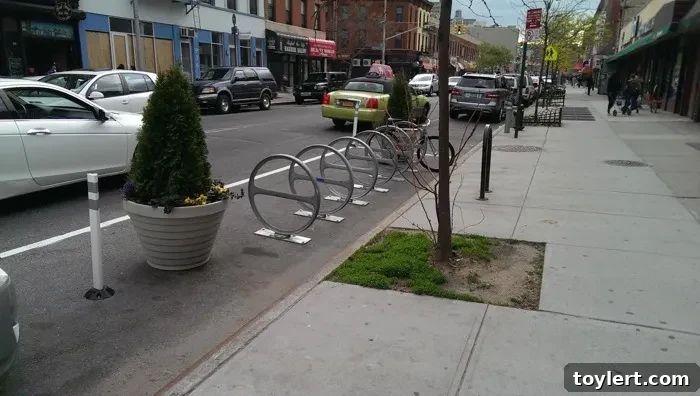
New Bike Parking Corral on Fulton Street: A Boost for Brooklyn’s Cycling Community
In a significant stride towards fostering a more sustainable and bicycle-friendly urban environment, the city has recently unveiled a brand-new bike parking corral on Fulton Street. This strategic installation, located prominently between St. James Place and Cambridge Place, directly in front of the esteemed Fulton Bike shop, represents a vital enhancement to Brooklyn’s ever-expanding cycling infrastructure. The initiative is designed to offer secure, organized, and highly convenient parking solutions for the borough’s growing number of cyclists, addressing a critical need for efficient urban mobility.
While the introduction of such amenities is widely celebrated by the cycling community, it often catalyzes broader discussions within local neighborhoods. The spirited controversy that surrounded a similar setup on Franklin Avenue in the past serves as a poignant reminder of the intricate balance required in urban planning and the indispensable role of proactive community engagement. However, through thoughtful planning, transparent communication, and a focus on collective benefits, this new Fulton Street corral is poised to integrate seamlessly into the streetscape, establishing itself as a valued asset that enhances the area’s bicycle-friendliness without sparking the contention experienced by previous projects.
Understanding the Bike Parking Corral: Design, Functionality, and Urban Integration
For those unacquainted with modern urban cycling infrastructure, a bike parking corral is far more sophisticated than a mere cluster of individual bike racks. It constitutes a dedicated public space, typically converting the footprint of one conventional car parking spot into a high-capacity area specifically engineered to accommodate numerous bicycles efficiently and securely. These innovative corrals usually incorporate several inverted-U bike racks, capable of safely housing anywhere from 8 to 16 bicycles, depending on the specific design and available spatial dimensions. The primary objective of their design is to alleviate sidewalk clutter, a common issue where improperly parked or haphazardly chained bicycles can obstruct pedestrian pathways, creating accessibility challenges and diminishing the overall aesthetic appeal of urban commercial zones. By relocating bicycles from sidewalks to designated street-level spaces, these corrals significantly enhance pedestrian safety and visibly improve the visual order of bustling thoroughfares.
The chosen location on Fulton Street offers particular synergy, sitting directly adjacent to a cherished local institution like the Fulton Bike shop. This strategic placement not only furnishes a highly convenient parking solution for patrons visiting the shop but also firmly establishes a visible, accessible hub for cyclists within the neighborhood. This targeted positioning actively reinforces the area as a prime cycling destination and unequivocally demonstrates the city’s unwavering commitment to supporting local businesses that cater to the burgeoning population of urban cyclists. Beyond mere utility, the design of these corrals often incorporates clear, intuitive signage and, at times, thoughtful decorative elements, ensuring that the installation is harmoniously integrated into the urban landscape rather than perceived as an intrusive or disjointed addition.
The Multifaceted Benefits of Enhanced Bike Parking for the Community
The strategic deployment of bike parking corrals like the one on Fulton Street yields a wide array of benefits, extending far beyond the immediate convenience offered to individual cyclists. These advantages create a positive ripple effect throughout the entire community, profoundly influencing local businesses, shaping urban planning objectives, and bolstering environmental sustainability efforts.
For Cyclists: Elevated Security, Unparalleled Convenience, and Active Encouragement
For the individual urban cyclist, the provision of a dedicated parking corral delivers invaluable peace of mind. The often-frustrating experience of finding suitable street parking for bikes, frequently involving an endless search for available poles or suitable racks, becomes a thing of the past. Corrals offer a clearly designated, typically well-lit space, substantially mitigating the risk of theft or damage and providing robust, secure anchoring options. This enhanced convenience is a powerful incentive, actively encouraging more residents to embrace cycling for their daily commutes, routine errands, and leisure activities, secure in the knowledge that reliable and safe parking awaits them at their destination. As cycling continues its meteoric rise in popularity across New York City, the provision of adequate and thoughtfully designed infrastructure such as this is absolutely crucial for sustaining and accelerating that trend, thereby solidifying two-wheeled travel as an increasingly viable, attractive, and integral component of urban mobility.
For Local Businesses: Boosting Patronage and Enhancing Curb Appeal
Businesses, particularly those operating within vibrant and bustling commercial districts such as Fulton Street, stand to gain tremendously from the increased availability of dedicated bike parking. Extensive studies have consistently demonstrated that cyclists tend to make more frequent visits to local businesses and, over time, often spend comparable or even greater amounts than their counterparts who arrive by car. By providing readily accessible and highly visible parking solutions, businesses effectively make themselves more appealing and accessible to this valuable and growing customer demographic. Furthermore, a meticulously organized bike corral significantly contributes to a cleaner, less cluttered sidewalk environment, which in turn dramatically improves the overall curb appeal and inviting atmosphere of the street. This cumulative effect can lead to a more welcoming experience for all patrons, whether they arrive on foot, by bicycle, or via public transportation, ultimately fostering greater local economic vitality and community engagement.
For Urban Planning and Community Livability: Efficient Space and Sustainable Futures
From a sophisticated urban planning perspective, bike parking corrals represent an exceptionally efficient and forward-thinking utilization of public space. The intelligent conversion of a single car parking spot into a space capable of accommodating a dozen or more bicycles eloquently demonstrates a profound commitment to sustainable transport strategies and intelligent urban design principles. This deliberate shift acknowledges the dynamic and evolving realities of urban mobility, consciously prioritizing modes of transport that actively reduce traffic congestion, significantly lower harmful emissions, and proactively promote public health. Moreover, by drawing bicycles off crowded sidewalks, these corrals fundamentally improve pedestrian safety and accessibility for all, rendering streets more enjoyable and functional for every resident. They symbolize a tangible and impactful investment in the creation of more walkable, bikeable, and ultimately more livable neighborhoods, perfectly aligning with the broader city-wide objectives for a greener, healthier, and more interconnected New York.
Addressing Potential Concerns: Learning from Past Controversies for Future Success
The insightful reference to the Franklin Avenue controversy is critically important, as it illuminates the common yet complex challenges frequently associated with the implementation of new urban infrastructure. Debates surrounding bike parking facilities and dedicated bike lanes often crystallize around several key areas of concern:
- Perceived Loss of Car Parking: This is arguably the most frequent and vocal objection, centering on the conversion of existing car parking spaces, especially in already densely populated urban areas where parking is notoriously scarce.
- Uncertain Impact on Local Businesses: While a significant body of research points to positive economic impacts for businesses, some owners express genuine concerns that reduced car parking availability might deter customers who rely on driving.
- Aesthetics and Street Clutter: Community members may raise valid concerns about how new infrastructure might alter the established visual character of a street or contribute to perceived urban clutter.
- Safety Perceptions and Integration: Debates occasionally emerge regarding the safety implications for both cyclists and pedestrians as new bike facilities are integrated into pre-existing traffic patterns and urban layouts.
The valuable experience gained from the Franklin Avenue project undeniably underscores the paramount necessity for proactive, inclusive, and extensive community engagement. Rather than merely installing infrastructure without prior consultation, successful urban projects necessitate early and sustained outreach to local residents, affected businesses, and community boards. Facilitating open forums, ensuring clear and consistent communication regarding the rationale and anticipated benefits, and providing genuine opportunities for constructive feedback can effectively transform potential opposition into constructive dialogue and even enthusiastic community support. Emphasizing how these transformative changes benefit the entire community, not exclusively cyclists, is absolutely paramount for fostering widespread acceptance. For the Fulton Street bike parking corral, the aspiration is that lessons meticulously learned from past experiences will pave the way for its smooth integration and foster broad, enthusiastic community acceptance, turning potential challenges into shared victories.
Fulton Street’s Pivotal Role in Brooklyn’s Evolving Urban Fabric
Fulton Street itself is more than just a thoroughfare; it is a vibrant, historic, and culturally rich artery threading through the diverse tapestry of Brooklyn. Stretching across multiple dynamic neighborhoods, it serves as a crucial commercial, retail, and cultural corridor. The deliberate placement of this new bike parking corral here is far from arbitrary; it profoundly signifies Fulton Street’s ongoing evolution as a truly multimodal transportation artery. Alongside a consistent flow of buses, private vehicles, and a bustling pedestrian presence, bicycles are increasingly asserting themselves as an indispensable component of its daily traffic. Integrating robust bike infrastructure at this location not only adeptly serves the needs of existing cyclists but also actively encourages new riders to confidently explore this dynamic street and its myriad attractions, from unique shops to diverse eateries.
The immediate proximity to the Fulton Bike shop is particularly noteworthy and exemplifies perfect synergy. For many decades, local bike shops like Fulton Bike have functioned as more than just commercial establishments; they have been authentic community anchors, providing not only essential sales and repair services but also invaluable expert advice, fostering camaraderie among riders, and cultivating a profound sense of belonging for cyclists across the borough. By thoughtfully situating the bike corral directly in front of such an established and respected institution, the city is effectively engaging in a collaborative partnership with a local business to cultivate an even more cycling-friendly environment. This creates a natural meeting point for cyclists and makes a clear, visible declaration of support for the vibrant local cycling culture. This precise kind of synergy, where forward-thinking urban planning converges harmoniously with local commerce, is absolutely crucial for achieving sustainable and community-driven urban development.
Brooklyn’s Cycling Boom and the Future Trajectory of Urban Mobility
Brooklyn has been at the forefront of an extraordinary cycling boom over the past two decades. This surge has been primarily fueled by a heightened collective consciousness regarding personal health benefits, environmental stewardship, and the undeniable efficiency of bike commuting in a dense urban landscape. What was once a relatively niche activity has decisively transitioned into a mainstream and highly embraced mode of transport. The strategic expansion of dedicated bike lanes, the resounding success of innovative programs like Citi Bike (which boasts widespread adoption and usage across Brooklyn), and a fundamental paradigm shift in urban planning philosophy have all been instrumental in contributing to this remarkable proliferation of cycling. The recent installation of the Fulton Street bike parking corral, while a localized improvement, serves as a powerful micro-example of a much larger, macro-trend: urban centers worldwide are increasingly acknowledging, legitimizing, and significantly investing in cycling as a legitimate, beneficial, and indispensable form of urban mobility.
As New York City steadfastly continues its ambitious “Vision Zero” initiative, which is resolutely aimed at eliminating all traffic fatalities and serious injuries, the role of safe and comprehensive cycling infrastructure becomes paramount. Dedicated bike lanes, intelligently designed protected intersections, and secure bike parking facilities all collectively contribute to making city streets safer, more predictable, and more equitable for every user. Bike corrals, such as the exemplary one now gracing Fulton Street, transcend their basic function as mere places to park bicycles; they are potent symbols of a city actively evolving, enthusiastically embracing sustainability, promoting active lifestyles, and ensuring equitable access to diverse transportation options. These corrals are small yet profoundly significant pieces within a much grander urban puzzle, collectively contributing to the vision of a healthier, greener, more connected, and ultimately more resilient urban future for all New Yorkers.
A Call for Community Support and Sustainable Choices for a Better Brooklyn
The introduction of the new bike parking corral on Fulton Street represents a tangible and highly positive stride forward for the borough of Brooklyn. It stands as an open invitation to both residents and visitors alike to thoughtfully embrace cycling as a convenient, health-promoting, and environmentally responsible mode of navigating our vibrant city. While minor operational adjustments and ongoing, constructive community feedback will always remain an intrinsic part of any dynamic urban development process, the overarching goal consistently remains clear: to meticulously craft a city that functions more efficiently, more equitably, and more sustainably for all its diverse inhabitants.
We heartily encourage everyone within the vibrant Fulton Street corridor and extending throughout Brooklyn to wholeheartedly welcome and utilize this new piece of essential urban infrastructure. For the dedicated cyclist, it unfailingly offers a secure, accessible, and dedicated spot for their bicycles. For the pedestrian, it unequivocally translates into clearer, more navigable sidewalks, free from obstruction. For our cherished local businesses, it portends the exciting potential for attracting a new, environmentally conscious customer base. And for the city as a comprehensive entity, it proudly signifies unwavering progress towards the realization of a more sustainable, more accessible, and ultimately more vibrant urban environment. Let this exemplary new corral stand as a enduring testament to Brooklyn’s ongoing commitment to progressive urban planning and the thriving, resilient spirit of its dynamic cycling community, striving not to replicate the debates of the past, but rather to construct a shared, optimistic vision for the future, built on collaboration and mutual benefit.