In a significant shift reflecting Brooklyn’s ever-evolving real estate landscape, developers behind the prominent Cascade Linen Supply and Laundry Corp. site have altered their original vision. What was once planned as religious housing tailored for the Orthodox Jewish community will now give way to an ambitious luxury condominium complex. This strategic pivot underscores the intense demand for high-end residential properties in flourishing neighborhoods like Bed-Stuy, where developers are keenly aware of the lucrative potential. The project is set to introduce a new benchmark for upscale living in the area, with units projected to command prices ranging from an impressive $1 million to $2 million, according to insights from The Real Deal. This decision marks not just a change in architectural blueprint, but a testament to the dynamic forces shaping urban development in one of New York City’s most vibrant boroughs.
The Evolution of a Landmark Site: From Industry to Luxury
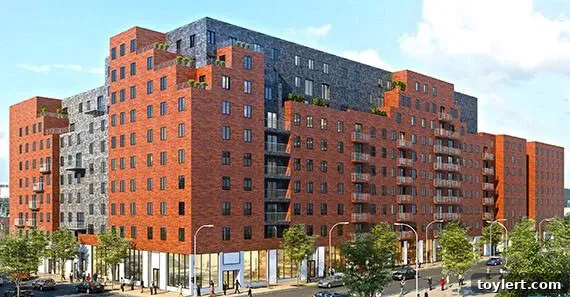
The transformation of the former Cascade Linen site at 835 Myrtle Avenue represents a compelling narrative of urban renewal and shifting priorities. Developers, after careful consideration of market trends and investment opportunities, opted to cater to a broader demographic seeking modern, high-amenity residences. This move from community-specific housing to general luxury condos signals confidence in Bed-Stuy’s appeal to affluent buyers, including young professionals, families, and individuals drawn to the neighborhood’s rich cultural fabric and increasingly sophisticated amenities. The scale of the project is substantial, envisioning a comprehensive development comprising seven distinct buildings upon its completion, poised to redefine a significant block of Myrtle Avenue.
This decision was likely influenced by several factors, including the escalating property values in Bed-Stuy, the robust demand for upscale housing across Brooklyn, and the potential for higher returns on investment from luxury sales. While religious housing serves a vital community need, the open market for luxury condominiums often presents a more direct path to maximizing development profits, especially on a site of this magnitude and prime location. The shift highlights a common tension in rapidly gentrifying areas: balancing community-specific needs with broader market forces that favor high-value residential projects.
A Glimpse into the Future: The Proposed Luxury Condominiums
The planned luxury condominiums at 835 Myrtle Avenue are expected to offer an unparalleled living experience, justifying their aspirational price points of $1 million to $2 million. Prospective buyers can anticipate meticulously designed interiors, state-of-the-art appliances, premium finishes, and a suite of amenities typically associated with high-end urban living. These might include private fitness centers, rooftop lounges with panoramic city views, co-working spaces, concierge services, and landscaped courtyards. Such features are essential for attracting the discerning buyer who is prepared to invest significantly in their home and lifestyle.
The integration of seven buildings suggests a carefully planned community within the larger Bed-Stuy neighborhood. This multi-building approach allows for diverse unit layouts, ranging from spacious studios to multi-bedroom residences, catering to a variety of buyer preferences. Furthermore, a complex of this size can often incorporate retail spaces at ground level, bringing new shops, cafes, or services that enhance the vibrancy and convenience of the immediate vicinity, further solidifying its appeal as a desirable place to live and invest in Brooklyn’s dynamic real estate market.
The Enduring Legacy of Cascade Linen: A Century of History
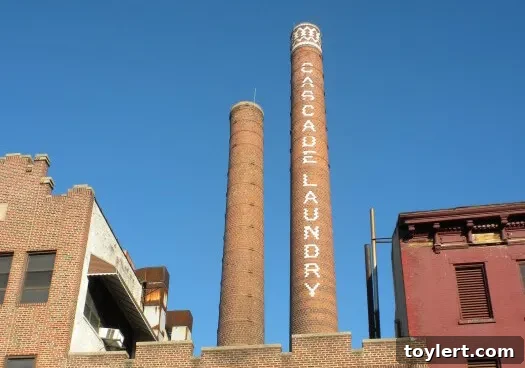
Before the bulldozers arrived in 2015, the site at 835 Myrtle Avenue was home to the iconic Cascade Linen Supply and Laundry Corp., a fixture of Bed-Stuy for over a century. The sprawling complex was instantly recognizable by its distinctive red-brick factory buildings and intricate Neo-Grec architectural details, which spoke to an era of robust industrial activity in Brooklyn. Its signature smokestacks, towering over the neighborhood, were not merely functional elements but became beloved icons of the Bed-Stuy skyline, a constant visual reminder of the area’s rich industrial heritage and enduring spirit.
The closure of Cascade Linen in 2010 marked the end of an era for many residents. For generations, the company had not only provided essential services but also offered local employment, playing a significant role in the community’s economic fabric. The complex’s demolition five years later, while paving the way for new development, also symbolized a tangible loss of a piece of Bed-Stuy’s historical and architectural identity. Debates surrounding the preservation of such structures versus the necessity of urban redevelopment are common in growing cities, and Cascade Linen’s fate became a poignant example of this ongoing tension. The site now stands as a testament to Brooklyn’s continuous cycle of reinvention, where the echoes of the past meet the ambitions of the future.
From Industrial Hub to High-Value Development Site: The Real Estate Journey
The journey of the 835 Myrtle Avenue site from an operational laundry facility to a prime development opportunity is a compelling case study in Brooklyn’s aggressive real estate market. The property first changed hands in 2013, when it sold to Alliance Capital Group for $27 million. This initial acquisition underscored the growing recognition of Bed-Stuy’s potential as a development hotspot, even before its full residential boom. Alliance Capital Group, known for its strategic investments, likely identified the site’s vast potential for large-scale redevelopment, given its size and location.
Just two years later, in 2015, the property experienced an astonishing surge in value, selling again for a staggering $70 million. This rapid appreciation, more than doubling its value in a short span, highlighted the intense competition among developers for coveted parcels in Brooklyn. The new ownership consortium comprised prominent real estate figures Isaac Deutsch, Abraham Brach, and Nachman Liebowitz. This partnership’s substantial investment demonstrated their collective vision for the site and their belief in Bed-Stuy’s upward trajectory. Such a significant financial commitment often signals plans for a high-density, high-return project, consistent with the eventual decision to pursue luxury condominiums rather than the previously mooted religious housing. This transaction remains a vivid illustration of the speculative fervor and investment confidence that characterized the Brooklyn real estate market during that period, setting the stage for the transformative development now underway.
The Impact on Bed-Stuy: Gentrification and Growth
The development of luxury condominiums on the Cascade Linen site is more than just a real estate transaction; it’s a potent symbol of the profound changes sweeping through Bed-Stuy and other historically working-class neighborhoods in Brooklyn. The introduction of high-priced units brings with it concerns about gentrification, a complex process that sees property values rise, demographics shift, and the original character of a neighborhood evolve. While such developments can bring economic benefits like increased tax revenues and new local amenities, they also raise questions about affordability, potential displacement of long-term residents, and the preservation of cultural heritage.
The influx of luxury housing often attracts a new wave of residents with higher incomes, which can stimulate local businesses and create a demand for new services, from trendy cafes to upscale boutiques. However, this can also lead to increased rents and property taxes, making it challenging for existing residents and small businesses to remain in the neighborhood. Community stakeholders and urban planners frequently grapple with how to manage this growth responsibly, ensuring that new developments contribute positively to the area without eroding its unique identity or exacerbating socio-economic disparities.
Beyond the economic ripple effects, the architectural landscape of Bed-Stuy is being fundamentally altered. The seven-building complex will stand as a modern counterpoint to the neighborhood’s iconic brownstones and pre-war buildings. This blend of old and new can create a dynamic urban environment, but it also necessitates careful consideration of scale, design, and integration to ensure that new constructions harmonize with the existing streetscape. The Cascade Linen project exemplifies the ongoing balancing act between progress and preservation in one of New York City’s most storied and rapidly changing communities.
Bed-Stuy’s Enduring Appeal in the Brooklyn Real Estate Landscape
Bedford-Stuyvesant, or Bed-Stuy as it’s affectionately known, has long been a vibrant cultural epicenter in Brooklyn. Historically a cornerstone of African American culture, the neighborhood boasts stunning tree-lined streets, magnificent brownstones, and a strong sense of community. In recent decades, Bed-Stuy has transitioned from being an affordable alternative to Manhattan and pricier Brooklyn neighborhoods to becoming a destination in its own right, highly coveted by a diverse array of residents and investors.
Several factors contribute to Bed-Stuy’s enduring and escalating appeal in the Brooklyn real estate market. Its strategic location offers excellent connectivity to Manhattan via multiple subway lines, making it attractive to commuters. The architectural charm of its historic homes, combined with a burgeoning scene of independent restaurants, cafes, and boutiques, creates a desirable urban lifestyle. Furthermore, Bed-Stuy’s strong community spirit, cultural institutions, and green spaces add to its residential allure. Developers, recognizing these intrinsic values and the upward trajectory of property appreciation, are increasingly drawn to the neighborhood for large-scale projects like the Cascade Linen site. This sustained interest and investment solidify Bed-Stuy’s position as a dynamic and highly sought-after locale, continuously shaping its future while honoring its rich past.