Discovering Timeless Elegance: A Brooklyn Heights Anglo-Italianate Masterpiece at 176 State Street
Nestled within the coveted Brooklyn Heights Historic District, the distinguished townhouse at 176 State Street stands as a testament to architectural grandeur and enduring appeal. This exceptional residence masterfully combines the stately charm of its 19th-century origins with the seamless integration of modern luxury. From its classical facade that speaks volumes of historical craftsmanship to the sophisticated curve of its internal staircase, every detail reflects a heritage of elegance. Yet, beneath this historic veneer lie contemporary comforts such as state-of-the-art central air conditioning and a beautifully appointed, contemporary kitchen, ensuring a living experience that is both grand and effortlessly modern.
The townhouse is an integral part of a distinctive row of three Anglo-Italianate architectural gems, an iconic style prevalent in mid-19th-century Brooklyn. Known for their stately center staircases, beautifully arched details, and robust masonry, these homes represent a significant chapter in the city’s architectural narrative. Located at 176 State Street, this particular property offers a unique opportunity to own a piece of Brooklyn’s rich history, meticulously preserved and thoughtfully updated for the demands of modern living in one of New York City’s most picturesque neighborhoods.
The Enduring Allure of Anglo-Italianate Architecture in Brooklyn Heights
The Anglo-Italianate style, a popular architectural choice during the mid-19th century, especially in burgeoning urban centers like Brooklyn, represents a fascinating blend of English and Italian architectural sensibilities. Characterized by its relatively flat roofs, wide overhanging cornices supported by decorative brackets, and tall, often arched windows, these homes exuded a sense of refined opulence. Unlike the more flamboyant pure Italianate style, Anglo-Italianate often incorporated a more restrained, classical approach, making it particularly well-suited for the elegant row houses that define much of Brooklyn Heights.
The townhouse at 176 State Street perfectly embodies these characteristics. The facade, with its balanced proportions and decorative elements, immediately evokes a sense of historical gravitas. The signature arched details, visible in various architectural elements, and the inherent design of a prominent center staircase are hallmarks of this distinguished style. These homes were designed not just for aesthetics but also for practical urban living, offering spacious interiors and grand entertaining areas. Owning an Anglo-Italianate property in Brooklyn Heights means inheriting a piece of architectural art, a home built with a quality and attention to detail that is rarely replicated today. For those who appreciate historical architecture, understanding the nuances of the Anglo-Italianate style adds an even deeper layer of appreciation for this magnificent residence.
A Journey Through Time: Unraveling 176 State Street’s Historic Pedigree
The historical significance of 176 State Street is deeply rooted in its construction period, which the LPC landmarks map dates to circa 1861-1879. This era marked a dynamic period of growth and development for Brooklyn, transforming it into a vibrant urban center with a distinctive architectural identity. The precise timing of the row’s construction likely falls towards the middle of this range, a time when brownstones and “marble front” houses were actively being marketed and built across the block, reflecting a flourishing real estate market and a preference for distinguished residential architecture.
The materials chosen for these homes were a clear indication of status and durability. While the LPC map generally describes the row as being made of “stone,” there’s an intriguing possibility regarding the lighter-colored facing on the upper floors: could it indeed be marble? If confirmed, this detail would elevate 176 State Street to a very exclusive category, as marble-clad rows are exceptionally rare in Brooklyn. Most prominent homes of the period favored brownstone, which, while beautiful and durable, lacked the inherent prestige and luminosity of marble. The prospect of marble facing would underscore the original builder’s ambition and the exceptional quality envisioned for this particular row, distinguishing it as a truly unique and high-status residence from its inception.
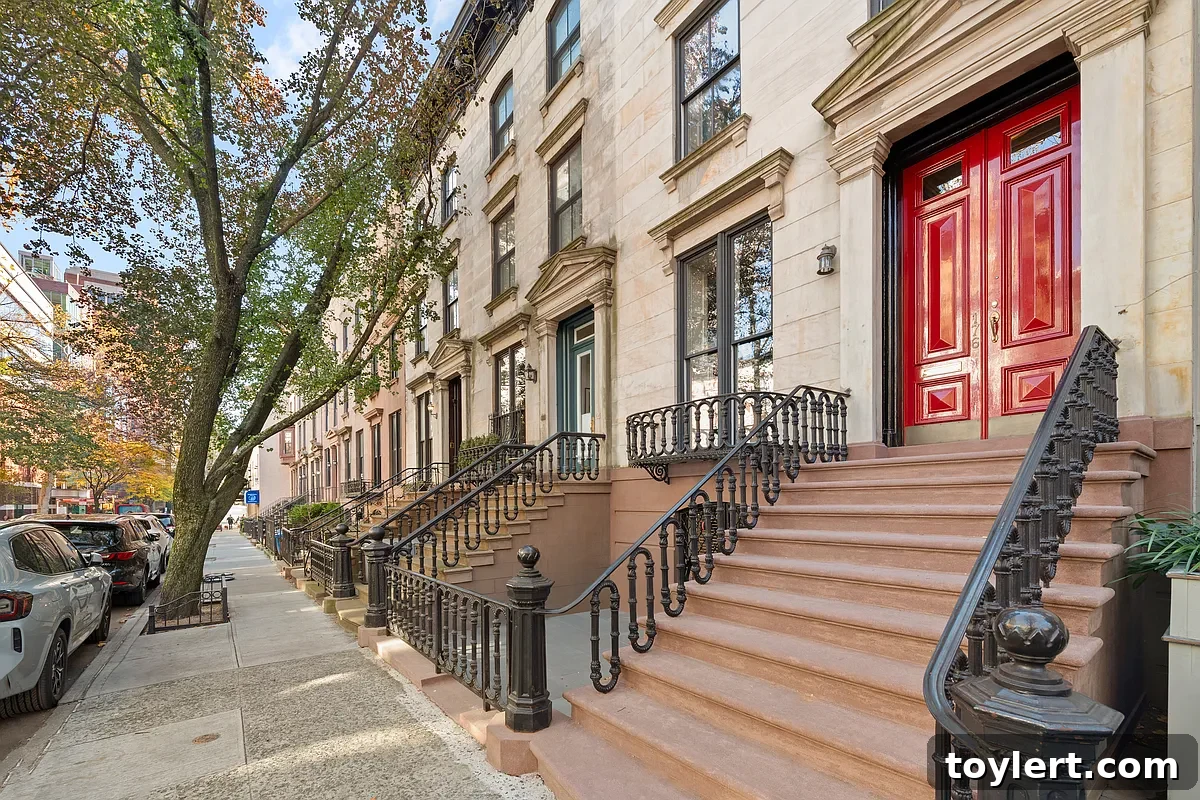
Beyond the potential for marble, the townhouse retains a wealth of its original, exquisite details. The robust brownstone basement and stoop, classic elements of Brooklyn townhouses, are perfectly intact, grounding the structure in its historical context. The grand pedimented front door surround makes a welcoming and elegant statement, echoing classical design principles. Above, the rounded upper-story windows add a soft, sophisticated touch to the facade, while the ornate bracketed cornice crowns the building with decorative flair. These features are not merely decorative; they are integral to the architectural style and contribute significantly to the building’s historic character and charm, allowing residents and passersby alike to appreciate the craftsmanship of a bygone era. The preservation of these elements speaks volumes about the care and respect afforded to the property over generations.
Even details that were subject to change over time have been meticulously restored. For instance, by the time of the