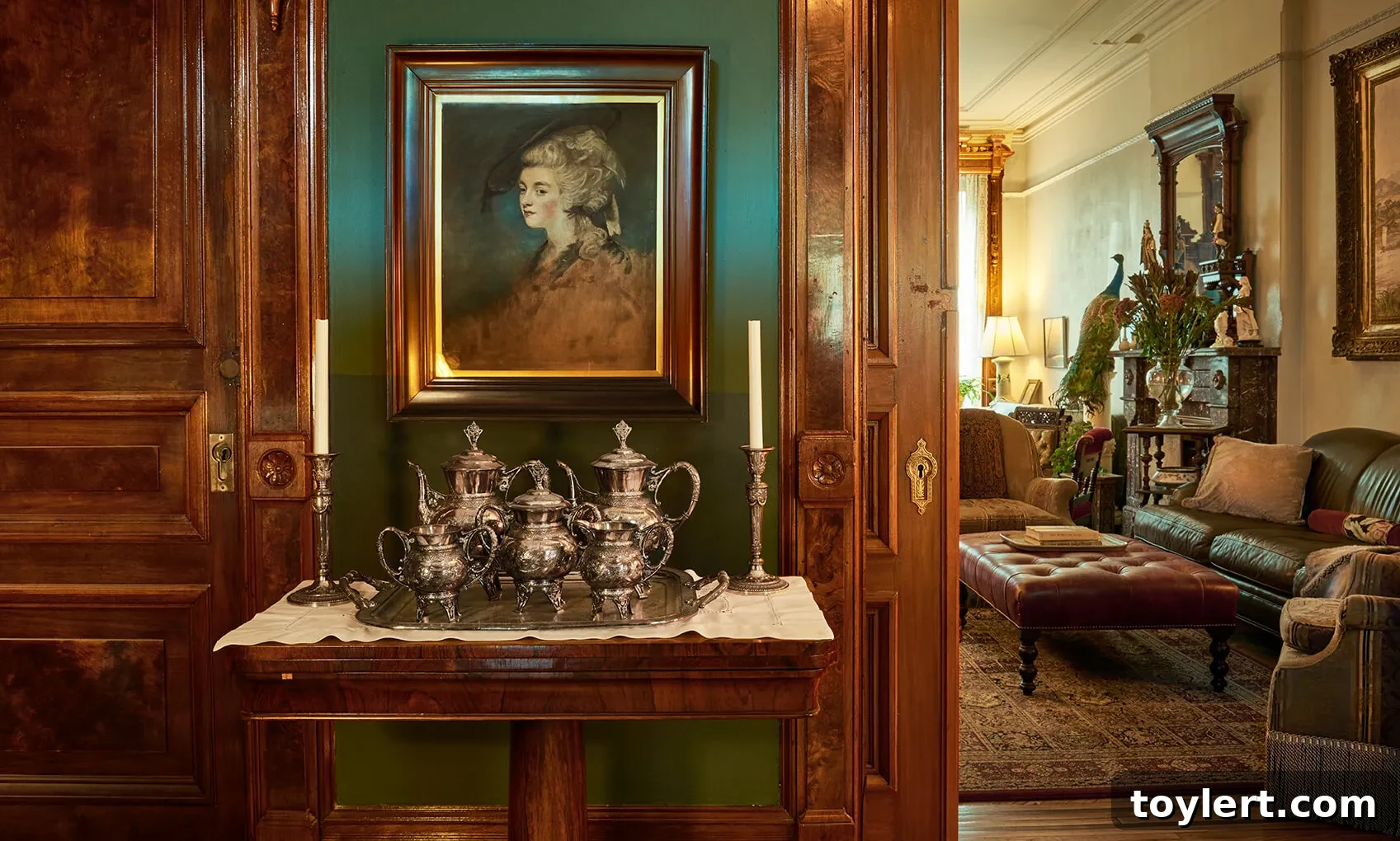
In the vibrant tapestry of New York City’s real estate narrative, the classic Brooklyn brownstone has achieved an almost mythical status. Once overshadowed by the allure of modern high-rise living, these stately, historic homes have undergone an astonishing renaissance in recent years, captivating the popular imagination as the quintessential ideal of urban dwelling. However, for Daniel Thompson, this isn’t a newfound fascination or a trendy conversion; it’s a deep-rooted passion. He is, to put it simply, a Victorianist born and bred.
The Enduring Allure of the Brooklyn Brownstone: A Victorianist’s Lifelong Passion
“I grew up in a 19th-century home,” Thompson reminisces, his voice carrying the warmth of cherished memories. “And so I always just considered that what homes feel like.” This innate connection to the grandeur and intricate details of Victorian architecture shaped his understanding of what a true home embodies long before the recent resurgence of brownstone popularity. For Thompson, these homes are not just buildings; they are living relics, infused with history and character that modern constructions often lack.
Sixteen years ago, his lifelong appreciation culminated in a personal quest. He found his own slice of history, a place that resonated with his soul and felt undeniably like home: a strikingly handsome 1881 brownstone. Nestled on a picturesque, tree-lined street in the heart of Bedford Stuyvesant – a locale so charming it’s often described as a location scout’s dream – this property was more than just a house. For Thompson, it swiftly transformed into a profound labor of love, an ongoing education, and an evolving artistic project that continues to unfold nearly two decades later.
Reviving History: The Brownstone Renaissance and Daniel Thompson’s Vision
The journey into brownstone ownership in Brooklyn is often a commitment to preservation and thoughtful modernization. While many are drawn to the aesthetic appeal and investment potential, Thompson’s approach is distinguished by his profound respect for the home’s original era. He embodies a commitment to authenticity, a rare find in an age where quick flips and homogenized designs are prevalent. His background as a “Victorianist” means he sees beyond superficial charm, appreciating the craftsmanship, the historical context, and the stories embedded within the very bricks and mortar of his 1881 residence.
The rediscovery of Brooklyn brownstones by a new generation of homeowners speaks volumes about a shifting desire for character, community, and a tangible connection to history. These homes, with their iconic stoops, grand facades, and spacious interiors, offer a unique blend of urban sophistication and timeless elegance. They stand as a testament to a bygone era of meticulous construction and architectural beauty. Thompson’s personal odyssey with his Bed-Stuy brownstone perfectly encapsulates this broader trend, albeit with a deeper, more personal historical reverence.
A Deep Dive into Architectural Heritage: Unpacking an 1881 Gem
An 1881 brownstone like Thompson’s is a treasure trove of period details, from high ceilings and original hardwood floors to ornate plasterwork and intricate millwork. Each element tells a story of late 19th-century design and the societal aspirations of the time. The initial appeal for Thompson wasn’t merely the structure itself, but the potential to peel back layers of previous renovations and carefully restore its inherent grandeur, while subtly integrating modern comforts essential for contemporary living. His home in Bedford Stuyvesant, a neighborhood celebrated for its stunning collection of historic homes and vibrant community spirit, provided the perfect canvas for this ambitious undertaking.
The decision to invest in such a property is often driven by a desire to live within a piece of history. For Thompson, it’s about inhabiting a space that feels genuine and speaks to his long-held aesthetic preferences. The tree-lined streets of Bed-Stuy further enhance this feeling, providing a serene urban oasis that complements the architectural splendor of the homes. It’s an environment where history is not just observed but lived and breathed every day.
More Than a House: A Labor of Love, an Education, and an Artistic Project
Daniel Thompson’s brownstone is far from a static dwelling; it is a dynamic testament to his unwavering dedication. The phrase “a labor of love” barely scratches the surface of the commitment required to restore and maintain a historic property of this caliber. It involves countless hours of research into period-appropriate materials and techniques, sourcing authentic fixtures, and collaborating with artisans who understand the nuances of Victorian craftsmanship. Every decision, from the choice of paint color to the intricate details of a light fixture, is made with careful consideration for the home’s historical integrity.
The Education of a Homeowner
Beyond the physical effort, the project has been an profound education. Thompson has undoubtedly become an expert in Victorian architecture, learning about everything from structural preservation to the specific styles prevalent in 1881 Brooklyn. He’s likely delved into the history of French polish, a traditional wood finishing technique known for its deep luster and durability, often a hallmark of fine period furniture and interiors. Mastering or overseeing such a process requires patience and a keen eye, enriching his understanding of historical preservation and applied artistry.
His education extends to the practicalities of modern integration without compromise. For instance, the mention of “refrigerator drawers” from the original article’s hidden context hints at a sophisticated approach to kitchen design. This modern appliance choice allows for seamless integration into a historically styled kitchen, preserving the aesthetic while offering contemporary convenience. It’s a subtle yet ingenious solution that respects the home’s past while catering to the demands of modern life.
An Ongoing Artistic Endeavor
As an “artistic project,” Thompson’s brownstone is a continually evolving masterpiece. Interior design in a Victorian context isn’t about rigid adherence to a museum-like display, but about creating a living space that harmonizes historical accuracy with personal expression. This is where elements like “wallpaper,” hinted at in the original link, come into play. Selecting period-appropriate patterns, colors, and textures, or even modern interpretations that complement the historical fabric, allows Thompson to infuse his personality while honoring the home’s origins.
The nearly two decades spent on this project underscore a philosophy of slow, deliberate creation. It’s not about instant gratification but about a meticulous process of refinement, where each addition and alteration contributes to a cohesive vision. This extended timeline allows for careful contemplation, experimentation, and the discovery of perfect pieces that resonate with the home’s soul and the owner’s aesthetic. It’s a testament to the idea that a truly beautiful home is grown, not merely built or decorated.
In conclusion, Daniel Thompson’s brownstone is more than just an address in Bedford Stuyvesant; it’s a vibrant testament to the enduring appeal of Brooklyn’s architectural heritage and the passion of an individual dedicated to preserving and enriching it. His story offers a compelling glimpse into the world of historic home renovation, highlighting the blend of dedication, continuous learning, and artistic vision required to transform a house from 1881 into a cherished, contemporary home that honors its past while embracing its present.
The brownstone renaissance, exemplified by custodians like Thompson, is a powerful reminder that true luxury often lies not in newness, but in history, character, and the personal narrative woven into the fabric of a truly exceptional home.