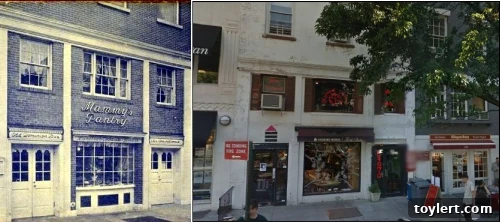
From Mammy’s Pantry to Modern Brooklyn: A Historical Culinary Journey on Montague Street
Brooklyn, a borough renowned for its dynamic evolution and rich historical tapestry, constantly reinvents itself while retaining echoes of its past. Every street corner, every building, holds stories of bygone eras, reflecting societal norms, economic shifts, and cultural transformations. Among these historical landmarks is 122 Montague Street, nestled in the heart of Brooklyn Heights, a location that has witnessed a profound metamorphosis over the decades. This article delves into the intriguing history of this particular address, from its controversial past as “Mammy’s Pantry” in the 1940s to its present-day iteration as a beacon of community service, offering a compelling look at Brooklyn, then and now.
Brooklyn Then and Now: A Tapestry of Urban Change
The very essence of Brooklyn is its perpetual state of change. What was once a bustling port city, a melting pot for immigrants, and a collection of distinct neighborhoods, has transformed into a global icon of culture, innovation, and diverse lifestyles. The Brooklyn of the 1940s, while vibrant in its own right, bore little resemblance to the borough we know today. It was a time shaped by the echoes of the Great Depression and the looming shadow of World War II, a period when local establishments played a crucial role in community life, serving as gathering places and culinary havens. Examining specific historical sites like 122 Montague Street allows us to peer through the veil of time and understand the profound societal shifts that have shaped urban identities.
The culinary landscape, too, has undergone a dramatic evolution. From classic diners and neighborhood eateries serving traditional American fare to today’s explosion of international cuisines and artisanal establishments, Brooklyn’s food scene mirrors its cultural diversity. Understanding a restaurant like Mammy’s Pantry requires us to contextualize it within its era, appreciating not just the food it offered but also the cultural symbols it invoked. This historical lens helps us grasp how perceptions of hospitality and representation have changed over generations.
The Weight of Archetypes: Understanding the “Mammy” Figure in Advertising
Cultural archetypes, often hardening into deeply ingrained stereotypes, wield significant power over collective consciousness. These images, frequently perpetuated and amplified by generations of advertising, can shape perceptions for decades. The marketing landscape of the mid-20th century, particularly the 1940s, was rife with imagery that, by today’s standards, would be deemed politically incorrect and deeply offensive. A prominent example is the “Mammy” figure, an archetype that was, for many in that era, synonymous with comforting Southern cooking and hospitality.
The “Mammy” stereotype typically depicted an ample, smiling Black woman, often adorned with a bandana, presenting a platter of food. This figure emerged from the post-Civil War era in the American South, romanticizing the roles of enslaved Black women in white households. It became a powerful, albeit deeply problematic, symbol in popular culture and advertising, designed to evoke feelings of nostalgia, warmth, and domesticity. Brands, particularly those related to food, embraced this imagery to convey authenticity, tradition, and home-style goodness. At the time, if a restaurant, even one in culturally diverse Brooklyn, adopted the name “Mammy’s Pantry” to signify Southern deliciousness, it was often intended and received as a compliment – a nod to what was then perceived as the epitome of Southern hospitality and flavor. However, from a contemporary perspective, such an emblem is recognized as a racist caricature that perpetuates harmful stereotypes, romanticizes an oppressive past, and diminishes the individuality and humanity of Black women.
122 Montague Street: A Glimpse into 1940s Brooklyn Heights
Nestled in the picturesque and historic neighborhood of Brooklyn Heights, Montague Street has long served as a vibrant commercial and residential artery. In the 1940s, it was a bustling thoroughfare, lined with an eclectic mix of shops, professional offices, and eateries, catering to a diverse clientele of residents and visitors. It was against this backdrop that Mammy’s Pantry established itself at 122 Montague Street, near the charming corner of Henry Street.
The decision to open a Southern-themed restaurant in Brooklyn during this era speaks volumes about the borough’s evolving culinary tastes and its openness to diverse influences. While New York City was (and remains) a melting pot of global cultures, Southern cuisine, with its distinct flavors and comfort food appeal, found its niche. Mammy’s Pantry, combined with the “Old Dominion Bar,” aimed to transport its patrons straight to the heart of the American South, offering a unique dining experience that stood out amidst the more conventional offerings of the time.
The Culinary Delights of Mammy’s Pantry
Mammy’s Pantry was a bastion of Southern-style goodness, serving up a menu brimming with regional favorites that tantalized the taste buds of 1940s Brooklynites. Patrons could indulge in a selection of iconic dishes, each promising an authentic taste of Dixie. Among the celebrated offerings were Maryland crab cakes, renowned for their succulent crab meat and delicate seasoning, a true East Coast delicacy that captured the essence of coastal Southern cooking. The menu also boasted classic fried chicken, a cornerstone of Southern cooking, celebrated for its crispy exterior and juicy, flavorful interior – a dish that embodies comfort and tradition, prepared with a homely touch.
For those craving seafood with a kick, the shrimps Creole offered a spicy, flavorful experience, showcasing the vibrant culinary traditions of Louisiana with its rich tomato-based sauce and aromatic spices. And, echoing the rich bounty of the Chesapeake Bay, fresh Chesapeake Bay oysters were likely served, perhaps raw on the half shell with a squeeze of lemon or prepared in various Southern styles like pan-fried or baked, providing a taste of the region’s famed shellfish. To accompany these delectable dishes, the Old Dominion Bar offered an array of beverages, including refreshing juleps, invigorating swizzlers, a selection of fine wines, and classic cocktails, ensuring a complete and sophisticated dining experience.
No Southern meal would be complete without a satisfying dessert, and Mammy’s Pantry certainly delivered. Diners could cap off their meal with a delicious cobbler, a warm fruit dessert topped with a biscuit-like crust, embodying rustic charm and home-baked goodness. Beyond the main dining experience, the establishment also prided itself on producing homemade jams and jellies, reflecting a commitment to traditional methods and fresh ingredients, possibly even sold for take-home enjoyment. Furthermore, a selection of homemade cakes and pies was available, likely varying daily to offer seasonal delights, further cementing the pantry’s image as a purveyor of authentic, comforting Southern fare that left a lasting impression on its patrons.
The Ambiance of “Old Dominion”
The inclusion of the “Old Dominion Bar” alongside Mammy’s Pantry was not merely a convenience; it was an integral part of the restaurant’s thematic identity. “Old Dominion” is a traditional nickname for the state of Virginia, further anchoring the establishment in a specific cultural and geographical context. One can imagine the bar exuding an atmosphere of refined Southern charm, perhaps with dark wood finishes, comfortable seating, and decor that subtly hinted at Virginian history or plantation elegance, designed to transport patrons to a different world.
This dual establishment likely offered a versatile space for its patrons. The pantry side would cater to families and those seeking a hearty meal in a more informal setting, while the Old Dominion Bar would appeal to adults looking for a social gathering spot, a place for a pre-dinner drink, or a relaxed evening cocktail after a long day. It speaks to a time when dining out was not just about the food but about the entire experience, the escape, and the immersion into a particular theme, carefully crafted to evoke a sense of Southern hospitality and tradition within the bustling urban landscape of Brooklyn.
Montague Street Today: A Legacy Transformed
The passage of time has brought significant changes to 122 Montague Street. The vibrant Southern flavors of Mammy’s Pantry and the classic allure of the Old Dominion Bar are now a distant memory, replaced by an establishment that reflects modern Brooklyn’s community-focused ethos. Today, this historic address is home to the Housing Works Thrift Shop, a non-profit organization dedicated to ending the dual crises of homelessness and AIDS.
The transformation of 122 Montague Street from a restaurant bearing a problematic name to a socially conscious thrift store is a powerful testament to the evolution of societal values and the changing landscape of urban needs. Housing Works, with its mission to provide housing, healthcare, job training, and other life-saving services to vulnerable populations, represents a stark contrast to the cultural insensitivities of the past. It symbolizes Brooklyn’s ongoing commitment to social justice and community support, reflecting a borough that strives for inclusivity and addresses contemporary challenges head-on with compassion and practical aid.
Montague Street itself continues to thrive as a premier destination in Brooklyn Heights. While the businesses have changed, its charm and vitality remain undiminished. It is a street where historic brownstones meet modern boutiques, where generations-old establishments sit alongside new, trendy cafes, creating a unique blend of old and new. The building at 122 Montague Street, though its purpose has shifted dramatically, remains an active and important part of this dynamic streetscape, a living chronicle of Brooklyn’s continuous journey of adaptation and renewal.
Evolving Sensibilities: Reflecting on Advertising and Culture
The story of Mammy’s Pantry is more than just a historical footnote; it serves as a potent reminder of how dramatically cultural sensitivities and advertising practices have evolved over the decades. What was once considered acceptable, or even endearing, can become deeply offensive as society progresses and collective understanding of identity and representation grows. The shift from using stereotypical caricatures like the “Mammy” figure to today’s emphasis on diversity, equity, and inclusion in branding highlights a crucial cultural awakening and a collective commitment to more respectful representation.
Modern advertising strives for authenticity, respect, and positive impact, recognizing the profound power of images and language to either uplift or demean. The historical context of establishments like Mammy’s Pantry compels us to critically examine the past, not to erase it, but to learn from it. It prompts reflection on the unconscious biases that shaped public perception and the slow, often challenging, journey towards a more equitable and respectful representation of all communities. Brooklyn, a borough celebrated for its progressive spirit and diverse population, exemplifies this ongoing cultural transformation, continuously shedding outdated norms in favor of a more inclusive future where all individuals are seen and valued.
Brooklyn’s Enduring Spirit: Lessons from the Past
The journey through the history of 122 Montague Street, from Mammy’s Pantry to Housing Works Thrift Shop, offers a microcosmic view of Brooklyn’s broader narrative. It underscores the borough’s incredible resilience, its capacity for reinvention, and its unwavering commitment to progress. The physical structures may remain, bearing witness to different eras, but their occupants and the values they represent are in constant flux, mirroring the larger tides of societal change and ethical awakening.
This historical exploration reminds us that urban spaces are not static; they are living entities, shaped by the people who inhabit them and the evolving cultural consciousness. By understanding the past, even its more problematic aspects, we gain invaluable insights into the present and can better navigate the path toward a more thoughtful and inclusive future for Brooklyn and beyond. The story of 122 Montague Street is a powerful testament to the enduring spirit of a community that learns, grows, and continuously strives to redefine itself in alignment with evolving societal values, proving that history is not just about what happened, but what we choose to learn from it.