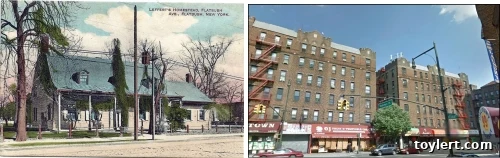
Brooklyn: A Journey Through Time – Unveiling the Past and Present of an Iconic Borough
New York City, a global metropolis renowned for its relentless pace of innovation and constant evolution, often stands in stark contrast to ancient European capitals like Rome. In the Eternal City, one can find a striking juxtaposition: a sleek, modern office building might stand proudly next to a magnificent Renaissance palazzo, which in turn could share a block with the millennia-old ruins of a Roman temple or aqueduct. This intricate layering of civilizations, where each epoch adds to the visible tapestry of history without completely erasing what came before, offers a profound sense of continuity and a palpable connection to the past.
Here in New York, the narrative of urban development typically follows a different, often more assertive, trajectory. Instead of building alongside history, preserving the visual integrity of past eras, we frequently build directly on top of it. The march of progress in the five boroughs has historically meant that older structures, even those with significant architectural or cultural value, are often demolished to make way for new, taller, and more ‘efficient’ developments. This approach, while fostering incredible growth and dynamism, inadvertently diminishes the visible historical strata that define cities like Rome, often leaving behind only fragmented memories and archaeological traces buried beneath new foundations. For many New Yorkers, what’s past is not merely prologue but often long gone, reduced to rubble and forgotten, or at best, meticulously documented before its inevitable disappearance.
However, amidst this ceaseless churn of demolition and construction, there exist remarkable exceptions – invaluable windows into a bygone era that have miraculously endured the tides of change. These rare historical anchors provide a crucial counterbalance to the city’s forward momentum, offering tangible links to the foundational stories of our communities. This time, our exploration takes us to one such extraordinary anomaly within Brooklyn, a borough celebrated for its vibrant diversity and rich historical legacy. It’s a place where the past isn’t just a faint echo but a living, breathing testament to what once was, challenging the pervasive notion that in New York City, the past must always yield to the present.
The Enduring Legacy: Discovering the Lefferts Homestead in Flatbush
Nestled within the vibrant, ever-evolving landscape of Flatbush, Brooklyn, the Lefferts Homestead stands as a monumental exception to New York City’s typical urban development patterns. This impeccably preserved 18th-century Dutch colonial farmhouse offers more than just a glimpse into the distant past; it serves as a tangible, living monument to the agricultural and social history of what was once rural Brooklyn. Unlike countless other historical structures that succumbed to the relentless march of modernization, the Lefferts Homestead has defied the odds, remaining a beacon of heritage amidst the urban sprawl.
Its very existence today is a testament to dedicated preservation efforts and a deep-seated appreciation for the foundational stories that shaped this incredible borough. The Homestead is not just an old house; it is a repository of memories, a classroom without walls, and a vibrant cultural hub that connects contemporary Brooklynites with their colonial predecessors. It compels us to pause and reflect on the roots of our community, reminding us that Brooklyn’s identity is not solely defined by its present-day dynamism but is deeply enriched by its layered past.
A Glimpse into Colonial Flatbush: The Lefferts Family Story
The story of the Lefferts Homestead is inextricably linked to the history of the Lefferts family, one of the most prominent and influential Dutch families in colonial Flatbush. The original farmhouse, built around 1783-1787 by Pieter Lefferts after a previous family home was destroyed during the Revolutionary War’s Battle of Long Island, exemplifies the distinctive Dutch Colonial architectural style prevalent in the region during that era. Characterized by its gambrel roof, dormer windows, and sturdy timber frame construction, the house reflects both practicality and the enduring cultural identity of its Dutch settlers.
Flatbush, in the 18th century, was a predominantly agricultural community, a verdant expanse of farms and fields that supplied New York City with produce. The Lefferts family were significant landowners and played a crucial role in the social and political life of the town. Their homestead was not merely a residence but the nerve center of a working farm, a hub of daily activity where generations lived, worked, and contributed to the burgeoning settlement. Exploring the rooms within the Homestead, one can almost hear the echoes of colonial life: the bustling kitchen preparing meals, the quiet parlors where family decisions were made, and the bedrooms that witnessed births and deaths. It offers a unique sensory immersion into an existence vastly different from our own, yet foundational to Brooklyn’s current identity.
The authenticity of the Homestead is further enhanced by its collection of period furnishings and artifacts, many of which belonged to the Lefferts family themselves. These items – from spinning wheels and cooking utensils to personal letters and family portraits – paint a vivid picture of domestic life, economic realities, and the societal norms of the late 18th and early 19th centuries. They tell a story of resilience, hard work, and the establishment of communities that would eventually grow into one of the world’s most vibrant urban centers. Understanding their lives helps us contextualize the rapid transformation Brooklyn has undergone and appreciate the depth of its roots.
Preserving a Precious Past: The Homestead’s Journey to Modernity
The survival of the Lefferts Homestead is a remarkable tale of foresight and community dedication. By the late 19th century, as Brooklyn rapidly urbanized and Flatbush transitioned from farmland to a bustling residential area, the Homestead faced the very real threat of demolition. Recognizing its irreplaceable historical value, the City of New York acquired the property in 1918, a pivotal decision that saved it from the wrecking ball. The house was then carefully moved from its original site on Flatbush Avenue to its current location within Prospect Park, a magnificent act of preservation that allowed it to escape the encroachment of modern development.
This relocation was not merely a physical move; it was a symbolic gesture, placing the Homestead within a protected natural and recreational setting where it could be appreciated by a wider public. Once situated in Prospect Park, the house underwent extensive restoration to return it to its late 18th-century appearance. This meticulous process involved historical research, architectural analysis, and skilled craftsmanship to ensure that every detail, from the timber framing to the interior finishes, accurately reflected its original design and construction. The goal was to create an authentic educational experience, a true portal to the past.
Today, the Lefferts Homestead is operated by the Prospect Park Alliance in partnership with the City of New York, functioning as a house museum dedicated to interpreting colonial life. The commitment to its preservation is ongoing, requiring continuous maintenance, conservation work, and educational programming. These efforts ensure that the structure itself remains sound and that its stories continue to be told to new generations. It stands as a testament to the power of collective will to safeguard heritage against the relentless forces of urban change.
More Than a Museum: Education, Community, and Reflection at Lefferts Homestead
Beyond its architectural beauty, the Lefferts Homestead serves a vital role as a living museum and an invaluable educational resource for all New Yorkers and visitors. Through interactive exhibits, guided tours, and hands-on workshops, it brings the 18th century to life, allowing children and adults alike to experience what daily life was like on a colonial farm. Visitors can participate in hearth cooking demonstrations, learn traditional crafts, explore the heritage garden, and engage with interpreters who share stories of the Lefferts family, their neighbors, and the broader context of Brooklyn’s early history.
Crucially, the Homestead’s interpretive programs also delve into the complex and often challenging aspects of colonial life, including the history of slavery in New York. The Lefferts family, like many prominent landowners of their time, enslaved African people who worked on their farm. Addressing this difficult but essential part of the past is vital for a comprehensive understanding of American history and the foundations of our society. By confronting these realities, the Homestead fosters a more nuanced and honest dialogue about the diverse experiences that shaped early Brooklyn, ensuring that all voices and stories are acknowledged and remembered.
The Homestead actively engages the community through various events, from seasonal festivals celebrating traditional holidays to workshops on sustainable living inspired by historical practices. It acts as a bridge between the past and present, fostering a sense of connection and pride in Brooklyn’s rich heritage. It’s a place where history isn’t just observed behind velvet ropes, but actively explored and understood, making it relevant and resonant for contemporary audiences. It truly embodies the spirit of public history, transforming a static artifact into a dynamic learning environment.
Brooklyn’s Identity: Weaving Past and Present in a Dynamic Borough
The existence of places like the Lefferts Homestead offers profound insights into Brooklyn’s enduring character. While much of New York City has embraced a future-forward ethos, often at the expense of its past, Brooklyn has managed, in many areas, to strike a delicate balance. Iconic neighborhoods such as Brooklyn Heights, with its Federal-style and Greek Revival townhouses, or the historic brownstone districts of Park Slope and Fort Greene, stand as testament to a borough that values its architectural and cultural heritage. These areas, like the Lefferts Homestead, challenge the narrative that urban progress must always equate to the erasure of what came before.
Brooklyn’s layered identity is not just about isolated historical sites but about the very fabric of its neighborhoods. The transformation of industrial waterfronts in areas like DUMBO and Red Hook into vibrant residential and commercial hubs, while modernizing, often incorporates elements of their past, repurposing old warehouses rather than entirely leveling them. This conscious effort to integrate history into contemporary development, even if imperfectly, contributes to Brooklyn’s unique charm and its strong sense of place. It’s a borough where the ghosts of immigrants, artists, and innovators walk alongside digital entrepreneurs and new families, creating a rich cultural tapestry.
However, the struggle for preservation remains ongoing. Rapid gentrification, escalating property values, and the constant demand for new housing pose continuous threats to historic districts and individual landmarks. The story of the Lefferts Homestead serves as a powerful reminder of what can be saved when communities and institutions unite to protect their shared heritage. It inspires conversations about what aspects of Brooklyn’s past we prioritize, how we interpret them, and how we ensure they continue to resonate with future generations in a borough that never ceases to reinvent itself.
Conclusion: Brooklyn’s Enduring Spirit Through Historical Preservation
In a city often characterized by its relentless pursuit of the new, the Lefferts Homestead stands as a poignant and powerful emblem of Brooklyn’s deep historical roots. It is a vital counter-narrative to the prevailing tendency to build “on top of” the past, demonstrating that careful preservation and thoughtful interpretation can allow history to not only survive but thrive amidst modernity. This remarkable farmhouse offers a unique opportunity to step back in time, to understand the foundational experiences of those who first settled this land, and to appreciate the profound transformations that have shaped Brooklyn into the diverse and dynamic borough it is today.
Understanding the past, as embodied by the Lefferts Homestead, is not merely an academic exercise; it is essential for appreciating the present and intelligently envisioning the future. It reminds us that our urban landscapes are not blank slates but complex palimpsests, inscribed with stories and struggles that continue to influence our lives. As Brooklyn continues its remarkable journey of evolution, the lessons learned from places like the Lefferts Homestead – lessons of resilience, community, and the enduring value of heritage – will remain invaluable. They ensure that even as the borough builds towards tomorrow, it remains firmly connected to the rich, layered history that defines its enduring spirit.