Pulaski Bridge Bike Lane Project Set to Launch: A New Era for NYC Cyclists and Pedestrians
New York City’s Department of Transportation (DOT) is preparing to unveil its highly anticipated plans for a dedicated bike lane on the iconic Pulaski Bridge. This pivotal infrastructure project, aimed at significantly enhancing safety and connectivity for cyclists and pedestrians traversing between Brooklyn and Queens, will be formally presented at a community meeting scheduled for tomorrow evening. This vital public forum will take place at 6 PM at MoMA P.S. 1, located at 22-25 Jackson Avenue in Long Island City, offering residents a crucial opportunity to engage directly with the proposed changes.
For years, the prospect of a dedicated two-way bike lane on the Pulaski Bridge has been a topic of fervent discussion among urban planners, cycling advocates, and daily commuters alike. The current configuration of the bridge, which serves as a critical link over Newtown Creek, has long presented challenges for non-motorized transport. With its narrow sidewalks and lack of protected cycling space, the bridge has been a source of anxiety and risk for those choosing active modes of transportation. The forthcoming project represents a significant step towards rectifying these long-standing issues, aligning with New York City’s broader vision for a more pedestrian and cyclist-friendly urban landscape.
A Long-Awaited Solution: Addressing Critical Safety Needs
The journey to this announcement has seen its share of twists and turns. Previous reports indicated potential delays in the project’s construction, pushing completion timelines further into the future. However, renewed momentum last month brought welcome news: the DOT successfully secured a contractor, paving the way for construction to commence and setting an updated, optimistic completion target of spring 2015. This acceleration reflects the city’s commitment to delivering essential infrastructure improvements that directly impact the quality of life for its residents.
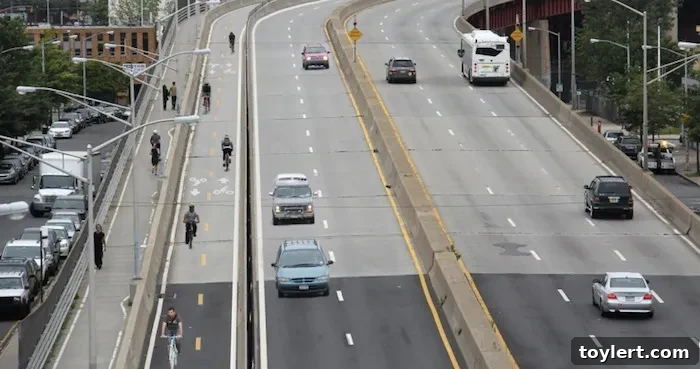
Upon its completion, the Pulaski Bridge bike lane project will introduce a transformative change to the bridge’s layout. The design calls for the creation of a fully separated, two-way bike lane, providing cyclists with a dedicated and secure pathway. Complementing this, a distinct pedestrian lane will also be established, ensuring that walkers can traverse the bridge safely and comfortably, free from conflicts with vehicular traffic or cyclists. This dual-pronged approach underscores the project’s comprehensive commitment to multi-modal safety and efficiency.
Reconfiguring Urban Space: Balancing Modes of Transit
To accommodate these vital new lanes, the DOT’s plan involves a strategic reallocation of existing roadway space. Specifically, the agency will reconfigure the Brooklyn-bound side of the bridge, reducing its three existing traffic lanes to two. This decision, while potentially raising questions about vehicular traffic flow, is a calculated move designed to prioritize safety and promote sustainable transportation alternatives. Such reconfigurations are increasingly common in major urban centers worldwide, reflecting a growing recognition of the need to balance the demands of motor vehicles with the benefits of active transit.
The rationale behind this lane reduction is multifaceted. By dedicating space to cyclists and pedestrians, the city aims to reduce traffic congestion in the long run by encouraging more people to choose cycling or walking for shorter commutes. Furthermore, it directly addresses the critical safety deficit on the bridge, where the absence of separated lanes has historically forced cyclists and pedestrians into dangerous proximity with fast-moving vehicles. This bold step demonstrates a progressive approach to urban planning, recognizing that efficient and equitable transportation systems must cater to all road users.
The Pulaski Bridge: A Lifeline Between Boroughs
Connecting Long Island City, Queens, with Greenpoint, Brooklyn, the Pulaski Bridge serves as a vital artery for hundreds of thousands of commuters, local residents, and businesses. Its strategic location makes it an indispensable link in the city’s transportation network. However, its current design, largely optimized for vehicular traffic, has historically neglected the burgeoning needs of cyclists and pedestrians. For decades, those on two feet or two wheels have navigated narrow, often hazardous pathways, or worse, have been forced to contend with vehicle lanes, making the crossing a less-than-ideal experience.
The introduction of dedicated infrastructure on the Pulaski Bridge is not just about convenience; it’s about public health and environmental sustainability. By providing a safe, direct, and attractive route for active transportation, the project is expected to encourage more residents to cycle and walk, thereby reducing reliance on cars. This shift contributes significantly to improving air quality, lowering carbon emissions, and fostering healthier, more active lifestyles within the community. Moreover, it creates a crucial missing link in the broader New York City bike network, connecting previously disparate routes and enhancing overall urban mobility.
Community Engagement: A Cornerstone of Progress
The community meeting tomorrow is a testament to the DOT’s commitment to transparent governance and collaborative planning. It serves as an essential platform for local residents, businesses, and advocacy groups to understand the project specifics, voice their concerns, and provide invaluable feedback. Such public forums are critical for fostering community buy-in and ensuring that infrastructure projects are not only technically sound but also responsive to the unique needs and aspirations of the neighborhoods they serve.
Attendees can expect a detailed presentation from DOT officials, outlining the project’s design, timeline, and anticipated impacts. This will likely include renderings, traffic studies, and a Q&A session allowing for direct dialogue. The insights gathered from this meeting will play a crucial role in the finalization of plans, ensuring that the Pulaski Bridge bike lane project is implemented in a manner that maximizes its benefits while minimizing potential disruptions to the community. Engaging with the public at this early stage allows for adaptive planning and helps to build a stronger, more connected urban fabric.
Beyond the Bridge: Broader Implications for Urban Mobility
The Pulaski Bridge bike lane project is more than just a local improvement; it’s a microcosm of New York City’s larger commitment to transforming its transportation infrastructure. This initiative aligns with global trends in urban planning that prioritize sustainable, active modes of transport as solutions to congestion, pollution, and public health challenges. Cities around the world are increasingly investing in dedicated bike lanes, pedestrian zones, and public transit expansions to create more livable, resilient, and equitable urban environments.
Successful implementation of projects like the Pulaski Bridge bike lane often leads to a cascade of positive effects. Beyond direct safety benefits, they can stimulate local economies by increasing foot and bike traffic to neighborhood businesses. They can also enhance property values in adjacent areas, as residents seek out communities with convenient access to active transportation options. Furthermore, these projects foster a stronger sense of community, encouraging outdoor activity and facilitating more personal connections between neighborhoods. As New York City continues its evolution, projects of this nature are fundamental to shaping its future as a vibrant, accessible metropolis.
Looking Ahead: A Greener, More Connected NYC
With the Pulaski Bridge bike lane project moving forward, New York City is poised to take another significant step towards its goal of becoming a truly bike-friendly and pedestrian-centric city. The spring 2015 completion estimate offers a tangible timeline for residents to anticipate a safer, more efficient, and more enjoyable crossing between two of the city’s most dynamic boroughs. This project stands as a testament to the power of thoughtful urban planning and community advocacy in creating infrastructure that genuinely serves the public good.
Residents of Long Island City and Greenpoint, as well as all New Yorkers who value active transportation, are strongly encouraged to attend tomorrow’s community meeting. Your participation is vital in shaping the future of urban mobility on the Pulaski Bridge and beyond. This is not merely an engineering project; it is a community investment in health, safety, and a more sustainable future for one of the world’s greatest cities.