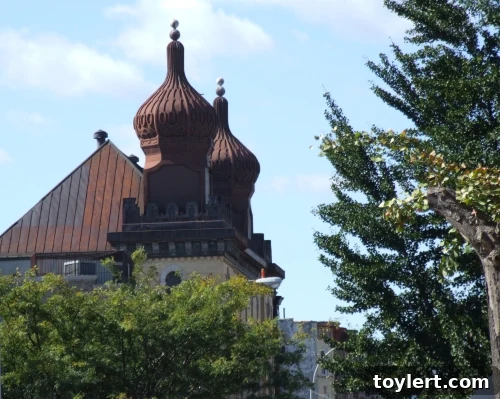
Brooklyn’s Enduring Legacy: Friendship Baptist Church, Formerly Kismet Temple at 92 Herkimer Street
Brooklyn, a borough renowned for its vibrant history and diverse architectural landscape, holds countless stories within its brick and brownstone facades. Each building contributes to a rich narrative, painting a picture of evolution, community, and enduring heritage. Among these significant structures stands a truly remarkable edifice: the Friendship Baptist Church at 92 Herkimer Street. This building is not merely a place of worship; it is a living monument, a testament to Brooklyn’s dynamic past and its continuous transformation. Originally known as the Kismet Temple, its dual identity offers a captivating glimpse into early 20th-century fraternal life and the profound shifts that have shaped urban American communities.
A Journey Through Time: The Story of 92 Herkimer Street
The structure at 92 Herkimer Street in Brooklyn embodies a fascinating architectural and social journey. From its elaborate beginnings as a fraternal lodge to its current vital role as a spiritual and community hub, the building has served diverse purposes, each leaving an indelible mark on its legacy. Exploring this magnificent property reveals not only intricate design details but also layers of historical significance that resonate deeply within the fabric of historic Brooklyn buildings. Its story is one of adaptation, resilience, and the power of communal spaces to evolve with the needs of a changing city.
The Grandeur of Kismet Temple: An Architectural Marvel
The building’s origins lie in the early 1900s, when it was commissioned as the Kismet Temple. This was the Brooklyn headquarters for the Ancient Arabic Order of the Nobles of the Mystic Shrine, more widely known as the Shriners. During this era, fraternal organizations played a significant role in social life, offering camaraderie, mutual support, and a platform for charitable endeavors. To reflect their prestige and unique cultural identity, Shriner temples across the United States were often constructed in grand, exotic architectural styles, and Kismet Temple was a prime example of this trend.
Architecturally, the Kismet Temple was a spectacular specimen of Moorish Revival architecture. This captivating style, inspired by the intricate and ornate designs of Islamic art and architecture, was chosen to evoke a sense of the mysterious and opulent East, aligning with the Shriners’ adopted “Arabic Order” theme. Typical features of Moorish Revival buildings include distinctive horseshoe arches, ornate tilework, intricate geometric patterns, decorative domes (often onion-shaped), and sometimes even minaret-like towers. The building at 92 Herkimer Street would have featured many of these elements, making it an unmistakable and visually striking landmark on the streetscape of Herkimer Street. Its presence would have added an exotic flair to the more traditional Victorian and Beaux-Arts structures prevalent in the surrounding neighborhoods, solidifying its place as a unique piece of Brooklyn architecture.
Intricate Details and Enduring Design
A closer examination of the Kismet Temple’s design, even as it stands today as Friendship Baptist Church, reveals meticulous craftsmanship and a commitment to architectural splendor. The facade would likely have been constructed from high-quality stone or brick, adorned with richly carved details, elaborate cornices, and possibly decorative panels or friezes depicting symbols related to the Shriners’ lore. The windows, essential for illuminating the grand interior spaces, would have been thoughtfully designed to complement the overall Moorish aesthetic, perhaps incorporating stained glass or unique fenestration patterns that capture and diffuse light beautifully.
The entrance, traditionally a focal point for buildings of such prominence, would have been particularly ornate, designed to impress and invite. Inside, the temple would have housed expansive meeting halls, ceremonial rooms, and social spaces, all likely featuring high ceilings, robust construction, and interiors embellished with rich materials, intricate plasterwork, and perhaps exotic motifs. These details underscore the significant investment and artistic vision that went into creating a building fit for a prominent fraternal organization. Even after decades and a change in purpose, the building’s inherent architectural integrity and original grandeur continue to shine through, captivating observers and serving as a testament to its builders’ skill.
From Fraternal Hall to Sacred Space: The Birth of Friendship Baptist Church
As the 20th century progressed, urban demographics shifted, and the role of fraternal organizations in society evolved. Many grand fraternal lodges, including the Kismet Temple, began to seek new occupants. This pivotal transition led to the building’s acquisition by the Friendship Baptist Church, marking a new and significant chapter in its history and for the community it would now serve. The church’s move to 92 Herkimer Street was a monumental event, symbolizing growth, renewed purpose, and a deep commitment to the spiritual and social well-being of the surrounding neighborhood.
The establishment of Friendship Baptist Church within these historic walls transformed a symbol of fraternal brotherhood into a beacon of faith and community outreach. This kind of adaptive reuse is a common and fascinating aspect of urban development, where historic structures are given new life and continue to contribute to their communities in meaningful ways. For decades now, Friendship Baptist Church has anchored itself firmly within the local community, becoming a vibrant center for worship, education, social programs, and cultural gatherings. This transformation underscores the enduring need for communal spaces and the powerful ability of architecture to serve changing human needs.
Friendship Baptist Church: A Pillar of the Bedford-Stuyvesant Community
Today, Friendship Baptist Church stands as far more than just a magnificent piece of architecture; it is a vital social institution, deeply interwoven into the fabric of Bedford-Stuyvesant and the broader Brooklyn landscape. Beyond its weekly worship services, the church actively engages in a wide array of community programs. These initiatives often include educational workshops, youth mentorship programs, food distribution drives, health and wellness seminars, and local advocacy efforts. Such programs are crucial for nurturing community cohesion, providing essential support, and fostering a sense of belonging among its members and neighbors.
The church’s consistent and active presence ensures that the historical significance of the building is matched by its contemporary relevance. It serves as a focal point for celebrations, solace, and collective action, embodying the spirit of community resilience and faith that characterizes so much of Brooklyn. The continued use and meticulous care of the building by Friendship Baptist Church also play a critical role in its ongoing preservation, safeguarding its unique architectural features and its layered history for future generations to appreciate and learn from.
92 Herkimer Street: In the Heart of Historic Bedford-Stuyvesant
The location of this remarkable building at 92 Herkimer Street places it squarely in the heart of one of Brooklyn’s most historically rich and culturally significant neighborhoods: Bedford-Stuyvesant, affectionately known as Bed-Stuy. This area is celebrated for its distinctive tree-lined streets, grand residential architecture – particularly its iconic brownstones – and an eclectic mix of architectural styles that narrate Brooklyn’s evolution from the 19th century to the present day. Herkimer Street itself is a treasure trove of architectural wonders, each structure adding to the neighborhood’s charm and historical depth.
Bed-Stuy holds profound cultural importance, particularly as a historically African American neighborhood that played a pivotal role in the Civil Rights Movement and the development of Black culture, art, and intellectual life in America. Buildings like Friendship Baptist Church are not isolated entities but integral components of this vibrant heritage, standing alongside other historically significant churches, community centers, and residential blocks that form a cohesive and deeply meaningful urban fabric. The presence of Friendship Baptist Church in this neighborhood further solidifies its role as a key community landmark and a keeper of local history, contributing to the rich tapestry that makes exploring Herkimer Street akin to walking through a living, breathing museum of Brooklyn’s storied past.
Preserving Brooklyn’s Unique Architectural and Cultural Heritage
The enduring story of Friendship Baptist Church, and its origins as the Kismet Temple, serves as a powerful reminder of the importance of preserving Brooklyn’s architectural heritage. Buildings of this caliber are far more than mere constructions of brick and mortar; they are tangible links to past eras, reflecting the aspirations, aesthetic values, and social structures of their time. Their preservation ensures that future generations can understand, appreciate, and connect with the multifaceted layers of history that define Brooklyn as a unique and culturally rich borough.
Efforts to maintain, restore, and adaptively reuse such significant structures contribute immensely not only to architectural conservation but also to broader urban regeneration and community pride. When a community actively engages with its historic buildings – whether through worship, educational programs, social events, or simply daily admiration – it reinforces a strong sense of place and collective identity. The continued vibrant use of 92 Herkimer Street as a church is a prime example of successful adaptive reuse, showcasing how historic buildings can remain relevant, functional, and deeply vital in a constantly evolving urban environment. Such preservation efforts are crucial for sustaining the visual character and historical narrative of Brooklyn for generations to come.
In conclusion, the building at 92 Herkimer Street, home to the revered Friendship Baptist Church and originally the Kismet Temple, stands as a magnificent symbol of Brooklyn’s dynamic and layered history. From its exotic architectural origins as a Shriner temple to its current profound role as a spiritual and communal cornerstone, this edifice is a testament to endurance, adaptation, and the timeless beauty of well-crafted architecture. It invites both residents and visitors alike to delve deeper into the stories etched within its historic walls and to appreciate the profound and continuing legacy of historic Brooklyn buildings. This landmark is a must-visit for anyone interested in Brooklyn’s rich architectural and cultural narrative.