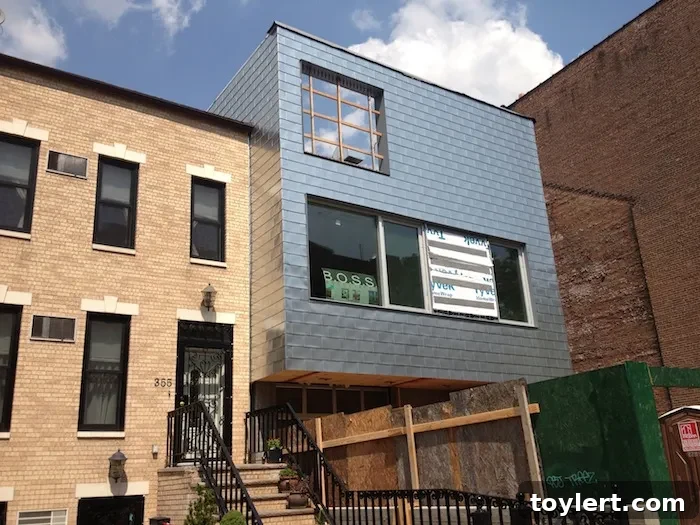
A Glimpse into Tomorrow: Kaleta Doolin’s Modern Masterpiece in Park Slope
In the heart of Brooklyn’s historic Park Slope, a striking architectural statement is taking shape, poised to redefine contemporary living amidst a landscape celebrated for its classic brownstones and tree-lined streets. This isn’t just another building; it’s the visionary home of Kaleta Doolin, heir to the Frito Company fortune, located at the prestigious address of 357 7th Street. With its distinctive modern, silvery facade, this residence stands as a bold testament to innovative design and personal artistic passion, drawing considerable attention from architectural enthusiasts and local residents alike. We first caught wind of this ambitious project when its preliminary renderings emerged back in October, and it is gratifying to observe how closely the finished structure mirrors that initial, captivating vision, a true testament to meticulous planning and execution. This architectural endeavor promises to be a significant addition to Park Slope’s evolving urban tapestry, seamlessly blending modern aesthetics with the enduring charm of one of Brooklyn’s most coveted neighborhoods.
The Architectural Vision: Blending Modernity with Park Slope’s Heritage
The decision to erect such a distinctly modern structure within Park Slope, a neighborhood renowned for its Victorian-era architecture, historic brownstones, and deep-rooted historical charm, is a brave and commendable one. It speaks to a forward-thinking approach that seeks to enrich, rather than detract from, the existing urban fabric. This three-story, single-family home immediately evokes a sense of ’70s modernism, characterized by its clean lines, minimalist aesthetic, and the thoughtful use of materials that project both sophistication and durability. This architectural language, while distinct from its immediate surroundings, engages in a respectful dialogue with the neighborhood’s scale and rhythm, ensuring it complements rather than overshadows its historic neighbors. The “silvery” aspect, likely achieved through high-quality metallic panels, zinc, or polished concrete, interacts dynamically with natural light, creating a constantly evolving facade that shifts with the time of day and the changing seasons, a captivating visual spectacle. Such a design approach demonstrates a profound understanding of how to introduce contemporary elements without compromising the historical integrity of a revered district.
Lynch/Eisinger/Design: Crafting a Sanctuary for Creativity
The creative force behind this exceptional project is Lynch/Eisinger/Design, an architectural firm celebrated for its innovative and client-centric approach to design. Their expertise shines through in every facet of the 357 7th Street residence, where form meets function in a harmonious blend. The firm’s website provides fascinating insights into the meticulously planned interior spaces, revealing that this is more than just a home; it is a comprehensive sanctuary designed to foster artistic endeavor and intellectual pursuit. The lower level is dedicated to both a sculpture studio and a drawing studio, alongside an extensive archive, suggesting a patron deeply involved in the arts or with a substantial personal collection requiring specialized care. The upper floors, in contrast, are reserved for the luxurious and private residential spaces, ensuring a clear delineation between work and relaxation, yet seamlessly integrated within the overall design. Lynch/Eisinger/Design’s ability to conceptualize and execute such a multi-faceted dwelling in a challenging urban environment truly sets this project apart.
An Artist’s Haven: Studios and Archive at the Heart of the Home
The inclusion of dedicated artistic studios within a private residence speaks volumes about the owner’s passions and lifestyle. The **sculpture studio** on the lower level is envisioned as a robust space, likely featuring high ceilings to accommodate large-scale works, industrial-grade flooring capable of withstanding heavy equipment and materials, and superior ventilation systems essential for working with various media. Abundant natural light, perhaps from strategically placed skylights or large windows, would be crucial for precise artistic work, illuminating the textures and forms of sculptures. This dedicated area ensures that creative exploration is not just an occasional hobby but a central part of daily life. Adjacent to this, the **drawing studio** would demand a different ambiance: a quieter, more contemplative space with controlled lighting, ample flat surfaces for drafting, and specialized storage for an array of drawing tools and paper. These studios are not mere afterthoughts but central to the home’s identity, reflecting a deep commitment to creative expression and providing an inspiring environment for artistic endeavors.
Furthermore, the presence of an **archive** on the lower level is particularly intriguing. This space would require specific environmental controls, including precise temperature and humidity regulation, to preserve valuable artworks, historical documents, or significant personal artifacts. It suggests a collection of considerable personal or artistic value, demanding a secure, organized, and climate-controlled environment that safeguards its contents for posterity. Such an archive transforms the home into a living museum, a repository of personal history and cultural significance, offering a unique opportunity for both study and contemplation. The intelligent zoning of these spaces ensures that while the artistic and archival endeavors are well-supported, the residential areas above remain tranquil and private, offering a serene escape after a day of creative work or intellectual exploration. This thoughtful separation and integration exemplify Lynch/Eisinger/Design’s prowess in creating multi-functional, bespoke living environments that cater to the unique needs of their discerning clients.
Living Above the Art: The Residential Sanctuary
Ascending to the upper floors of 357 7th Street, one transitions from the vibrant world of creation to a realm of exquisite comfort and privacy. The residential spaces are designed to be a luxurious retreat, embodying the principles of modern design with an emphasis on open-plan living, abundant natural light, and seamless indoor-outdoor transitions. Large windows and perhaps private terraces or balconies would offer sweeping views of Park Slope and the surrounding cityscape, connecting the residents with their urban surroundings while maintaining an elevated sense of solitude. The ’70s modernism aesthetic likely translates into uncluttered interiors, premium finishes, and integrated smart home technology, providing both elegance and convenience. Imagine expansive living areas perfect for entertaining, a gourmet kitchen equipped with state-of-the-art appliances, and serene bedrooms that offer ultimate respite. The design would prioritize comfort and functionality without compromising on style, creating an environment that is both visually stunning and eminently livable. Each detail, from the choice of lighting fixtures to the texture of the flooring, would be carefully curated to enhance the modern, refined atmosphere, reflecting Kaleta Doolin’s discerning taste and commitment to unparalleled quality in every aspect of her home.
The “Silvery” Persona: Materials and Environmental Integration
The description of the home as “silvery” hints at a deliberate material palette chosen for its aesthetic appeal, durability, and contemporary character. Materials like zinc, brushed aluminum, stainless steel, or even highly polished concrete panels could contribute to this distinctive facade, creating a sleek and sophisticated exterior. These modern materials are not only visually striking but also offer significant benefits, including exceptional longevity, minimal maintenance requirements, and often, enhanced energy efficiency through their reflective properties. The choice of such modern materials creates a captivating contrast with the warm, earthy tones of Park Slope’s traditional brownstones, yet through thoughtful design, this contrast can become a harmonious dialogue, adding a layer of contemporary elegance to the streetscape. The architect likely employed strategies to ensure the new structure sits comfortably within its context, perhaps by maintaining similar building heights, setbacks, or a rhythm of fenestration that subtly echoes the neighborhood’s established patterns. Furthermore, modern architecture often incorporates sustainable features, and it is highly plausible that this residence includes energy-efficient windows, advanced insulation, and potentially even rooftop solar panels or a green roof, aligning the home with contemporary ecological concerns while providing long-term benefits to its inhabitants.
A Landmark of Modernity in a Historic Locale
Kaleta Doolin’s residence at 357 7th Street is more than just a private home; it is a significant addition to Brooklyn’s architectural landscape. In a neighborhood where historical preservation often dictates design choices, this project stands out as a bold embrace of modernity, sparking important conversations about urban development and architectural evolution. It prompts a fascinating discussion about the integration of new forms into old contexts and the definition of luxury living in the 21st century. As a three-story, single-family home, it retains a sense of residential scale, yet its distinctive design elevates it to the status of a local landmark, capturing the imagination of passersby. The successful realization of the original rendering speaks to a confident vision and a skilled execution, proving that contemporary design can thrive and even enhance historically rich environments. This home is a beacon for those who appreciate innovative design and serves as an inspiring example of how personal passion, when paired with architectural brilliance, can create something truly extraordinary. It challenges perceptions and broadens the visual vocabulary of Park Slope, inviting residents and visitors alike to consider the possibilities when tradition meets innovation in a thoughtful and respectful manner.
The Evolution of Urban Living: Conclusion
The construction of Kaleta Doolin’s modern, silvery home at 357 7th Street in Park Slope represents a pivotal moment in contemporary urban architecture. It masterfully intertwines the private aspirations of an individual—an heir with a clear artistic vision—with the public face of a historic neighborhood. Lynch/Eisinger/Design has not merely constructed a building; they have crafted a bespoke environment that seamlessly integrates high-level artistic studios and an extensive archive with luxurious residential quarters. This project exemplifies how modern design, characterized by a ’70s modernism feel, can be thoughtfully introduced into a venerable setting, demonstrating respect for context while forging a bold new identity. The close resemblance of the finished structure to its initial renderings underscores the precision and commitment poured into every stage of its development. As this remarkable residence takes its place among Park Slope’s diverse architectural tapestry, it stands as a shining example of forward-thinking design, offering a blueprint for future developments that seek to balance innovation with historical reverence, creating dynamic and inspiring living spaces for generations to come. It is, unequivocally, a testament to the enduring power of architecture to shape lives and enrich communities, proving that the future of urban living can be both modern and deeply rooted in history.