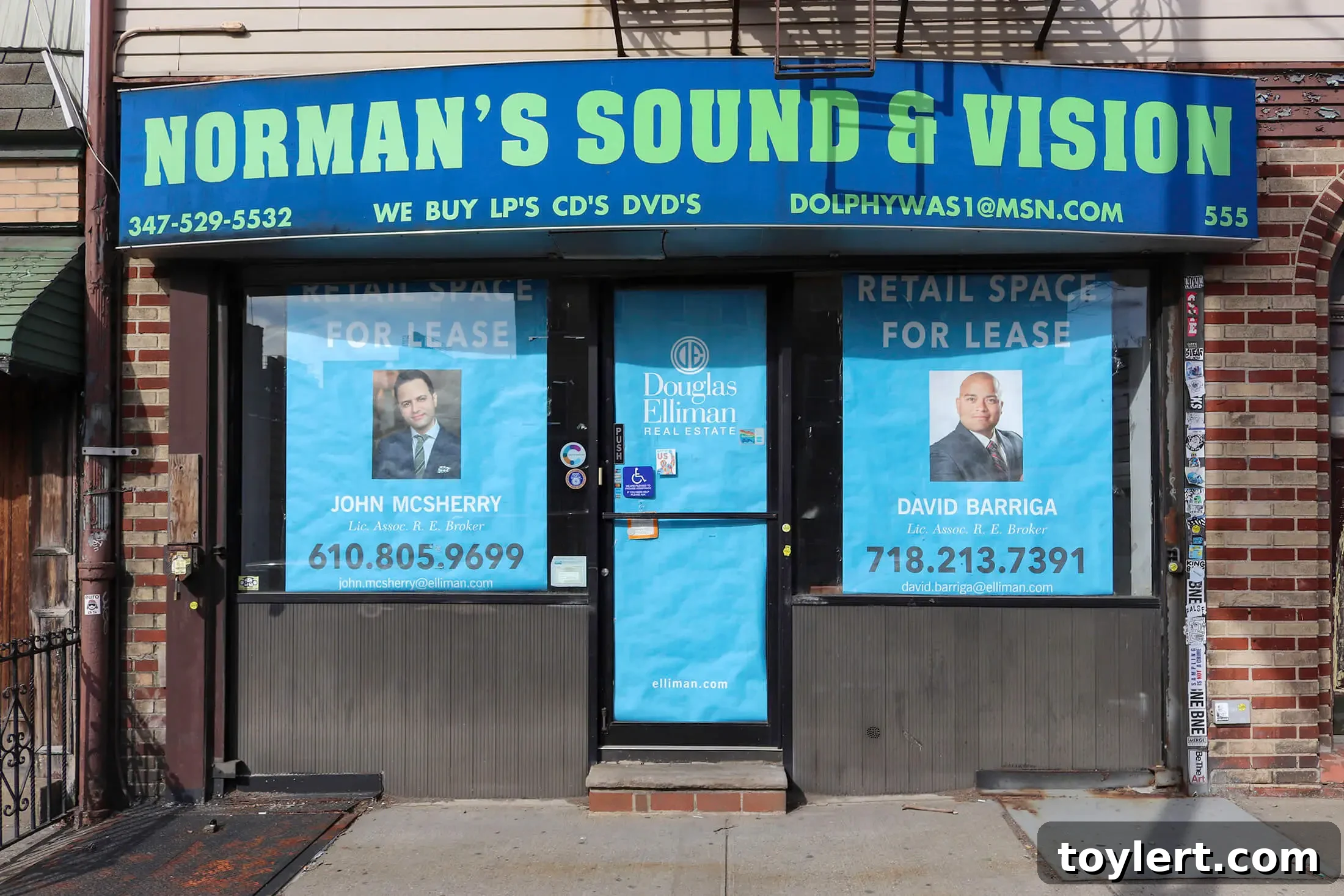
Norman’s Sound & Vision Shutters: A Requiem for a Williamsburg Vinyl Institution Amidst a Booming Market
In a surprising turn of events for Brooklyn’s vibrant music scene, Norman’s Sound & Vision, a long-standing haven for vinyl enthusiasts, has quietly closed its doors in Williamsburg. This closure marks the end of an era for many seasoned record collectors and casual listeners alike, posing a stark contrast to the widely reported resurgence of vinyl sales and the proliferation of new record shops across the borough. As the awning remains, a silent testament to years of musical curation, the cleared-out interior and active online listings for a new tenant confirm the finality of this beloved institution’s departure from Metropolitan Avenue.
The End of a Musical Journey on Metropolitan Avenue
Late last year, the familiar storefront of Norman’s Sound & Vision at 555 Metropolitan Avenue ceased operations, leaving a palpable void in Williamsburg’s eclectic retail landscape. While the physical sign bearing its name still hangs, a ghost of its former self, the windows are adorned with ‘for lease’ signs and online real estate platforms, such as Elliman.com, clearly indicate the landlord’s active search for a new commercial occupant. The sight of the empty shelves and the absence of the store’s characteristic hum of music and flipping records serve as a somber reminder that even in a seemingly thriving market for physical music, independent businesses face insurmountable challenges.
Norman’s Sound & Vision was more than just a place to buy records; it was a cultural touchstone, a gathering place where generations of music lovers could connect with artists, discover new sounds, and rediscover old favorites. Its closure isn’t merely the disappearance of a retail space but the loss of a unique communal experience, a sentiment echoed by many who frequented its aisles over the decades. The reasons behind its closure are multifaceted, reflecting broader trends impacting small businesses in rapidly gentrifying urban environments like Williamsburg.
From Manhattan’s Cooper Square to Williamsburg: A Legacy of Digging
The story of Norman’s Sound & Vision began long before its Williamsburg chapter. The original incarnation opened its doors in 1994 at 67 Cooper Square in Manhattan. For nearly two decades, this downtown location cultivated a reputation as a quintessential destination for “crate diggers” – those passionate collectors who reveled in the hunt for rare, obscure, and beloved records and compact discs buried within vast, eclectic inventories. It was a true old-school record shop, where the thrill of discovery was as much a part of the experience as the purchase itself. Patrons would spend hours sifting through meticulously organized (and sometimes delightfully disorganized) stacks, unearthing forgotten gems and expanding their musical horizons.
However, the burgeoning success and cultural significance of the Cooper Square location were eventually overshadowed by the escalating economic pressures of New York City. A significant rent hike, a recurring narrative for many long-standing independent businesses in the city, forced Norman’s Sound & Vision to seek a new home. As reported by The Local East Village in 2012, the owner cited exorbitant rental costs as the primary reason for their displacement from the East Village neighborhood. This unfortunate but familiar scenario highlights the precarious position of small businesses in a fiercely competitive and ever-changing real estate market, often struggling to compete with larger chains or more lucrative ventures.
The Williamsburg Incarnation: A New Chapter and Its Unexpected Close
In August 2012, Norman’s Sound & Vision embarked on its second chapter, reopening in Williamsburg, Brooklyn, specifically at 555 Metropolitan Avenue. This move represented an adaptation, a hopeful new beginning in a neighborhood that was rapidly becoming a cultural epicenter, particularly for young, artistically inclined residents who were increasingly embracing physical media. The timing seemed auspicious; the vinyl revival, though still nascent, was beginning to gather momentum, and Williamsburg itself was ripe with independent boutiques, cafes, and creative spaces that fostered a sense of community and appreciation for curated experiences.
The store quickly re-established itself within the Brooklyn music community, drawing both its loyal Manhattan clientele and new Brooklynites eager to explore its extensive collection. Yet, even within this seemingly supportive environment and during a period of sustained growth for the vinyl market, Norman’s ultimately succumbed to pressures that proved too great. The precise reasons for the recent closure have not been publicly detailed by the owners, but observers can surmise that a combination of factors, including potentially another rent increase, evolving consumer habits, or the sheer operational challenges of running a brick-and-mortar independent record store in a high-demand area, contributed to its final demise.
The Paradox of the Vinyl Revival and Independent Store Survival
The closure of Norman’s Sound & Vision presents a striking paradox: it occurs amid what many observers are calling a golden age for vinyl. Reports consistently show year-over-year increases in vinyl record sales, a trend that has captivated both music industry analysts and casual listeners. This resurgence is fueled by a nostalgic appreciation for the tangible experience of music, the desire for high-fidelity audio, and the cultural significance of owning physical albums with elaborate artwork and liner notes. New record stores have indeed popped up across Brooklyn and beyond, catering to this renewed demand and demonstrating the market’s vitality.
So, why would a respected establishment like Norman’s close its doors when the overall market appears so robust? The answer often lies in the nuanced differences between general market trends and the specific realities of independent retail. While overall vinyl sales are up, profit margins on many new releases can be tight, and the fierce competition from online retailers like Amazon or even larger chains can make it difficult for smaller shops to thrive. Furthermore, the rising cost of living and operating a business in prime urban areas like Williamsburg disproportionately affects independent stores, which often cannot absorb massive rent hikes or compete with corporate entities for prime real estate.
The “boom” for record stores isn’t uniform; it often benefits those with strong online presences, diverse revenue streams (like events or coffee shops within the store), or those operating in areas where commercial rents are more manageable. Norman’s Sound & Vision, with its traditional focus on discovery and digging through physical inventory, may have found it increasingly difficult to sustain its model in a rapidly changing retail landscape where digital convenience and economic pressures continually reshape consumer behavior and business viability.
More Than Just Records: The Cultural Significance of Independent Music Stores
Independent record stores like Norman’s Sound & Vision are far more than mere retail outlets; they are vital cultural institutions. They serve as community hubs, places where enthusiasts can gather, share recommendations, attend intimate performances, and forge connections based on a shared love of music. These shops are often curated by passionate owners and staff who possess deep musical knowledge, offering a level of expertise and personal recommendation that algorithm-driven streaming services simply cannot replicate. The act of browsing through records, touching the sleeves, reading the notes, and engaging in conversations about music fosters a tangible, immersive experience that transcends a purely transactional exchange.
For decades, Norman’s played a crucial role in shaping the musical tastes of its patrons, introducing them to new genres, artists, and sounds they might never have encountered otherwise. Such stores contribute significantly to the unique character and appeal of neighborhoods like Williamsburg, drawing visitors and fostering a sense of local identity. Their gradual disappearance, whether due to economic pressures or shifting cultural paradigms, represents a loss not just for the music industry but for the broader cultural fabric of a city that thrives on independent expression and community interaction. The closure is a reminder of the fragility of these cherished spaces and the ongoing need to support local businesses.
What Lies Ahead for 555 Metropolitan Avenue and Williamsburg Retail?
With Norman’s Sound & Vision now vacant, the future of 555 Metropolitan Avenue remains uncertain. The space, located in a prime Williamsburg corridor, will undoubtedly attract new tenants. However, the question remains whether its next occupant will contribute to the rich, independent spirit that defined Norman’s and many other beloved local businesses. Williamsburg has experienced profound transformation over the last two decades, evolving from an industrial hub into a global destination for fashion, dining, and culture. This evolution, while bringing new vibrancy and economic activity, has also led to concerns about gentrification and the displacement of long-standing local establishments by larger chains or more homogeneous businesses.
The vacancy at 555 Metropolitan Avenue is a microcosm of a larger trend in urban retail. As commercial rents continue their upward trajectory, particularly in desirable neighborhoods, the unique, independent businesses that give areas their character often struggle to survive. The hope is that whatever replaces Norman’s will somehow honor the legacy of community and curated experience that the record store offered. Yet, the reality is that the next tenant could be anything from another boutique clothing store to a corporate coffee shop, further shifting the character of a block that once resonated with the sounds of vinyl and passionate musical exchange. The community will watch with keen interest to see what the next chapter holds for this significant address.