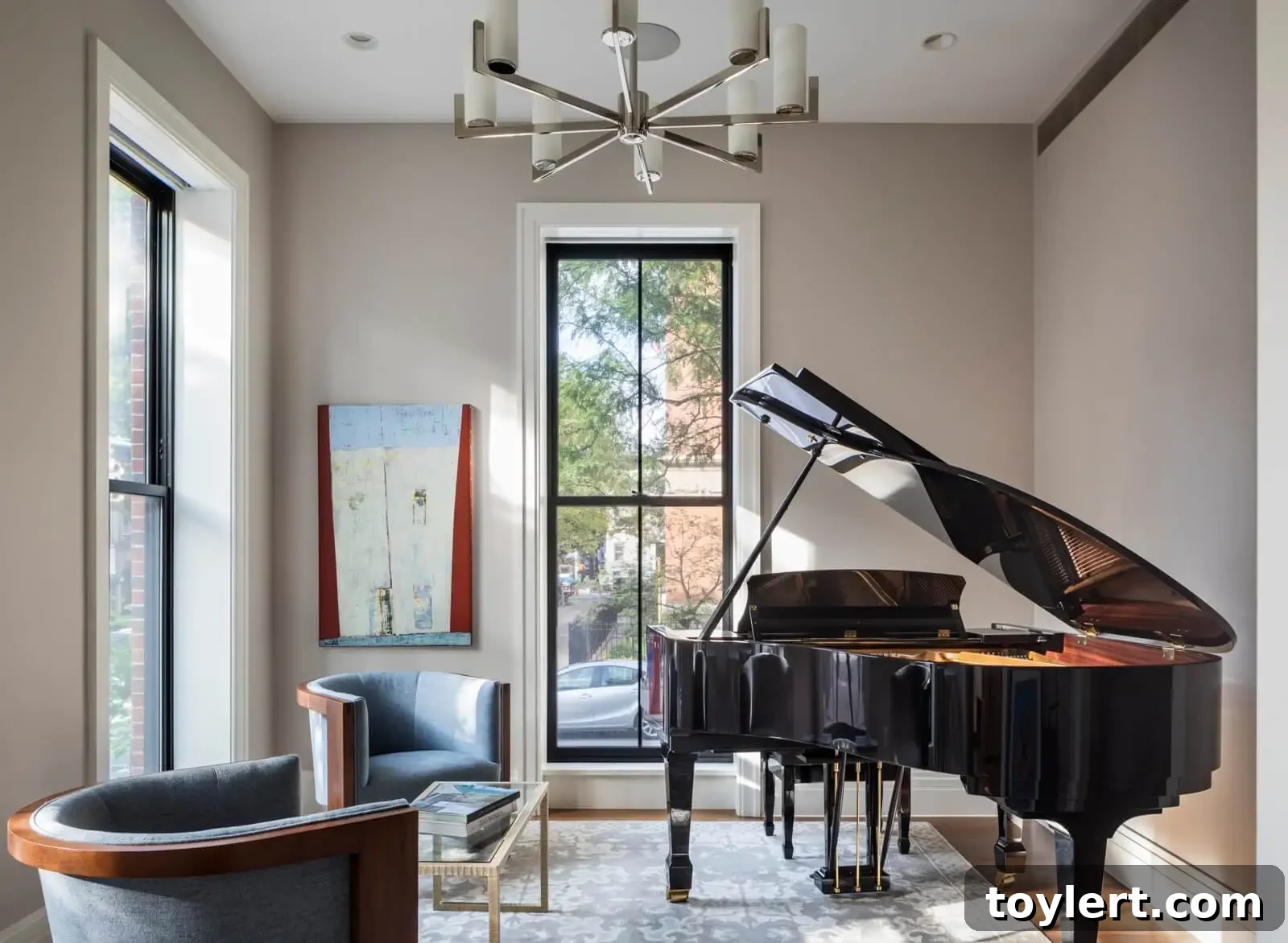
A New Standard for Urban Living: Crafting a “Row House That Doesn’t Feel Like One” in Cobble Hill
The quest for a perfect urban dwelling often involves a unique set of challenges, particularly in historic districts. Such was the case for a client who approached Brendan Coburn of Dumbo-based CWB Architects with a singular vision: “I want a row house that doesn’t feel like a row house.” This seemingly paradoxical request became the blueprint for CWB Architects, a firm founded in 1995 and now recognized as one of Brooklyn’s foremost authorities in high-end townhouse renovation and custom construction. The project involved the ground-up construction of a magnificent 5,600-square-foot, five-story residence in the prestigious Cobble Hill Historic District, a testament to the firm’s ability to blend innovative design with stringent historic preservation requirements.
The client’s desire spoke volumes about the common limitations and perceptions associated with traditional row houses. Often, these homes are characterized by their inherent narrowness, which can lead to dark interiors and a series of long, straight flights of stairs running along a party wall – an architectural feature that, while functional, can contribute to a sense of confinement rather than openness. As proponents of modern design, the homeowners yearned for an abode that transcended these typical constraints. Their vision was clear: an exterior that respected and subtly “tweaked” traditional details, insofar as local regulations permitted, coupled with a thoroughly contemporary and “of-the-moment” interior plan.
The Evolution of the Urban Row House: Beyond Traditional Constraints
For centuries, the row house has been a staple of urban architecture, offering efficient use of space in densely populated areas. However, their defining characteristics – shared walls, deep footprints, and often limited access to natural light – have also presented design dilemmas. Homeowners today, particularly in sought-after neighborhoods like Cobble Hill, seek more than just square footage; they desire expansive, light-filled spaces that foster a connection to the outdoors, even within a bustling city environment. The challenge lies in transforming the inherent structure of a row house into a residence that embodies openness, modernity, and a seamless flow, all while adhering to the unique historical context of its location.
CWB Architects, with their extensive experience in navigating these complex architectural landscapes, understands this evolving demand. Their portfolio is replete with projects that demonstrate a profound respect for Brooklyn’s rich architectural heritage, alongside a commitment to contemporary living. For this particular Cobble Hill project, the firm was tasked with creating a residence that would not only meet the client’s demanding aesthetic and functional requirements but also seamlessly integrate into the fabric of a protected historic district. This meant a meticulous design process, where every exterior detail, from brickwork to window fenestration, would require approval from the Landmarks Preservation Commission (LPC), ensuring the new build harmonized with its venerable neighbors.
CWB Architects: Bridging History and Modernity in Brooklyn Design
Since its inception in 1995, CWB Architects has grown from a two-person operation into a leading architectural firm renowned for its sophisticated approach to urban residential design. Specializing in high-end projects, particularly in Brooklyn’s historic neighborhoods, the firm has cultivated a deep expertise in transforming existing townhouses and crafting new constructions that honor their surroundings while offering all the conveniences and luxuries of modern life. Brendan Coburn and his team are adept at interpreting client visions, no matter how ambitious, and translating them into tangible, breathtaking realities. Their work is characterized by an unwavering commitment to quality, an inventive use of space, and an elegant aesthetic that appeals to discerning homeowners.
The Cobble Hill project represents the fifth in a series of significant ground-up constructions undertaken by CWB Architects within the historic district. Each project builds upon the firm’s cumulative knowledge of local regulations, material sourcing, and construction techniques specific to this unique urban environment. This track record instills confidence in clients seeking to embark on complex projects, knowing that CWB Architects possesses the foresight and skill to anticipate potential hurdles and deliver exceptional results. Their ability to secure LPC approval for contemporary interpretations within a traditional framework is a testament to their thoughtful and respectful design philosophy.
Designing for Light and Openness: The Modern Row House Interior
The client’s desire for a home that didn’t “feel like a row house” primarily centered on the interior experience. To combat the typical darkness and linearity, CWB Architects likely employed a series of innovative design strategies. One of the most effective approaches involves reimagining the traditional floor plan. Instead of rigidly defined rooms, an open-concept layout on key floors allows for natural light to penetrate deeper into the home, creating a sense of expansiveness. This might involve wider openings between living spaces, strategic placement of interior windows, or even the creation of multi-story voids that draw light from upper levels down to the lower floors.
Vertical circulation, traditionally a dark and narrow element, becomes a focal point in modern row house design. Instead of straight party-wall staircases, CWB Architects might introduce a grand, sculptural staircase positioned centrally or near a light source, turning it into a dramatic design feature rather than a mere means of transit. Skylights, especially those integrated into a central atrium or stairwell, play a crucial role in flooding the interior with overhead light, transforming what could be dim inner spaces into vibrant, naturally illuminated zones. The use of light-colored materials, reflective surfaces, and minimalist finishes further enhances the feeling of brightness and spaciousness, creating a serene and sophisticated urban sanctuary.
Harmonizing Traditional Exteriors with Contemporary Interiors
One of the most delicate balances in designing a new build within a historic district is the external aesthetic. The client’s preference for “traditional details tweaked on the exterior” perfectly aligns with CWB Architects’ philosophy. This involves a careful study of the surrounding architecture to ensure the new facade complements its neighbors in terms of scale, proportion, material palette, and architectural language. Subtle contemporary interpretations might include refined detailing, bespoke window designs, or a contemporary twist on traditional ironwork, all executed with impeccable craftsmanship and high-quality, durable materials that stand the test of time.
The internal transformation, however, is where the “of-the-moment interior plan” truly comes to life. Once past the meticulously crafted traditional facade, residents and guests are greeted by interiors that speak a decidedly modern language. This juxtaposition creates a delightful surprise and underscores the home’s unique character. Expect sleek, custom millwork, state-of-the-art kitchen and bathroom fixtures, integrated smart home technology, and carefully curated finishes that exude luxury and sophistication. The design prioritizes comfort, functionality, and aesthetic purity, ensuring that every square foot of the 5,600-square-foot, five-story structure is optimized for modern living. From spacious private quarters to elegant entertaining areas and potentially a rooftop terrace offering panoramic city views, the home is a masterclass in bespoke urban luxury.
The Allure of Cobble Hill: A Perfect Setting for Bespoke Design
Cobble Hill, with its tree-lined streets, historic brownstones, and vibrant community, remains one of Brooklyn’s most coveted neighborhoods. Its architectural integrity, largely preserved by its historic district status, offers a charming backdrop for residences that seamlessly blend old-world elegance with new-world amenities. Clients are drawn to Cobble Hill not just for its beauty but also for its proximity to diverse culinary experiences, boutique shops, and excellent schools, creating an ideal environment for families and individuals seeking a refined urban lifestyle. Building a new home in such a locale requires an architect who deeply understands the context, the regulations, and the aspirations of homeowners who choose to invest in this unique setting.
CWB Architects’ repeated success in Cobble Hill underscores their capability in delivering projects that satisfy both the exacting standards of the Landmarks Preservation Commission and the sophisticated tastes of their clients. This 5,600-square-foot, five-story structure stands as a testament to their skill in creating expansive, light-filled, and utterly modern homes that paradoxically feel perfectly at home within a historic streetscape. It represents the pinnacle of luxury townhouse design, where traditional constraints are transformed into opportunities for architectural innovation, resulting in a residence that truly embodies the client’s vision of a “row house that doesn’t feel like a row house.”

Explore The Insider
Find your Brooklyn design inspiration
View Project Portfolio