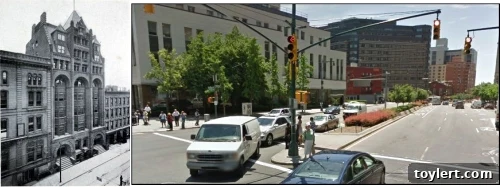
Brooklyn Through the Ages: A Tale of Political Power and Urban Transformation
A fascinating glimpse into Brooklyn’s vibrant past, revealing how its political landscape has shaped the borough we know today, and how a monumental decision in 1888 forged a lasting legacy.
For much of the latter half of the 19th century, Brooklyn stood firmly under the Republican Party’s powerful sway. This was an era where political identity was not just about policy, but about prominent social institutions. Republican clubs, such as the grand Union League and the influential Lincoln Clubs, were more than mere meeting places; they were imposing edifices, architectural declarations of dominance that reminded everyone in Kings County precisely who held the reins of power. These clubs symbolized the established order, a testament to the party’s deep roots and widespread influence across the rapidly developing borough. Their structures were often ornate, strategically located, and served as hubs for social, business, and political networking, fostering a sense of community and shared purpose among the Republican elite.
Against this backdrop of Republican supremacy, the Democratic Party in Brooklyn faced a significant challenge. To truly contend for power, they needed to make their own bold statement, to establish a physical presence that could rival the grandeur and authority of their political rivals. This ambition culminated in a pivotal decision in 1888. The Kings County Democrats, demonstrating foresight and determination, voted to construct a permanent headquarters for the party. This was not merely about acquiring office space; it was about building a symbol, a beacon for their cause, and a testament to their growing aspirations. The decision marked a turning point, signaling a clear intent to move beyond scattered meeting rooms and establish a unified, visible base for their operations.
The Birth of a Political Landmark: The Thomas Jefferson Association Building
To finance this ambitious undertaking, the Democrats established the Thomas Jefferson Association. This entity was crucial for pooling resources and managing the development of what they envisioned as a majestic headquarters. The choice of name itself—honoring Thomas Jefferson, a founding father and champion of democratic ideals—underscored their commitment to the party’s core principles and sought to evoke a sense of historical legitimacy and intellectual gravitas. This strategic naming not only helped rally support but also positioned the new headquarters as a continuation of a long-standing American political tradition, aiming to connect contemporary Brooklyn Democrats with the revolutionary spirit of the nation’s early days.
The selection of the building’s site was perhaps even more significant than its financing mechanism. The Association secured a prime lot directly across from Brooklyn City Hall. This location was far from arbitrary; it was a deliberate and calculated move designed to maximize visibility and project an image of authority. For too long, the Democrats had felt somewhat marginalized, operating without a central, imposing home that commanded attention. By situating their new headquarters opposite the very seat of municipal power, they were sending an unmistakable message: the Kings County Democrats were here to stay, they were a force to be reckoned with, and they intended to be at the heart of Brooklyn’s political life. This strategic placement ensured that their building would be seen daily by citizens, officials, and, crucially, by their Republican adversaries, cementing their presence in the civic consciousness of the borough.
The year 1888 itself was a dynamic period in American history, characterized by rapid industrialization, burgeoning cities, and intense political rivalries. Brooklyn, then an independent city before its consolidation into Greater New York, was experiencing explosive growth. Its population was swelling, driven by immigration and economic opportunity. This demographic shift created a fertile ground for political mobilization, and both parties vied fiercely for the loyalty of new residents. The Democrats’ move to establish a grand headquarters was a direct response to this evolving environment, an attempt to solidify their base and expand their influence in a borough undergoing profound transformation. They recognized that a strong physical presence could translate into political capital, attracting new members and projecting an image of strength and stability.
Brooklyn’s Political Evolution: From Republican Stronghold to Democratic Powerhouse
The late 19th century represented a fascinating chapter in Brooklyn’s political saga. While the Republican Party had indeed dominated for a considerable time, their grip was beginning to loosen as the borough diversified. The Union League and Lincoln Clubs, with their exclusive memberships and grand Victorian architecture, embodied the era’s upper-class, business-oriented Republicanism. They were often bastions of wealth and influence, shaping policy and public opinion through their networks. The Democratic Party, on the other hand, increasingly drew strength from the growing working-class population and immigrant communities who were flocking to Brooklyn seeking opportunities. These emerging demographics often felt unrepresented by the established Republican order, finding a more welcoming home in the burgeoning Democratic machine.
The construction of the Thomas Jefferson Association Building was not just about bricks and mortar; it was a physical manifestation of this shifting political tide. It symbolized the Democratic Party’s rising power and their commitment to building a broad-based coalition. The very act of investing in a permanent, prominent headquarters conveyed stability and confidence, qualities essential for attracting and retaining voters. The building would serve as a central hub for party organizing, campaigning, and community outreach, providing a sense of cohesion and identity that had previously been lacking. It was designed to be a place where strategies were forged, candidates were nominated, and the party’s message was disseminated, a true engine of democratic action in Kings County.
The architectural style of such a building, though not explicitly detailed in the snippet, would likely have reflected the popular trends of the era, possibly incorporating elements of Romanesque Revival or Beaux-Arts, styles known for their solidity, grandeur, and classical allusions. These styles were often employed for public and institutional buildings, conveying a sense of permanence, dignity, and civic pride. A building of this stature, strategically placed across from City Hall, would undoubtedly have featured an imposing facade, grand entrances, and spacious interiors suitable for large gatherings and administrative functions, making a powerful visual statement about the party’s strength and aspirations.
Brooklyn: Then and Now – A Legacy of Change
The story of the Thomas Jefferson Association Building is intrinsically linked to the larger narrative of Brooklyn’s evolution from an independent city to a vital borough of New York City, and its subsequent transformation into a global cultural hub. In the late 19th century, Brooklyn was a bustling industrial center with distinct neighborhoods, a rapidly expanding transportation network, and a burgeoning civic identity. Its politics were fiercely local, reflecting the diverse interests of its many communities. The establishment of grand party headquarters like the one built by the Kings County Democrats underscores the intense political engagement and the importance of organized party structures in shaping the urban landscape and directing civic life.
Fast forward to today, and Brooklyn presents a vastly different picture, yet one where echoes of its past political struggles and architectural ambitions can still be found. Downtown Brooklyn, the very precinct where the Thomas Jefferson Association Building made its stand, has undergone a dramatic resurgence. Once a commercial and governmental heart, it is now a thriving mixed-use district characterized by gleaming skyscrapers, residential towers, educational institutions, and a vibrant arts scene. The political landscape, too, has transformed. Brooklyn is now overwhelmingly Democratic, a testament to the long-term demographic shifts and the enduring legacy of parties like the Kings County Democrats who strategically built their foundations over a century ago.
The “then and now” comparison reveals a continuous cycle of change and adaptation. The bold move by Brooklyn’s Democrats in 1888 to build their own headquarters was more than a mere construction project; it was an act of political assertion that helped redefine the borough’s power dynamics. It symbolized a shift from an era dominated by one party to a more contested and eventually, a more diverse political environment. The physical structure, whether it still stands in its original form or has been redeveloped, represents a tangible link to that pivotal moment in Brooklyn’s history. It reminds us how civic ambition, strategic planning, and the desire for representation can leave an indelible mark on the urban fabric and the political soul of a community. The enduring spirit of Brooklyn, a place of constant reinvention, owes much to the visionaries who, like the Thomas Jefferson Association, dared to build a future for their ideals.