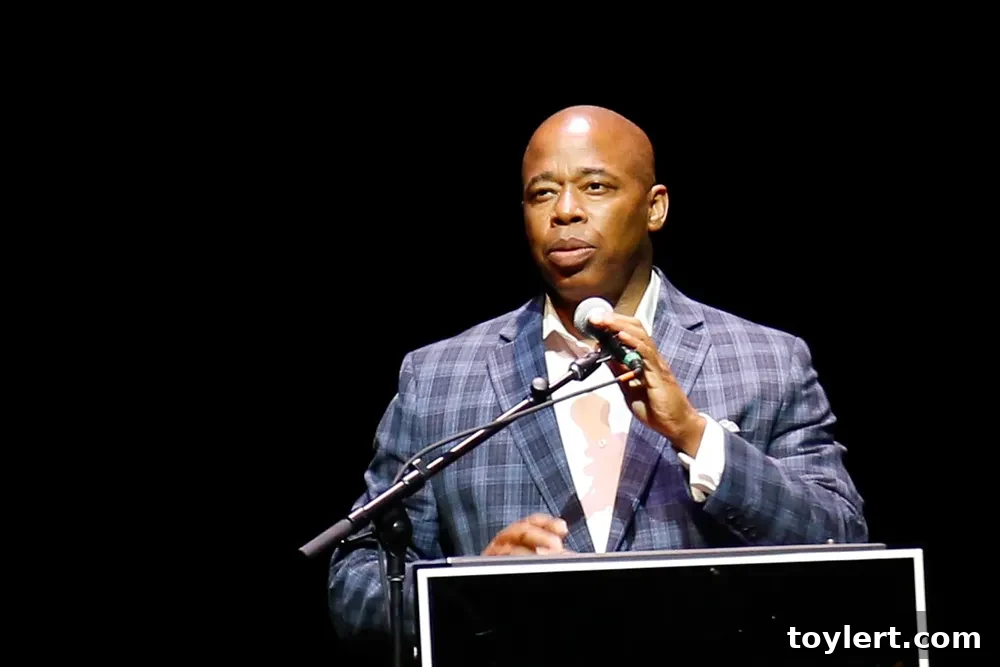
East New York Rezoning Plan Faces Conditional Rejection from Brooklyn Borough President Eric Adams
In a pivotal moment for urban development in New York City, Brooklyn Borough President Eric Adams announced his formal vote to reject the Mayor’s ambitious East New York rezoning proposal. This significant decision came just minutes before a crucial public hearing on the plan was set to begin on a Wednesday morning, sending clear signals about the strong community and borough-level concerns surrounding the contentious initiative. Adams’ stance introduces a critical layer of deliberation into a process that has garnered considerable attention from residents, developers, and policymakers alike, highlighting the complex balance between growth and preservation in rapidly changing neighborhoods.
Adams’ official declaration was not an outright refusal but a nuanced disapproval of the plan “with conditions.” This distinct position signifies that while he does not endorse the proposed rezoning for East New York in its current form, he remains open to supporting it, provided specific, substantive modifications and commitments are met. This conditional rejection is a powerful tool for negotiation, empowering Adams to advocate for a plan that genuinely serves the long-term interests of East New York’s existing residents and character, rather than simply facilitating new development. It reflects a deeper understanding that successful urban transformation must be inclusive and directly address community needs, not just fulfill city-wide housing targets.
Understanding the Implications of “Disapprove with Conditions”
The phrase “disapprove with conditions” carries significant weight within New York City’s intricate Uniform Land Use Review Procedure (ULURP). It’s a mechanism that allows a Borough President to acknowledge the potential benefits of a project while simultaneously demanding critical improvements to mitigate negative impacts or enhance community benefits. For the East New York rezoning, Adams’ conditions are expected to center around ensuring truly affordable housing, protecting existing residents from displacement, improving local infrastructure, and creating genuine economic opportunities for the community. This approach allows for continued dialogue and negotiation, aiming to reshape the plan into one that is more equitable and sustainable for the neighborhood.
This strategic move places Borough President Adams at the forefront of the debate, positioning him as a staunch advocate for his constituents. His decision demonstrates a commitment to ensuring that large-scale development projects do not inadvertently lead to gentrification and displacement, which have historically been major concerns in rapidly developing areas of Brooklyn. By attaching conditions, Adams provides a roadmap for how the Mayor’s office and City Planning can adjust the proposal to gain broader support, ensuring that the benefits of rezoning are shared equitably and address the unique challenges faced by East New York.
The Context: East New York Rezoning and its Ambitions
The Mayor’s East New York rezoning plan is a cornerstone of a broader city initiative to create and preserve affordable housing and stimulate economic growth across New York City. East New York, with its ample undeveloped land, existing transit infrastructure, and predominantly lower-income population, was identified as a prime candidate for this large-scale urban renewal. The plan aimed to introduce higher-density residential buildings, commercial spaces, and mixed-use developments, theoretically generating thousands of new housing units, many of which would be designated as “affordable” under city programs.
Proponents of the plan argued that it was essential to address New York City’s pervasive housing crisis, create vibrant new streetscapes, and bring much-needed investment to an underserved community. They highlighted the potential for new jobs during construction and in new businesses, improved public spaces, and an overall revitalization of the neighborhood. The vision was to transform East New York into a more dynamic, thriving area capable of accommodating a growing population while providing opportunities for existing residents to benefit from the new development. However, this vision often clashed with the immediate concerns and historical experiences of those living in the neighborhood.
Community Concerns: A Deep Dive into Resident Fears
Despite the city’s stated intentions, the East New York rezoning plan sparked widespread apprehension among current residents and community advocates. A primary concern was the fear of displacement and gentrification. Many worried that the influx of new, higher-income residents would inevitably drive up property values and rents, making it impossible for long-time residents and small businesses to remain in the neighborhood. The term “affordable housing” itself became a point of contention, with critics arguing that the affordability levels proposed were often out of reach for the area’s current median income.
Beyond affordability, residents voiced significant worries about the strain on existing infrastructure. East New York already grappled with overcrowded schools, limited public transportation options, and inadequate parks and community facilities. Introducing thousands of new residents without substantial, guaranteed investments in these critical services was seen as a recipe for disaster, potentially degrading the quality of life for everyone. There were also deep concerns about preserving the neighborhood’s unique cultural identity and character, fearing that large-scale development would erase its history and sense of community. The call was not for a halt to all development, but for development that was truly community-led, equitable, and sensitive to the needs of those who already called East New York home.
Eric Adams’ Role and the Political Landscape
As Borough President of Brooklyn, Eric Adams holds a unique position, acting as both an advocate for the borough’s diverse communities and a participant in the city’s overall development strategy. His role requires him to balance the broader goals of the city administration with the specific, often localized, needs and desires of individual neighborhoods. In the context of the East New York rezoning, Adams’ conditional rejection underscores his commitment to ensuring that Brooklyn’s growth is equitable and inclusive, rather than merely rapid.
Politically, Adams’ decision also reflects a shrewd understanding of the sentiment on the ground. Community opposition to the rezoning has been vocal and persistent, making it politically imperative for local leaders to take a strong stance. By issuing a conditional disapproval, Adams positions himself as a responsive leader who listens to his constituents, while also keeping the door open for a revised plan that could eventually garner his support. This move not only gives a voice to the community’s demands but also provides a template for future development debates across the city, emphasizing the power of local governance in shaping urban futures.
Key Conditions for a Truly Equitable East New York Rezoning
While the exact specifics of Eric Adams’ conditions for approval are subject to ongoing negotiations, they are widely anticipated to focus on several critical areas aimed at achieving a more equitable and beneficial outcome for East New York. Firstly, a demand for deeper affordability levels is almost certain. This would mean ensuring a significant portion of new housing units are genuinely affordable to residents earning 30% to 50% of the Area Median Income (AMI), reflecting the economic realities of existing East New York households, rather than the broader city or regional AMI figures. This would be a crucial step in preventing displacement and ensuring local residents can afford to stay in their neighborhood.
Secondly, Adams is likely to push for substantial investments in social and physical infrastructure. This includes guarantees for funding new or expanded schools, improved public transportation services, the creation of new parks and green spaces, and enhanced healthcare facilities. Such investments are vital to accommodate the increased population density without overburdening existing resources. Furthermore, conditions could include mandates for local hiring and job training programs, ensuring that construction jobs and new opportunities in commercial spaces primarily benefit East New York residents, fostering economic empowerment within the community itself.
Another key area for conditions would involve robust anti-displacement measures for both residents and small businesses. This could include legal aid services for tenants, community land trusts, and commercial rent stabilization programs to protect long-standing businesses that contribute to the neighborhood’s unique character. Finally, a significant condition might be the establishment of a community oversight board or participatory planning mechanisms, giving residents a direct voice in the implementation and ongoing management of the rezoning’s effects, ensuring accountability and continued responsiveness to local needs.
The Path Forward: Negotiations and Broader Impact
Following Borough President Adams’ conditional disapproval, the East New York rezoning plan will now advance through the ULURP process to the City Council. The Council’s local representative, in particular, will play a crucial role in negotiating the final terms. Adams’ rejection serves as a powerful endorsement for the community’s demands, strengthening the hand of the local Council Member in advocating for more significant concessions from the Mayor’s office and developers. This sets the stage for intensive negotiations where the “conditions” laid out by Adams will be central to reaching a final agreement.
The outcome of the East New York rezoning will undoubtedly have far-reaching implications for urban planning across New York City. It will serve as a precedent for how future large-scale development projects are debated, negotiated, and ultimately shaped, particularly in neighborhoods facing similar pressures of gentrification and the need for affordable housing. Adams’ firm stance underscores the ongoing struggle to achieve equitable development – growth that uplifts existing communities without displacing them, and that prioritizes human well-being alongside economic expansion. It reinforces the idea that true progress in urban development must be a collaborative effort, deeply rooted in community engagement and a commitment to social justice.
As the East New York rezoning moves into its next phase, all eyes will be on the negotiations that follow. The challenge will be to craft a plan that not only addresses the city’s urgent housing needs but also respects the heritage, safeguards the future, and truly benefits the long-term residents of East New York. Borough President Eric Adams’ conditional rejection has ensured that these crucial considerations remain at the forefront of the discussion, setting a higher bar for inclusive urban transformation in New York City.