Brooklyn’s Overcrowding Crisis: Unpacking the Challenge of Space in NYC’s Most Populous Borough
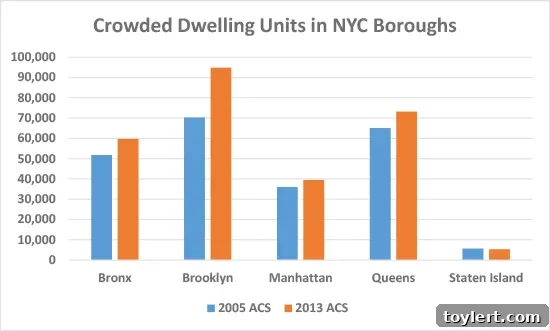
A recent report from the City Comptroller’s Office has cast a stark light on the housing situation in New York City, revealing that Brooklyn bears the heaviest burden of crowded and severely crowded living conditions among all five boroughs. This critical study, drawing its data from the comprehensive U.S. Census Bureau’s annual American Community Survey, underscores a pressing issue affecting a significant portion of the city’s population. The findings indicate that approximately 1.5 million New Yorkers are currently residing in homes classified as either crowded or severely crowded, highlighting a widespread and deeply entrenched housing crisis.
The implications of such pervasive overcrowding extend far beyond mere discomfort, touching upon public health, educational outcomes, economic stability, and the overall quality of life for millions. Understanding the nuances of this challenge, particularly why Brooklyn stands out, is crucial for developing effective and equitable solutions.
Defining Overcrowding: What the Numbers Truly Mean
To grasp the magnitude of Brooklyn’s housing predicament, it’s essential to understand how “crowding” is officially defined. Housing experts and government agencies, including the U.S. Census Bureau, typically classify a home as crowded when there is more than one person per room (excluding bathrooms and kitchens). The term “severely crowded” is reserved for even more extreme conditions, generally when there are 1.51 or more persons per room.
These metrics are not arbitrary; they are designed to identify households where the lack of adequate space can lead to a host of problems. Living in an overcrowded environment often means less privacy, increased stress, greater difficulty for children to study, and a higher risk of transmitting infectious diseases. The Comptroller’s report, leveraging the granular data of the American Community Survey, meticulously analyzed these conditions across New York City, painting a clear picture of where the challenges are most acute. The ACS, renowned for its detailed demographic, social, economic, and housing data, provides an invaluable resource for policymakers and urban planners seeking to address complex societal issues like housing scarcity and inequity.
The Scope of Brooklyn’s Crowding Challenge
While overcrowding is a city-wide concern in New York, Brooklyn’s prominence in the Comptroller’s report demands specific attention. The borough, known for its vibrant communities, diverse population, and burgeoning cultural scene, has also seen relentless population growth over the past few decades. This growth, coupled with an insufficient increase in housing supply, particularly affordable units, has exacerbated the problem.
Brooklyn’s unique demographic landscape, including a significant immigrant population that often faces greater barriers to finding adequate and affordable housing, further contributes to these high crowding rates. Families, striving to stay in their communities or remain close to work opportunities, frequently resort to sharing limited spaces to make ends meet. This economic necessity often trumps the desire for spacious living, leading to multi-generational families or multiple unrelated households sharing single apartments, a phenomenon reflected starkly in the crowding statistics.
The report highlights specific neighborhoods within Brooklyn that are disproportionately affected, often coinciding with areas that have historically been home to lower-income communities or have experienced rapid gentrification without corresponding housing development. This dynamic creates immense pressure on existing housing stock, driving up rents and forcing more residents into substandard or overcrowded living situations.
The Root Causes: Why is Brooklyn So Crowded?
The crisis of overcrowding in Brooklyn is not a monolithic issue but rather the result of a confluence of interconnected factors:
1. The Unrelenting Affordability Crisis
New York City’s housing market is notoriously expensive, and Brooklyn is no exception. Rents have soared in recent years, far outpacing wage growth for many residents. This affordability gap forces families to allocate an ever-larger portion of their income to housing, making it increasingly difficult to afford adequately sized apartments. For many, the only viable option is to pool resources with relatives or friends, leading directly to higher occupancy rates per dwelling.
2. Persistent Housing Supply Shortage
Despite ongoing development, the construction of new housing units, especially those within an affordable price range, has not kept pace with demand. Restrictive zoning regulations, lengthy approval processes, and the high cost of land and construction in Brooklyn contribute to this supply deficit. When fewer units are available than needed, competition intensifies, prices rise, and existing housing stock becomes more intensively utilized.
3. Demographic Shifts and Population Growth
Brooklyn has experienced significant population growth, driven by both domestic migration and international immigration. This influx of new residents, eager to take advantage of the borough’s opportunities and amenities, puts additional strain on an already tight housing market. Immigrant communities, in particular, often face unique challenges, including language barriers, discrimination, and limited access to information about housing rights, which can push them towards overcrowded housing as a last resort.
4. Stagnant Wages and Economic Inequality
While the cost of living continues to climb, wages for many working-class families have remained relatively stagnant. This widening disparity means that even full-time employment may not guarantee access to safe, uncrowded housing. The economic pressure to save money on rent, even at the cost of living space, is a powerful driver of overcrowding.
The Far-Reaching Impacts of Overcrowding
The consequences of living in crowded or severely crowded conditions ripple through individuals, families, and communities, creating significant long-term challenges:
1. Detrimental Health and Well-being Outcomes
Overcrowded living environments are breeding grounds for illness. The close proximity of individuals facilitates the rapid spread of infectious diseases, including respiratory illnesses like the flu and tuberculosis. Beyond physical health, the lack of personal space and privacy can lead to increased stress, anxiety, and other mental health issues, particularly in children and adolescents. Adequate sleep often becomes elusive, further compounding health problems.
2. Impaired Educational Attainment
For children, living in an overcrowded home can severely impede academic success. Without a quiet space to study, complete homework, or simply reflect, concentration and learning suffer. The constant commotion and lack of personal boundaries can also contribute to behavioral issues and lower school attendance rates, ultimately affecting their educational trajectories and future opportunities.
3. Economic Strain and Reduced Upward Mobility
While sharing space might initially seem like a cost-saving measure, the long-term economic impacts of overcrowding can be significant. The poor health and educational outcomes associated with it can limit job prospects and earning potential. Furthermore, a family struggling with inadequate housing often faces other related financial burdens, creating a cycle of poverty that is difficult to break.
4. Strain on Community Resources and Infrastructure
High population density in overcrowded areas places immense pressure on local public services, including schools, healthcare facilities, public transportation, and sanitation systems. This strain can degrade the quality of these essential services for all residents, leading to broader community dissatisfaction and inequities.
Policy Responses and Pathways to Solutions
Addressing Brooklyn’s overcrowding crisis requires a multi-faceted approach involving government, community organizations, and private developers. The City Comptroller’s report serves as a vital call to action, providing crucial data to inform policy development.
1. Expanding and Preserving Affordable Housing
A primary solution lies in significantly increasing the supply of genuinely affordable housing units across Brooklyn. This includes not only new construction but also the preservation of existing affordable housing stock through renovation and robust tenant protection programs. Initiatives like inclusionary zoning, which mandates a percentage of affordable units in new developments, are critical but need to be scaled up and enforced effectively.
2. Strengthening Tenant Protections and Rights
To prevent displacement and stabilize communities, strong tenant protections are essential. This includes enforcing rent stabilization laws, providing legal aid to tenants facing eviction, and implementing measures to prevent harassment by landlords. Empowering tenants with knowledge of their rights can help prevent situations where they are forced into unsafe or overcrowded conditions.
3. Data-Driven Policy Making
The Comptroller’s report exemplifies the importance of accurate, up-to-date data in understanding urban challenges. Continued monitoring through surveys like the American Community Survey, coupled with localized research, is vital for identifying specific needs and tailoring interventions to the unique characteristics of Brooklyn’s diverse neighborhoods.
4. Investing in Community Infrastructure
Alongside housing solutions, investments in community infrastructure are necessary. Expanding access to quality healthcare, improving public schools, and enhancing green spaces in densely populated areas can mitigate some of the negative impacts of crowding and improve the overall living environment for residents.
Conclusion: A Call for Concerted Action
The findings from the City Comptroller’s Office paint a sobering picture of the housing reality for nearly 1.5 million New Yorkers, with Brooklyn at the epicenter of the overcrowding crisis. This issue is not merely statistical; it represents a profound human challenge affecting health, education, economic opportunity, and social equity. Addressing this complex problem demands a concerted and compassionate effort from all stakeholders. By prioritizing affordable housing development, strengthening tenant protections, leveraging data for informed decision-making, and investing in comprehensive community support, New York City can work towards a future where every resident, especially those in Brooklyn, has access to safe, stable, and uncrowded living conditions. The urgency of this challenge cannot be overstated, and the well-being of countless individuals depends on our collective will to act decisively.