Discovering Historic Charm: A Unique HDFC Co-op Opportunity at 388 Halsey Street in Bed Stuy
Nestled within the vibrant and historically rich neighborhood of Bedford-Stuyvesant, Brooklyn, lies a distinctive opportunity for discerning buyers seeking a blend of classic architecture, community living, and a rewarding renovation project. This particular unit, situated on the third floor of an elegant 1890s flats building at 388 Halsey Street, offers a spacious layout adorned with the coveted feature of windows in every room. However, prospective purchasers should be aware of specific requirements that accompany this unique offering: meeting income restrictions, the ability to pay in cash, and sufficient funds to undertake a thorough and thoughtful renovation.
The building itself, an eight-unit walk-up, has been operating as an HDFC (Housing Development Fund Corporation) co-operative since the 1990s. HDFC co-ops are an integral part of New York City’s landscape, designed to preserve and promote affordable housing by rehabilitating formerly distressed buildings and making them accessible to moderate and low-income residents. This structure ensures a strong sense of community and stewardship among residents, but also necessitates adherence to specific financial guidelines.
A Glimpse into 388 Halsey Street: The Building’s Enduring Legacy
The origins of 388 Halsey Street trace back to a period of rapid development and architectural innovation in Brooklyn. When the building first opened its doors to renters in the late 19th century, its appeal was immediately evident through its forward-thinking design. Contemporary advertising from the era highlighted the luxury of “windows in every room,” a significant selling point that offered superior light and ventilation compared to many other tenement-style buildings of the time, which often suffered from dark, internal rooms lacking direct outdoor exposure. The absence of a traditional airshaft, combined with the promise of tiled halls and bathrooms, further underscored a commitment to comfort and hygiene – modern amenities that were highly desirable for urban dwellers.
The plans for this handsome structure were filed in 1897 by owner C. Hagedorn, commissioning the expertise of architect Henry Vollweiler. Vollweiler, a German immigrant, established his own successful practice after gaining valuable experience working with the renowned Brooklyn architect Theobald Engelhardt. His prolific career saw him design numerous other flats buildings, elegant row houses, and even theaters across Brooklyn, leaving an indelible mark on the borough’s architectural tapestry. Buildings like 388 Halsey Street exemplify Vollweiler’s dedication to thoughtful design, blending functionality with aesthetic appeal that continues to captivate today. His work contributes significantly to the historic character of neighborhoods like Bed Stuy, making properties he designed highly sought after by those who appreciate late 19th-century craftsmanship.
Navigating HDFC Co-op Ownership: What Buyers Need to Know
Purchasing an HDFC co-op like the one at 388 Halsey Street is a unique pathway to homeownership in New York City. The primary mission of Housing Development Fund Corporations is to foster and maintain affordable housing. This means that while owning a piece of Brooklyn’s history, buyers must also understand and comply with specific regulations designed to ensure the ongoing affordability and community focus of the building.
Income Restrictions and Eligibility
A crucial aspect of HDFC co-ops is the existence of income restrictions for buyers. These limits are typically based on a percentage of the Area Median Income (AMI) for New York City, which varies by household size. Prospective buyers must demonstrate that their annual income falls within these predefined thresholds. The exact figures are often determined by the co-op board and can be verified through the managing agent. These restrictions ensure that the housing remains accessible to individuals and families who truly need it, upholding the HDFC’s mission. It’s imperative for interested parties to verify their eligibility early in the process.
The “Cash Only” Requirement
The stipulation for a cash-only purchase is another common feature in many HDFC co-ops. This requirement often stems from several factors. Historically, many HDFC buildings underwent significant rehabilitation with government subsidies, which can sometimes place restrictions on financing options. Additionally, some HDFC co-op boards prefer cash transactions to simplify the buying process, avoid potential complications with mortgage lenders who may be unfamiliar with HDFC regulations, and ensure the financial stability of the incoming owner. A cash purchase can also expedite closing times and reduce transaction costs often associated with obtaining a mortgage. Buyers should ensure they have access to the full purchase price without needing external financing.
Funds for a Thorough Renovation
Given the building’s 1890s origins, the unit at 388 Halsey Street presents a significant renovation opportunity. While the property boasts beautiful historic details, it will undoubtedly require substantial investment to bring it up to modern standards of comfort and functionality, while ideally preserving its inherent charm. This isn’t merely about cosmetic upgrades; it might involve updates to plumbing, electrical systems, kitchen and bathroom overhauls, and potential restoration of original features. A thorough renovation budget should account for these structural and aesthetic improvements, along with unforeseen expenses common in historic properties. Embracing this challenge offers the chance to custom-design a dream home while respecting the building’s rich past. Furthermore, the renovation must often adhere to co-op board guidelines and potentially city regulations for historic properties, requiring careful planning and approved contractors.
Inside the Unit: A Canvas of History and Potential
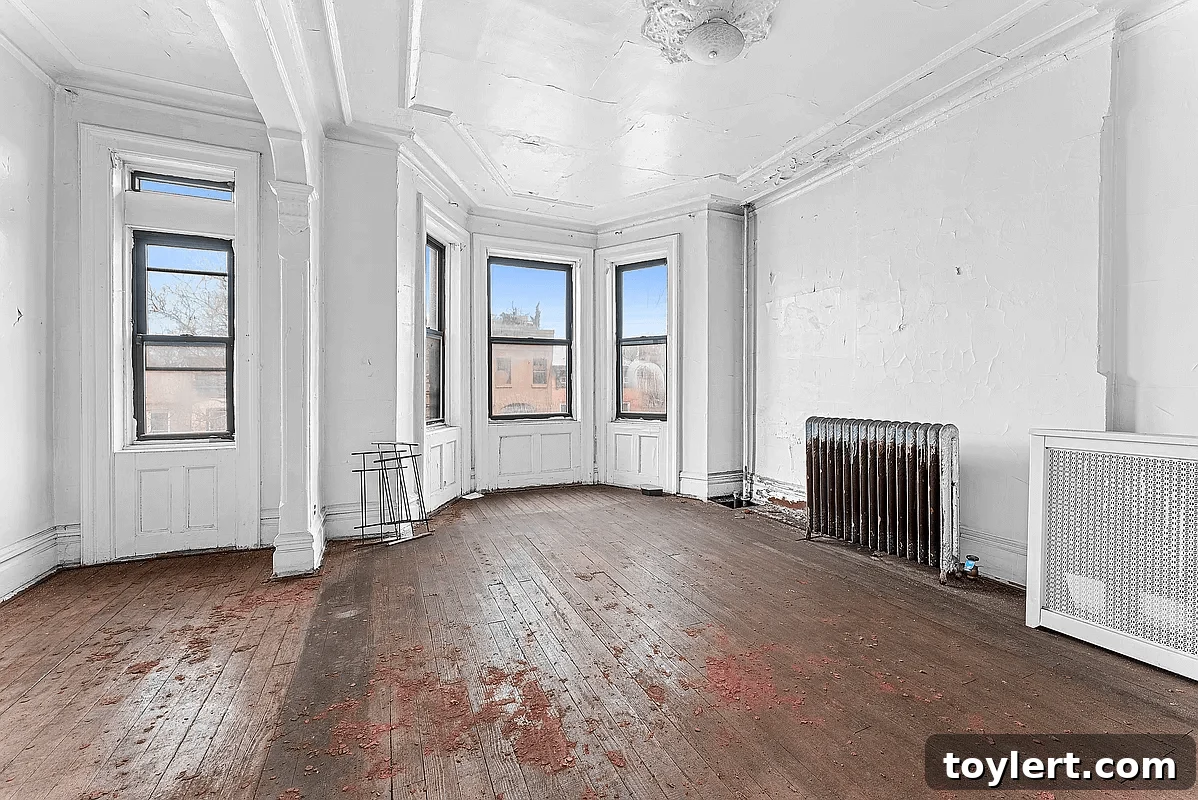
Step inside this third-floor unit, and you are immediately greeted by the architectural grandeur of the late 19th century. The apartment boasts high ceilings, original wood floors that whisper tales of bygone eras, intricate moldings, elegant paneling, and practical built-ins that speak to the craftsmanship of its time. These period details offer a unique foundation, providing a canvas for a modern renovation that can harmoniously blend contemporary living with historic charm.
With a generous seven rooms, the unit benefits from an exceptionally flexible layout, largely thanks to the aforementioned windows in every room. While these windows face a neighboring building, they still flood each space with natural light, a true luxury for any city apartment. The thoughtful design ensures that no room feels dark or enclosed, promoting an airy and open feel throughout the residence.
The layout is practical and inviting: a long hall extends from the sun-drenched living room at the front of the unit, guiding you toward the private spaces. At the rear, you’ll discover the kitchen, ready for a complete modern transformation. Adjacent to the kitchen is another large room, originally conceived as a formal dining room, which could easily be re-imagined as a spacious home office, an artist’s studio, or a comfortable family den. In the central core of the apartment, three smaller rooms are configured as bedrooms. Each of these intimate spaces benefits from its own window, providing natural light, a dedicated closet for storage, and a private door to the main hall, ensuring privacy and convenience for all residents. This configuration, with its distinct zones for living, dining, and sleeping, offers ample space and adaptability for various lifestyle needs.
Architectural Heritage: Henry Vollweiler’s Vision in Bed Stuy
The presence of an architect like Henry Vollweiler behind the design of 388 Halsey Street adds significant historical and architectural value to the property. Vollweiler, a talented German immigrant, arrived in a booming Brooklyn eager to make his mark. His early experience working with Theobald Engelhardt, a master architect renowned for his industrial buildings and breweries, likely instilled in Vollweiler a strong sense of practicality and robust construction, alongside an appreciation for elegant detailing.
Vollweiler’s independent practice flourished, contributing significantly to Brooklyn’s urban landscape. He was instrumental in designing numerous residential and commercial structures that defined the character of neighborhoods in the late 19th and early 20th centuries. His flats buildings, such as 388 Halsey Street, were often characterized by their attention to detail, generous layouts, and innovative features for their time, like abundant natural light and efficient use of space. Beyond flats, his portfolio included stylish row houses that catered to the burgeoning middle class, and even grand theaters, showcasing his versatility and sophisticated understanding of diverse architectural needs. Owning a property designed by Vollweiler means owning a piece of Brooklyn’s architectural heritage, a testament to the city’s growth and the vision of its builders.
Bed-Stuy: A Vibrant Neighborhood with Deep Roots
Bedford-Stuyvesant itself is a neighborhood celebrated for its rich history, stunning brownstone-lined streets, and vibrant community spirit. From its origins as a collection of Dutch farming villages to its development into one of Brooklyn’s most iconic residential districts, Bed Stuy has always been a place of cultural significance. Today, it remains a sought-after location, blending historic charm with modern amenities. The neighborhood boasts an array of trendy cafes, acclaimed restaurants, bustling boutiques, and expansive parks, all while maintaining its distinctive character and tight-knit community feel. Excellent public transportation options provide easy access to Manhattan and other parts of Brooklyn, making it an ideal location for those seeking convenience without sacrificing neighborhood charm. Owning a historic HDFC co-op in Bed Stuy means becoming a part of this dynamic and ever-evolving community, contributing to its future while preserving its storied past.
Conclusion: An Unparalleled Opportunity for the Right Buyer
This HDFC co-op at 388 Halsey Street represents an unparalleled opportunity for a very specific type of buyer. It is a chance to acquire a piece of Brooklyn’s architectural legacy, designed by a notable architect, within a historic building that promotes community and affordability. While the income restrictions, cash-only requirement, and the need for a significant renovation present clear challenges, they also define the unique value proposition. For the individual or family prepared to meet these criteria, this third-floor unit offers the reward of creating a truly personalized home in a spacious, light-filled, and historically significant setting, all within the thriving heart of Bed-Stuy. It’s more than just an apartment; it’s an investment in history, community, and the vibrant future of one of New York City’s most cherished neighborhoods.