Sunset Park Tenants Rally Against “Worst Landlord” Silvershore Properties Amidst Widespread Neglect
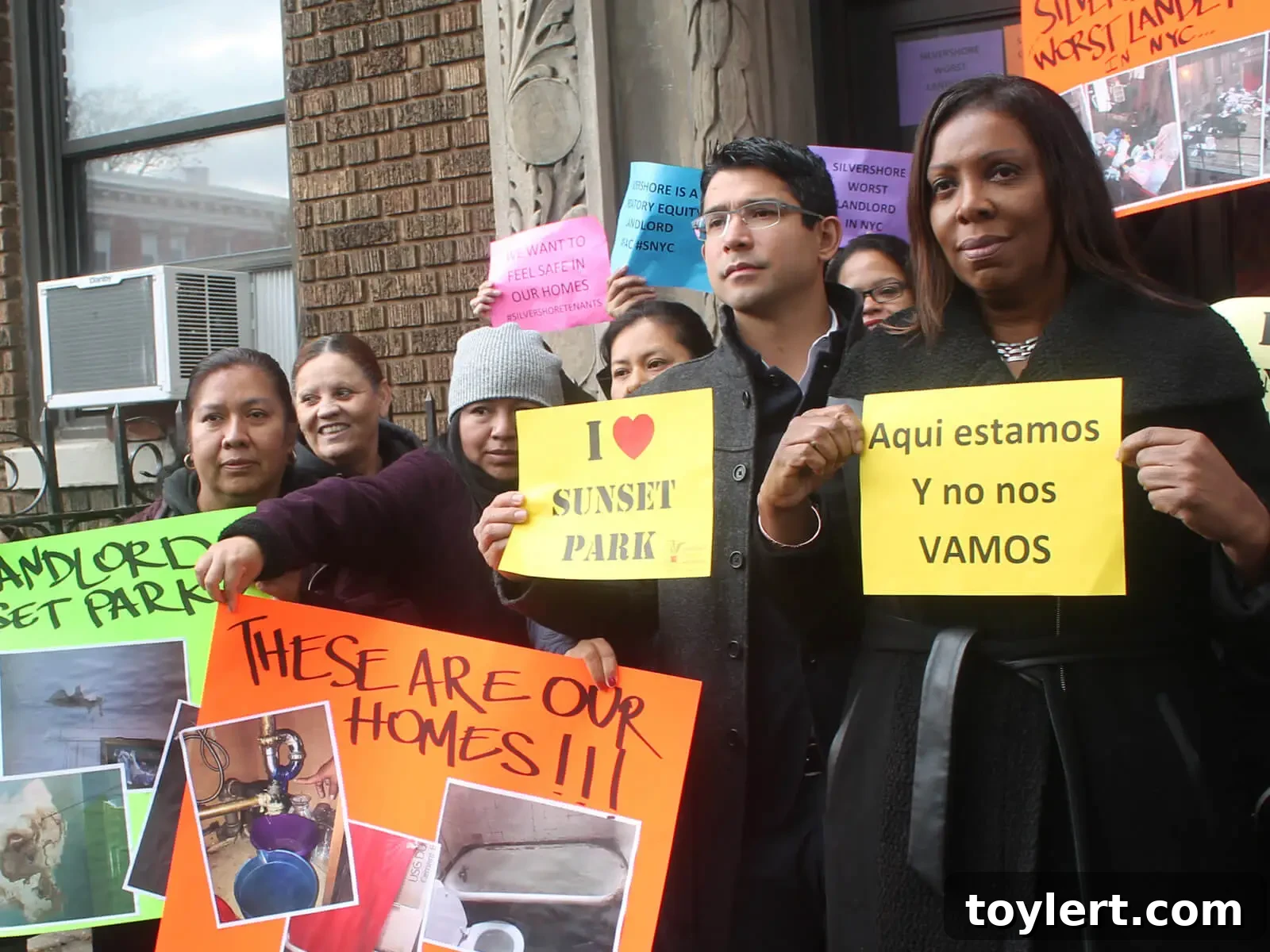
A groundswell of community frustration erupted in Sunset Park on Thursday, November 16, as tenants, their dedicated supporters, and local politicians converged in front of residential buildings 5416 and 5422 4th Avenue. Their collective voice aimed to spotlight the deeply unfair treatment endured under the ownership of Jonathan Cohen of Silvershore Properties, a landlord who recently earned the ignominious distinction of being ranked No. 1 on the city’s 2017 Worst Landlord Watchlist. This gathering served as a powerful testament to the residents’ resolve, transforming a local grievance into a visible public protest demanding accountability and justice in the heart of Brooklyn.
The event underscored a critical issue plaguing New York City’s vibrant neighborhoods: the struggle for safe, dignified, and affordable housing. For too long, tenants in these buildings have faced a grim reality of deteriorating living conditions, unresponsive management, and a stark imbalance of power. Their fight is not just for repairs but for a fundamental right to habitable homes and respect from those who profit from their housing.
The Scrutiny of the Worst Landlord Watchlist: Unmasking Neglect
The “Worst Landlord Watchlist,” a crucial initiative spearheaded by the Public Advocate’s office, plays a vital role in identifying and shaming landlords who consistently fail to provide basic services and maintain their properties according to city regulations. Public Advocate Letitia James, who inaugurated the list, minced no words in describing the ethos of Silvershore Properties. “This is a landlord that basically puts profit over people,” James asserted, highlighting a pervasive and troubling pattern. Her statement resonated deeply with the tenants present, echoing their daily experiences and confirming their long-held suspicions about their landlord’s priorities.
The watchlist is more than just a public record; it’s a powerful advocacy tool. It compiles data on housing code violations from the Department of Housing Preservation and Development (HPD), empowering tenants, community organizers, and legal aid groups with concrete evidence to challenge negligent landlords. Jonathan Cohen’s top ranking on this list for 2017 sent a clear message: his properties, particularly 5416 and 5422 4th Avenue, were epicenters of neglect and systemic disregard for tenant well-being. This spotlight not only drew media attention but also mobilized a broader network of support for the beleaguered residents.
Silvershore Properties: A Pattern of Acquisition and Neglect
According to Public Advocate James, Silvershore Properties has rapidly expanded its portfolio in recent years, acquiring numerous buildings across the city, including the two properties in Sunset Park. However, this aggressive expansion has not been matched by a commitment to property maintenance. “Silvershore bought many of these buildings in the last few years like these two buildings, but they are not making active repairs,” James pointed out. This pattern suggests a business model focused on maximizing acquisitions and minimizing operational costs, often at the direct expense of tenant comfort, safety, and legal rights.
Tenants reported a litany of issues that define daily life in these buildings: persistent leaks and water damage, chronic heating and hot water outages, pest infestations, crumbling plaster, broken security systems, and unsafe common areas. These aren’t minor inconveniences; they represent severe violations of the warranty of habitability, a fundamental legal right ensuring that rented properties are safe and livable. For residents, especially those with children or elderly family members, these conditions don’t just reduce quality of life—they pose significant health and safety risks, contributing to stress, illness, and a profound sense of instability.
Amplifying Tenant Voices: The Role of Community Organizers
The tenant rally was not a spontaneous outburst but the culmination of years of organized efforts by dedicated community advocates. Stephanie Lewkowitz, a tenant advocate and organizer affiliated with both the Fifth Avenue Committee and Neighbors Helping Neighbors, played a pivotal role in bringing the tenants’ grievances to the forefront. Lewkowitz eloquently articulated the depth of the injustices tenants have been experiencing, recounting tales of unanswered calls, ignored complaints, and a systematic pattern of neglect that has plagued residents over the past couple of years.
Organizations like the Fifth Avenue Committee and Neighbors Helping Neighbors are indispensable lifelines for tenants facing such adversities. They provide crucial resources, including legal assistance, tenant rights education, and organizing support, empowering residents to collectively assert their rights. Lewkowitz’s involvement highlights the power of sustained, grassroots advocacy. By mobilizing tenants, connecting them with legal counsel, and coordinating public actions, these organizations transform individual complaints into a collective force capable of challenging even the most entrenched negligent landlords.
The Human Cost of Neglect: More Than Just Broken Pipes
Beyond the structural issues, the impact of living under a “worst landlord” extends deeply into the emotional and psychological well-being of tenants. The constant stress of living in disrepair, the fear of retaliatory eviction for complaining, and the financial strain of paying rent for substandard housing can be overwhelming. Children living in these conditions often experience chronic health problems, missed school days, and a reduced sense of security. Elderly residents, particularly those with mobility issues, find their daily lives severely hampered by broken elevators or unsafe stairwells.
The sense of powerlessness can be debilitating. Many tenants, particularly those from immigrant communities or low-income households, may not be fully aware of their rights or fear the bureaucratic hurdles of navigating housing court. This vulnerability is often exploited by landlords who hope that residents will either give up or move out, allowing them to bring in new tenants at higher, market-rate rents.
The Broader Battle for Housing Justice in New York City
The situation in Sunset Park is not an isolated incident but a microcosm of a larger housing crisis gripping New York City. The city’s red-hot real estate market, coupled with aggressive gentrification pressures, often incentivizes landlords to engage in practices that push out long-term, rent-stabilized tenants. Investors like Silvershore Properties often acquire buildings with existing tenants, not with the intent of maintaining them, but sometimes with a strategy to create vacancies through various means—including intentional neglect—to perform “renovations” and then re-rent units at much higher, deregulated prices.
This practice erodes the city’s affordable housing stock and displaces communities, fundamentally altering the fabric of neighborhoods like Sunset Park. Tenant organizations and public advocates continuously battle against these predatory practices, fighting to preserve affordable housing and protect the rights of vulnerable residents. The very existence of the “Worst Landlord Watchlist” is a testament to the ongoing need for vigilance and public pressure to hold these entities accountable.
Legal Avenues and Tenant Protections
New York City tenants possess a range of legal protections designed to ensure habitable living conditions. The warranty of habitability mandates that landlords provide a safe and healthy environment, including essential services like heat, hot water, and freedom from pests. Rent-stabilized tenants have additional protections against excessive rent increases and unjust evictions. When landlords fail to meet these obligations, tenants can file complaints with HPD, seek legal counsel, and bring cases to Housing Court to demand repairs and, in some instances, rent reductions.
However, navigating the legal system can be complex and intimidating for individual tenants. This is where the work of organizations like the Fifth Avenue Committee becomes invaluable, providing the expertise and support necessary for tenants to effectively pursue their rights. The Public Advocate’s office also plays a crucial role in advocating for stronger tenant protection laws and ensuring existing laws are rigorously enforced.
A Call for Systemic Change and Sustained Advocacy
The Sunset Park rally for the tenants of 5416 and 5422 4th Avenue was more than just a protest; it was a powerful demand for systemic change. It highlighted the urgent need for stricter enforcement of housing laws, more robust tenant protections, and increased resources for legal aid and community organizing. It also served as a stark reminder that collective action is the most potent weapon tenants have against landlords who prioritize profit over people.
For New York City to truly be a city for all its residents, housing justice must be a paramount concern. This means not only holding individual bad actors like Jonathan Cohen and Silvershore Properties accountable but also addressing the underlying systemic issues that allow such exploitation to flourish. The fight for habitable housing and tenant dignity is ongoing, requiring sustained advocacy, unwavering solidarity, and the continued vigilance of both residents and their elected officials.
The Sunset Park community, by standing together, sent an unequivocal message: tenants will not be silenced, and they will not accept substandard living conditions. Their struggle is a beacon of hope for housing justice, demonstrating that when communities unite, they possess the power to challenge injustice and demand the respect and safe homes they rightfully deserve.