Unearthing Brooklyn’s Past: A Timeless Journey Through Crown Heights’ Vanishing Grandeur and Enduring Spirit
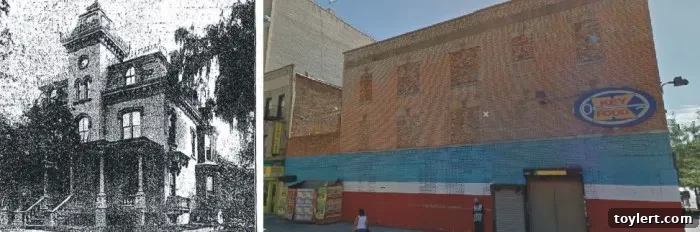
Every time a new photograph surfaces, revealing a long-vanished architectural gem on St. Marks Avenue in Crown Heights, a profound sense of yearning washes over me. It’s a feeling that makes one wish for a time machine, if only to witness the vibrant streetscapes of these blocks as they stood proudly at the turn of the 20th century. Today, much of this historic fabric has been rewoven, almost entirely covered by the towering presence of large apartment buildings. These historical snapshots, like the one published in the Brooklyn Eagle in 1902 showcasing another magnificent, long-gone structure, serve as poignant windows into a bygone era, sparking both wonder and a touch of melancholy for what was lost.
The Vanishing Grandeur of Turn-of-the-Century Brooklyn
At the cusp of the 20th century, Brooklyn was a borough blossoming with unique architectural expressions, particularly in neighborhoods like Crown Heights. St. Marks Avenue, among others, was adorned with an eclectic array of residential buildings that spoke volumes about the era’s prosperity and artistic sensibilities. Imagine rows of elegant brownstones, stately Queen Anne homes with their distinctive turrets and intricate woodwork, and robust Romanesque Revival structures, all contributing to a streetscape of unparalleled charm. These weren’t mere houses; they were statements of craftsmanship, status, and community aspiration, each brick and carved detail telling a story of the burgeoning city.
The architects and builders of that period utilized high-quality materials and employed skilled artisans, resulting in buildings that were not only aesthetically pleasing but also robust and enduring. Ornate cornices, detailed stoops, stained-glass windows, and elaborate decorative elements were commonplace, transforming ordinary residential streets into avenues of architectural marvels. The sheer diversity in design, even within a single block, created a dynamic visual rhythm that characterized Brooklyn’s urban identity. To walk these streets then would have been to immerse oneself in a living museum of American architectural history, a stark contrast to the more uniform, functional structures that often define modern urban development.
Drivers of Transformation: From Grand Homes to Apartment Blocks
The transformation of Brooklyn, and specifically areas like Crown Heights, from a landscape of individual grand residences to one dominated by large apartment buildings was not an overnight phenomenon but a gradual shift driven by powerful socio-economic forces. The early 20th century witnessed an unprecedented population boom in New York City. Brooklyn, with its expanding infrastructure and appeal as a burgeoning urban center, became a magnet for new residents seeking opportunities and homes. This rapid influx created an immense demand for housing, far outstripping the capacity of single-family homes.
Developers quickly recognized the economic viability of constructing multi-family dwellings. Apartment buildings offered a way to house more people in smaller footprints, maximizing land use and generating higher returns on investment. As land values soared, the demolition of older, often single-family or smaller multi-family structures became a financially attractive proposition, paving the way for larger, denser apartment complexes. These new constructions, while addressing a critical housing need, frequently prioritized efficiency and capacity over the unique architectural detailing and craftsmanship of their predecessors. The architectural styles shifted towards more utilitarian designs, though often incorporating elements of Art Deco or Classical Revival, reflecting the changing aesthetic preferences and construction techniques of the time.
Beyond population pressure, evolving urban planning philosophies also played a role. There was a growing perception that modern cities required more efficient and standardized housing solutions to accommodate industrial workers and a burgeoning middle class. The concept of the “modern apartment” offered conveniences and shared amenities that were often absent in older private homes, appealing to a new generation of urban dwellers. Economic downturns and subsequent recoveries also influenced development cycles, with periods of rapid expansion followed by slower growth, further shaping the architectural landscape of Brooklyn.
A Walk Through Time on St. Marks Avenue: Then and Now
St. Marks Avenue in Crown Heights serves as a quintessential example of this profound urban metamorphosis. Imagining its turn-of-the-century visage is to conjure a scene of elegant townhouses, each with its own character, nestled amidst tree-lined streets, perhaps with horse-drawn carriages passing by. These homes were often built for affluent families, reflecting a more suburban ideal within an increasingly urban setting. They represented a certain lifestyle, a connection to craftsmanship, and a slower pace of life.
Fast forward to today, and St. Marks Avenue presents a vastly different tableau. While pockets of historical preservation thankfully remain, much of the street is now defined by the imposing facades of apartment buildings, some dating from the early 20th century’s rapid development, others more contemporary. These structures, while providing essential housing, irrevocably altered the avenue’s original charm and scale. The intimate street-level experience, characterized by individual stoops and varied architectural details, has largely given way to grander, often more anonymous entrances leading into multi-unit dwellings.
This stark contrast highlights the relentless march of urban progress. The very success and desirability of Brooklyn as a place to live have necessitated these changes. Yet, for those with an appreciation for history and architecture, the remnants of the past—a lone brownstone standing defiantly amidst taller neighbors, a peculiar roofline peeking over a modern facade—become treasures. They are silent testaments to what once was, whispering stories of generations past and the vibrant life that unfolded on these very streets.
The Enduring Power of Historical Photography and Nostalgia
The yearning for a “time machine” is, at its heart, a deep appreciation for the unique aesthetics and societal context of a bygone era. Historical photographs, such as the 1902 image from the Brooklyn Eagle mentioned earlier, are more than just pictures; they are invaluable historical documents. They provide tangible evidence of vanished streetscapes, architectural styles, and daily life, allowing us to reconstruct and understand the physical evolution of our cities. Without these visual records, much of this rich urban heritage would be lost forever, relegated solely to written descriptions that lack the immediacy of an image.
This powerful nostalgia isn’t merely a romantic idealization of the past. It’s a vital component of urban identity and civic pride. Understanding how a neighborhood has changed allows us to appreciate its current form more deeply, recognizing the layers of history beneath modern developments. It fuels preservation efforts, encouraging communities to identify and protect remaining historical structures, ensuring that future generations can also connect with their past. Organizations dedicated to architectural preservation and local history societies play a crucial role in curating these visual records and advocating for the conservation of Brooklyn’s remaining heritage assets.
The Balancing Act: Preservation and Progress in Modern Brooklyn
Brooklyn today is a dynamic tapestry woven from threads of history and modernity. The conversation around urban development in areas like Crown Heights is a delicate balancing act. On one hand, there is an undeniable need for continued growth to accommodate a growing population, foster economic development, and provide affordable housing. This often necessitates new construction, which, in turn, can sometimes lead to the demolition of older structures or significant alterations to existing streetscapes.
On the other hand, there’s a compelling argument for the preservation of Brooklyn’s architectural heritage. Historical buildings contribute significantly to the borough’s character, providing a sense of place, connection to the past, and unique aesthetic appeal. They are often built with superior craftsmanship and materials that are difficult to replicate today. Preservation efforts, such as landmarking individual buildings or entire historic districts, aim to protect these invaluable assets while allowing for sensitive development that respects the historical context.
Striking this balance requires thoughtful urban planning, community engagement, and innovative design solutions. It means exploring adaptive reuse projects that repurpose historical buildings for modern needs rather than demolishing them. It involves integrating new, well-designed structures that complement, rather than clash with, their historical neighbors. The future of Brooklyn lies not in erasing its past, but in finding harmonious ways for new generations of buildings to coexist with the venerable structures that have stood for over a century, collectively telling the story of an ever-evolving borough.
Conclusion: Brooklyn’s Enduring Narrative
Brooklyn, then and now, presents a compelling narrative of change, resilience, and enduring identity. The vanished buildings of St. Marks Avenue in Crown Heights are not merely absent structures; they are powerful symbols of the constant evolution of urban environments. While we may yearn for a glimpse into the past, the current landscape of Brooklyn is itself a testament to its vibrant history and ongoing transformation. The juxtaposition of historic brownstones with modern apartment complexes, the echoes of a bygone era mingling with the bustle of contemporary life, creates a unique urban fabric that continues to fascinate and inspire.
This journey through Brooklyn’s architectural past reminds us to appreciate the present, to seek out the historical details embedded within the modern cityscape, and to actively participate in shaping a future that respects its rich heritage. The borough continues to reinvent itself, but its foundational spirit, steeped in history and community, remains unwavering. It is this blend of progress and preservation, of memory and aspiration, that truly defines Brooklyn’s enduring charm.