The Enduring Evolution of Interior Design and Home Decor
From the moment early humans adorned their living spaces with rudimentary drawings and natural elements, the desire to personalize and beautify our surroundings has been an intrinsic part of human existence. Bringing flowers into a cave, arranging stones, or painting symbols on walls were the first rudimentary steps in what would evolve into the sophisticated art and science of interior design we know today. This fundamental human impulse to create comfortable, aesthetically pleasing, and functional environments has only grown stronger over millennia, culminating in a global interior design industry that is more dynamic and influential than ever before.
In contemporary society, the world of home decor is a vibrant tapestry woven with threads of tradition, innovation, and personal expression. We are constantly exposed to a plethora of ideas and inspirations, from glossy trade magazines showcasing the pinnacle of luxury design to niche publications catering to specific styles. The digital landscape has further democratized design, with countless decorator blogs, engaging websites, and visually-driven platforms like Pinterest and Instagram offering an endless stream of creative concepts. Beyond professional spaces, major cities often feature dedicated “decorator districts” teeming with showrooms and businesses that cater not only to the trade but also increasingly to discerning homeowners seeking expert guidance. For many, the idea of furnishing a home without the discerning eye of an interior decorator or designer is simply unfathomable, highlighting the value placed on expertly curated living spaces.
The Television Revolution: How HGTV Redefined Home Design
Perhaps one of the most remarkable phenomena in modern home decor is the meteoric rise of television networks dedicated solely to design, renovation, and house-hunting shows. Who could have predicted that a channel like HGTV (Home & Garden Television) would become a powerhouse, launching tastemakers into household names and generating multi-million-dollar celebrity careers? This network, along with its numerous imitators and inspirations across various streaming platforms, has profoundly reshaped public perception and participation in interior design, transforming it into mainstream entertainment.
HGTV’s influence is undeniable. Concepts like the “open plan” living space, once a niche architectural preference, have become a ubiquitous demand in modern home construction and renovation, largely popularized by these programs. Similarly, materials like shiplap, once a rustic siding material, are now widely available in mainstream home improvement stores like Home Depot, thanks to their frequent appearance on popular shows. While most viewers understand that the “reality” portrayed in these programs is often carefully constructed and dramatized for entertainment, the excitement surrounding the “reveal” – the dramatic transformation of a space – remains a powerful draw, inspiring countless viewers to embark on their own home improvement journeys, sometimes with unrealistic expectations regarding budget and timeline.
The Historical Roots of Home Decoration: From Antiquity to the American Boom
The human fascination with home decoration extends back through centuries across diverse cultures and civilizations. From the ornate palaces of ancient Egypt and Mesopotamia, with their intricate carvings and lavish furnishings, to the sophisticated domestic aesthetics of Roman villas adorned with mosaics and frescoes, and the elegant simplicity of traditional Japanese interiors, the art of enhancing living spaces has a long and rich pedigree. These early forms of interior design often reflected social status, religious beliefs, and available resources, evolving with each historical epoch and leaving behind a legacy of design principles that still inform contemporary aesthetics.
However, in the United States, the concept of widespread home decoration as a distinct industry and cultural phenomenon truly burgeoned in the latter half of the 19th century. The period following the Civil War (roughly 1865 onwards) created a unique confluence of societal changes that proved to be a perfect storm for the emergence of modern interior design. Several key factors contributed to this explosive growth:
The Industrial Revolution and Mass Production:
- **Technological Advances:** Innovations in manufacturing processes led to the mass production of furniture, textiles, wallpaper, and decorative objects. Items that were once bespoke or handcrafted and thus exclusive to the wealthy became more accessible to a broader market.
- **New Materials and Techniques:** The development of new dyes, weaving techniques, and material processing methods brought a wider variety of colors, patterns, and textures into homes. Factories could churn out everything from intricate mouldings to ready-made curtains at an unprecedented scale, offering unprecedented choice to consumers.
The Rise of the Middle Class:
- **Increased Affluence:** A rapidly expanding middle class, fueled by industrialization and urbanization, now possessed disposable income. They sought to emulate the lavish lifestyles of the upper class, desiring comfortable, stylish, and well-appointed homes as a reflection of their newfound prosperity.
- **Desire for Status and Comfort:** A beautifully decorated home became a significant symbol of social standing, refinement, and domestic harmony. It was a cherished space for entertainment, family life, and personal sanctuary, reflecting the aspirations and values of its inhabitants. This era also saw the popularization of specialist rooms, like parlors and dining rooms, each designed for specific social functions.
Cultural and Social Shifts:
- **Urbanization:** As populations moved to cities, smaller homes and apartments became common, necessitating efficient and aesthetically pleasing use of space. This encouraged innovative solutions for furniture and storage.
- **Victorian Sensibility:** The Victorian era championed domesticity, comfort, and an eclectic approach to decoration, often characterized by elaborate furnishings, rich textiles, and an abundance of decorative objects. This maximalist aesthetic encouraged a robust market for home goods and intricate embellishments.
- **Early Professionalization:** While often initially an extension of furniture stores or undertaken by women within their social circles, the concept of a specialized “decorator” began to emerge. These early professionals offered expert advice, sourced materials, and helped coordinate interior schemes for those who could afford their services, laying the groundwork for the modern interior design profession.
From Print Catalogs to Digital Mood Boards: The Evolution of Design Inspiration
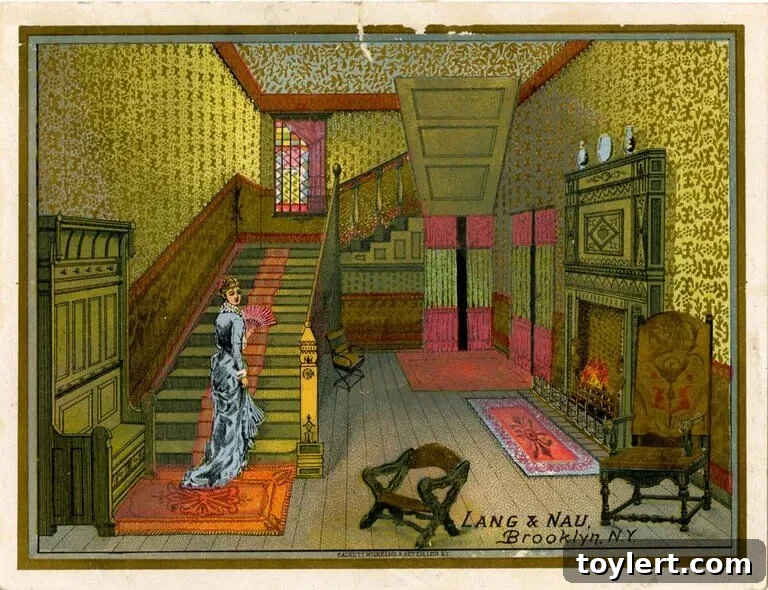
Before the internet transformed how we discover and share design ideas, inspiration primarily came through print media and local shops. Vintage trade cards, like the one from Lang and Nau, served as early advertisements, showcasing available furniture and goods. Pattern books, department store catalogs, and influential women’s magazines such as Godey’s Lady’s Book and later Ladies’ Home Journal played a crucial role in disseminating trends and educating homemakers on decor etiquette and style. These publications often provided detailed illustrations, suggested color palettes, and even floor plans, guiding readers in creating fashionable interiors that reflected the prevailing tastes of the time.
The mid-20th century saw the rise of modernism, bringing with it a push for functionality, clean lines, and less ornamentation. Department stores began offering in-house decorating services, making professional design advice more accessible to a broader clientele seeking contemporary aesthetics. Architects and designers like Frank Lloyd Wright and Charles and Ray Eames not only designed groundbreaking furniture but also championed holistic approaches to interior and exterior spaces, significantly influencing how homes were conceived and decorated, emphasizing harmony and purpose.
The late 20th and early 21st centuries ushered in the digital age, irrevocably altering the landscape of design inspiration. The advent of the internet brought about online magazines, forums, and blogs, allowing a wider audience to access professional design insights and DIY tips with unprecedented ease. This digital transformation was further amplified by the emergence of social media platforms, which redefined how we consume and share visual content related to home decor.
- **Pinterest:** Revolutionized visual inspiration, allowing users to create “mood boards” and collect images from across the web. This platform made design planning highly visual, collaborative, and accessible, fostering a culture of curated visual storytelling for home projects.
- **Instagram:** Became a dominant platform for professional designers, interior design influencers, and enthusiastic homeowners to share stunning visuals of their projects and beautifully styled spaces. It fostered vibrant communities around specific design aesthetics, making trends instantly global.
- **Houzz:** Emerged as a comprehensive platform combining professional directories, product sourcing, and ideabooks, effectively bridging the gap between inspiration and implementation for renovation and design projects. It empowers users to connect with professionals and find products directly related to their desired aesthetics.
These platforms have not only made design inspiration globally accessible but have also fueled the DIY culture, empowering individuals to tackle projects with confidence, guided by countless online tutorials, shared experiences, and readily available resources.
The Modern Interior Design Landscape: Trends, Technology, and Personalization
Today’s interior design industry is a dynamic field that expertly balances historical influences with cutting-edge innovation. While the professional interior designer still plays a vital role in creating bespoke, high-end spaces for clients with specific needs and visions, the explosion of online resources means that well-executed, stylish home decor is increasingly attainable for virtually any budget and skill level. This accessibility fosters a more inclusive design environment.
Current trends often lean towards sustainability, with a growing emphasis on eco-friendly materials, upcycling existing furniture, and responsible sourcing of new products. This movement reflects a broader societal shift towards environmental consciousness. Smart home technology is also seamlessly integrating into design, from automated lighting and climate control systems to hidden speakers and voice-activated assistants, transforming living spaces into intelligent, responsive environments that enhance comfort and convenience. Personalization remains paramount, moving away from prescriptive, uniform styles towards interiors that genuinely reflect the inhabitant’s personality, passions, and unique lifestyle. This often involves a thoughtful blend of vintage finds with contemporary pieces, the incorporation of travel mementos, and the commissioning of custom artworks, creating truly one-of-a-kind spaces.
The industry also grapples with the global nature of trends. What starts as a niche style in one part of the world can quickly become a global phenomenon thanks to the instantaneous sharing capabilities of social media. This constant flow of ideas means designers and homeowners alike must navigate a rich, sometimes overwhelming, array of choices, making careful curation and thoughtful selection more important than ever to create cohesive and meaningful interiors.
Conclusion: The Ever-Evolving Art of Creating Home
From the primitive decorations of ancient caves to the hyper-connected, smart homes of the 21st century, the human drive to decorate and design our living spaces has been a continuous, evolving journey. What began as a primal instinct for comfort and identity has blossomed into a multi-faceted industry, profoundly influenced by technological leaps, economic shifts, and media revolutions. Whether through the curated elegance of a professional designer’s touch or the joyful experimentation of a DIY enthusiast, home decor remains a profound form of self-expression and a fundamental aspect of human well-being. As our lives continue to change and new innovations emerge, so too will the art of creating a home – a testament to our enduring desire for beauty, comfort, and a space that truly feels our own.