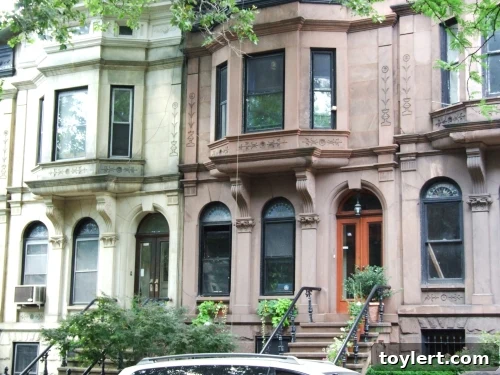
Unprecedented Discount: Park Slope Brownstone Sells for $800,000, Halving Its Value
A recent real estate transaction in the highly coveted Park Slope neighborhood of Brooklyn has sent shockwaves through the market, leaving industry experts and local residents utterly baffled. A stunning brownstone, located at the prestigious address of 501 Garfield Place, has reportedly sold for an astonishing $800,000. While this figure might seem considerable for many properties, it represents a bewildering fifty percent markdown from its previous sale price of $1.6 million, which it commanded back in 1996. This dramatic and unforeseen dip in value for a prime piece of Brooklyn real estate defies conventional market logic and has ignited a flurry of speculation regarding its underlying causes.
The Enigma of an Off-Market Deal in a Thriving Neighborhood
The circumstances surrounding this particular sale are as extraordinary as the price disparity itself. According to a reliable tipster who brought this anomaly to light, the property was not publicly listed, suggesting an unadvertised, off-market transaction. This method often indicates a desire for discretion or an urgent need to sell, circumventing the typical visibility and competitive bidding process that usually characterizes high-value property sales in Park Slope. PropertyShark records independently confirm the brownstone’s prior sale for $1.6 million in 1996, highlighting the magnitude of the current discount.
Our informant further clarified that this was an “arm’s length transaction,” a term signifying a fair, independent deal between unrelated and uninfluenced parties. Such a designation typically implies that the price reflects genuine market conditions. Yet, the deep discount in a neighborhood celebrated for its robust property values only deepens the mystery. Park Slope, renowned for its picturesque tree-lined blocks, historic brownstones, and proximity to Prospect Park, rarely witnesses such significant price reductions, making this sale a truly unique event that warrants a closer examination.
A Montrose Morris Masterpiece: History and Location
Beyond the bewildering financials, the brownstone at 501 Garfield Place is a property of immense historical and architectural significance. It was previously recognized as a “Building of the Day” by local architectural enthusiasts, underscoring its unique charm and heritage. The residence was masterfully designed by Montrose Morris, an iconic architect whose distinctive Romanesque Revival and Queen Anne style buildings significantly shaped the urban landscape of late 19th-century Brooklyn. Morris’s work is highly celebrated for its intricate detailing, grand scale, and enduring quality, making properties attributed to him particularly desirable and valuable.
The brownstone’s enviable position just a stone’s throw from the verdant expanse of Prospect Park further enhances its appeal. Situated on one of Park Slope’s most prestigious blocks, residents enjoy unparalleled access to nature, recreational facilities, and a vibrant cultural scene. This prime location, combined with the property’s distinguished architectural lineage, typically ensures sustained and substantial appreciation in value. The recent sale price, therefore, stands in stark contrast to the inherent worth and market expectations for such a prized asset.
Inside the Elegance: A Symphony of Preserved Details and Modern Comforts
Accounts from individuals who had the privilege of touring the interior of 501 Garfield Place prior to its sale paint a vivid picture of exquisite craftsmanship and thoughtful design. The brownstone reportedly boasted perfectly preserved original details, a testament to meticulous care and a reverence for its historical integrity. Such details often include intricate plaster moldings, ornate fireplace surrounds, original hardwood flooring, detailed millwork, and grand staircases—elements that are incredibly costly to restore or replicate and significantly contribute to a brownstone’s premium value and aesthetic appeal.
Moreover, the property wasn’t merely a historical relic; it had been thoughtfully updated with new mechanicals, including contemporary kitchens and baths. This strategic blend of historical charm and modern convenience is precisely what discerning buyers of luxury brownstones seek. One observer eloquently noted how “the marble went on for acres,” suggesting a lavish use of high-quality stone finishes throughout the interior, indicative of a high-end renovation. Furthermore, the “back wall was blown out with custom-made iron windows,” a significant and expensive alteration likely designed to flood the interior with natural light and provide expansive views of a private garden or courtyard. These enhancements point to substantial investment and meticulous attention to detail, making the discounted sale price an even greater enigma given the apparent quality and condition of the home.
Decoding the Devaluation: Exploring Potential Factors
In a real estate market usually governed by supply, demand, and logical valuation, this sale at 501 Garfield Place represents a significant aberration. The real estate community is abuzz with theories attempting to explain such an extraordinary reduction in value. Let’s explore some of the most prominent conjectures.
The Echoes of the Cyprus Banking Crisis
One intriguing hypothesis, put forth by our initial informant, links the dramatic price drop to the banking crisis that unfolded in Cyprus around 2012-2013. During this period, Cyprus experienced a severe financial downturn, leading to a controversial “bail-in” of bank deposits. This measure saw a portion of depositors’ savings forcibly used to recapitalize failing banks. The event sent ripples across global financial markets, particularly impacting high-net-worth individuals and entities with significant holdings in Cypriot financial institutions. It is conceivable that an owner with substantial exposure to this crisis might have faced urgent financial pressures, necessitating a rapid liquidation of high-value assets, such as a prime Brooklyn brownstone, even if it meant accepting a considerably lower, off-market price to meet immediate liquidity needs. While a direct link can be hard to prove, global economic instabilities can certainly influence the decisions of international property owners.
Renovation Overreach and Landmarks Commission Challenges
Another compelling theory centers on the extensive renovation work undertaken on the property. As an individual who saw the interior remarked, “I’m not sure if the seller got in over his head with the renovations — or maybe conforming to Landmarks’ requests for historic windows was the last straw.” Renovating a historic brownstone in a designated district like Park Slope is notoriously complex, time-consuming, and incredibly expensive. The New York City Landmarks Preservation Commission (LPC) enforces stringent regulations to preserve the architectural integrity of historic buildings and districts. These regulations often dictate the specific materials, techniques, and designs that must be used for any alterations, which can dramatically inflate costs compared to standard modern construction.
For instance, replacing windows in a landmarked property is a common pain point. The LPC frequently requires the restoration of original windows or the installation of custom-made, historically accurate replicas, which can cost tens of thousands of dollars per window. If a seller had embarked on an ambitious renovation project, as suggested by the “custom-made iron windows” in the back, they might have encountered spiraling costs, unforeseen delays, or intractable disagreements with the LPC over design or materials. Such pressures could have led to a decision to sell swiftly, even at a loss, to mitigate further financial strain or regulatory headaches. The sheer scope of modernizing a historic Montrose Morris brownstone while adhering to preservation guidelines could indeed push a homeowner beyond their financial or emotional limits.
Expert Reaction: “Run for the Hills”
The astonishing discount associated with this sale has not gone unnoticed by the wider real estate community, eliciting reactions of disbelief and concern. A seasoned real estate agent, who preferred to remain anonymous given the sensitive nature of discussing such an unusual market event, candidly stated, “In 30 years of selling real estate, I’ve never seen anything like this. Run for the hills.” This dramatic pronouncement from a veteran of the intensely competitive and typically resilient New York real estate market underscores the truly unprecedented nature of this transaction.
Such an emphatic warning from an experienced professional raises critical questions: Is this an isolated incident, a perfect storm of unique personal circumstances converging with specific property challenges? Or could it potentially signal a deeper, underlying vulnerability within the luxury real estate market that has yet to fully manifest? While the consensus might lean towards the former, an anomaly of this magnitude in one of Brooklyn’s most stable and high-value markets compels thorough observation. It serves as a potent reminder that even in seemingly unassailable markets, unforeseen factors can lead to outcomes that defy all expectations and established norms.
The Lingering Mystery: What Comes Next?
As the initial shock begins to subside, the Park Slope brownstone sale at 501 Garfield Place continues to prompt introspection within the real estate world. The true motivations behind such a significant price concession remain shrouded in mystery. Was it a calculated financial maneuver, a desperate attempt to liquidate assets, or perhaps a reflection of undisclosed issues that only the parties involved are privy to? The implications of this sale extend beyond just the buyer and seller, influencing perceptions of value and stability in prime urban real estate markets.
The whimsical, yet telling, closing remark from the original commentary, “We are looking into emigrating to Canada,” while almost certainly made in jest, perfectly encapsulates the collective bewilderment and anxiety this event has generated. It speaks to a shared sense of unease when fundamental market principles appear to be so dramatically overturned. In an environment where property values in prime locations like Park Slope are generally expected to only climb, a sudden halving of value for an architectural gem prompts profound questions about market resilience and individual financial vulnerabilities.
The real estate community, along with concerned residents, remains eager for further insights or a more definitive explanation for this astonishing Park Slope brownstone transaction. We invite any thoughts, theories, or additional information that might help unravel the full story behind one of Brooklyn’s most talked-about property sales in recent memory. Your perspective could be key to understanding this compelling real estate enigma.