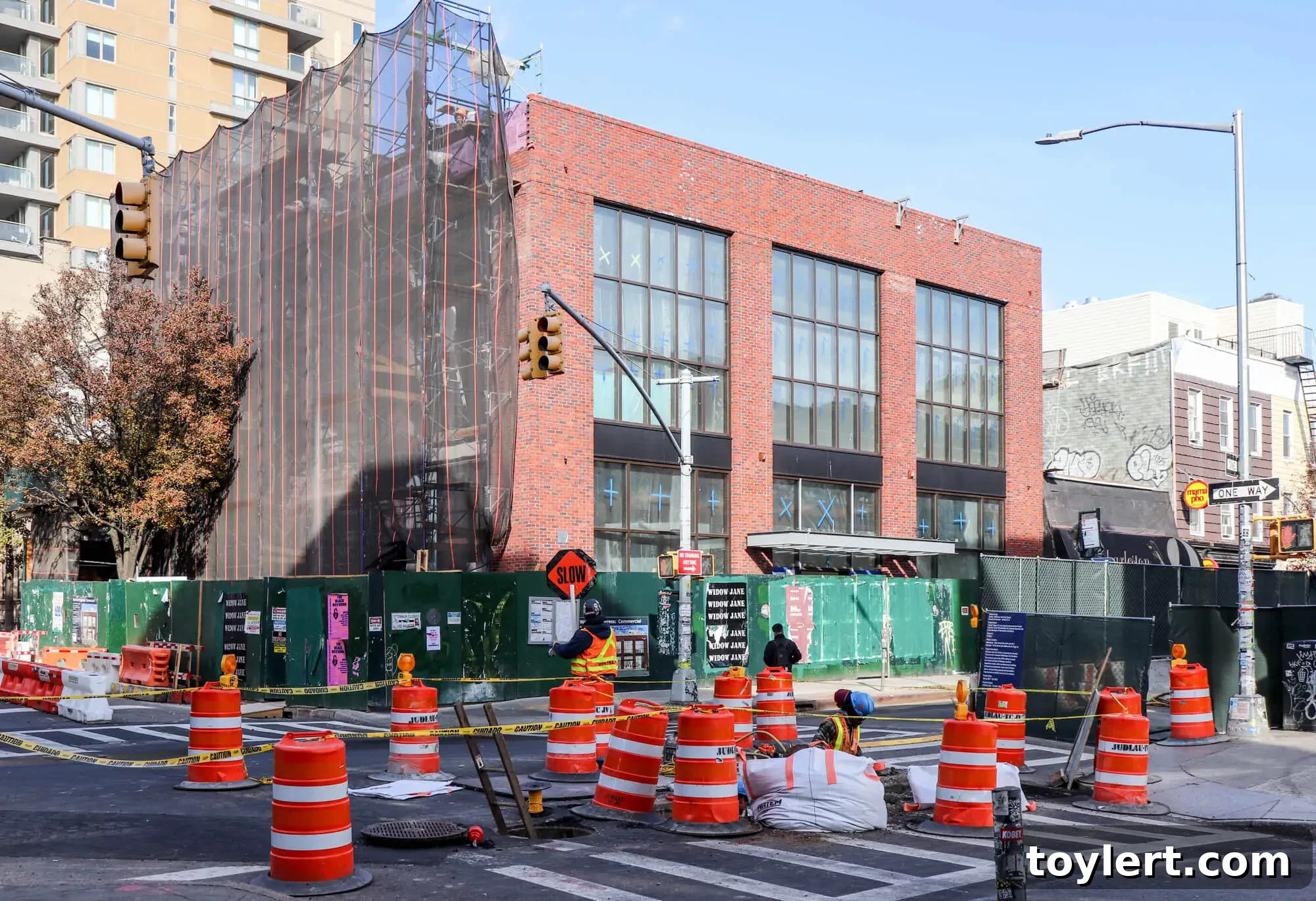
In the vibrant heart of Brooklyn’s ever-evolving landscape, a significant transformation is nearing completion at one of Williamsburg’s most coveted retail addresses. As the shadow of the impending L train shutdown loomed, developer Thor Equities demonstrated remarkable foresight and agility, swiftly moving to erect a state-of-the-art commercial structure at 176 Bedford Avenue. This strategic development is poised to redefine the retail experience on one of New York City’s most iconic thoroughfares, signaling a robust confidence in Williamsburg’s enduring commercial appeal.
The journey of this prime site began roughly a year ago, when the sale of the former Salvation Army building at 176 Bedford Avenue finally concluded, paving the way for a new chapter in the area’s commercial narrative. Since then, construction has progressed at an impressive pace. The site, once a cornerstone of community service, has been meticulously reimagined as a modern, two-story retail building designed to captivate both local residents and the countless visitors drawn to Williamsburg’s unique charm. This rapid progression underscores Thor Equities’ commitment to timely delivery and their keen understanding of the market’s demands, especially in a district as dynamic as this Brooklyn hotbed.
Today, the building stands majestically, having topped out months ago, its structural skeleton now fully clad. The windows have been expertly installed, reflecting the bustling street life of Bedford Avenue, and a distinctive canopy now extends over the main entrance, hinting at the high-end retail experience within. According to Thor Equities spokesman Josh Greenwald, the project is on track for a December wrap-up, promising an exciting new addition to Williamsburg’s retail fabric just in time for the new year. This expeditious timeline is a testament to the streamlined execution and strategic planning that characterize Thor Equities’ approach to urban development.
Williamsburg’s Retail Renaissance: A Deep Dive into 176 Bedford Avenue’s Transformation
Williamsburg, Brooklyn, has long been a beacon of cultural innovation, artistic expression, and, increasingly, a powerhouse of urban development. Its transformation from an industrial hub to a global destination for lifestyle and retail has been nothing short of spectacular. At the epicenter of this renaissance lies Bedford Avenue, a bustling artery renowned for its eclectic mix of independent boutiques, acclaimed eateries, and burgeoning flagship stores. The redevelopment of 176 Bedford Avenue by Thor Equities represents a pivotal moment in this ongoing evolution, a bold statement about the future of commercial real estate in one of New York’s most desirable neighborhoods.
Thor Equities’ Strategic Vision for a Prime Location
Thor Equities, a prominent real estate development and management firm, has built a formidable reputation for identifying and transforming prime properties in high-growth urban markets. Their investment in 176 Bedford Avenue is a quintessential example of their strategic prowess. This particular location offers unparalleled visibility and foot traffic, situated at the nexus of residential density and tourist appeal. The decision to replace a venerable community institution with a cutting-edge retail space reflects a calculated move to capitalize on Williamsburg’s demographic shifts—a growing population of affluent residents and a steady stream of tourists seeking authentic urban experiences.
The choice of a two-story retail building speaks volumes about the firm’s ambition and understanding of modern consumer behavior. In an era where e-commerce often dominates headlines, physical retail spaces that offer unique experiences, brand immersion, and convenient access are more valuable than ever. A multi-level layout allows for greater retail flexibility, potentially accommodating a single large anchor tenant or multiple complementary businesses, each benefiting from the high-traffic location. Thor Equities’ portfolio often features high-profile retail developments in key cities globally, and their approach at 176 Bedford Avenue aligns perfectly with their track record of creating iconic retail destinations that attract premier tenants and generate substantial value.
Key considerations for Thor Equities likely included the demand for modern, adaptable retail footprints in Williamsburg, the strong local economy, and the potential for significant rent premiums. The firm’s confidence in the area’s long-term growth trajectory appears unshaken, even amidst broader market uncertainties. This development is not merely about constructing a building; it’s about curating a future retail experience that resonates with the character and aspirations of Williamsburg itself.
Navigating the L Train Shutdown: A Challenge or an Opportunity?
The looming L train shutdown, a critical infrastructure project aimed at repairing damage from Hurricane Sandy, has cast a long shadow over businesses and residents along the L line, particularly in Williamsburg. For a neighborhood heavily reliant on this subway line for commuter traffic, the prospect of an extended closure presented significant logistical and economic challenges. Yet, for developers like Thor Equities, such disruptions can paradoxically become catalysts for strategic planning and resilient investment.
While many businesses braced for potential dips in foot traffic and revenue, Thor Equities’ swift progress on 176 Bedford Avenue suggests a longer-term perspective. The development timeline, with an anticipated December completion, means the new retail space will open its doors right as the L train impact begins to be felt, or even after the most acute phase has passed. This timing could be a deliberate strategy, betting on the fundamental strength and adaptability of the Williamsburg market. The neighborhood has historically demonstrated remarkable resilience, evolving and attracting new residents and businesses even through various economic cycles.
Mitigation efforts by the MTA and the city, including new ferry services, expanded bus routes, and carpool initiatives, aim to minimize the disruption. Furthermore, the L train shutdown itself could inadvertently create new local dynamics. With fewer commuters potentially venturing out of Williamsburg, local businesses that cater to residents might see increased patronage. Developers who have invested heavily in creating local amenities and attractions, such as Thor Equities at 176 Bedford Avenue, might find their properties well-positioned to serve an increasingly localized consumer base during the shutdown period.
Ultimately, the L train shutdown, while undeniably a challenge, is likely viewed by savvy developers as a temporary hurdle within a much larger, upward trajectory for Williamsburg. It forces innovation, encourages diversification of transport options, and tests the true mettle of a neighborhood’s economic foundations. Thor Equities’ continued investment highlights a belief that Williamsburg’s appeal extends far beyond its immediate transit links, rooted instead in its vibrant community, unique culture, and inherent desirability.
The Evolving Retail Landscape of Williamsburg: More Than Just Stores
Williamsburg’s retail scene is a dynamic tapestry, constantly weaving new patterns. From its early days as a haven for artists and DIY entrepreneurs, it has matured into a sophisticated market that attracts a mix of cutting-edge independent brands and global luxury retailers. Bedford Avenue, in particular, serves as the main artery for this commercial activity, experiencing some of the highest pedestrian counts in Brooklyn.
The new retail building at 176 Bedford Avenue is expected to contribute significantly to this evolving landscape. Modern retail is no longer just about transactions; it’s about experiences. Consumers seek environments that offer more than just products—they desire engaging spaces, curated selections, and a sense of community. The design and potential tenants for this two-story structure will likely reflect these trends, perhaps hosting:
- Flagship stores for national or international brands seeking a presence in a trendy, high-visibility market.
- Innovative experiential retail concepts that blend shopping with services or entertainment.
- High-end fashion or lifestyle boutiques that cater to Williamsburg’s affluent demographic.
- Gourmet food establishments or unique culinary concepts that complement the neighborhood’s vibrant dining scene.
This focus on “experience” is critical for brick-and-mortar retail to thrive in an age dominated by online shopping. By offering something distinctive and engaging, properties like 176 Bedford Avenue can solidify their position as essential destinations.
The competition for prime retail space in Williamsburg is intense, with high demand driving up commercial rents. This scenario attracts developers like Thor Equities who are confident in their ability to secure top-tier tenants willing to pay for premium locations. The success of 176 Bedford Avenue will serve as a benchmark for future developments, further cementing Williamsburg’s status as a premier retail destination in New York City.
Beyond the Building: Economic Impact and Future Outlook for Brooklyn Development
The development at 176 Bedford Avenue is more than just a single project; it is a microcosm of larger economic trends shaping Brooklyn and, indeed, urban centers across the globe. Real estate development, particularly in high-demand areas like Williamsburg, generates significant economic activity. This includes:
- Job Creation: From construction workers to future retail staff, the project creates numerous employment opportunities.
- Tax Revenue: Increased property values and commercial activity contribute significantly to the city’s tax base.
- Neighborhood Revitalization: Modern, attractive retail spaces can enhance the overall appeal of a street and neighborhood, drawing further investment and improving quality of life.
Thor Equities’ investment underscores a persistent belief in Brooklyn’s long-term growth trajectory. Despite challenges such as rising interest rates or temporary transit disruptions, the fundamentals of the market—population density, strong demographics, cultural allure, and strategic location—remain incredibly strong. Williamsburg continues to attract businesses and residents who seek a dynamic urban environment with a distinct identity.
Looking ahead, the successful completion and leasing of 176 Bedford Avenue will undoubtedly influence future development patterns in the area. It sets a precedent for the type of high-quality, experience-driven retail that can thrive on Bedford Avenue. As Williamsburg continues to evolve, balancing its historic charm with modern amenities, projects like this play a crucial role in shaping its identity. The transformation from a Salvation Army outpost to a cutting-edge retail hub at 176 Bedford Avenue is a powerful testament to the relentless pace of change and enduring appeal of one of Brooklyn’s most iconic neighborhoods.