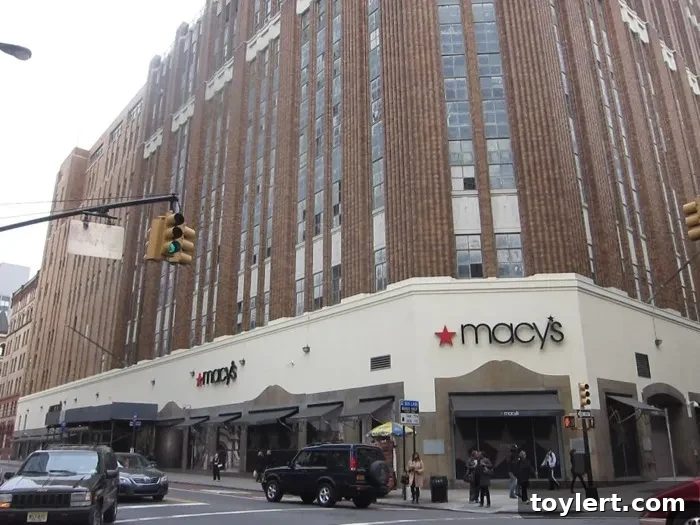
The Future of Macy’s Downtown Brooklyn: A Landmark at a Crossroads
In a pivotal moment for urban retail and real estate, Macy’s, the iconic American department store chain, has been meticulously contemplating the strategic future of its long-standing and prominent location in Downtown Brooklyn. Recent reports from authoritative industry sources, including Women’s Wear Daily (WWD) and subsequently highlighted by Racked, revealed internal discussions within the company concerning two transformative paths. Macy’s could either opt to sell its current sprawling property and establish a new, potentially more modern and streamlined store in a nearby location, or embark on an ambitious redevelopment of the existing structure into a dynamic mixed-use complex. This critical evaluation is unfolding against the backdrop of Downtown Brooklyn’s profound and ongoing gentrification and urban revitalization.
For generations, the Macy’s store at 422 Fulton Street has served as a cornerstone of Brooklyn’s commercial district, a symbol of traditional retail. However, in recent times, the store has frequently been subject to critique for its somewhat “lackluster” atmosphere and a shopping experience that many perceive as dated. This assessment stands in stark contrast to the burgeoning vitality and contemporary character of Downtown Brooklyn, an area that has rapidly evolved from a largely commercial and governmental precinct into a vibrant residential and cultural hub. The influx of new residents, often bringing with them higher disposable incomes and modern lifestyles, has cultivated a demand for fresh, contemporary retail offerings, thereby intensifying the pressure on venerable institutions like Macy’s to innovate and adapt.
A Retail Giant’s Strategic Dilemma in a Rapidly Evolving Borough
The strategic decision confronting Macy’s transcends mere real estate considerations; it encapsulates a broader, more profound existential challenge currently facing traditional department stores nationwide. With the inexorable shift in consumer preferences towards online shopping, specialized boutiques, and experience-driven retail, the once-dominant model of vast, multi-story department stores struggles to maintain its former market preeminence. For the Macy’s location in Downtown Brooklyn, this challenge is further amplified by the extraordinary market value of its prime real estate. Industry estimates by WWD suggested that a potential sale of the property could command an impressive $300 million, a clear indication of Brooklyn’s booming real estate market. Such a substantial financial opportunity presents a compelling incentive for Macy’s to re-evaluate its substantial asset holdings and unlock significant capital for future growth and investment.
The Allure of Redevelopment: Embracing a Mixed-Use Urban Model
Among the most compelling options being considered is a comprehensive redevelopment of the existing Macy’s building. This forward-thinking strategy, as detailed in reports, envisions a future where the upper floors of the expansive structure are transformed into sought-after residential apartment units, while a more compact, “shrunken version” of the department store would occupy the lower, street-level floors. This approach reflects a significant and accelerating trend in modern urban development, commonly known as mixed-use, where commercial establishments, residential spaces, and sometimes even office facilities are intelligently integrated within a single architectural complex. The impending Nordstrom store, frequently cited as a contemporary precedent, illustrates how luxury retailers are strategically rightsizing their physical footprints to align with modern urban living, cultivating more curated and efficient retail experiences that coexist harmoniously with residential populations.
The potential advantages of such a mixed-use redevelopment are multifaceted. For Macy’s, it offers an unparalleled opportunity to maximize the utility and value of its valuable land asset, generating diversified revenue streams not only from traditional retail sales but also from stable residential rents. This hybrid model could serve as a crucial financial buffer against the inherent volatility of the retail sector. Furthermore, a smaller, more strategically focused retail presence would empower Macy’s to curate its merchandise more effectively, tailoring its offerings precisely to the evolving tastes and specific demands of the affluent new residents populating Downtown Brooklyn. From an architectural and urban planning perspective, such a project could infuse new vitality into an aging, albeit historically significant, building, reimagining it as a contemporary landmark that serves multiple vital functions within the vibrant community.
The Alternative Path: Selling and Relocating for a Fresh Start
The alternative strategic direction involves the complete sale of the existing Fulton Street property, followed by the construction of an entirely new store in a proximate location. This option also possesses considerable appeal for the retail giant. Macy’s currently owns a parking lot within the vicinity, which presents a practical and convenient site for a purpose-built new establishment. Pursuing a new construction would afford Macy’s the unique opportunity to design a cutting-edge retail space from the ground up, integrating modern architectural principles, highly efficient layouts, and advanced technological infrastructure specifically tailored for the discerning contemporary shopper. A brand-new build could definitively address the long-standing criticisms regarding the current store’s dated aesthetics and functional limitations, offering a truly unencumbered fresh start without the inherent complexities, compromises, and lengthy timelines typically associated with retrofitting a historical structure.
While the prospect of a state-of-the-art Macy’s store is undoubtedly exciting, the full sale option also presents its own set of challenges. It would necessitate identifying a suitable and willing buyer for the expansive and historically significant current property, a process that can be protracted and intricate, even within a dynamic and competitive market like Brooklyn. Moreover, relocating an established retail presence, even over a short distance, carries the potential to temporarily disrupt existing customer loyalty and operational continuity. However, the prospect of a substantial capital injection from such a sale – the aforementioned $300 million – remains a profoundly powerful driver, offering Macy’s significant financial flexibility for critical future investments and overarching strategic initiatives across its extensive retail portfolio.
The Driving Force: Downtown Brooklyn’s Remarkable Urban Transformation
The undeniable catalyst for Macy’s comprehensive reevaluation is the dramatic and ongoing metamorphosis of Downtown Brooklyn. What was once primarily perceived as a commercial, civic, and governmental district has undergone an extraordinary evolution over the past decade. Aggressive and forward-thinking rezoning initiatives, coupled with monumental public and private sector investments, have stimulated the rapid development of numerous towering residential buildings, drawing thousands of new residents to the area. These newcomers, predominantly young professionals and growing families, contribute significantly to the local economy with higher disposable incomes and an escalating demand for a diverse array of modern amenities, ranging from artisanal cafes and gourmet supermarkets to advanced fitness centers and luxury boutiques.
This profound demographic shift has fundamentally reshaped the entire retail landscape of the area. Traditional anchor stores like Macy’s, which historically thrived on consistent foot traffic from office workers and generations of loyal shoppers, now find themselves navigating an increasingly competitive environment populated by a vibrant ecosystem of specialized retail outlets and innovative, experience-driven retail concepts. The area’s newfound and undeniable appeal has also garnered considerable attention from astute real estate developers, all eager to capitalize on soaring property values and the escalating demand for both prime residential and coveted commercial spaces. For Macy’s, maintaining a static presence within such an incredibly dynamic and rapidly evolving urban environment is simply no longer a viable option; proactive adaptation is absolutely crucial for ensuring long-term viability and maintaining contemporary relevance.
Broader Implications for Retail and Urban Development
Macy’s eventual decision will undoubtedly reverberate with far-reaching implications, extending beyond the corporation itself to influence the broader retail industry and the trajectory of urban development in Brooklyn. For the retail sector, this situation powerfully underscores the ongoing and urgent necessity for traditional brick-and-mortar stores to innovate boldly and fundamentally reconsider their physical presence and operational models. The era of the monolithic, one-size-fits-all department store is rapidly waning, giving way to more agile, technologically integrated, and experience-driven models that increasingly integrate seamlessly with other essential urban functions, such as residential living and community spaces.
For urban development, particularly within dense and rapidly gentrifying areas like Downtown Brooklyn, the potential redevelopment of such a historically significant and physically prominent site represents a crucial inflection point. It vividly highlights the intricate and often delicate balance between preserving existing historical landmarks, accommodating burgeoning new residential growth, and fostering robust economic vitality. Any major project undertaken at the Macy’s site would inevitably reshape a prominent and iconic block in Brooklyn, influencing everything from traffic patterns and pedestrian flow to the overall aesthetic and character of the immediate neighborhood. The ultimate choice between pursuing a fully new construction and opting for a sophisticated mixed-use retrofit also carries distinct implications for environmental sustainability, the timelines of construction, and the immediate, tangible impact on the existing urban fabric and its residents.
Conclusion: A Glimpse into the Future of Urban Department Stores
As Macy’s continues to navigate these momentous decisions, its deliberations regarding the Downtown Brooklyn location offer an invaluable and fascinating case study in the ongoing evolution of urban retail in the 21st century. The company stands at a profound juncture, where cherished tradition confronts transformative change, and its rich historical legacy is weighed against compelling economic imperatives. Whether Macy’s ultimately chooses to pursue a sleek, modern, purpose-built store designed for contemporary needs, or opts for a groundbreaking mixed-use development that intricately interweaves dynamic retail with vibrant residential living, the ultimate outcome will undoubtedly establish a significant precedent. This decision will not only redefine a prominent and beloved corner of the borough but will also provide invaluable insights into the broader and ongoing reinvention of the classic American department store model within an increasingly dynamic and ever-evolving urban landscape.