Bed Stuy Community Fights for Green Space, Questions Affordable Housing Plan at Historic Girls High School
In the vibrant heart of Bedford-Stuyvesant, a significant debate is unfolding, pitting a community’s desire for vital green space against the city’s push for affordable housing development. At the center of this contention is the 30,000-square-foot parking lot adjacent to the majestic, landmarked Girls High School at 457 Nostrand Avenue. While city officials envision a towering 16-story affordable housing complex, local residents are staunchly advocating for the land to remain publicly owned and transformed into a much-needed community green oasis. This unfolding narrative highlights the complex challenges of urban planning, historic preservation, and community empowerment in one of Brooklyn’s most cherished neighborhoods.
The Contested Site: A Landmark’s Legacy Meets Future Development
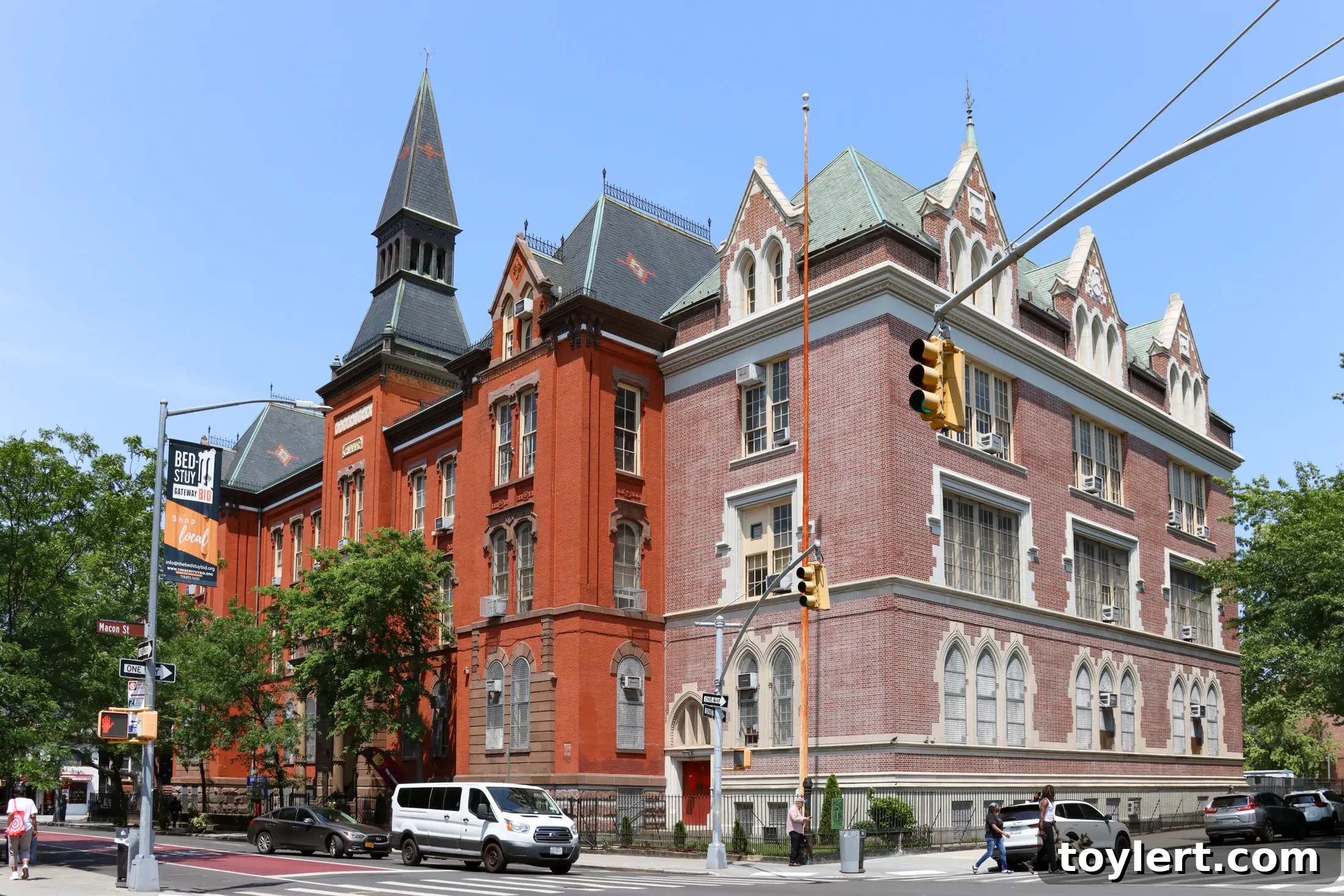
The Girls High School, an architectural gem nestled between Macon and Halsey streets, holds a special place in Bed Stuy’s history and urban fabric. Its landmark status underscores its historical and cultural significance, making any proposed development on its grounds a matter of intense public scrutiny. The expansive parking lot, currently a utilitarian space, represents a rare opportunity in a densely populated area – a blank slate whose future is now hotly debated.
Historical Significance of Girls High School
Built in 1885, the Brooklyn Girls High School building is a stunning example of Romanesque Revival architecture, designed by James W. Naughton. Its imposing facade and intricate detailing have made it a neighborhood icon for over a century. Designated as a landmark, the school stands as a testament to Brooklyn’s rich educational history and architectural heritage. The preservation of its character, and by extension its immediate surroundings, is a paramount concern for many residents who see it as an anchor of community identity. Any new construction on its adjacent land must be carefully considered to ensure it complements, rather than detracts from, this historic masterpiece.
The City’s Vision: Affordable Housing Under the Atlantic Avenue Plan
The city’s plan for the 457 Nostrand Avenue lot stems from the recently approved Atlantic Avenue Mixed-Use Plan rezoning. This ambitious initiative aims to stimulate housing development, particularly affordable units, within Brooklyn’s industrial corridors. The Girls High School parking lot was identified as one of five publicly owned sites slated for disposition and the creation of 100 percent subsidized affordable housing. Rezoning documents detail plans for a substantial 240-unit building, projected to rise up to 155 feet tall, or approximately 16 stories. This significant vertical expansion in a historically low-rise area naturally raises questions about neighborhood character, infrastructure, and community integration.
Community Voices: A Green Dream for Bed Stuy
Local residents and community advocates have been vocal in their opposition to the sale and development of the parking lot, articulating a powerful vision for an alternative future. They argue that the land, as a publicly owned asset, should be utilized for the maximum public good, which, in their view, means a vibrant green space for the community.
The Call for a Community Green Space
The push for a community green space is driven by a profound understanding of its benefits in a dense urban environment like Bed Stuy. Advocates envision a tranquil park, a bustling community garden, or a versatile public plaza that could serve multiple purposes: a place for relaxation, recreation, community gatherings, and environmental enrichment. Such a space would offer residents a much-needed respite from the urban hustle, improve air quality, foster biodiversity, and provide opportunities for outdoor activities for all ages. In a neighborhood where accessible green space is often limited, transforming this expansive lot into a park would represent a significant enhancement to the quality of life for thousands of Brooklynites.
The Principle of Public Ownership and Community Benefit
At the core of the community’s argument is the principle that publicly owned land should serve enduring public interests, not simply be sold off for private development, even if it includes affordable housing components. Residents believe that converting the land into a permanent green space offers a unique, long-term public benefit that aligns more closely with the neighborhood’s existing needs and character. The concern is that once public land is sold, it is permanently lost as a direct community asset, making future efforts to establish green spaces significantly more challenging and costly. This perspective emphasizes a holistic view of community well-being, where environmental health and social cohesion are given equal weight to housing provision.
The Rezoning Process and Its Limitations
The journey of any major development in New York City involves navigating a complex rezoning and public review process, known as the Uniform Land Use Review Procedure (ULURP). While designed to incorporate community feedback, the process often reveals a gap between local input and binding commitments.
Community Board 3’s Conditional Approval
During the rezoning review, Community Board 3, representing the interests of Bed Stuy residents, voted 22 to 6 to approve the project. However, this approval was not unqualified; it came with a series of significant conditions reflecting the community’s concerns. These conditions included stipulations that the new building should not exceed the height of the school’s historic spire, that studio units should be minimized in favor of larger family-sized apartments, and that the apartments should target households earning an average of 40 percent of the Area Median Income (AMI) to ensure deeper affordability. Furthermore, the Board recommended considering underground parking to mitigate street congestion and mandating the inclusion of significant green space on the Halsey Street side of the development.
The Challenge of Non-Binding Conditions
Despite the Community Board’s clear articulation of these conditions, a critical flaw in the ULURP process emerged: these recommendations are not legally binding. Without a formal Community Benefits Agreement (CBA) negotiated and secured during the rezoning, there is no legal mechanism to ensure the developer or the city adheres to these specific demands. This lack of enforceability means that while community voices were heard and documented, the likelihood of their conditions being fully met is unfortunately slim. This scenario highlights a systemic challenge in urban planning, where local input can be influential but ultimately lacks the teeth to guarantee specific outcomes, leaving communities feeling disenfranchised.
Balancing Competing Needs: Affordable Housing vs. Green Space
The debate in Bed Stuy is a microcosm of a larger city-wide, and even national, challenge: how to balance the urgent need for affordable housing with equally critical community needs such as open space, historic preservation, and neighborhood character.
Addressing Brooklyn’s Affordable Housing Crisis
There is no denying New York City’s severe affordable housing crisis, and Brooklyn is at the epicenter. The demand for safe, quality, and affordable homes far outstrips supply, leading to displacement and economic hardship for many families. Projects that create 100 percent affordable housing are crucial components of the city’s strategy to address this crisis. From the city’s perspective, converting a underutilized parking lot into hundreds of affordable units is a direct and impactful way to tackle housing shortages, especially when aiming for deeper affordability levels like 40% AMI, which serves very low-income households.
Integrating Development with Historic and Environmental Sensibility
However, the manner in which affordable housing is developed is equally important. The Bed Stuy case underscores the need for thoughtful urban design that respects existing historical contexts and environmental imperatives. Simply maximizing unit count on every available plot may provide housing but can simultaneously erode the very qualities that make a neighborhood desirable. Historic districts, in particular, require sensitive planning that ensures new structures complement their surroundings rather than overshadowing them. The argument for green space is not anti-development but rather a plea for integrated development that considers environmental sustainability and public health alongside housing density.
Innovative Solutions for Future Urban Planning
This situation presents an opportunity for innovative urban planning solutions. Could a project integrate both affordable housing and significant public green space? Perhaps a portion of the site could be dedicated to a park, while housing is built elsewhere or with a more creative architectural approach. Exploring models like green roofs, vertical gardens, or creatively designed public plazas that are integral to development rather than an afterthought, could offer pathways to satisfy multiple community needs. The challenge for urban planners is to move beyond an “either/or” paradigm and work towards “both/and” solutions that genuinely benefit all stakeholders.
The Path Forward for 457 Nostrand Avenue
As the city moves forward with its plans, the Bed Stuy community remains resolute in its advocacy. The future of the Girls High School parking lot is more than just a real estate transaction; it’s a test case for how New York City balances development, historic preservation, and community aspirations.
Continued Community Activism and Advocacy
Residents are expected to continue their activism, utilizing various channels to make their voices heard. This includes further public meetings, petitions, engagement with local elected officials, and potentially legal avenues. The passion displayed by Bed Stuy locals underscores a deep commitment to shaping their neighborhood’s future, ensuring it remains a place where history is honored, and public spaces serve the people.
Setting a Precedent for Urban Development
The outcome of this particular debate could set a significant precedent for future development projects on publicly owned land in landmarked districts across New York City. It raises crucial questions about the process of land disposition, the efficacy of community input during rezoning, and the ultimate responsibility of urban planners and developers to deliver projects that genuinely enhance the quality of life for residents, balancing the critical need for housing with equally important civic and environmental considerations. The Bed Stuy struggle highlights the ongoing tension between top-down urban policy and grassroots community vision, making it a pivotal case study for sustainable and equitable city growth.
Ultimately, the story of the Girls High School parking lot is a compelling narrative about the soul of a neighborhood and the fight for its future. It is a call for a vision that encompasses not only the urgent need for housing but also the invaluable contributions of green spaces, historic preservation, and robust community engagement to create truly livable, thriving urban environments.