476 Washington Avenue: A Modern Masterpiece in Clinton Hill’s Historic Fabric
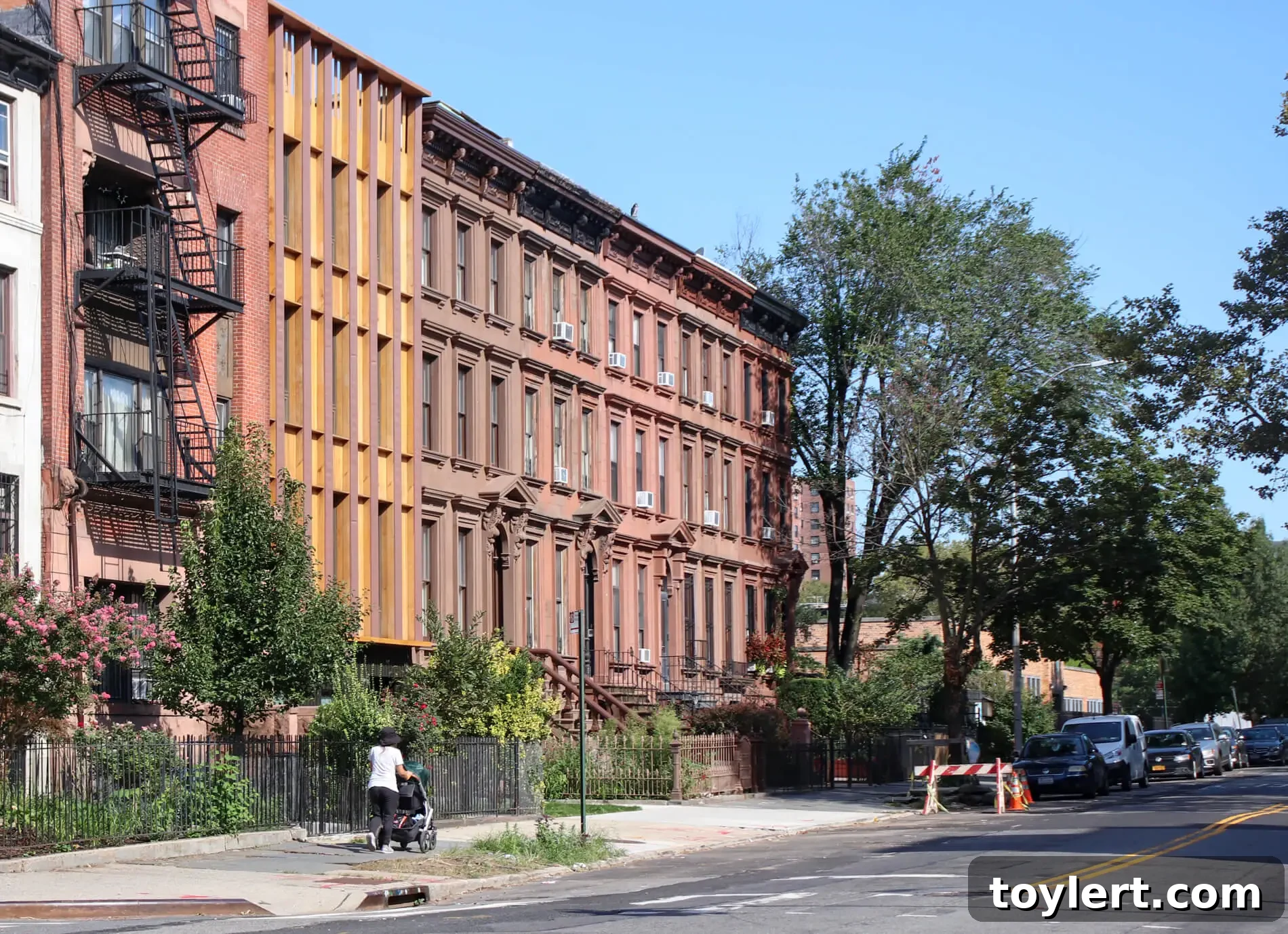
In the vibrant and historically rich Clinton Hill neighborhood of Brooklyn, a remarkable architectural transformation has taken place. At 476 Washington Avenue, a sophisticated modern row house now stands proudly, having replaced a dilapidated 19th-century wood-frame dwelling. This project, spearheaded by the innovative minds at NV.Design.Architecture, is more than just a new building; it represents a thoughtful dialogue between historical context and contemporary design, setting a new benchmark for urban infill within a storied historic district.
The site, once home to a deteriorating structure, has been reimagined as a testament to modern architectural sensibilities. The new residence masterfully navigates the delicate balance of integrating a distinctly contemporary aesthetic into a streetscape renowned for its classic charm. NV.Design.Architecture’s vision was clear: to create a “modern transition” – a structure that would respectfully bridge the architectural eras of its neighbors while asserting its own identity through cutting-edge design and sustainable practices.
From Deterioration to Modern Elegance: The Site’s Dramatic Transformation
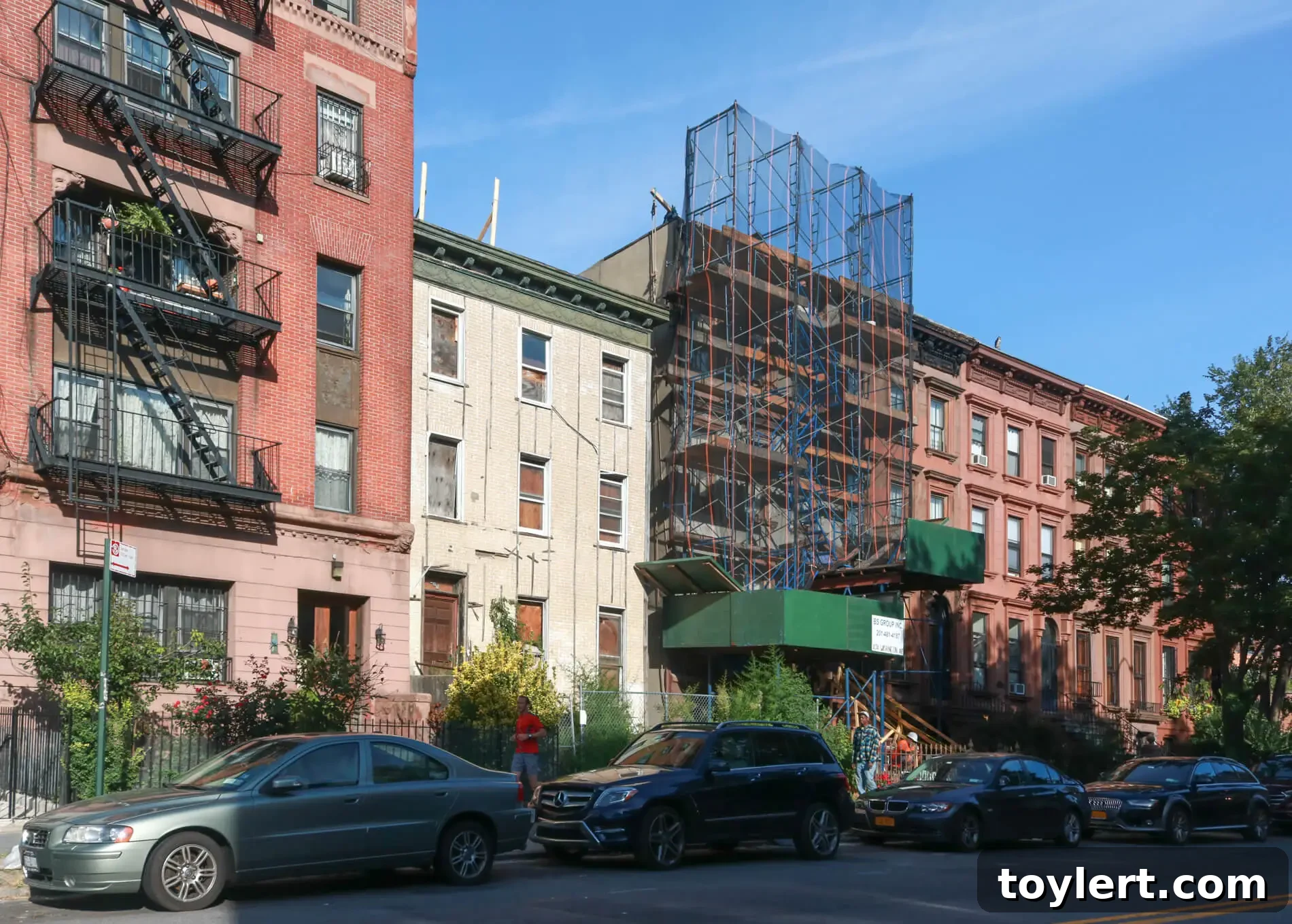
The decision to replace the existing 19th-century wood-frame house at 476 Washington Avenue was born out of necessity. The original dwelling had fallen into a state of disrepair, no longer serving its purpose effectively nor contributing positively to the aesthetic integrity of the street. Rather than attempting a costly and potentially compromised renovation, the project sought a comprehensive solution that would revitalize the lot entirely. This bold move provided an opportunity to address the challenges of urban decay and introduce a structure that truly reflects modern living standards and environmental considerations.
The former building, typical of its era, represented a piece of Clinton Hill’s past. Its replacement, however, signifies a forward-looking approach to architectural development in established neighborhoods. It underscores a growing trend where dilapidated structures are not merely restored but are intelligently supplanted by designs that can contribute to the urban fabric for generations to come. This particular transformation highlights how thoughtful demolition and subsequent reconstruction, when handled with sensitivity and vision, can lead to a revitalization that benefits the entire community, enhancing property values and elevating aesthetic standards.
NV.Design.Architecture’s Vision: Crafting a Seamless Modern Transition
NV.Design.Architecture, the creative force behind 476 Washington Avenue, approached this project with a profound understanding of its contextual complexities. Their design philosophy for this modern row house revolved around the concept of a “modern transition.” This wasn’t merely about constructing a new building; it was about meticulously crafting a structure that acknowledges the existing architectural language of the Clinton Hill Historic District while confidently asserting a contemporary presence.
The firm aimed to create a design that felt both fresh and familiar. They meticulously studied the rhythms, proportions, and materials prevalent in the surrounding 19th and early 20th-century brownstones and row houses. Instead of direct mimicry, they sought to reinterpret these elements through a modern lens. The goal was to establish a harmonious dialogue between the old and the new, ensuring the modern row house at 476 Washington Avenue would seamlessly integrate into its historic surroundings rather than stand out as an alien imposition. This careful balance is a hallmark of NV.Design.Architecture’s commitment to contextually sensitive design, proving that innovation can coexist beautifully with tradition.
Architectural Excellence: Materiality and Form at 476 Washington Avenue
The defining feature of the modern row house at 476 Washington Avenue is its stylized board-and-batten siding. This choice is a brilliant reinterpretation of a classic American architectural element, typically associated with rustic or vernacular structures. NV.Design.Architecture has elevated it to a sophisticated contemporary expression. The vertical lines of the battens create a sense of height and slenderness, lending a subtle elegance to the facade. This modern rendition plays with light and shadow, giving the exterior a dynamic, textured quality that changes throughout the day.
Beyond the innovative siding, the building’s material palette is a thoughtful composition. While not explicitly detailed in the initial description, the project’s context often implies the use of durable, high-quality modern materials like zinc and warm natural wood, commonly found in similar contemporary designs within historic urban settings. The interplay between a sleek, often metallic material like zinc – perhaps used for accents or upper-level cladding – and the organic warmth of wood or the board-and-batten siding creates a rich visual contrast. Zinc, known for its longevity and elegant patina, would offer a robust, low-maintenance component, while natural wood elements could introduce softness and connect the structure to its natural surroundings and the historical use of organic materials.
The facade’s thoughtful composition extends to its fenestration. Window placement is strategic, designed not only to maximize natural light within the interiors but also to establish a rhythmic order on the exterior that aligns with the street’s existing architectural cadence. The size and shape of the windows might vary, creating visual interest and indicating different programmatic functions within the house, yet they remain cohesive within the overall design language. This meticulous attention to detail in material selection and form contributes significantly to the house’s ability to be both distinctly modern and contextually appropriate.
Clinton Hill Historic District: A Rich Tapestry of Architectural Heritage
The Clinton Hill Historic District is one of Brooklyn’s most cherished and architecturally significant neighborhoods. Known for its tree-lined streets, grand 19th-century mansions, and stately brownstones, it represents a remarkable collection of Italianate, Neo-Grec, Queen Anne, and Romanesque Revival styles. The district’s designation by the Landmarks Preservation Commission (LPC) ensures the preservation of its unique character and protects its historic buildings from insensitive alterations or demolition. This context presents both a challenge and an extraordinary opportunity for any new development.
Building within such a protected area requires an acute awareness of historical precedent and a respectful engagement with the LPC. Projects like 476 Washington Avenue must demonstrate not only architectural merit but also a profound understanding of how they will integrate into a landscape rich with history. The success of this modern row house lies in its ability to contribute to the district’s ongoing architectural narrative, showing that contemporary design can enhance, rather than detract from, a historic setting. It stands as an example of how modern interventions, when sensitively executed, can breathe new life into an area, offering a fresh perspective while honoring the legacy of its predecessors.
Contemporary Living: Inside 476 Washington Avenue
While the exterior of 476 Washington Avenue makes a powerful statement, the interior is designed to deliver a modern, functional, and aesthetically pleasing living experience. Contemporary row houses are typically characterized by open-plan layouts that foster a sense of spaciousness and flexibility, perfectly suited for today’s urban dwellers. The design likely prioritizes maximizing natural light, a crucial element in row house typology where side windows are often limited. Strategically placed large windows, skylights, and perhaps a central light well could flood the interiors with an abundance of daylight, creating bright and inviting spaces.
The internal material palette would likely echo the sophisticated simplicity of the exterior, featuring clean lines, refined finishes, and a focus on natural materials like wide-plank wood flooring, custom millwork, and high-end fixtures. Kitchens and bathrooms are expected to be state-of-the-art, incorporating smart home technologies and energy-efficient appliances. The layout would flow seamlessly from one space to another, perhaps connecting living areas to outdoor spaces such as a private garden at the rear or a rooftop terrace offering panoramic views of the historic neighborhood and beyond. This integration of indoor and outdoor environments further enhances the quality of life, providing urban residents with essential connection to nature and fresh air. Every detail inside 476 Washington Avenue would be carefully curated to offer comfort, convenience, and a truly luxurious modern living experience.
A Precedent for Urban Infill: The Impact of 476 Washington Avenue
The development at 476 Washington Avenue represents a significant case study in urban infill architecture. In densely populated cities like Brooklyn, finding opportunities for new construction often means replacing existing structures or building on challenging, narrow lots. This project exemplifies how such constraints can be transformed into opportunities for innovation. By replacing a deteriorated building with a thoughtfully designed modern dwelling, NV.Design.Architecture has not only improved the aesthetic appeal of the immediate streetscape but also contributed to the sustainable regeneration of the urban environment.
Its impact extends beyond its immediate footprint. This modern row house serves as a powerful precedent, demonstrating that contemporary architecture can thrive within historic districts without compromising their integrity. It encourages a nuanced approach to preservation, suggesting that “new” does not always equate to “disruptive.” Instead, it shows how innovative design can coexist and even enhance the existing architectural fabric, proving that respect for the past can inspire a compelling vision for the future of urban development. This project fosters a progressive dialogue within the architectural community and among urban planners about how cities can evolve gracefully while honoring their heritage.
Conclusion: A Harmonious Blend of Past, Present, and Future
The modern row house at 476 Washington Avenue in Clinton Hill is a triumph of thoughtful design and contextual sensitivity. NV.Design.Architecture has not merely constructed a new dwelling; they have woven a contemporary thread into the rich tapestry of a historic neighborhood. By replacing a decaying 19th-century structure with a vibrant, meticulously designed modern home, the project exemplifies how innovative architecture can serve as a “modern transition,” respectfully bridging eras and elevating the urban landscape.
Through its stylized board-and-batten siding and considered material palette, the house demonstrates a profound understanding of its surroundings while asserting a confident modern identity. It stands as a testament to the idea that architectural progress and historical preservation are not mutually exclusive but can, in fact, enrich each other. 476 Washington Avenue is more than just a home; it is a vision realized, a harmonious blend of past, present, and future, solidifying its place as a significant contribution to Brooklyn’s diverse and evolving architectural narrative.