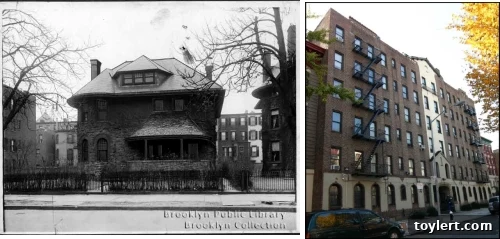
Brooklyn’s Enduring Legacy: A Journey Through Crown Heights North’s Grand Past and Vibrant Present
Brooklyn, a borough synonymous with vibrant culture and historic charm, boasts an architectural heritage that tells a compelling story of growth, prosperity, and transformation. Among its many distinguished neighborhoods, Crown Heights North stands out as a living testament to a golden age of urban development. This article delves into the fascinating evolution of this area, exploring its emergence from the bustling landscape of 19th-century Bedford to the prestigious Saint Marks District, and reflecting on its enduring legacy in the modern era. We’ll specifically examine the architectural marvels that defined its streets, particularly St. Marks Avenue, and consider how a house like the Raymond H. Fiero House epitomized the grandeur of its time.
The Dawn of a Golden Age: Brooklyn’s Boom Years (1880s-1920s)
The period between the 1880s and the 1920s marked an unprecedented boom time for Brooklyn. As New York City solidified its position as a global economic powerhouse, Brooklyn evolved rapidly from an independent city into a sprawling urban center, drawing new residents, industries, and wealth. This era witnessed a dramatic increase in population, fueled by immigration and the burgeoning success of merchants, industrialists, and professionals. The demand for housing, particularly for the burgeoning upper and middle classes, spurred an extraordinary building spree across the borough. Architects and developers seized the opportunity to create magnificent homes, establishing distinctive streetscapes that continue to define Brooklyn’s character today.
During these decades, architectural styles such as Victorian, Romanesque Revival, Neo-Renaissance, and Beaux-Arts flourished, each contributing to a rich tapestry of elaborate facades, intricate detailing, and stately proportions. Brooklyn’s relatively undeveloped land, compared to Manhattan, offered ample space for grander residences, including freestanding mansions on generous lots – a luxury increasingly rare elsewhere in the city. The borough’s strategic location, with improving commuter lines and a perceived higher quality of life, made it an attractive alternative for those seeking both urban convenience and suburban tranquility. This confluence of economic prosperity, population growth, and architectural ambition laid the foundation for neighborhoods like Crown Heights North to reach their zenith.
From Bedford to Crown Heights North: A Shifting Identity and Rising Prestige
Before it became known as Crown Heights North, much of this thriving area was simply considered part of the larger Bedford section of Brooklyn. Bedford, an older and more expansive district, encompassed a broad swath of central Brooklyn. However, as wealth concentrated and specific blocks were developed with particularly affluent residences, new micro-neighborhood identities began to emerge. The desire for exclusivity and the distinct character of its newly built grand homes led to the area we now recognize as Crown Heights North gaining a unique identity and a higher social cachet.
The transformation was driven not just by the quality of housing but also by the type of residents it attracted. Successful entrepreneurs, prominent civic leaders, and influential families sought out locations that reflected their status and provided a serene, beautiful environment away from the industrial hustle. The development of elevated train lines and trolley services further enhanced the area’s appeal, offering convenient access to Manhattan and other parts of Brooklyn while maintaining a residential serenity. This period of rapid development and social stratification gradually carved out Crown Heights North as a premier residential district, characterized by its impressive architecture and distinguished residents.
The Genesis of the Saint Marks District: An Enclave of Wealth and Elegance
Within Crown Heights North, one particular stretch, and its surrounding vicinity, garnered exceptional prestige, leading to its unofficial designation as the “Saint Marks District.” This moniker arose directly from the concentration of wealthy individuals who chose to build their elaborate homes along St. Marks Avenue. Unlike many other streets that featured rows of attached brownstones, St. Marks Avenue itself was dominated by large private homes, predominantly freestanding mansions situated on expansive, meticulously landscaped lots. This architectural preference immediately set it apart, signifying a higher level of affluence and a desire for greater privacy and space.
The residents of the Saint Marks District were often at the pinnacle of Brooklyn society – captains of industry, successful merchants, and professionals who invested heavily in creating residences that were not merely houses but statements of their prosperity and sophisticated taste. These homes were designed to impress, featuring architectural details, fine materials, and spacious interiors conducive to lavish entertaining and comfortable family life. The “added cachet” was palpable, making the Saint Marks District a coveted address for those who sought to reside among their social peers in an environment of unparalleled elegance and grandeur.
Architectural Splendor: St. Marks Avenue’s Grand Residences
To truly grasp the magnificence of St. Marks Avenue during its heyday, one might imagine a streetscape akin to Clinton Avenue in Clinton Hill. Clinton Hill, another prestigious Brooklyn neighborhood, was celebrated for its wide, tree-lined streets adorned with an array of stunning freestanding mansions and grand townhouses. This comparison highlights the scale, ambition, and aesthetic quality that defined St. Marks Avenue between Nostrand and Brooklyn Avenues.
The homes along St. Marks Avenue were not mass-produced; they were bespoke creations, often designed by notable architects of the era. Each mansion was a unique blend of architectural styles, frequently incorporating elements of Romanesque Revival with its robust stone facades, round arches, and turrets, or the more refined details of Neo-Renaissance with classical motifs and elegant proportions. Materials were of the highest quality: Indiana limestone, carved brownstone, ornate terra cotta, and rich hardwoods. Inside, these houses featured grand entryways, sweeping staircases, multiple parlors, libraries, formal dining rooms, and ballrooms, all adorned with exquisite millwork, stained glass, and decorative plasterwork. The generous lot sizes allowed for side yards, carriage houses, and elaborate gardens, contributing to a verdant and picturesque streetscape that exuded an air of exclusivity and refined living. These residences were more than just buildings; they were masterpieces of design and craftsmanship, reflecting the aspirations and lifestyles of Brooklyn’s elite.
The Raymond H. Fiero House: An Embodiment of Historic Grandeur
While specific details about the Raymond H. Fiero House are not extensively documented in the historical record, its very existence on St. Marks Avenue during this era places it squarely within the context of these magnificent architectural achievements. A house bearing the name of an individual, likely a prominent figure of the time, would have undoubtedly adhered to the high standards of design and construction prevalent in the Saint Marks District. One can infer that the Fiero House, similar to its distinguished neighbors, would have showcased a prominent architectural style, perhaps a robust Romanesque Revival or an elegant Queen Anne, characterized by a striking façade, thoughtful ornamentation, and an imposing presence on its lot.
Imagine the Raymond H. Fiero House with its own distinct character: perhaps a commanding bay window offering views of the avenue, intricate brickwork or stone carvings that spoke to the artisan’s skill, and a grand entrance befitting a residence of its stature. Its interiors would have featured multiple levels of expansive living spaces, high ceilings, intricate fireplaces, and perhaps original hardwood floors that whispered tales of social gatherings and family life from a bygone era. The Fiero House, much like other significant homes of the period, contributed significantly to the street’s overall aesthetic and historical narrative, serving as a tangible link to the prosperous and culturally rich Brooklyn of the late 19th and early 20th centuries. It stood as a symbol of individual success and collective urban elegance, anchoring a neighborhood renowned for its architectural integrity.
Brooklyn “Then and Now”: Legacy, Challenges, and Preservation Efforts
The passage of time has brought significant changes to Crown Heights North and the wider Brooklyn landscape. The economic shifts, social changes, and periods of urban decay throughout the 20th century presented considerable challenges to these grand old neighborhoods. Many mansions were subdivided into apartments, some fell into disrepair, and others faced the threat of demolition for modern redevelopment. However, the inherent quality of their construction, the timeless appeal of their architecture, and the dedication of preservationists and community groups have ensured that many of these historic treasures have survived.
Today, Crown Heights North, including the revered Saint Marks District, is experiencing a renewed appreciation for its historical and architectural value. Preservation efforts, including landmark designations, have played a crucial role in protecting the unique character of its streets. The “then and now” narrative reveals a neighborhood that has weathered various storms, adapting while retaining its core identity. These historic homes are no longer merely relics of the past; they are cherished residences, art galleries, and cultural landmarks, contributing to the vibrant contemporary life of Brooklyn. The architectural grandeur of the 1880s-1920s continues to attract residents who seek beauty, history, and a strong sense of community, ensuring that the legacy of streets like St. Marks Avenue endures for future generations.
Conclusion: An Enduring Architectural Tapestry
The journey through Crown Heights North’s past, from its origins within Bedford to its peak as the distinguished Saint Marks District, offers a captivating glimpse into Brooklyn’s rich architectural and social history. The period between the 1880s and the 1920s truly was a transformative era, leaving behind a magnificent collection of homes, including the likes of the Raymond H. Fiero House, that continue to define the neighborhood’s unique character. These structures, built with an unparalleled commitment to craftsmanship and grandeur, tell stories of aspiration, success, and a bygone era of elegance.
The comparison with Clinton Avenue in Clinton Hill underscores the caliber of St. Marks Avenue’s development, highlighting its status as one of Brooklyn’s most prestigious residential streets. As we look at Brooklyn then and now, it becomes clear that the efforts to preserve these architectural gems are not just about maintaining old buildings; they are about safeguarding the very soul of the borough. Crown Heights North stands as a vibrant testament to this enduring legacy, a place where history breathes new life into the present, inviting all to appreciate the timeless beauty and profound stories etched into its brownstones and grand mansions.