Devastating Vandalism Strikes Historic Green-Wood Cemetery: A Community’s Plea for Preservation
Green-Wood Cemetery, a beacon of history, art, and nature in Brooklyn, has recently fallen victim to a heartbreaking act of vandalism. This incident has left dozens of cherished memorials damaged, sparking outrage and a renewed commitment from the community to protect this irreplaceable National Historic Landmark.
The Unsettling Discovery: A Morning of Despair
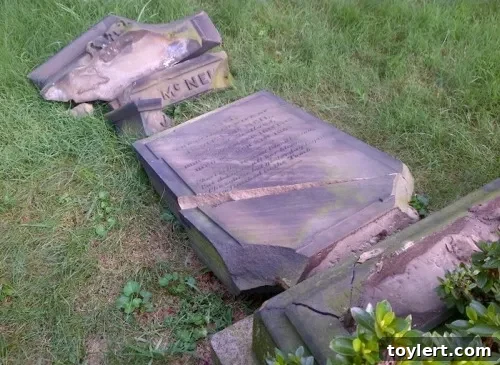
What began as a typical Tuesday morning for the dedicated staff of Green-Wood Cemetery quickly turned into a scene of profound dismay. As approximately 90 men and women reported for duty, ready to perform their daily tasks of maintaining the sprawling 478-acre grounds – mowing lawns, trimming grass, and tending to gardens – an unsettling truth began to emerge. Ken Nielsen, the acting foreman of the south zone, was the first to encounter the grim reality. His discovery soon rippled through the workforce as colleagues learned the heartbreaking news: a depraved individual, or perhaps a group of individuals, had systematically desecrated 43 of the cemetery’s revered memorials and monuments.
“Tuesday morning started out like any other summer day at Green-Wood. About 90 men and women who work on the cemetery grounds reported for work and headed out to mow the lawns, trim the grass, and weed the gardens. But, something was not right, as Ken Nielsen, acting foreman of the south zone, discovered. And worker after worker soon learned the sad truth: a very sick individual, or individuals, had vandalized 43 memorials and monuments of the dead.”
This senseless act of destruction targeted a significant number of grave markers, ranging from ornate statues to simple headstones, leaving behind a trail of shattered stone, toppled structures, and widespread despair. The immediate aftermath was a stark contrast to the usual serene beauty of Green-Wood, replaced by a palpable sense of violation and sorrow felt by everyone connected to this historic site. The emotional toll on the diligent staff, who meticulously care for these hallowed grounds, was palpable, transforming their routine duties into a somber assessment of damage and loss.
Green-Wood’s Sanctuary Status: An Unprecedented Violation
Green-Wood Cemetery holds a unique and treasured place in the fabric of Brooklyn and indeed, the nation. Designated a National Historic Landmark, it is far more than just a burial ground; it is a meticulously preserved landscape of rolling hills, ancient trees, tranquil ponds, and breathtaking Gothic Revival architecture. Spanning 478 acres, it serves as a verdant oasis, a vibrant arboretum, an outdoor museum of funerary art, and a peaceful sanctuary for both the living and the departed. Its grounds are home to an extraordinary array of flora and fauna, offering a crucial green lung within the bustling urban environment.
This revered institution is the final resting place for over 600,000 individuals, including illustrious figures from American history, pioneering artists, and countless citizens whose lives collectively weave the rich tapestry of the past. From artists and musicians to inventors and politicians, the monuments and memorials within Green-Wood are not merely markers; they are testaments to lives lived, artistic expressions, and vital historical records. Each gravestone, each statue, each intricate carving tells a story, contributing to the cemetery’s profound educational and cultural significance, drawing historians, genealogists, and tourists alike.
While acts of cemetery vandalism are unfortunately a recurring problem in many places, the scale and nature of this particular incident at Green-Wood are truly unprecedented for the site. Historian Jeff Richman, who has been intimately familiar with Green-Wood since 1986, noted the profound difference. “I cannot remember anything on this scale or close to it. Gravestones were pushed over and shattered,” he wrote. This statement underscores the unusual severity, given Green-Wood’s robust security infrastructure. The cemetery is encircled by a formidable fence, benefits from continuous 24-hour car patrols, and is monitored by an extensive network of video cameras positioned throughout its vast expanse. This comprehensive security system usually deters such widespread acts, making this particular transgression all the more shocking and deeply troubling to those who cherish the cemetery and its irreplaceable heritage.
The Devastating Impact: Financial and Emotional Toll
The damage inflicted upon these sacred grounds is not only visually heartbreaking but also carries a substantial financial burden. Initial estimates suggest the cost of repair and restoration will be “well in excess of $100,000.” This figure, likely a conservative estimate, encompasses a wide array of specialized work required to return the vandalized memorials to their original state. Restoring historic gravestones and monuments is a meticulous process, often requiring the expertise of skilled conservators and stone masons who possess a deep understanding of historical materials and techniques, ensuring the preservation of their artistic and historical integrity.
The financial cost will cover the labor involved in carefully righting toppled stones, which can weigh hundreds or thousands of pounds, piecing together shattered fragments of delicate marble or granite, and meticulously cleaning away any defacement or graffiti. For monuments that have been irrevocably broken, the process may involve sourcing matching materials and recreating intricate carvings, a task that can be both time-consuming and prohibitively expensive due to the unique craftsmanship required. Beyond the immediate repair costs, there are also administrative and security enhancement expenses to consider, as the cemetery reviews and potentially upgrades its protective measures to prevent future incidents, adding to the overall financial strain.
However, the true cost extends far beyond monetary figures. The emotional toll on the families whose ancestors’ resting places were desecrated is immeasurable. For many, a grave site is a vital link to their heritage, a place for remembrance, solace, and connection across generations. To see these cherished symbols of memory defiled is a profound personal affront, reopening old wounds and inflicting new pain. The Green-Wood staff, who dedicate their lives to preserving this sacred space, also feel the weight of this violation deeply, as do the countless visitors, historians, and local residents who consider the cemetery a beloved community asset. This act of vandalism strikes at the very heart of the cemetery’s mission to honor the past and provide a peaceful haven for reflection.
Investigation Underway: Seeking Justice and Enhanced Security
In the wake of this destructive event, authorities immediately launched an investigation to identify and apprehend those responsible. Green-Wood Cemetery’s sophisticated security infrastructure, including its extensive network of surveillance cameras strategically positioned across its vast landscape, proved instrumental in providing crucial leads. Footage captured one individual suspected of being involved in the widespread damage. Law enforcement agencies are actively pursuing these leads, and there is strong hope within the community that an arrest or arrests will be made swiftly, bringing the perpetrators to justice and sending a clear message that such acts will not be tolerated.
The incident serves as a stark reminder that even the most robust security systems cannot offer absolute guarantees against determined acts of vandalism. As Jeff Richman soberly noted, “no cemetery security system is a guarantee against vandalism.” This reality prompts ongoing discussions about how to further bolster protective measures without detracting from the serene and accessible nature of the cemetery, which is vital for its role as a public park and historical site. While the immediate focus is on the investigation and restoration, the long-term strategy will likely involve a combination of increased human presence through expanded patrol teams, technological advancements in surveillance and detection, and greater community engagement to act as additional eyes and ears on the grounds. The ultimate goal remains to create an environment where such desecration is not only deterred but also swiftly identified and remedied, ensuring the perpetual safety of this revered landmark.
Community Rallies: Support for Green-Wood’s Restoration
The news of the vandalism quickly reverberated throughout the Brooklyn community and beyond, eliciting a powerful outpouring of support and concern. Local blogs, such as The Concerned Citizens of Greenwood Heights blog, played a crucial role in alerting the wider public to the incident, ensuring that awareness spread rapidly. This swift dissemination of information underscored the deep connection residents feel towards Green-Wood, recognizing it not just as a historical site but as a vibrant, living part of their neighborhood, a place where generations have found solace and recreation.
In times of crisis, Green-Wood Cemetery has consistently found strength in its community, relying on the dedication of volunteers and the generosity of patrons. This incident is no exception. Calls for donations to aid in the extensive restoration efforts have begun, with individuals and organizations eager to contribute to the monumental task of repairing the damaged memorials. Beyond financial contributions, there’s a growing sentiment of collective responsibility to protect this cherished landmark. Community members are encouraged to be vigilant, report suspicious activities, and participate in volunteer initiatives that help maintain and monitor the cemetery’s vast grounds, fostering a sense of shared ownership and guardianship.
This solidarity highlights a fundamental truth: Green-Wood Cemetery belongs to everyone. Its beauty, history, and tranquility are shared resources, and its preservation is a collective endeavor that transcends individual interests. The community’s proactive response demonstrates an unwavering commitment to restoring not just the physical damage, but also the sense of peace and reverence that was so cruelly shattered by this act of vandalism. Through unified action, the hope is to emerge from this challenge stronger, with an even more dedicated network of guardians for Green-Wood’s invaluable heritage, ensuring its sanctity for future generations.
The Enduring Significance of Sacred Spaces
Cemeteries like Green-Wood are much more than mere repositories for the deceased; they are vital cultural landscapes that connect us to our past, inform our present, and shape our future. They serve as outdoor museums, showcasing diverse architectural styles, intricate sculptural art, and evolving memorial traditions from various eras. Each gravestone, mausoleum, and monument stands as a unique artifact, telling a fragment of a larger story – the story of a community, a city, and a nation – making them invaluable resources for historical and cultural study.
Furthermore, these sacred spaces provide essential green infrastructure within urban environments. Green-Wood, with its diverse tree canopy, rolling topography, and varied habitats, is a crucial haven for migratory birds, local wildlife, and a wide array of plant species, contributing significantly to urban biodiversity. It also offers a serene retreat for the living, providing tranquil pathways for reflection, exercise, and contemplation amidst the hustle and bustle of city life. The historical, ecological, and recreational value of such a site cannot be overstated, making its preservation a critical concern for environmentalists, historians, urban planners, and the general public alike.
The act of vandalizing a cemetery, therefore, is not merely property damage; it is an assault on history, culture, and the fundamental human need for remembrance and respect. It undermines the very purpose of these hallowed grounds and inflicts pain on countless individuals who find solace and connection there, challenging the core values of reverence and dignity. The restoration of Green-Wood’s damaged memorials is not just about fixing broken stone; it is about reaffirming the community’s commitment to honoring its heritage and upholding the sanctity of these irreplaceable public treasures, ensuring that the stories they tell continue to inspire and educate.
Moving Forward: Restoration, Resilience, and Renewed Vigilance
The path to full recovery for Green-Wood Cemetery will be arduous, but it is a journey the institution and its supporters are prepared to undertake with unwavering resolve. The process of restoring the 43 damaged monuments will require patience, significant financial resources, and the skilled hands of expert conservators specializing in historic preservation. Each piece will be assessed individually, with restoration plans meticulously tailored to the specific material, age, and extent of the damage, ensuring that repairs are sympathetic to the original craftsmanship and historical context. This dedicated work aims not just to repair the physical structures but to symbolically heal the wound inflicted upon the cemetery’s heart and the collective memory it embodies.
In addition to physical restoration, Green-Wood Cemetery will undoubtedly review and strengthen its long-term prevention strategies to minimize the risk of future incidents. This may include exploring new surveillance technologies, increasing volunteer patrols and partnerships with local law enforcement, and implementing educational programs designed to foster a deeper appreciation and respect for historical sites and public spaces among younger generations. Engaging the wider public in the ongoing stewardship of Green-Wood is paramount, transforming passive visitors into active protectors of its legacy and ensuring a shared sense of responsibility for its future.
This incident, while tragic, has also served to highlight the profound affection and respect that Green-Wood Cemetery commands from its community and beyond. The outpouring of grief and solidarity from the community underscores its vital role as a cultural and historical anchor, a place of beauty, peace, and remembrance. As the arduous work of restoration begins, Green-Wood stands as a testament to resilience, a sacred space determined to overcome adversity and continue its noble mission of preserving memory, celebrating art, and providing solace for generations to come. The collective effort to restore Green-Wood is a powerful affirmation that history, heritage, and solemn remembrance will always prevail over acts of senseless destruction.