The Lingering Shadow Over 441 Willoughby Avenue: Unraveling the Jacob Dangler Mansion Saga
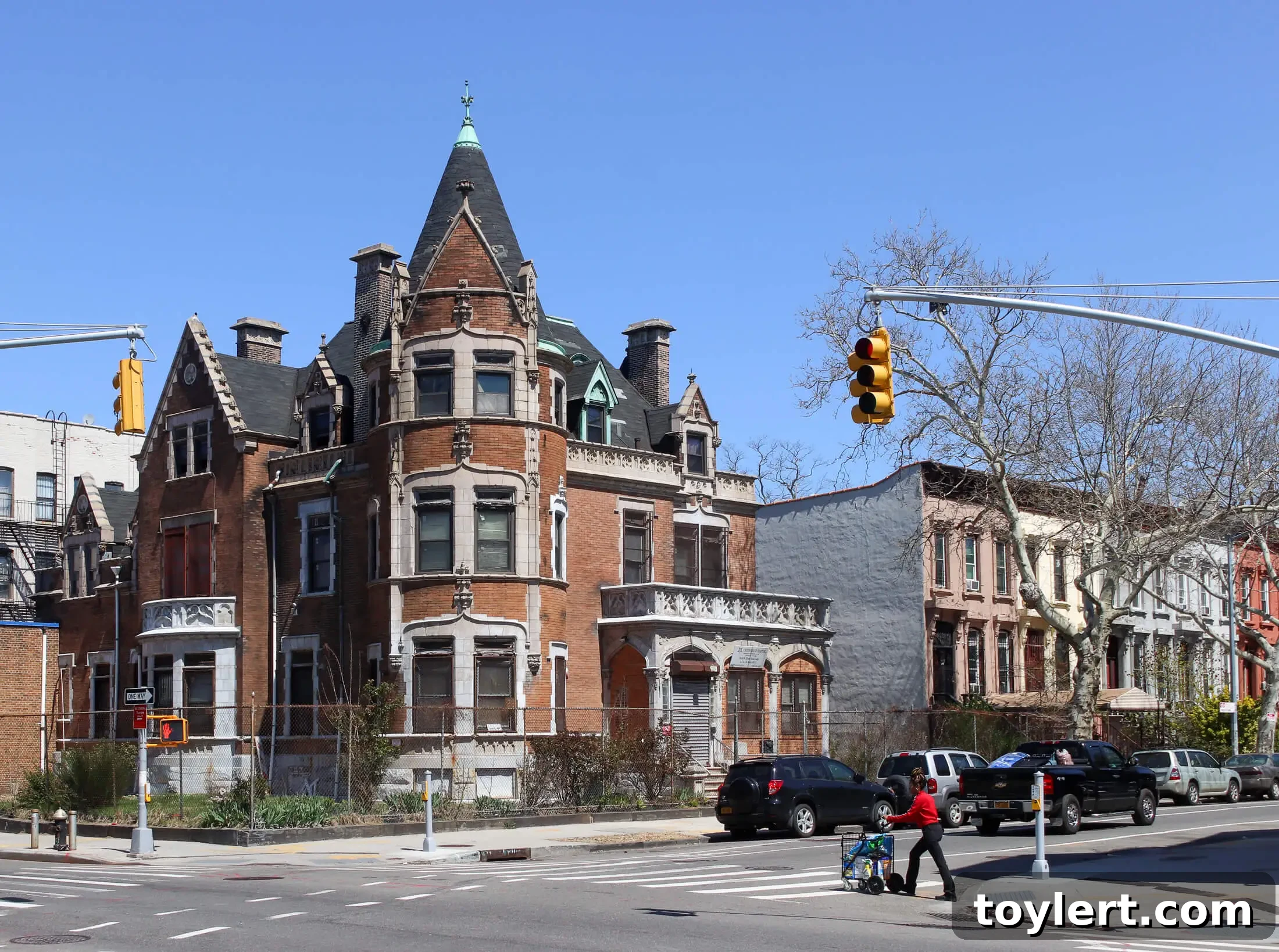
More than a year has elapsed since the shocking and controversial demolition of the historic Jacob Dangler Mansion, a cherished French Gothic Revival landmark located at 441 Willoughby Avenue in Bed-Stuy, Brooklyn. The site, once home to an architectural masterpiece that captivated local residents and historians alike, now lies as a stark, empty lot, a desolate reminder of a significant loss for the community. Despite the developer’s ambitious plans for a new apartment building on this coveted urban parcel, the land remains under the ownership of the struggling non-profit, the United Grand Chapter Order of the Eastern Star. This organization had previously stated its intent to sell the beloved edifice to circumvent an impending foreclosure, a decision that ultimately paved the way for the mansion’s untimely demise.
The saga surrounding 441 Willoughby Avenue is a complex tapestry woven with threads of financial distress, real estate ambition, and legal ambiguity. While the non-profit’s narrative centered on a desperate sale to avert financial ruin, court filings reveal a critical missing piece: a petition to the state attorney general, a mandatory step for non-profit organizations seeking to sell property in New York. The absence of this vital filing raises serious questions about the legal finality of any alleged sale and the true ownership status of the valuable Bed-Stuy property.
A Glimpse into the Past: The Jacob Dangler Mansion’s Legacy
Architectural Splendor and Historical Significance
The Jacob Dangler Mansion, constructed in the early 20th century, was far more than just a building; it was a cornerstone of Bed-Stuy’s rich architectural heritage. Designed in the ornate French Gothic Revival style, its distinctive turrets, intricate stone carvings, and grand facade stood out as a testament to a bygone era of craftsmanship and opulence. Such architectural gems are increasingly rare in rapidly developing urban landscapes, making the Dangler Mansion a particularly poignant symbol of historic preservation challenges. For decades, it served as a beacon of the neighborhood’s unique character, drawing admiration from locals and architectural enthusiasts alike. Its potential for landmark designation, a process that was reportedly underway or being considered prior to its destruction, underscored its recognized cultural and historical value to New York City.
The Demolition: A Community’s Outcry
The sudden and unannounced demolition of the Jacob Dangler Mansion in August 2022 sent shockwaves through the Bed-Stuy community and beyond. Activists, preservationists, and concerned residents had tirelessly campaigned to save the structure, highlighting its architectural significance and urging for its protection. The timing of the demolition, occurring amidst ongoing discussions about its landmark status, fueled widespread outrage and accusations of cynical maneuvering to bypass preservation efforts. The sight of the historic building reduced to rubble was not merely the loss of bricks and mortar, but a perceived assault on the neighborhood’s identity and a painful reminder of the vulnerability of unprotected historic properties in the face of commercial development pressures. The empty lot that now sits at 441 Willoughby Avenue serves as a physical scar, a stark reminder of the community’s loss and the unanswered questions surrounding the circumstances of the mansion’s destruction.
The Current Quandary: An Empty Lot, Complex Ownership
The Persistent Vacancy at 441 Willoughby Avenue
Over a year after its dramatic demise, the site of the Jacob Dangler Mansion at 441 Willoughby Avenue remains a vacant and undeveloped parcel. This prolonged emptiness is a stark contrast to the developer’s stated intentions of rapidly constructing a new apartment complex. The lack of visible progress not only underscores the complexities of the situation but also leaves the Bed-Stuy neighborhood with a gaping void where a historic structure once stood. The empty lot has become a symbol of stagnation and unresolved legal and financial entanglements, inviting speculation and continued scrutiny from the public and local authorities. Its present state speaks volumes about the challenges that can arise even after a property has been cleared for development, particularly when its history is steeped in controversy and its ownership is shrouded in legal technicalities.
The Non-Profit’s Predicament: Financial Struggles and Disputed Sales
The United Grand Chapter Order of the Eastern Star, the non-profit organization that legally owns the 441 Willoughby Avenue site, has openly cited financial hardship as the primary reason for their decision to sell the Jacob Dangler Mansion. The organization claimed that a sale was necessary to avoid foreclosure, a common predicament for financially struggling entities. However, the exact nature of these financial difficulties and the transparency of the sales process have come under intense public scrutiny. Non-profits in New York State operate under specific legal frameworks designed to protect their assets, often requiring oversight from the state attorney general’s office for significant property transactions. This regulatory layer adds a crucial dimension to the current situation, as the reported absence of the mandatory petition to the attorney general leaves the legitimacy of any purported sale in a precarious legal position, irrespective of any private agreements made.
Navigating Legal Labyrinths: The State Attorney General’s Role in Non-Profit Property Sales
A central pillar of the ongoing legal ambiguity surrounding 441 Willoughby Avenue is the requirement for non-profit organizations in New York State to obtain approval from the state attorney general before selling significant assets like real estate. This oversight mechanism is designed to ensure that such transactions are conducted fairly, in the best interest of the non-profit’s mission, and at a fair market value. The fact that court filings indicate the United Grand Chapter Order of the Eastern Star has yet to file this essential petition casts a long shadow over the entire transaction. Without this approval, any contract of sale, even if privately agreed upon, might not be legally enforceable or final. This critical procedural gap suggests that, despite the demolition and any developer’s claims, the property has not legally and unequivocally changed hands, leaving its future in a state of unresolved legal flux.
The Developer’s Footprint: Tomer Erlich and Financial Maneuvers
Tomer Erlich’s Connection and Development Ambitions
The local developer linked to the plans for a new apartment building on the Dangler Mansion site is Tomer Erlich. His involvement in the project has been documented in various reports, including by the Wall Street Journal, which stated that Erlich entered into a contract to purchase the property for $4.3 million in 2021. Furthermore, NYC Department of Buildings permits for the site already list Erlich as the property’s owner, despite official city records indicating no legal change of hands. This discrepancy creates a significant point of contention, highlighting a potential disconnect between the de facto control asserted by the developer and the legal realities of property ownership. Erlich’s plans for a residential development underscore the ongoing pressure to maximize land value in desirable Brooklyn neighborhoods like Bed-Stuy.
The Reassigned Mortgage: A Closer Look at the Financial Details
Adding another layer of complexity to the 441 Willoughby Avenue saga is the recent revelation concerning the property’s mortgage. Documents recorded by the city only last week show that a $1.525 million mortgage was reassigned last year. Initially provided by Advill Capital LLC to the United Grand Chapter Order of the Eastern Star, the mortgage was transferred in August of last year to a corporation named E&SD Management. This entity has a Florida address, a detail that has been publicly linked with developer Tomer Erlich. A mortgage reassignment typically means that the rights and obligations of the original lender are transferred to a new party. In this instance, E&SD Management, linked to Erlich, now effectively holds the debt against the property. This financial maneuver suggests a deeper level of financial control or investment by the developer, even while the legal ownership remains with the non-profit and contingent on the state attorney general’s approval.
Discrepancies in Ownership: Permits vs. City Records
One of the most perplexing aspects of the Dangler Mansion site’s current situation is the conflicting information regarding its ownership. While NYC Department of Buildings permits list Tomer Erlich as the owner – a typical prerequisite for initiating development plans – official city records tell a different story. According to these records, the building has not legally changed hands from the United Grand Chapter Order of the Eastern Star. This discrepancy is not merely a bureaucratic oversight; it signifies a fundamental legal challenge. The permits may have been issued based on a contract of sale or an agreement, but until all legal conditions, including the state attorney general’s approval for the non-profit, are met and recorded, the legal title remains with the original owner. This legal limbo creates uncertainty and potential obstacles for any future development on the site.
Community and Preservation Concerns: A Neighborhood’s Loss
The demolition of the Jacob Dangler Mansion represents a profound loss for the Bed-Stuy community and for historic preservation advocates across New York City. The mansion was a tangible link to the neighborhood’s past, contributing significantly to its unique aesthetic and cultural fabric. Its destruction has sparked renewed discussions about the efficacy of current preservation laws, the power of developers, and the vulnerability of historic structures that lack official landmark protection. Residents and local groups continue to monitor the vacant lot at 441 Willoughby Avenue, hopeful that any future development will be undertaken with a greater degree of transparency, community engagement, and respect for the architectural legacy that was so abruptly erased. The empty space serves as a constant reminder of what was lost and amplifies the call for stronger protections for historic properties in rapidly gentrifying areas.
Looking Ahead: What Lies Ahead for 441 Willoughby Avenue?
The future of 441 Willoughby Avenue remains shrouded in uncertainty. The legal complexities involving the non-profit’s ownership, the absence of the state attorney general’s approval, and the developer’s financial maneuvers all contribute to a murky outlook. Until the mandatory legal requirements for the sale of a non-profit’s property are satisfied, the site could remain in a prolonged state of limbo, delaying any definitive development. Community interest and ongoing scrutiny will likely continue to play a vital role, pressing for clarity and accountability. The saga of the Jacob Dangler Mansion is not just a tale of a lost building; it is a live case study in the ongoing battle between urban development and historic preservation, highlighting the crucial need for robust legal processes and community voice in shaping the future of our urban landscapes.