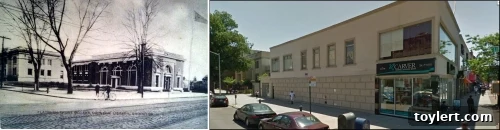
Flatbush Then and Now: A Historical Journey Through Brooklyn’s Dynamic Heart
Step into a living timeline and witness the profound transformation of one of Brooklyn’s most iconic neighborhoods: Flatbush. More than just a collection of streets and buildings, Flatbush tells a compelling story of urban evolution, a testament to the relentless march of time and the ever-changing needs of a vibrant metropolis. From its tranquil suburban origins in the early 20th century to its current status as a bustling urban center, Flatbush offers a microcosm of Brooklyn’s broader development. This article delves into the fascinating history of Flatbush, exploring how its landscape, particularly along the famed Flatbush Avenue and its critical intersections like Linden Boulevard, has evolved dramatically over the last century, painting a vivid picture of its past and present.
The Dawn of the 20th Century: Flatbush’s Suburban Charm
At the cusp of the 20th century, Flatbush was a burgeoning district, rapidly establishing itself as a desirable suburban retreat within the sprawling borough of Brooklyn. Unlike the dense, industrialized areas closer to Manhattan, much of Flatbush was characterized by spacious residential streets, often lined with majestic trees, and featuring an array of architecturally significant homes. These residences ranged from elegant Victorian brownstones to grand Queen Anne and Colonial Revival houses, reflecting the aspirations of the middle and upper-middle-class families seeking a quieter life away from the city’s core, yet still within an accessible commute.
The early development of Flatbush was heavily influenced by the expansion of public transportation. Trolley lines first, and later the burgeoning subway system, provided crucial links to Manhattan, transforming Flatbush from a remote farming community into a viable bedroom community. This accessibility fueled a population boom, drawing new residents eager for larger plots of land and a more pastoral environment than was available in the more congested parts of Brooklyn. Local businesses began to emerge, catering to the daily needs of these growing communities, but the overall character remained distinctly residential and low-rise, embodying a serene suburban ideal.
Flatbush Avenue: The Vein of Commerce Begins to Throb
Even in its early suburban phase, Flatbush Avenue stood out as the principal artery of the neighborhood. Initially, it might have featured smaller, locally-owned shops and perhaps a general store, blending seamlessly into the residential fabric. However, as the 20th century progressed and Brooklyn’s population swelled, the pressures of urbanization began to reshape this key thoroughfare. The demand for more diverse commercial services, entertainment options, and accessible public amenities grew exponentially, signaling an inevitable shift away from its quaint, small-town aesthetic.
The Urbanization Wave: Flatbush Transforms
The mid-20th century marked a pivotal era for Flatbush, initiating a period of rapid and profound urbanization. The gentle transition gave way to a dramatic metamorphosis, particularly along Flatbush Avenue. What were once grand, individual homes or modest commercial establishments began to make way for larger, multi-story structures designed to accommodate a growing urban population and its expanding commercial needs. This era saw the systematic replacement of older residential properties by a new breed of urban architecture, signaling Flatbush’s full embrace of its role as a vital urban hub.
New buildings sprung up at an astonishing pace: imposing office buildings, sprawling department stores that rivaled those in Manhattan, and opulent movie theaters that served as cultural beacons, drawing crowds from across the borough. Banks, libraries, and larger municipal buildings also appeared, solidifying Flatbush Avenue’s status as a comprehensive urban center. These structures were not merely functional; many were designed with considerable architectural ambition, reflecting the prevailing styles of the time, from Art Deco grandeur to more streamlined Modernist aesthetics, adding a new layer of visual complexity to the streetscape.
This construction boom was driven by several factors: increased population density requiring more housing (leading to the proliferation of apartment buildings), a rising consumer culture demanding more retail spaces, and a greater emphasis on centralized services. The shift was irreversible; Flatbush Avenue lost its “small town look” almost entirely, transforming into a bustling corridor of commerce and public activity, a stark contrast to its earlier incarnation.
Flatbush Avenue and Linden Boulevard: A Microcosm of Change
The southeast corner of Flatbush Avenue and Linden Boulevard serves as a quintessential example of this dramatic urban evolution. Historically, this intersection might have housed a significant residential property, perhaps a stately home with a manicured garden, or a cluster of smaller, early 20th-century commercial buildings reflecting the neighborhood’s suburban roots. One can imagine children playing on wide sidewalks, and local shopkeepers knowing their customers by name.
However, by the latter half of the 20th century, the pressure for development at such a prime location became irresistible. The single, impressive building often depicted in historical photographs standing at this corner likely succumbed to the wrecking ball. In its place rose a structure more suited to the demands of a modern, densely populated urban environment—perhaps a multi-story commercial building with ground-floor retail, or an apartment complex designed to house many families, reflecting the ongoing need for housing and accessible goods and services.
This specific corner’s transformation encapsulates the broader narrative of Flatbush: the displacement of the personal and historical for the practical and contemporary. While the original grandeur or quaintness of individual buildings might have been lost, their replacement often contributed to the vitality and functionality of the neighborhood, providing employment, housing, and essential services to thousands of Brooklynites. It represents the perpetual balancing act between preserving historical integrity and accommodating modern growth.
Flatbush in the Late 20th and Early 21st Centuries: Enduring Dynamism
As the 20th century drew to a close and the new millennium began, Flatbush Avenue remained a bustling urban street, but not without its challenges and further transformations. The impressive buildings erected during the mid-century boom, some once symbols of modernity and progress, began to show their age. Economic shifts, changing demographics, and evolving retail patterns meant that some establishments closed, storefronts changed hands frequently, and the grand old movie palaces either shuttered or were repurposed, losing their original splendor. Many buildings underwent extensive renovations, altering their facades, while others were demolished entirely to make way for even newer developments, continuing the cycle of urban renewal.
Despite these changes, the spirit of Flatbush endured. The neighborhood remained a vibrant, diverse, and essential part of Brooklyn. New waves of immigrants brought fresh energy, establishing new businesses, restaurants, and cultural institutions that further enriched the area’s fabric. Flatbush Avenue, even with its aging infrastructure and mix of architectural styles, continued to serve as a vital commercial and social hub, a testament to the community’s resilience and adaptability.
Today, Flatbush is a dynamic tapestry woven from threads of its past and present. You can still find remnants of its early 20th-century charm tucked away on side streets, while the main thoroughfares pulsate with contemporary urban life. The eclectic mix of historic architecture alongside modern developments, bustling markets next to quiet residential blocks, speaks to a neighborhood constantly reinventing itself while holding onto its deep roots. The intersection of Flatbush Avenue and Linden Boulevard, like many others, continues to be a focal point, reflecting the vibrant energy and ongoing evolution that defines this unique part of Brooklyn.
The Enduring Legacy of Urban Transformation
The story of Flatbush, particularly its dramatic evolution along Flatbush Avenue, is more than just a local historical account; it’s a profound reflection on the nature of urban growth itself. It highlights the constant tension between preservation and progress, between the desire to retain historical character and the necessity to adapt to contemporary needs. Cities are not static entities; they are living organisms, perpetually in motion, shaped by economic forces, social changes, and the aspirations of their inhabitants.
Understanding the “then and now” of Flatbush allows us to appreciate the layers of history that underpin every modern cityscape. It reminds us that even the most impressive structures eventually give way to new visions, and that the true character of a neighborhood lies not just in its physical appearance, but in its continuous narrative of change, community, and enduring spirit. Flatbush stands as a proud example of Brooklyn’s enduring dynamism, a place where history is not just remembered, but actively lived and reshaped with every passing decade.