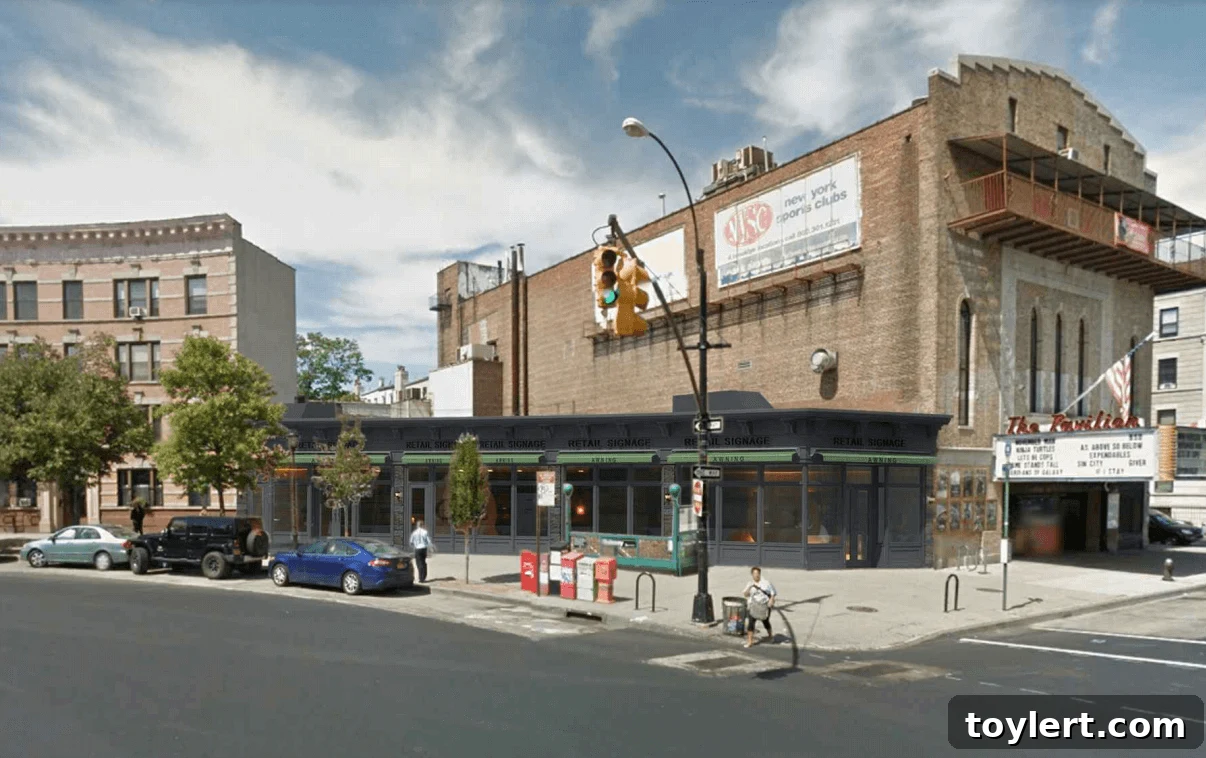
In the vibrant tapestry of Brooklyn’s ever-evolving landscape, where modern development frequently meets the rich threads of history, a significant new proposal has emerged for 192 Prospect Park West. This intriguing development, situated next to the iconic former Pavilion Theater within the esteemed Park Slope Historic District Extension, is currently under review by the city’s influential Landmarks Preservation Commission (LPC). What makes this particular plan so remarkable is not just its architectural ambition, but the profound shift in vision it represents for a site that has been a subject of extensive community discussion and previous development approvals.
The developer, Hidrock Properties, has unveiled a detailed strategy that promises to breathe new life into the existing one-story brick building. Their proposal centers on a meticulous restoration aimed at recapturing much of the edifice’s early 20th-century aesthetic and functionality. Far from envisioning another residential tower, Hidrock’s plan proposes to return the building to its roots, serving as a dynamic commercial hub with ground-floor stores – a move that could significantly enhance the street-level vibrancy of this historic Brooklyn thoroughfare. This approach stands in stark contrast to prior approvals, making it a pivotal moment in Park Slope’s ongoing narrative of preservation and progress.
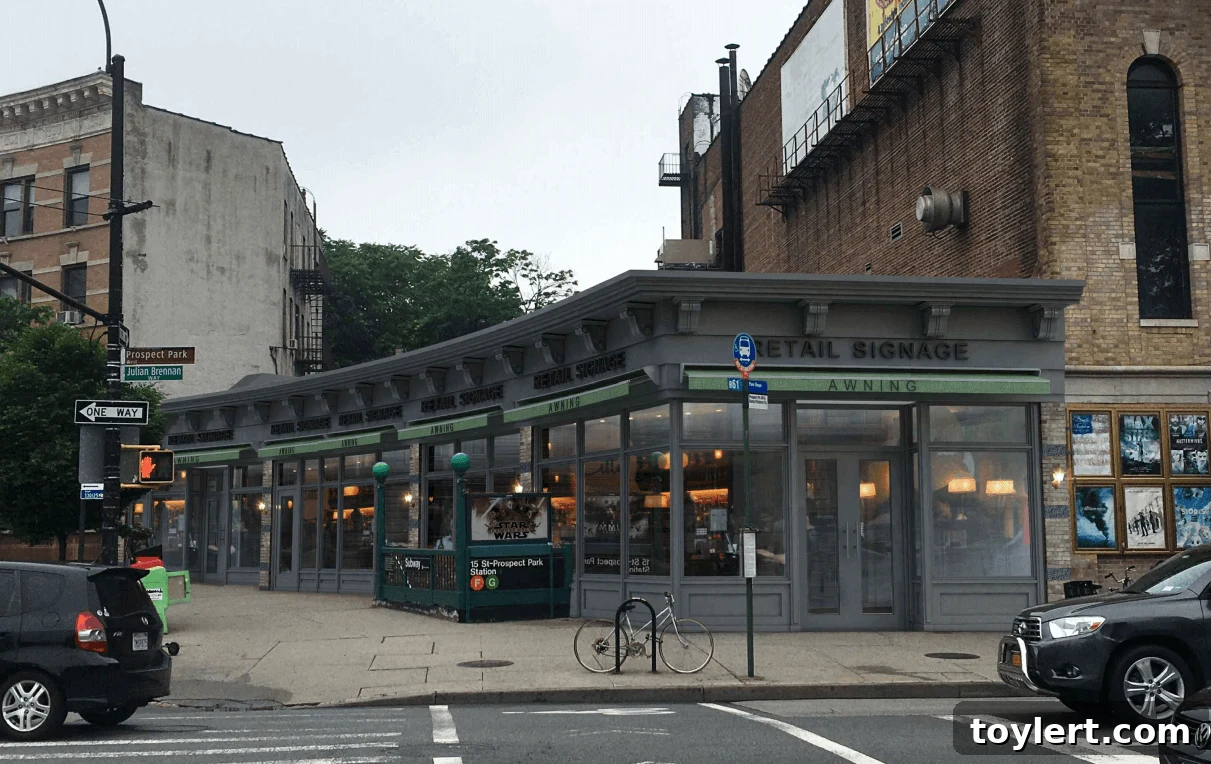
A Vision of Restoration: Preserving Park Slope’s Historic Fabric
The core of Hidrock Properties’ proposal revolves around a thoughtful and historically sensitive restoration. The plans detail the careful reconstruction of key architectural elements that define the building’s early 20th-century character. This includes the recreation of original window and door openings, which are crucial for maintaining the rhythm and scale of the streetscape. Furthermore, a decorative bracketed cornice, a hallmark of period architecture, is slated for reconstruction, promising to reinstate an important vertical element that has likely been lost or significantly altered over time. The renderings also suggest a meticulous effort to restore the appearance of the original brickwork and its distinctive striped pillars, details that contribute immensely to the building’s historical integrity and visual appeal.
While the focus is on historical accuracy, the proposal acknowledges modern sensibilities and practical constraints. Notably, a gabled entrance at the far end of the building, though potentially part of its original design, will not be resurrected. This decision, often made in such complex restoration projects, could be attributed to various factors, including evolving accessibility requirements, contemporary commercial layout needs, or the desire to prioritize other, more impactful historical features. The careful balance between faithful restoration and practical adaptation is a constant challenge in landmark preservation, and this specific choice highlights the thoughtful considerations involved in such a high-profile project within the Park Slope community.
The Remarkable Reversal: From Condos to Commercial Revival
What truly elevates this proposal from a standard development application to a headline-worthy event is the stark contrast it presents to previous plans for the site. In 2015, at a time when Brooklyn’s real estate market was fiercely embracing residential development, the Landmarks Preservation Commission itself approved a six-story condo building for this very parcel. That earlier approval was part of a larger scheme that also included the substantial redevelopment of the adjacent cinema building into additional condominiums, alongside a smaller, reconfigured theater. The thought of a towering residential structure at 192 Prospect Park West, altering the immediate context of a beloved local landmark like the Pavilion Theater, had generated considerable debate and concern among community members and preservationists alike.
The current proposal, therefore, represents a significant U-turn, pivoting away from high-density residential development towards a more neighborhood-centric commercial restoration. This shift is particularly remarkable given the ongoing trend of developers converting prime Brooklyn real estate into luxury housing to meet insatiable demand. It prompts an important question: what has changed since 2015 to facilitate such a dramatic re-evaluation of the site’s potential? It could reflect a confluence of factors, including evolving market conditions, a renewed emphasis on commercial viability in historic districts, or perhaps a deeper understanding of community desires for a more active, retail-oriented street presence.
The Role of the Landmarks Preservation Commission in Brooklyn’s Growth
The Landmarks Preservation Commission (LPC) plays an indispensable role in shaping the architectural future of New York City, acting as the custodian of its historic fabric. Its mission is to protect buildings and sites that possess special historical, cultural, or aesthetic character, ensuring that new developments or alterations respect and enhance these designated areas. For a district like the Park Slope Historic District Extension, every proposal undergoes rigorous scrutiny, involving detailed architectural reviews, public hearings, and careful deliberation by commissioners.
The LPC’s initial approval for a six-story condo building in 2015 underscores the complex challenges of balancing preservation with the pressures of urban growth. However, their willingness to revisit and potentially approve a drastically different proposal, such as Hidrock Properties’ current plan for commercial restoration, highlights the flexibility and adaptive nature of the commission’s work. This adaptability is crucial in a dynamic city like Brooklyn, where preservation efforts must constantly evolve to meet contemporary needs without sacrificing historical integrity. The current hearing is not merely a procedural step but a critical moment where the LPC will weigh the merits of restoring the building’s original commercial function against the backdrop of its past decisions and the neighborhood’s evolving character.
Enhancing Community Life: The Appeal of Retail in a Historic Setting
The decision to resurrect 192 Prospect Park West as commercial storefronts, rather than converting it into residential units, carries significant implications for the quality of life in Park Slope. Retail spaces, particularly those that integrate seamlessly into a historic streetscape, contribute immensely to the vitality and walkability of a neighborhood. They provide essential services, create local jobs, and foster a sense of community by encouraging pedestrian activity and casual encounters. In an area as cherished as Park Slope, maintaining a vibrant street-level commercial presence is often seen as a key component of its charm and functionality.
The prospect of new stores at this prime location, adjacent to a revitalized commercial stretch near the former Pavilion Theater, could reactivate a significant corner of the historic district. Such development aligns with a broader urban planning philosophy that values mixed-use districts, where residents can live, work, and shop within close proximity, reducing reliance on vehicular transport and strengthening local economies. For the residents of Park Slope, this means more choices for shopping, dining, or services, all while preserving the architectural beauty that makes their neighborhood unique. It’s a testament to the idea that development can, and should, serve to enrich community life, not just maximize square footage.
Architectural Authenticity and the Art of Restoration
Beyond the functional aspects, the architectural details of Hidrock Properties’ plan speak volumes about their commitment to authenticity. The restoration of specific elements like the “bracketed cornice” and “striped pillars” is not merely decorative; it is fundamental to the building’s identity within the Park Slope Historic District Extension. A cornice, for instance, serves as an important visual capstone, delineating the roofline and adding classical elegance. The striped pillars, common in early 20th-century commercial architecture, provide rhythm and visual interest to the facade, drawing the eye along the building’s length.
The careful selection of materials, particularly the restoration of the “original brick,” is another critical component. Bricks from different eras possess unique characteristics in terms of color, texture, and bonding patterns. Replicating or restoring these elements requires specialized knowledge and craftsmanship to ensure that the new work blends seamlessly with the existing historic fabric. This level of detail ensures that the restored building will not appear as a modern interpretation, but rather a faithful revival of its past glory, contributing cohesively to the architectural narrative of Prospect Park West.
Brooklyn’s Development Journey: A Balanced Future
The proposed development at 192 Prospect Park West is a microcosm of Brooklyn’s ongoing development journey. The borough has experienced unprecedented growth in recent decades, leading to both revitalization and significant concerns about gentrification and the loss of historical character. Projects like this highlight the delicate balance that urban planners, developers, and communities must strike between accommodating new growth and safeguarding the irreplaceable heritage that defines neighborhoods like Park Slope.
By opting for a commercial restoration that emphasizes historical accuracy and community benefit, Hidrock Properties’ proposal signals a potentially more nuanced approach to development in historically sensitive areas. It suggests a growing recognition that value can be found not just in maximizing residential density, but also in preserving and enhancing the distinct architectural and commercial character that makes a neighborhood desirable in the first place. As the Landmarks Preservation Commission deliberates, the outcome for 192 Prospect Park West will undoubtedly set an important precedent for future developments within Brooklyn’s cherished historic districts, shaping the visual and economic landscape for generations to come. This project offers a compelling vision for how thoughtful development can honor the past while building a vibrant future for the residents and businesses of Park Slope.