Transforming Urban Mobility: The Success Story of the Hicks Street Traffic Calming Project in Brooklyn
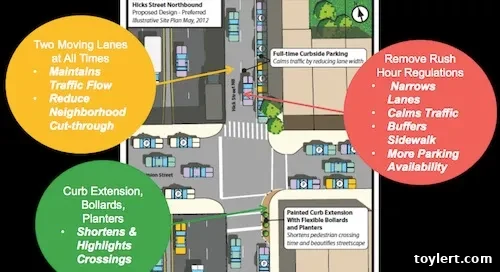
In the heart of Brooklyn, the Hicks Street Northbound Traffic Calming Project stands as a pivotal example of how strategic urban planning can profoundly reshape a neighborhood for the better. Initiated by the New York City Department of Transportation (DOT), this ambitious undertaking aimed to create a safer, more efficient, and more enjoyable streetscape for all users. The project introduced a suite of innovative measures, including thoughtful curb extensions, protective bollards, aesthetic planters, dedicated full-time curbside parking, and meticulously reconfigured moving lanes. These interventions collectively transformed Hicks Street from a corridor grappling with traffic challenges into a model of modern urban design, prioritizing pedestrian safety and enhancing the overall quality of life for residents and visitors.
The initiative specifically targeted the northbound stretch of Hicks Street, a vital artery particularly affected by its proximity to the bustling Brooklyn-Queens Expressway (BQE). This area historically presented unique complexities, with wider, less defined lanes that often encouraged higher vehicle speeds and created unpredictable conditions for pedestrians. The DOT’s vision was clear: to move beyond temporary fixes and implement lasting physical changes that would inherently slow traffic, shorten dangerous pedestrian crossings, and foster a more harmonious environment where vehicles, cyclists, and pedestrians could coexist safely. This comprehensive approach underscores a broader commitment to creating “Complete Streets” – thoroughfares designed to be safe and accessible for everyone, regardless of their mode of travel.
The Imperative for Change: Why Hicks Street Needed Traffic Calming
Before the implementation of the traffic calming measures, Hicks Street experienced challenges typical of many urban roads struggling to balance high traffic volumes with the needs of a residential community. The previous street layout featured a 10-foot moving lane alongside an 18-foot lane that served ambiguously as both a parking and a moving lane. This undefined configuration frequently led to driver confusion, erratic speeds, and significant safety concerns for pedestrians, particularly at intersections. Residents often reported instances of speeding, aggressive driving, and difficulties in safely crossing the street, highlighting the urgent need for a redesigned urban environment that prioritized safety and predictability.
The wide, open feel of the street, while seemingly facilitating traffic flow, often had the unintended consequence of encouraging drivers to increase their speeds, turning Hicks Street into more of a high-speed conduit than a neighborhood street. This environment was particularly problematic for vulnerable road users such as children walking to school, elderly residents, and individuals with disabilities. The lack of clearly delineated spaces for different road users created potential conflict points, increasing the risk of accidents and diminishing the street’s capacity to function as a vibrant, pedestrian-friendly public space. The DOT recognized that a reactive approach was insufficient; a proactive, design-led solution was essential to fundamentally alter driver behavior and enhance safety.
The Hicks Street Northbound Traffic Calming Project was thus conceived as a direct response to these community needs and urban planning challenges. It aimed not only to reduce traffic speeds but also to reclaim the street as a shared public realm, fostering a greater sense of community and improving the overall livability of the surrounding neighborhoods. This mission aligns perfectly with New York City’s Vision Zero initiative, which strives to eliminate all traffic fatalities and serious injuries through comprehensive engineering, enforcement, and education strategies. The project’s emphasis on physical street redesign is a cornerstone of Vision Zero’s preventative approach.
Innovative Components Driving the Hicks Street Transformation
The success of the Hicks Street project can be attributed to its strategic deployment of several interlinked traffic calming elements. Each component was carefully chosen and integrated to work synergistically, creating a cohesive and effective system that encourages safer driving while enhancing the street’s aesthetic and functional value.
Curb Extensions: Shortening Crossings and Boosting Visibility
A cornerstone of the Hicks Street redesign is the intelligent use of curb extensions, often referred to as “bulb-outs” or “neckdowns.” These structures extend the sidewalk into the roadway at intersections, significantly narrowing the street where pedestrians cross. The primary and most celebrated benefit of curb extensions is the dramatic reduction in pedestrian crossing distances. By bringing the curb closer to the center of the intersection, pedestrians spend less time exposed to moving traffic, thereby greatly reducing their risk of collision. This is particularly crucial for individuals who move slower, like children or the elderly, providing them with a much-needed margin of safety.
Beyond shortening crossing times, curb extensions play a vital role in enhancing visibility for both pedestrians and drivers. They prevent vehicles from parking too close to intersections, which often obstructs sightlines. With parked cars set back, drivers approaching an intersection have an unobstructed view of pedestrians waiting to cross, allowing for earlier detection and improved reaction times. Conversely, pedestrians gain a clearer view of oncoming traffic. Furthermore, these extensions offer valuable additional space on the sidewalk that can be utilized for street furniture, public art installations, or green infrastructure such as rain gardens, contributing to both the functionality and beauty of the streetscape. On Hicks Street, these extensions have meticulously transformed once ambiguous and perilous crossing points into clearly defined and inherently safer zones, embodying best practices in urban pedestrian infrastructure.
Bollards and Planters: Strategic Barriers and Green Aesthetics
Integral to the physical restructuring of Hicks Street are the thoughtfully integrated bollards and planters. Bollards, robust vertical posts, serve as critical physical barriers, effectively delineating pedestrian zones from vehicular traffic. They are strategically placed to prevent vehicles from encroaching onto sidewalks, illegal parking in no-standing zones, or making dangerous maneuvers. On Hicks Street, these sturdy elements work in concert with curb extensions to reinforce the safety perimeter around pedestrian areas, providing a robust line of defense and a clear visual cue for drivers to maintain their lanes and speeds. They act as a strong deterrent against aggressive driving behavior, enhancing the sense of security for those walking or cycling.
Planters, on the other hand, introduce a vital natural element into the urban fabric. Beyond their undeniable aesthetic appeal, these green installations serve multiple functional purposes. They visually narrow the street, subtly cueing drivers to reduce their speed and drive more cautiously. The presence of greenery softens the harshness of concrete and asphalt, creating a more pleasant and human-scaled environment. Furthermore, planters can contribute to urban sustainability by providing space for trees and shrubs that improve air quality, offer shade, and help manage stormwater runoff, reducing the burden on municipal drainage systems. The combination of durable bollards and vibrant planters on Hicks Street creates a corridor that is not only safer and more orderly but also more attractive, environmentally conscious, and inviting for the community.
Reimagined Lane Configuration: Dedicated Flow and Parking
A cornerstone of the Hicks Street Northbound Traffic Calming Project was the complete reimagining of the street’s lane configuration. Prior to the intervention, the street featured a less efficient and potentially hazardous setup with one 10-foot moving lane and an 18-foot lane ambiguously designated for both parking and moving traffic. This lack of clear definition often led to unpredictable traffic patterns, sudden lane changes, and confusion among drivers. The new design introduces a highly optimized configuration along the northbound length of Hicks Street adjacent to the BQE, featuring two dedicated 10.5-foot moving lanes alongside a permanent 7-foot curbside parking lane/curb extension.
This refined lane structure offers significant improvements in both safety and efficiency. The two 10.5-foot moving lanes are intentionally designed to facilitate a consistent and moderate traffic flow. Research in urban planning suggests that lanes slightly narrower than excessively wide ones (e.g., 12-14 feet) can effectively reduce vehicle speeds without significantly impeding traffic capacity. Drivers naturally feel a greater sense of enclosure, which subtly encourages them to drive more attentively and at lower, safer speeds. Crucially, the introduction of a full-time, dedicated 7-foot curbside parking lane eliminates the previous ambiguity. This clear separation of parked vehicles from moving traffic enhances safety for drivers entering and exiting parking spots, as well as for pedestrians walking along the curb. It minimizes sudden maneuvers, reduces the likelihood of double-parking, and creates a more predictable and orderly street environment. This optimized configuration ensures that Hicks Street can efficiently manage vehicular traffic while integrating seamlessly and safely with its pedestrian-rich surroundings.
Strategic Street Narrowing: An Intrinsic Calming Effect
The collective impact of the various interventions—including curb extensions, bollards, planters, and the precise recalibration of lane widths—culminates in the strategic narrowing of Hicks Street. While counterintuitive to traditional traffic engineering which often sought to widen roads, deliberate street narrowing is a powerful and proven traffic calming technique. By visually and physically reducing the perceived width of the roadway, the street creates a more enclosed and intimate atmosphere for drivers. This psychological effect naturally prompts motorists to instinctively reduce their speed, moving from the mentality of a highway-like thoroughfare to that of a more localized, neighborhood street.
This inherent calming mechanism is one of the most effective ways to foster safer driving behaviors without relying solely on enforcement or signage. It transforms the street’s character, making it feel less like a channel for high-speed transit and more like a shared public space that demands caution and consideration. The Hicks Street project masterfully employs this principle, achieving an organic reduction in traffic speed that makes the entire corridor more amenable to its dense residential context, thereby enhancing livability and safety for everyone who uses it, from drivers to pedestrians and cyclists.
Broader Impacts: Enhanced Safety, Community, and Environment
The Hicks Street Northbound Traffic Calming Project has generated a ripple effect of positive outcomes that extend far beyond its immediate objectives. This initiative serves as a compelling demonstration of how thoughtful urban design can significantly improve the safety, vibrancy, and overall quality of life within a community.
Elevated Pedestrian Safety and Walkability
The most immediate and celebrated benefit of the Hicks Street transformation is the dramatic enhancement of pedestrian safety. With shortened crossing distances at intersections, greatly improved visibility afforded by the strategic placement of curb extensions, and naturally reduced vehicle speeds, navigating Hicks Street on foot has become a substantially safer and more comfortable experience. This is critically important in a densely populated urban area like Brooklyn, where walking is not just a recreational activity but a primary mode of transportation for countless residents. The project empowers parents to feel more secure about their children walking to school, allows elderly residents to traverse their neighborhood with greater confidence, and generally fosters an environment where walking is genuinely prioritized and protected. This tangible improvement in walkability aligns perfectly with modern urban planning principles that advocate for the safety and accessibility of all road users.
Improving the Urban Environment and Aesthetic Appeal
Beyond the crucial aspect of safety, the project has made significant contributions to the aesthetic and environmental quality of the streetscape. The thoughtful integration of planters introduces much-needed greenery into an otherwise urban environment, which in turn helps to improve local air quality, provides natural shade during warmer months, and contributes positively to urban biodiversity. A more beautiful and greener street encourages greater community interaction, prompts more outdoor activities, and cultivates a stronger sense of place and local pride. Furthermore, the quieter streets resulting from reduced traffic speeds and aggression translate into less noise pollution, rendering the residential areas along Hicks Street more tranquil, serene, and ultimately, more enjoyable for their inhabitants.
Fostering Stronger Community Connections
Traditional street designs, often optimized solely for high-speed vehicular traffic, can inadvertently create barriers that fragment neighborhoods and discourage social interaction. In stark contrast, traffic calming measures like those implemented on Hicks Street actively work to stitch communities back together. By creating inherently safer and more attractive environments for pedestrians and cyclists, the project has subtly encouraged increased walking, cycling, and outdoor engagement. This shift towards more active, public-facing street life often leads to greater spontaneous social interaction among neighbors, fostering stronger community bonds and creating more vibrant, cohesive, and inclusive neighborhoods where people feel connected to their surroundings and each other.
Hicks Street as a Paragon of Modern Urban Planning
The Hicks Street Traffic Calming Project serves as a exemplary case study for the successful application of several key contemporary urban planning philosophies. Its comprehensive approach embodies the principles of both the “Complete Streets” concept and the “Vision Zero” initiative, demonstrating their practical and transformative power.
Embracing the Complete Streets Philosophy
A “Complete Street” is fundamentally designed and operated to enable safe and convenient access for all users, encompassing pedestrians, bicyclists, motorists, and transit riders of all ages and abilities. The transformation of Hicks Street perfectly encapsulates this philosophy. By meticulously allocating dedicated spaces for pedestrian movement, ensuring clearer and shorter crossings, and implementing regulated traffic flow, the street now functions not merely as a conduit for vehicles but as a truly multifunctional public space that is safe, accessible, and welcoming for everyone. The design choices actively promote a balanced ecosystem of urban mobility, ensuring that no single mode of transportation dominates at the expense of others.
A Core Tenet of Vision Zero
New York City’s ambitious Vision Zero initiative, with its overarching goal of eliminating all traffic fatalities and serious injuries, heavily relies on proactive engineering interventions—precisely the kind of measures implemented on Hicks Street. By fundamentally redesigning urban infrastructure to be inherently safer, cities can dramatically reduce the likelihood and severity of traffic collisions. The Hicks Street project directly contributes to Vision Zero’s objectives by physically altering the street environment to naturally promote safer driving speeds, enhance driver awareness, and provide robust protection for the city’s most vulnerable road users. It moves beyond traditional enforcement to create a forgiving street design that minimizes human error and its potential catastrophic consequences.
Community Engagement and the Future Outlook
The enduring success and positive reception of projects such as the Hicks Street initiative are often deeply rooted in robust and transparent community engagement. The Department of Transportation meticulously collaborates with local community boards and residents throughout the planning and implementation phases, gathering crucial feedback, addressing specific concerns, and refining designs to ensure they genuinely meet the needs and aspirations of the community they serve. The comprehensive public presentation of the Hicks Street changes to Community Board 6 (CB6), providing detailed insights into the proposed transformations, was a critical and exemplary step in this participatory process. This dedication to collaborative planning ensures that the implemented solutions are not just technically sound but also socially resonant and locally supported. You can review the full DOT presentation, outlining all the proposed changes that were subsequently implemented, right here.
As urban environments continue to evolve and grapple with the complex challenges of growth, population density, and sustainable mobility, the Hicks Street Northbound Traffic Calming Project serves as an invaluable and inspiring case study for future urban interventions, not only within Brooklyn but across other metropolitan areas. It powerfully demonstrates that with dedicated planning, strategic investment in proven design methodologies, and active, meaningful community participation, it is entirely possible to transform previously challenging urban corridors into truly safer, more attractive, and more equitable public spaces. The insights and successes gleaned from Hicks Street will undoubtedly inform and guide the development of countless future projects, all striving to create genuinely livable, sustainable, and human-centric urban environments for generations to come.
Conclusion: A Blueprint for Urban Livability and Safety
The Hicks Street Northbound Traffic Calming Project stands as a monumental achievement in contemporary urban planning and design for the borough of Brooklyn. Through the meticulous implementation of a diverse array of measures—including carefully crafted curb extensions, protective bollards, vibrant planters, and a precisely reconfigured lane structure—the Department of Transportation has profoundly mitigated long-standing traffic hazards, significantly reduced vehicle speeds, and dramatically elevated pedestrian safety. This project transcends a mere series of physical alterations; it represents a significant, long-term investment in the well-being, connectivity, and overall quality of life for an entire community. The Hicks Street transformation serves as a shining testament to how dedicated efforts, guided by progressive urban planning principles and deep community engagement, can fundamentally reshape a challenging street into a safe, beautiful, and vibrantly integral component of the city’s rich urban fabric, unequivocally proving that streets can, and should, be thoughtfully designed for everyone.