Unveiling Brooklyn’s Iconic Brownstone Market: A Six-Month Performance Review
Brooklyn’s real estate market has long been a subject of fascination, particularly its enduring brownstones, which stand as testaments to the borough’s rich history and architectural grandeur. Despite the ever-shifting economic landscape, these distinctive properties continue to command attention from discerning buyers and investors alike. As we navigate through the intricacies of the current market, it’s crucial to understand the trajectories of specific listings to grasp the broader trends at play. This detailed retrospective revisits the performance of a selection of our featured brownstone listings over the past six months, offering invaluable insights into the dynamics shaping Brooklyn’s most coveted neighborhoods.
Our journey delves into two prominent Brooklyn enclaves: Clinton Hill and Bed-Stuy. Each neighborhood boasts a unique character and market pulse, yet both share a deep appreciation for the classic brownstone aesthetic. By examining individual sales and current market statuses, we can uncover patterns, identify valuation drivers, and provide a clearer picture of what it takes for these magnificent homes to find their ideal owners in today’s competitive environment.
The Enduring Allure of Brooklyn Brownstones: More Than Just Homes
For many, owning a brownstone in Brooklyn isn’t merely a real estate transaction; it’s an investment in a lifestyle, a piece of history, and a stake in one of New York City’s most vibrant communities. These architectural gems, predominantly built in the 19th and early 20th centuries, are celebrated for their distinctive reddish-brown sandstone facades, intricate original details, high ceilings, and generous proportions. They offer a unique blend of old-world charm and modern urban living, making them highly sought-after commodities.
Beyond their aesthetic appeal, brownstones often present compelling investment opportunities. Many are configured as multi-family dwellings, allowing owners to live in one unit while generating significant rental income from others. This financial advantage can substantially offset mortgage costs, making homeownership more accessible and attractive in a high-cost market like Brooklyn. The intrinsic value of these properties, coupled with their scarcity and prime locations, typically ensures strong appreciation over time, cementing their status as prime assets in a diversified real estate portfolio. Understanding this underlying demand is key to analyzing specific market outcomes.
Case Study 1: Stately Charm and Strategic Investment in Clinton Hill
Our first deep dive takes us to the esteemed Clinton Hill Historic District, a neighborhood renowned for its tree-lined streets, grand architecture, and a harmonious blend of historic preservation and contemporary vibrancy. Clinton Hill offers a serene residential atmosphere combined with easy access to cultural institutions, acclaimed restaurants, and diverse local businesses. Its proximity to Fort Greene Park and BAM (Brooklyn Academy of Music) further enhances its appeal, drawing residents who appreciate both tranquility and cultural richness. The historic district designation itself adds an extra layer of prestige and value, ensuring the preservation of the neighborhood’s unique architectural character.
A Deep Dive into 304 Clinton Avenue: A Seamless Sale
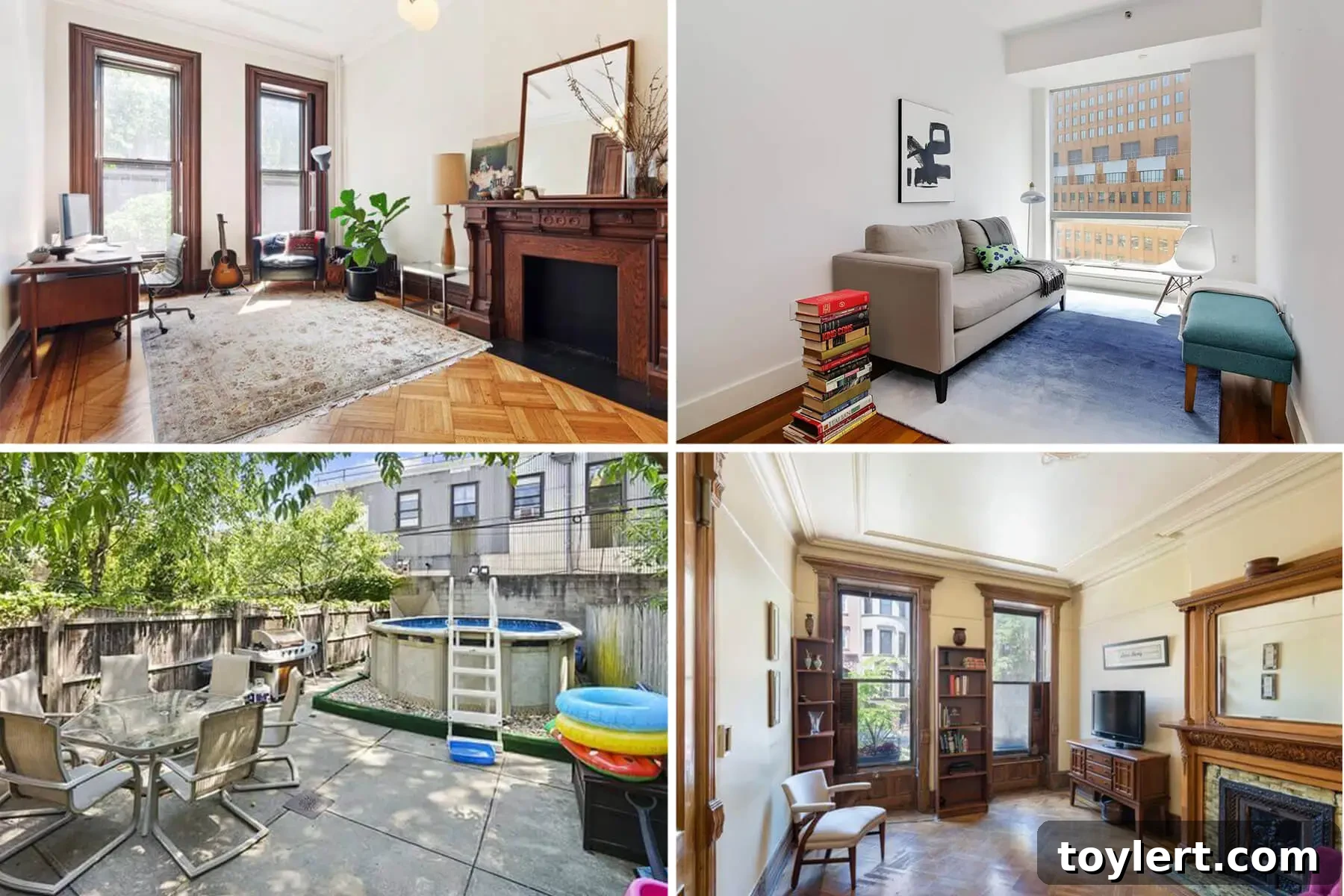
Six months ago, a truly exceptional property at 304 Clinton Avenue caught the eye of many. This stately brownstone, in pristine condition, represented a pinnacle of Clinton Hill living. What truly set it apart was its intelligent configuration: an expansive owner’s duplex, designed for comfortable and luxurious living, complemented by three well-appointed rental units. This setup presented an immediate and significant advantage, allowing the new owner to enjoy a substantial income stream to help manage the mortgage, a highly desirable feature in Brooklyn’s high-value market.
The property’s allure was undeniable, and its market performance reflected this strong appeal. After being featured as a “House of the Day,” the brownstone garnered considerable interest. In a swift and decisive transaction, it sold in November for $3.685 million, precisely matching its initial asking price. The buyer was none other than the renowned French conceptual artist, Pierre Huyghe, a testament to the property’s unique charm and the sophisticated taste it attracted. This sale underscores several critical market dynamics:
- Premium for Condition: The “prime condition” of the property likely justified its asking price, indicating buyers are willing to pay top dollar for turn-key homes, especially in historic districts where renovations can be costly and subject to strict guidelines.
- Value of Rental Income: The presence of three rental units was undoubtedly a major draw, positioning the property as both a luxurious residence and a savvy investment. This multi-family configuration often increases a property’s market value and broadens its appeal to a wider range of buyers, including those seeking to offset living expenses or maximize returns.
- Strong Demand in Clinton Hill: A sale at the asking price within six months (and likely much faster from listing to offer) signifies a robust and competitive market in Clinton Hill for well-maintained, income-generating properties.
- Buyer Profile: The acquisition by a prominent artist like Pierre Huyghe highlights the continued draw of Brooklyn’s historic neighborhoods for creative and affluent individuals seeking unique, character-filled homes.
The successful sale of 304 Clinton Avenue serves as a prime example of a property perfectly aligned with market expectations and buyer needs, resulting in a swift and satisfying transaction for all parties involved.
Case Study 2: Historic Grandeur and Enduring Potential in Bed-Stuy
Our second featured listing transports us to Bedford-Stuyvesant, affectionately known as Bed-Stuy. This expansive and vibrant neighborhood is celebrated for its stunning array of brownstones, intricate architectural details, and a profound sense of community. Stuyvesant Heights, in particular, is one of Bed-Stuy’s most picturesque subsections, characterized by blocks upon blocks of beautifully preserved late 19th-century and early 20th-century homes. While some parts of Bed-Stuy are designated historic districts, others, like the immediate vicinity of our next property, offer slightly more flexibility regarding renovations, which can be an advantage for buyers looking to customize their space while preserving historical integrity.
Exploring 588 Jefferson Avenue: Awaiting Its Next Chapter
At 588 Jefferson Avenue, situated on a prime Stuyvesant Heights block between Lewis and Stuyvesant avenues, stands a truly captivating brownstone. This four-story residence, built in the late 19th century, immediately impresses as a “looker,” boasting an abundance of original details that speak to its rich past. From ornate fireplaces to intricate millwork and period specific moldings, the property offers a canvas for those who appreciate historical craftsmanship and wish to restore or integrate modern comforts while honoring its heritage. Being just outside the historic district can sometimes offer a slight advantage in terms of renovation flexibility, though maintaining the home’s original character is often a priority for buyers in this area.
Despite its undeniable charm and desirable location, this particular “House of the Day” property has experienced a different trajectory than its Clinton Hill counterpart. As of our six-month review, 588 Jefferson Avenue is still available for its initial asking price of $2.15 million. This extended market presence prompts a closer examination of potential factors influencing its sale:
- Pricing Strategy: While $2.15 million reflects the premium for a four-story brownstone in a desirable Bed-Stuy location, the market often dictates a nuanced approach to pricing. Extended time on the market can sometimes signal that the initial asking price, while seemingly competitive, might be slightly above the immediate comfort zone for the current pool of active buyers.
- Condition vs. Potential: Properties “awash in original detail” often appeal to a specific buyer – one who is either an enthusiast for historical preservation or prepared for a renovation project. Unlike the “prime condition” of the Clinton Hill listing, this property, while beautiful, might require updates to meet contemporary living standards, which translates into additional time and financial investment for the buyer.
- Market Segment Differences: While both Clinton Hill and Bed-Stuy are highly desirable, their specific market segments can behave differently. Bed-Stuy offers a slightly more accessible entry point for brownstone ownership compared to some other prime Brooklyn neighborhoods, yet buyers are still highly strategic about their investments, weighing potential against immediate move-in readiness.
- Buyer Patience: In some market cycles, buyers exhibit more patience, waiting for properties that perfectly align with their vision and budget. For a home like 588 Jefferson Avenue, finding the right buyer who appreciates its specific character and potential, and is ready for the commitment, can take time.
The ongoing availability of 588 Jefferson Avenue highlights that even stunning properties in sought-after areas require a precise alignment of price, condition, and buyer expectations to secure a rapid sale. It also underscores the potential opportunity for a buyer looking for a value proposition, willing to invest in a home that offers significant upside through personalized restoration and renovation.
Navigating the Brooklyn Real Estate Landscape: Trends and Insights
These two distinct case studies offer a microcosm of the broader Brooklyn real estate market. While both Clinton Hill and Bed-Stuy boast robust demand for brownstones, the nuances of individual property condition, pricing strategy, and specific neighborhood dynamics play pivotal roles in market outcomes. The market for impeccably maintained, income-generating properties in prime historic districts, as exemplified by 304 Clinton Avenue, remains fiercely competitive, often leading to sales at or above asking price.
Conversely, properties that present significant renovation opportunities or are priced at the higher end of their segment, like 588 Jefferson Avenue, might experience a longer marketing period. This isn’t necessarily a negative indicator but rather a reflection that these homes appeal to a more specialized buyer. These buyers are typically those with a vision for customization, a budget for renovations, and a desire to create a truly bespoke living space that aligns perfectly with their tastes. The market for such properties often requires patience from both sellers and buyers, emphasizing the importance of accurate valuation and a flexible marketing approach.
Current economic factors, including evolving interest rates and inflationary pressures, also continually influence buyer sentiment and purchasing power. While Brooklyn brownstones are often seen as resilient investments, these broader trends can affect market velocity and pricing elasticity. Sellers must be mindful of these external forces when setting their initial asking prices and be prepared to adjust their strategies if market feedback suggests a recalibration is necessary. For buyers, understanding these trends can help them identify opportunities where properties might linger longer, potentially offering room for negotiation or a chance to secure a unique home that aligns with their long-term investment goals.
What This Means for Buyers and Sellers in Today’s Market
For prospective buyers enchanted by the timeless appeal of Brooklyn brownstones, these case studies illuminate the importance of clarity in their priorities. Decide whether a move-in ready, potentially income-generating property is paramount, or if the allure of restoring a historic gem, perhaps with some negotiation on price, is more appealing. Working with experienced real estate professionals who possess an intimate knowledge of specific Brooklyn neighborhoods and their unique market conditions is crucial. Such expertise can help buyers identify hidden value, navigate complex transactions, and make informed decisions.
For sellers, the lessons are equally clear: strategic pricing, impeccable property presentation, and a keen understanding of your property’s unique selling propositions are non-negotiable. If your brownstone is in pristine condition with income potential, you may command a premium and expect a swift sale. If it offers original details but requires renovation, highlighting its inherent potential and pricing it competitively to account for necessary upgrades will be key to attracting the right buyer. Aggressive marketing that targets specific buyer demographics, showcasing the property’s unique charm and investment benefits, is essential to stand out in a dynamic market.
Embracing Brooklyn’s Enduring Legacy
The allure of Brooklyn brownstones remains as potent as ever, drawing individuals from across the globe seeking to immerse themselves in the borough’s distinctive charm and vibrant community life. The market performance of properties like 304 Clinton Avenue and 588 Jefferson Avenue offers a valuable window into the nuanced realities of this highly desirable segment. From seamless transactions for meticulously maintained, income-producing assets to longer journeys for homes awaiting a visionary touch, the Brooklyn brownstone market continues to evolve, reflecting both enduring demand and the ever-present need for strategic engagement.
Whether you’re looking to acquire a piece of Brooklyn history or strategically divest, understanding these intricate market dynamics is paramount. The stories embedded within these brownstone walls are not just about transactions; they are about the enduring legacy of a borough that continues to captivate and inspire, promising both a unique lifestyle and a compelling investment opportunity for generations to come.