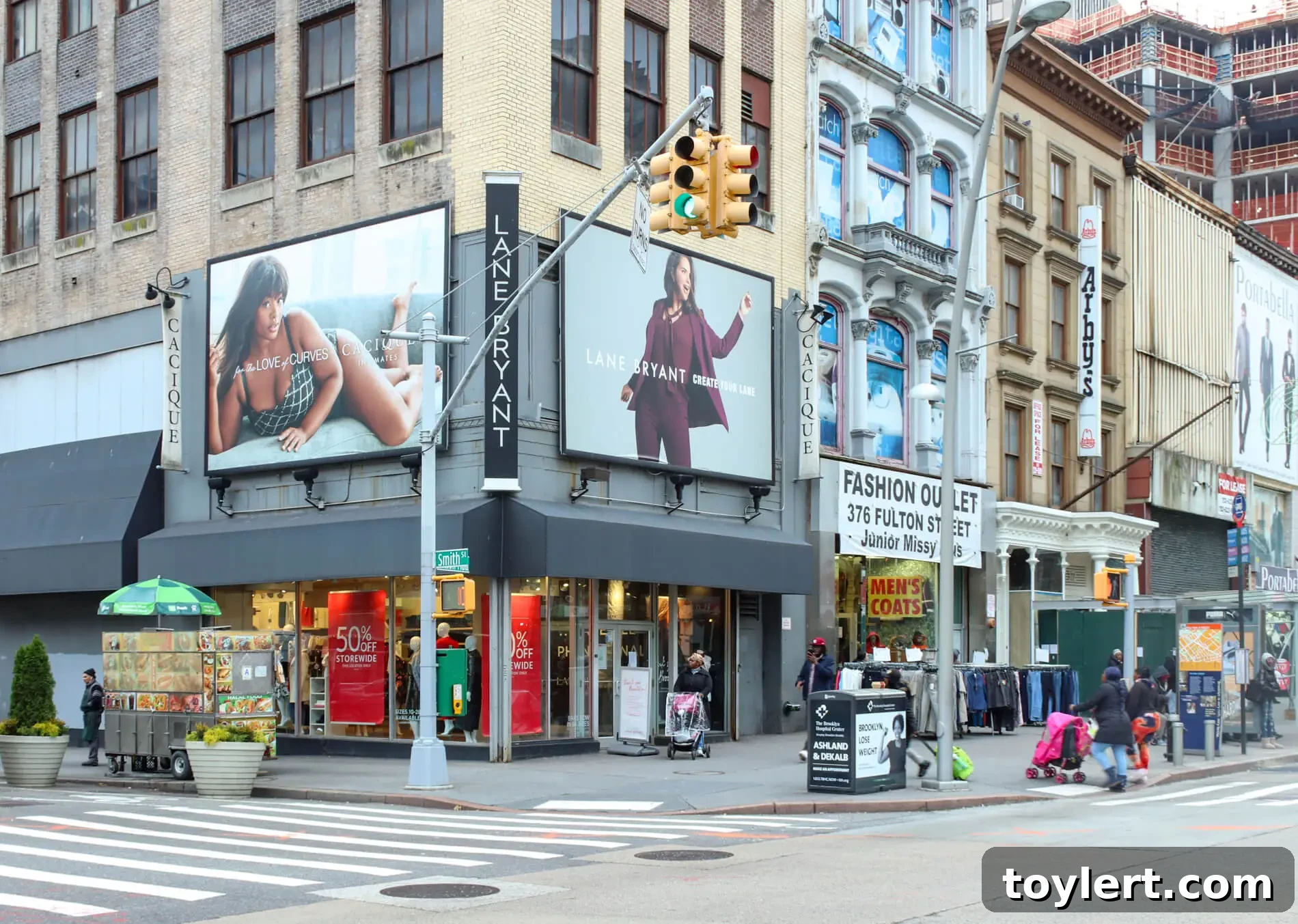
Lane Bryant Closes Historic Downtown Brooklyn Location After 69 Years
After a remarkable tenure spanning nearly seven decades, Lane Bryant, the renowned plus-size women’s apparel retailer, has announced the permanent closure of its flagship Downtown Brooklyn store. Located at the prominent address of 380 Fulton Street, the store officially ceased operations on December 17. A visible sign displayed outside the establishment confirmed the impending departure, marking the end of an era for both the iconic brand and the vibrant Brooklyn community it served.
For 69 years, Lane Bryant stood as a steadfast retail pillar on Fulton Street, witnessing and adapting to the profound transformations of Downtown Brooklyn. Its presence was more than just a retail outlet; it was a destination for generations of women seeking fashionable and well-fitting clothing in a market historically underserved. The closure represents a significant shift in the retail landscape of one of New York City’s most dynamic boroughs, prompting reflection on evolving consumer habits, rising urban costs, and the enduring legacy of a brand that pioneered inclusivity in fashion.
A Legacy Fades: Lane Bryant’s Enduring Presence in Downtown Brooklyn
The story of Lane Bryant at 380 Fulton Street is deeply interwoven with the history of Downtown Brooklyn itself. Opening its doors in the mid-20th century, a time when the area was a bustling commercial hub for Brooklyn residents, the store quickly established itself as an essential part of the community fabric. Before the advent of large suburban malls and widespread online shopping, department stores and specialty boutiques like Lane Bryant on Fulton Street were central to urban life, serving as social gathering places as much as retail destinations.
For nearly seven decades, the store at 380 Fulton Street specialized in providing stylish and comfortable clothing for plus-size women, a demographic often overlooked by mainstream fashion retailers. This commitment made Lane Bryant a trusted name and a vital resource, offering a sense of belonging and empowerment through fashion. Many Brooklynites recall shopping at the store with their mothers and grandmothers, creating multi-generational memories around finding the perfect outfit for special occasions or everyday wear. Its longevity underscored its deep roots and relevance to the diverse population of Brooklyn.
The Roots of an Iconic Brand
To understand the significance of this closure, it’s important to appreciate Lane Bryant’s historical role in American retail. Founded in 1904 by Lena Himmelstein Bryant Malsin, Lane Bryant was a trailblazer. Initially catering to pregnant women with innovative maternity wear, the brand quickly expanded to offer clothing for “stout women,” becoming a pioneer in the plus-size market. Before Lane Bryant, options for women beyond standard sizes were limited, often relegated to custom tailoring or ill-fitting garments. The company democratized fashion for millions, providing stylish, ready-to-wear options that celebrated different body types.
The brand’s expansion into prominent urban centers like Downtown Brooklyn solidified its status as a household name. These stores were not just points of sale; they were spaces where women could feel confident, seen, and fashionably addressed. The Fulton Street location embodied this ethos, serving as a beacon of inclusive fashion in a bustling urban environment. Its closure therefore is not merely the shutdown of a retail outlet, but the fading of a tangible connection to a century-long legacy of empowering women through fashion.
Downtown Brooklyn’s Shifting Sands: A Retail Evolution
Downtown Brooklyn has undergone a dramatic transformation in recent decades, evolving from a traditional commercial district into a vibrant mixed-use neighborhood characterized by high-rise residential buildings, burgeoning tech companies, and a dynamic cultural scene. This rapid urban renewal has brought both opportunities and challenges for long-standing retail establishments like Lane Bryant.
Fulton Street, in particular, has been at the epicenter of this change. Once dominated by classic department stores and independent shops, it now hosts a blend of national chain retailers, fast-casual dining, and high-end boutiques, catering to a new demographic of residents and workers. The increase in foot traffic, combined with rising property values and soaring commercial rents, has intensified competition and pressure on retailers. Businesses must constantly innovate and adapt to remain relevant and financially viable in this rapidly changing environment. For some heritage brands, navigating these shifts can prove exceptionally challenging.
The Dynamic Face of Fulton Street
The evolution of Fulton Street directly impacted the retail experience at 380 Fulton Street. In its prime, the street was a primary shopping destination, easily accessible by multiple subway lines and drawing shoppers from across Brooklyn and beyond. Over the years, while foot traffic has remained high, the nature of shopping has changed. Consumers increasingly seek experiential retail, convenience, or highly specialized offerings, often turning to online platforms for general merchandise. The traditional department store model, or even a specialized chain like Lane Bryant, finds itself competing with a myriad of new formats and digital storefronts.
The immediate vicinity of 380 Fulton Street has seen significant redevelopment, with new residential towers, office spaces, and modern retail complexes emerging. This urban densification, while bringing more people to the area, also means a more diverse set of retail options and higher operational costs. The decision to close after such a long tenure likely reflects a confluence of these local environmental factors, pushing the operational overhead beyond what the store’s performance could sustain in the long term.
Understanding the Modern Retail Environment
The closure of Lane Bryant in Downtown Brooklyn is not an isolated incident but rather indicative of broader trends shaping the retail industry nationwide. Brick-and-mortar stores, especially those with decades of history, are grappling with seismic shifts in consumer behavior, technological advancements, and economic pressures. The rise of e-commerce has fundamentally reshaped how people shop, offering unparalleled convenience, vast product selections, and competitive pricing often inaccessible to physical stores burdened by rent, labor, and inventory costs.
Furthermore, the retail landscape has become increasingly fragmented and specialized. Consumers now have an abundance of choices for plus-size fashion, ranging from online-only retailers to fast-fashion brands that have expanded their sizing, as well as niche boutiques focusing on specific styles or demographics. This heightened competition demands constant innovation in product offerings, customer experience, and marketing strategies. Brands that fail to keep pace risk losing market share to more agile and digitally integrated competitors.
The Digital Tsunami and Competitive Pressures
The “digital tsunami” has particularly impacted legacy retailers. Online shopping platforms offer a frictionless experience, allowing customers to browse, compare, and purchase items from the comfort of their homes. This convenience is a powerful draw, especially for items like clothing, where discreet shopping can be appealing for some plus-size consumers. While Lane Bryant does maintain a robust online presence, the role of its physical stores has had to evolve dramatically to justify their existence.
Beyond e-commerce, the physical retail world itself is more competitive than ever. Other plus-size brands, both established and new, have entered the market, offering diverse styles and price points. The traditional big-box model or dedicated specialty store format faces challenges from pop-up shops, subscription services, and direct-to-consumer brands that leverage digital channels to build strong customer relationships. Operating a large storefront in a prime urban location like Fulton Street requires significant sales volume to offset costs, a benchmark that becomes increasingly difficult to meet in today’s multi-channel retail environment.
More Than Just a Store: Community Impact and Nostalgia
The closure of Lane Bryant’s Downtown Brooklyn store evokes a strong sense of nostalgia and loss within the community. For many loyal customers, it was more than just a place to buy clothes; it was a familiar landmark, a reliable destination, and a source of consistent fashion for a specific need. Losing such a long-standing establishment can feel like losing a piece of the neighborhood’s identity.
For plus-size women in particular, the store played a crucial role. While online options are plentiful, the ability to physically try on clothes, feel the fabrics, and receive personalized assistance from sales associates remains invaluable. This hands-on shopping experience is particularly important for specialty sizing, where fit and comfort are paramount. The closure leaves a void, forcing these shoppers to seek alternatives, either online or further afield, which may not offer the same level of accessibility or personalized service that Lane Bryant had provided for decades on Fulton Street.
The Future of 380 Fulton Street: What Comes Next?
With Lane Bryant’s departure, the prime retail space at 380 Fulton Street becomes available, sparking speculation about its future. Given its strategic location in the heart of Downtown Brooklyn’s bustling commercial district, the property is highly desirable. It could attract a new national retailer looking to capitalize on the area’s high foot traffic, or it might be redeveloped to accommodate multiple tenants or a different commercial purpose.
The transformation of Downtown Brooklyn suggests that whatever replaces Lane Bryant will likely reflect the area’s ongoing evolution towards modernity and diverse offerings. It could be another fashion retailer, a new dining establishment, an experiential concept store, or even a tech-focused venture. The vacant space serves as a symbol of the continuous cycle of change that defines urban retail, where old guard institutions occasionally give way to new visions and enterprises, continually reshaping the streetscape for future generations of Brooklynites.
Conclusion: An End and a New Beginning for Downtown Brooklyn Retail
The closing of Lane Bryant’s store at 380 Fulton Street after 69 years marks a poignant moment in Downtown Brooklyn’s retail history. It signifies the end of a remarkable era for a brand that championed inclusive fashion and served as a steadfast presence for generations of shoppers. While the closure brings a touch of sadness and nostalgia for those who cherished the store, it also underscores the unstoppable forces of change at play in the modern retail landscape.
Downtown Brooklyn continues its relentless march forward, a vibrant and ever-evolving hub. The departure of Lane Bryant is a reminder that even the most enduring institutions must contend with changing consumer habits, economic pressures, and the dynamic nature of urban development. As the community bids farewell to a beloved landmark, it also looks ahead to the next chapter for 380 Fulton Street, anticipating what new ventures will emerge to continue the rich tapestry of retail life in this iconic Brooklyn neighborhood.