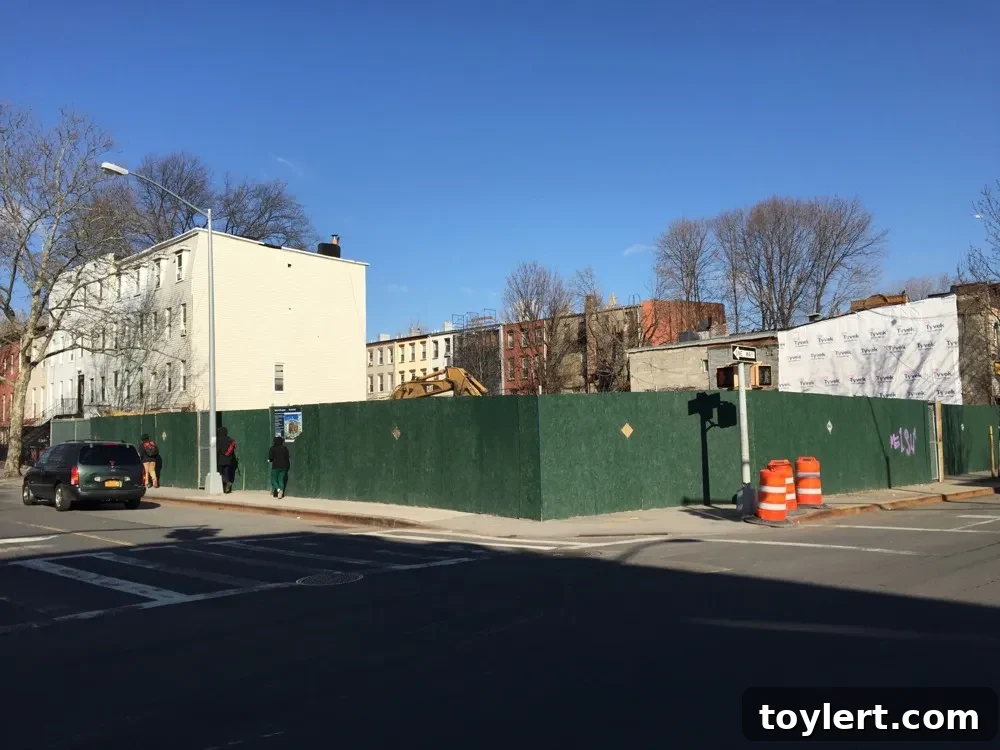
Driving past 420 Tompkins Avenue in the vibrant heart of Bedford-Stuyvesant, Brooklyn, over the weekend revealed a sight that was both anticipated and yet profoundly striking: a vast, empty lot. This prominent corner, once home to the venerable Weinstein Hardware store, now stands completely cleared, marking a significant physical and symbolic transformation for the entire neighborhood. While the impending demolition of the old structure had been widely known within local circles, witnessing its complete removal still came as a surprise, underscoring the rapid pace of urban development sweeping through this dynamic Brooklyn community. The old building, though perhaps not missed for its architectural splendor or modern amenities, represented decades of local history and commerce, making its absence a palpable void in the streetscape.
The End of an Era: Remembering Weinstein Hardware’s Legacy at 420 Tompkins Avenue
For generations of Bed-Stuy residents, Weinstein Hardware was far more than just a place to acquire tools, paint, or essential plumbing supplies. It truly stood as a neighborhood institution, a cornerstone of local life that steadfastly served the community for decades. Established at the highly visible intersection of 420 Tompkins Avenue, it functioned as a reliable beacon, a destination where one could consistently find that elusive screw, a knowledgeable assistant ready with practical home improvement advice, or simply a familiar, friendly face amidst the daily rhythm of city living. Its eventual closure a few years ago left a noticeable gap in the local retail landscape, serving as a subtle precursor to the dramatic transformation we observe today.
The store’s extensive history is deeply interwoven with the very fabric of Bed-Stuy. In an era predating the dominance of large chain retailers on every street corner, independent hardware stores like Weinstein’s were indispensable community hubs. They fostered genuine community connections, provided vital practical services, and often doubled as informal gathering spots for locals to catch up and share news. Residents didn’t merely shop there; they cultivated relationships with the dedicated staff, trusted their deep expertise, and relied on the store’s enduring presence as a quiet symbol of neighborhood stability and continuity. Its lasting legacy is a powerful testament to the crucial role small, family-owned businesses play in shaping a community’s unique identity and fostering its resilience over time.
More Than Just a Store: A Pillar of the Bed-Stuy Community
- A Reliable Resource: Weinstein Hardware was renowned for its comprehensive and often surprising inventory, frequently stocking niche items difficult to locate elsewhere.
- Source of Expert Advice: The staff’s long-standing experience and intimate product knowledge meant customers received invaluable, practical guidance for their diverse home and repair projects.
- A Recognizable Local Landmark: The building itself, strategically positioned at a bustling intersection, served as a familiar landmark for navigating the neighborhood and a common meeting point.
- Significant Economic Contributor: For many decades, the store provided steady local employment opportunities and contributed substantially to the economic vitality of Tompkins Avenue.
- An Organic Social Connector: It was a natural place where neighbors frequently encountered one another, exchanged local news, and inadvertently strengthened the bonds within the community.
The Demolition: From Historic Landmark to an Empty Canvas on Tompkins Avenue
The news regarding the eventual demolition, while not entirely unexpected, had been a topic of discussion within various local circles and online community forums for some time. The aging structure, despite its significant historical resonance, had likely reached a point where extensive modern renovations were no longer deemed feasible or financially viable for the ambitious new development plans envisioned for the site. The progressive sight of sturdy construction fences being erected, followed by the steady arrival of heavy machinery slowly but surely chipping away at the building, marked a somber yet inevitable farewell to a bygone era. Now, with the dust fully settled and all the debris meticulously cleared, 420 Tompkins Avenue presents itself as a meticulously blank canvas, eagerly awaiting its next transformative chapter.
The metamorphosis from a standing, historic structure to an expansive empty lot is always a visually striking and emotionally resonant experience. It invariably compels a moment of profound reflection on what once was, and what exciting possibilities could emerge. For some community members, the complete absence of the old building might evoke a sense of relief, perhaps having viewed it as an eyesore or an underutilized space hindering potential progress. For countless others, however, it represents a bittersweet moment, a tangible and poignant reminder of the relentless march of urban development and the gradual, sometimes painful, erasure of cherished, familiar landmarks. Regardless of individual sentiment, the sheer scale of the cleared space at such a critically prominent intersection is undeniable, signaling an undeniably major upcoming change for the vibrant fabric of Bed-Stuy.
Navigating the Winds of Change in Bed-Stuy, Brooklyn
Bedford-Stuyvesant, affectionately known as Bed-Stuy by its residents, has undergone truly profound transformations over the past two decades. Once recognized primarily for its magnificent historic brownstones and incredibly strong community ties, it has evolved into a dynamic hotbed for revitalization, extensive new development, and significant investment. Property values have experienced substantial appreciation, an array of new businesses have opened their doors, and a fresh wave of residents has moved into the area, all collectively contributing to a dynamic yet sometimes contentious evolution. The demolition at 420 Tompkins Avenue stands as a powerful microcosm of these broader neighborhood trends, representing both the immense opportunities and inherent challenges that invariably accompany rapid urban transformation.
The demand for new housing and diverse commercial spaces across Brooklyn is currently immense, and every available plot of land, especially in prime locations, holds significant development potential. Developers are constantly seeking strategic locations that offer both visibility and accessibility, and a corner lot on a bustling thoroughfare like Tompkins Avenue is exceptionally valuable. This particular site, being highly visible, easily accessible, and centrally located, is undoubtedly poised to become a central focal point of future activity, attracting considerable interest and intense speculation from developers and community members alike.
What Lies Ahead for 420 Tompkins Avenue? Speculating on Bed-Stuy’s Future Landscape
The most pressing question on the minds of many Bed-Stuy residents and keen observers of Brooklyn’s competitive real estate market is undeniably: What will ultimately replace the beloved Weinstein Hardware at 420 Tompkins Avenue? While official development plans are frequently kept under wraps until all necessary permits and approvals are fully secured, several possibilities align perfectly with current development trends prevalent throughout the area. Given the prime, high-visibility location, a sophisticated mixed-use development featuring attractive ground-floor retail spaces and thoughtfully designed residential units above is a highly probable and appealing scenario. This versatile model allows for the maximum utilization of the valuable space while simultaneously catering to the increasing demand for both modern housing and convenient local amenities within the community.
New residential buildings emerging in Bed-Stuy often incorporate a strategic mix of market-rate and more affordable housing units, a crucial consideration in responsibly maintaining the neighborhood’s vital socioeconomic diversity and inclusivity. The architectural design of any new structure on this site will undoubtedly face meticulous scrutiny from vigilant community boards and dedicated historic preservation groups. These groups are eager to ensure that new constructions harmoniously blend with and complement the existing architectural character of Bed-Stuy’s historic blocks. The aesthetics, overall scale, and intended function of the new building will profoundly impact the visual appeal and the daily rhythm of life at this historically significant intersection.
Potential Impacts of New Development at 420 Tompkins Avenue
- Economic Boost: Thoughtfully designed new retail spaces have the potential to attract diverse businesses and create valuable local job opportunities.
- Housing Supply: The addition of new residential units will contribute significantly to addressing Brooklyn’s pressing housing demands.
- Traffic & Infrastructure: An increase in population density may exert additional pressure on local infrastructure, including public transportation and traffic flow.
- Neighborhood Character: The architectural design, scale, and tenant mix of the new building will largely influence the evolving streetscape and community feel.
- Property Values: Modern, high-quality developments often lead to further appreciation of surrounding property values, impacting the broader real estate market.
Beyond the immediate construction phase, the future development at 420 Tompkins Avenue will undoubtedly stand as a powerful symbol of Bed-Stuy’s ongoing evolution and resilience. It will serve as a testament to the neighborhood’s remarkable ability to adapt and successfully reinvent itself, while ideally preserving the incredibly rich cultural heritage that makes it so uniquely special. The overarching challenge for developers, astute urban planners, and the engaged community alike will be to strike a delicate and meaningful balance between inevitable progress and essential preservation. This ensures that new growth genuinely enhances, rather than inadvertently detracts from, the beloved and distinctive character of Bed-Stuy.
Embracing the Dynamics of Urban Transformation in Bed-Stuy
The comprehensive transformation of 420 Tompkins Avenue encapsulates the broader narrative of urban renewal and the ever-changing face of iconic cities like New York. The perpetual cycle of the old gracefully making way for the new is a constant, driven by powerful economic forces, evolving population needs, and significant shifts in cultural preferences. While a certain degree of nostalgia for cherished institutions like Weinstein Hardware is both natural and entirely valid, acknowledging the inherent necessity for progress and thoughtful adaptation is equally paramount. The now empty lot serves as a powerful and visually striking reminder that urban landscapes are inherently dynamic, perpetually in motion, and constantly reshaping their identities in response to contemporary demands.
For Bed-Stuy, a neighborhood deeply steeped in rich history yet continually looking towards a vibrant future, this particular site will undoubtedly emerge as a new landmark, a crucial point of reference for future generations. The enduring memories of Weinstein Hardware will continue to persist in the stories eloquently told by long-time residents, but the new structure that eventually rises will forge its own distinct identity, contributing significantly to the ongoing, intricate tapestry of Bed-Stuy life. As the community eagerly anticipates the unveiling of detailed architectural plans, there is a collective hope that whatever ultimately rises on this incredibly important corner will respectfully honor the past while boldly embracing the future, effectively serving the diverse needs of this extraordinary and resilient Brooklyn neighborhood.
The compelling journey from a bustling, beloved hardware store to an expansive empty lot, and soon to a new, modern development, represents a significant and compelling chapter in the ongoing story of Bedford-Stuyvesant. It profoundly highlights the complex and often delicate interplay between cherished heritage and cutting-edge innovation, between deeply felt local sentiment and the overwhelming pressures of regional development. This prominent corner, precisely at 420 Tompkins Avenue, remains a pivotal focal point—a silent witness to the relentless march of time, profound change, and the enduring, unbreakable spirit of one of Brooklyn’s most iconic and cherished neighborhoods.