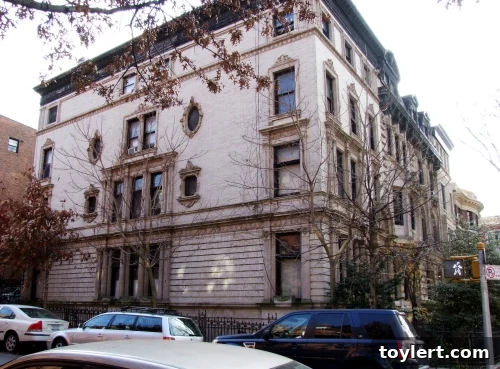
121 Eighth Avenue: A Brooklyn Landmark Transformed from Grandeur to Modern Co-op Living
Brooklyn, one building at a time.
Nestled in the heart of one of Brooklyn’s most coveted neighborhoods, Park Slope, stands a building that whispers tales of grandeur, evolution, and enduring charm: 121 Eighth Avenue. Originally conceived as the opulent private residence of the prominent Maillard Canda, this architectural marvel has gracefully transitioned through time. Today, it stands proudly as an eight-unit co-op, offering a unique blend of historic elegance and contemporary urban living. This article delves into the rich history, architectural significance, and modern appeal of a true Brooklyn icon, exploring its journey from a singular family estate to a vibrant community hub.
The Genesis of Grandeur: The Maillard Canda Legacy
The late 19th and early 20th centuries marked a period of immense prosperity and architectural ambition in Brooklyn. Wealthy industrialists, merchants, and entrepreneurs sought to establish their dominion through magnificent homes that reflected their status and vision. Among these figures was Maillard Canda, a name synonymous with refinement and success, who commissioned the construction of what would become 121 Eighth Avenue. While specific historical records about Canda himself may be scarce in common narratives, the sheer scale and design of his former residence speak volumes about the era’s upper echelon.
Imagine Brooklyn at the turn of the century: streets lined with horse-drawn carriages, burgeoning brownstones, and a vibrant cultural scene. Canda’s home was undoubtedly a centerpiece of this landscape, a testament to the era’s commitment to intricate craftsmanship and sophisticated design. It was more than just a house; it was a statement, a private sanctuary designed for entertaining, raising a family, and leaving an indelible mark on the urban fabric.
Architectural Splendor and Design Philosophy
The architecture of 121 Eighth Avenue is a stunning example of the period’s prevailing styles, often blending elements of Romanesque Revival with Neo-Renaissance influences. Characterized by its robust masonry, ornate detailing, and commanding street presence, the building immediately captures attention. The facade likely features rich brownstone or brick, accented with carved limestone or terra cotta, showcasing the skill of the artisans who brought it to life. Large, often arched windows would have allowed natural light to flood the interiors, illuminating grand entertaining spaces.
Typical features of such homes include stately entranceways, often adorned with elaborate carvings and heavy wooden doors. Inside, one could expect soaring ceilings, intricate plasterwork, meticulously crafted fireplaces, and sweeping staircases that served as the architectural spine of the residence. These details were not merely decorative; they were integral to the structural integrity and aesthetic vision, designed to impress and provide an unparalleled living experience for Maillard Canda and his family. The foresight in its initial design has allowed it to stand the test of time, adapting gracefully to new uses while retaining its original character.
From Private Estate to Community Living: The Co-op Transformation
As the 20th century progressed, societal norms and economic landscapes shifted. Many of Brooklyn’s grand single-family mansions faced an uncertain future, too large for modern family structures and costly to maintain. However, intelligent adaptive reuse offered a lifeline, allowing these architectural treasures to be preserved while serving new purposes. 121 Eighth Avenue embarked on this transformative journey, evolving from a solitary dwelling into a communal haven: an eight-unit co-op.
The conversion of a historic mansion into multiple residential units is a complex undertaking, requiring careful planning to balance preservation with modernization. For 121 Eighth Avenue, this process likely involved thoughtful architectural interventions to create distinct, self-contained residences while retaining shared common areas that echo the building’s original grandeur. This delicate balance ensures that residents benefit from modern amenities without sacrificing the unique historical ambiance.
The Allure of Co-op Living at 121 Eighth Avenue
Living in a co-op at 121 Eighth Avenue offers a distinctive lifestyle. Residents are not just buying an apartment; they are investing in a piece of Brooklyn history and becoming part of a close-knit community. Each unit, while distinct, carries the legacy of the original mansion, often boasting features like original hardwood floors, high ceilings, large windows, and sometimes even a fireplace or intricate moldings that have been carefully restored.
- Historic Charm: Experience the elegance of a bygone era with modern comforts.
- Community Focus: Co-op living fosters a strong sense of community among residents.
- Prime Location: Enjoy the unparalleled amenities and vibrancy of Park Slope.
- Architectural Preservation: Contribute to the ongoing legacy of a beautifully maintained historic building.
The conversion allows more people to experience the unique pleasure of residing in such a significant building, democratizing access to architectural heritage that might otherwise be out of reach or fall into disrepair. It’s a testament to sustainable urban development, where the past informs and enriches the present.
Park Slope: The Perfect Backdrop
The address, 121 Eighth Avenue, places this magnificent building in one of Brooklyn’s most desirable and historically rich neighborhoods: Park Slope. Known for its tree-lined streets, stunning brownstones, and vibrant community, Park Slope consistently ranks among the best places to live in New York City. The neighborhood offers an enviable lifestyle, blending urban convenience with a charming, almost suburban feel.
Residents of 121 Eighth Avenue are privy to the best of Park Slope. Just steps away, Prospect Park, Frederick Law Olmsted and Calvert Vaux’s masterpiece, provides an urban oasis with sprawling lawns, scenic walking paths, a zoo, and a botanical garden. The neighborhood is also renowned for its excellent schools, diverse culinary scene, independent boutiques, and cultural institutions like the Brooklyn Academy of Music (BAM) and the Brooklyn Museum.
Contributing to Park Slope’s Architectural Tapestry
121 Eighth Avenue is not an isolated gem but an integral thread in Park Slope’s rich architectural tapestry. It stands alongside other magnificent brownstones, limestones, and townhouses, each contributing to the neighborhood’s distinctive character. Preservation efforts in Park Slope are robust, ensuring that the area’s historical integrity is maintained for future generations. Buildings like 121 Eighth Avenue serve as living museums, reminding us of the artistry and craftsmanship of yesteryear.
The building’s presence reinforces the notion that historic structures can indeed adapt and thrive in a modern context. Its journey reflects the broader narrative of Brooklyn itself: a borough constantly evolving, yet deeply rooted in its past, cherishing its heritage while embracing progress. This delicate balance is precisely what makes Park Slope, and buildings like 121 Eighth Avenue, so incredibly special and sought-after.
Preservation and Legacy: A Future Built on History
The continued existence and vitality of 121 Eighth Avenue as a functioning co-op is a triumph of historic preservation. It demonstrates that with vision and commitment, significant architectural landmarks can be saved from demolition or neglect and repurposed to meet contemporary needs. The building stands as a powerful example of how retaining the structural and aesthetic integrity of old buildings can enhance the quality of urban life, adding character, depth, and a sense of continuity that new constructions often struggle to replicate.
For current residents, contributing to the upkeep and communal governance of such a building is not just a responsibility but a privilege. They are the custodians of Maillard Canda’s original vision, ensuring that the home’s legacy continues to flourish in a new form. This stewardship ensures that 121 Eighth Avenue remains a beacon of architectural excellence and a desirable place to live for decades to come, continuing to contribute significantly to the cultural and historical landscape of Brooklyn.
Conclusion: A Timeless Brooklyn Gem
From its origins as the stately Maillard Canda home to its present-day role as a vibrant eight-unit co-op, 121 Eighth Avenue encapsulates the dynamic history and enduring appeal of Brooklyn. It is a building that has witnessed more than a century of change, adapting and evolving while steadfastly holding onto its inherent beauty and character. More than just bricks and mortar, it is a living testament to architectural ingenuity, the spirit of preservation, and the continuous rebirth of one of New York City’s most cherished boroughs.
As we appreciate buildings like 121 Eighth Avenue, we gain a deeper understanding of Brooklyn’s rich heritage and the stories embedded within its very foundations. It stands as a reminder that great architecture, coupled with thoughtful adaptation, can truly create timeless spaces that continue to inspire and provide homes for generations. This magnificent edifice remains a proud cornerstone of Park Slope, a true Brooklyn landmark that perfectly blends history, community, and sophisticated urban living.