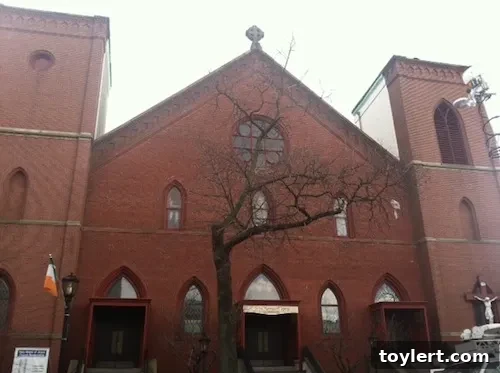
Restoring Grandeur: The Holy Name of Jesus Church Renovation in Windsor Terrace
Nestled gracefully at 245 Prospect Park West, in the vibrant and historic neighborhood of Windsor Terrace, Brooklyn, stands the revered Holy Name of Jesus Church. A testament to enduring faith and community spirit, this architectural gem has seen its interior dramatically transformed over the decades through various alterations, some of which have unfortunately obscured its original grandeur and spiritual ambiance. Today, the dedicated congregation has launched an ambitious, multi-million dollar restoration project, a monumental endeavor aimed at meticulously reclaiming the church’s historic splendor and safeguarding its legacy for generations to come. With a primary fundraising goal exceeding $1 million, this initiative is focused on a comprehensive revitalization, beginning with the most sacred and central space: the altar area.
The cornerstone of this profound spiritual and architectural renewal is the planned acquisition and precise installation of a magnificent marble altarpiece, a true masterpiece crafted by the celebrated architect James Renwick. This exquisite work of art, which once served as the focal point in another significant Brooklyn church, has been carefully disassembled and is currently housed in a secure warehouse, patiently awaiting its new home. Its reinstallation at Holy Name of Jesus signifies more than a mere structural enhancement; it represents a deep reconnection with a rich architectural past, a spiritual re-centering, and a commitment to restoring the church’s worship space to its intended glory.
A Vision for Comprehensive Renewal: Beyond the Sacred Altar
While the altar’s meticulous restoration forms the heart of the project, the congregation’s vision for Holy Name of Jesus Church is wonderfully comprehensive, extending far beyond this initial, crucial phase. Should the community’s generous support enable additional fundraising—a clear indicator of the profound dedication and commitment to this landmark—plans are in place for a holistic overhaul of the entire nave. This subsequent stage of renovation would involve the thoughtful replacement of the existing pews, which, having faithfully served countless parishioners over generations, are now showing the inevitable signs of age and wear. New, elegant carpeting would also be installed throughout the sanctuary, enhancing both comfort and aesthetic appeal. Furthermore, a significant architectural intervention is under consideration: the removal of a back wall that currently interrupts the church’s internal flow and spatial harmony, promising to open up the sanctuary and restore its original voluminous design.
Perhaps one of the most eagerly anticipated changes, and certainly one that has sparked considerable conversation within the community, is the definitive removal of the distinctly “Pepto-Bismol pink” paint that currently blankets much of the interior. This striking, and often polarizing, hue is a relic of past aesthetic choices that will soon give way to a more traditional and reverent color palette. Carefully chosen to complement the church’s inherent Gothic Revival architecture, the new colors will subtly enhance its spiritual atmosphere and highlight its intricate details. This dramatic aesthetic transformation promises to be nothing short of breathtaking, allowing the church’s intrinsic beauty and architectural integrity to re-emerge, free from the layers of less sympathetic design decisions that have accumulated over time.
The Journey of a Masterpiece: James Renwick’s Enduring Legacy
The narrative surrounding the James Renwick altarpiece is a captivating one, weaving together threads of architectural history, dedicated preservation, and profound artistic significance. James Renwick Jr. stands as a colossal figure in 19th-century American architecture, his genius responsible for some of the nation’s most iconic structures, including the majestic St. Patrick’s Cathedral in New York City and the revered Smithsonian Institution Building in Washington D.C. His designs were universally celebrated for their monumental grandeur, intricate detailing, and a deep, scholarly understanding of historical architectural styles, particularly the resurgent Gothic Revival. The altarpiece destined for Holy Name of Jesus Church is a powerful testament to his unparalleled artistry, offering a truly unique opportunity to integrate a piece of such significant provenance and historical weight into a thriving, modern parish environment.
Its remarkable journey, from its original home in another Brooklyn church to its current, temporary location in storage, vividly underscores the complex challenges and unwavering dedication inherent in preserving invaluable ecclesiastical art. The meticulous process of safely disassembling, carefully transporting, and securely storing such a delicate, monumental, and historically significant work demands not only precise planning but also the involvement of highly specialized expert craftsmanship. Its eventual reassembly and installation within the hallowed walls of Holy Name of Jesus will be a truly delicate and intricate operation, overseen by accomplished conservators and skilled artisans, all committed to ensuring that its original integrity, breathtaking beauty, and spiritual splendor are not just restored, but celebrated. This isn’t merely a decorative component; it is a profound spiritual focal point, an undeniable artistic masterpiece, and a tangible, living link to a rich and influential architectural past that continues to inspire.
A Community Rallies: Impressive Fundraising Progress and Collective Spirit
The initial response from the community to this exceptionally ambitious restoration project has been nothing short of inspiring, demonstrating an overwhelmingly positive and remarkably effective outpouring of support. As of this week’s update, the dedicated congregation and its fervent supporters have collectively raised an impressive sum of $725,000, propelling them significantly closer to the project’s multi-million dollar target. This substantial financial progress, achieved early in the fundraising campaign, is a powerful testament to the deep affection, unwavering commitment, and profound sense of ownership that the Windsor Terrace community holds for Holy Name of Jesus Church. It is a clear and resounding indicator of a collective desire to see this historic landmark not only revitalized but also robustly sustained for the spiritual and cultural enrichment of future generations.
Fundraising for large-scale historic church restorations is often a protracted and arduous process, relying heavily on the sustained generosity of dedicated parishioners, the proactive support of local residents, crucial historical preservation grants, and broader philanthropic efforts. The commendable success witnessed thus far by Holy Name of Jesus Church speaks volumes about the effective and passionate leadership of the restoration committee, and more profoundly, about the enduring and positive impact the church has consistently had on the lives of those it faithfully serves. Every single donation, regardless of its monetary value, contributes significantly to a collective endeavor that transcends mere brick and mortar, firmly reinforcing the church’s irreplaceable role as a spiritual, cultural, and communal anchor within the cherished fabric of Windsor Terrace.
The Broader Significance: Preserving Brooklyn’s Architectural Heritage
The comprehensive restoration of Holy Name of Jesus Church transcends its immediate impact on the parish; it stands as a vital and significant act of historic preservation for the entire borough of Brooklyn. Churches such as Holy Name of Jesus are far more than just places of worship; they are, in essence, architectural masterpieces, invaluable repositories of local history, and enduring, tangible symbols of community identity that shape the character of their surroundings. Their meticulous preservation ensures that the rich and intricate tapestry of Brooklyn’s past remains vibrantly visible and meaningfully accessible, contributing immeasurably to the unique character, historical depth, and undeniable appeal of cherished neighborhoods like Windsor Terrace.
Through careful, expert restoration, these magnificent buildings can continue to fulfill their sacred original purpose, while simultaneously serving as powerful educational tools. They allow us to vividly appreciate the intricate craftsmanship, the profound artistic movements, and the foundational societal values of bygone eras. The dedicated efforts currently underway at Holy Name of Jesus powerfully exemplify a growing and critical awareness of the paramount importance of protecting these truly irreplaceable structures from the ravages of decay, the passage of time, and the potential pitfalls of insensitive modernization. This ensures that their inherent beauty, their profound historical narratives, and their spiritual significance can continue to inspire and uplift future generations, connecting past, present, and future in a seamless, enduring legacy.
Below are a series of interior photographs that provide a compelling glimpse into the current state of the church, offering a crucial visual context for the exciting and transformative renovation plans. These images vividly capture the existing altar area, highlighting the now-prominent “pink paint,” and showcasing the very spaces where the magnificent James Renwick altarpiece will soon be carefully reinstalled, promising to redefine and elevate the spiritual heart of the church.
Learn more about the Big Renovation for Windsor Terrace Church on Brownstoner.com
Follow the Holy Name of Jesus Brooklyn Church Restoration Project on Facebook for the latest updates and photo galleries.
Visualizing the Transformation: Inside Holy Name of Jesus Pre-Restoration
This critical view of the altar area as it stands today vividly illustrates its current condition, notably dominated by the much-discussed pink paint. This perspective effectively highlights the specific elements slated for comprehensive transformation, offering a stark and dramatic contrast to the envisioned grandeur and architectural reverence of the restored space.
These prominent beams, clearly a feature of past structural modifications and aesthetic choices, are explicitly scheduled for removal. Their elimination will create the necessary space for the magnificent James Renwick altarpiece to be meticulously installed, allowing it to assume its rightful place as the spiritual, architectural, and artistic centerpiece of the sanctuary. This significant structural alteration is poised to profoundly open up the sacred space, restoring its intended spatial harmony and enhancing the overall sense of awe.
The altarpiece in question, a true testament to the exceptional artistry of James Renwick, is captured here during its period of secure storage. This photograph, originally shared on the church’s dedicated Facebook page, provides a clear and compelling glimpse into the incredible detail, exquisite craftsmanship, and monumental scale of the masterpiece that is patiently awaiting its grand re-installation. Its eventual and prominent presence is guaranteed to fundamentally redefine and elevate the entire sacred space, ushering in a new era of spiritual and aesthetic beauty.
View more comprehensive photo galleries and updates on the Holy Name of Jesus Church Restoration Project on Facebook.