Brownstoner delves into the rich tapestry of Brooklyn history in its captivating Nabe Names series, offering concise yet insightful explorations into the surprising origins and compelling stories behind the nomenclature of the borough’s diverse neighborhoods. This installment sheds light on Flatbush, a central Brooklyn cornerstone whose name whispers tales from a bygone era.
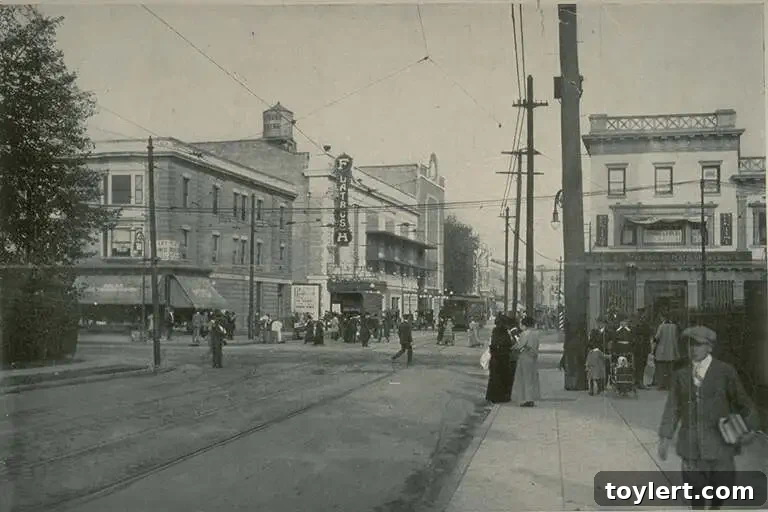
Flatbush, Brooklyn: Unearthing the Rich History and Vibrant Present of a Central Borough Gem
Flatbush, a sprawling and dynamic mass of central Brooklyn, stands as more than just a geographical location; it is a vibrant residential hub and a crucial artery for over 100,000 Brooklynites. Indeed, this historic district claims the distinction of being the literal center of the borough, playing a pivotal role in its development and character. Its name resonates through the very fabric of Brooklyn, particularly through Flatbush Avenue, a major thoroughfare that majestically traverses the borough from its southern reaches at Jamaica Bay all the way up to the bustling foot of the Manhattan Bridge.
For newcomers to the borough, the name “Flatbush” might seem deceptively simple, perhaps even a tad peculiar, implying a straightforward topographical description. However, its origins are steeped in history, tracing back to the Dutch settlers who first arrived on these shores. They christened the area “V’lacke Bos,” a melodic phrase that translates to “a plain with woods.” This evocative title was a direct reference to the landscape that greeted them: a richly timbered land, densely covered with trees, presenting a verdant plain ripe for settlement. This early nomenclature offers a fascinating glimpse into the natural environment of what would eventually become one of Brooklyn’s most iconic neighborhoods.
The Dutch Roots: From V’lacke Bos to Flatbush
The story of Flatbush begins in the 17th century when Dutch colonists established Nieuw Nederland (New Netherland). Among their settlements was a fertile stretch of land that caught their eye due to its abundant timber and relatively flat terrain. This area, nestled in the heart of what would become Long Island, was designated as one of the six original towns of Kings County (Brooklyn). The name “V’lacke Bos,” signifying “a plain with woods,” perfectly captured the essence of the undeveloped wilderness that the early settlers encountered. It was a place of vast forests interspersed with open plains, ideal for farming and providing essential resources for building their new world.
Over time, as English influence grew and eventually superseded Dutch rule in the region, the name gradually Anglicized. “V’lacke Bos” smoothly transitioned into “Flatbush,” retaining the core descriptive elements while adapting to the dominant language. This linguistic evolution is a common thread in the naming conventions of many early American settlements, reflecting the layers of diverse cultures that shaped the nation. The name Flatbush, therefore, is not merely a label; it’s a historical artifact, a linguistic bridge connecting the present-day bustling community with its tranquil, forested past under Dutch stewardship.
A Strategic Crossroads: Flatbush Avenue and Urban Development
Central to the identity and development of Flatbush is its namesake, Flatbush Avenue. This monumental thoroughfare is far more than just a street; it’s a vital artery that has historically connected and continues to connect disparate parts of Brooklyn. Its strategic importance dates back centuries, serving as a primary route for commerce and travel from the earliest colonial days. From its southern terminus near the waters of Jamaica Bay, providing access to the coastline and wetlands, it stretches northward, piercing through the borough’s heart and culminating at the base of the Manhattan Bridge, a crucial link to Manhattan itself.
The presence of such a significant road spurred much of the early growth and urbanization of the Flatbush area. Along its length, communities blossomed, businesses thrived, and transportation networks converged. Today, Flatbush Avenue remains a bustling commercial corridor, lined with shops, restaurants, and cultural institutions that cater to the diverse needs of the local population and visitors alike. Its continuous evolution mirrors the dynamic character of Flatbush itself, reflecting demographic shifts, architectural trends, and the ever-changing pulse of Brooklyn life.
Architectural Splendor: The Charm of Victorian Flatbush
One of the most captivating aspects of Flatbush, and a significant contributor to its unique character, is its remarkable architectural heritage. The neighborhood boasts some of the finest examples of Victorian-era residential architecture anywhere in New York City, particularly within the designated historic districts of “Victorian Flatbush.” Developed primarily between the late 19th and early 20th centuries, these areas feature an astounding collection of Queen Anne, Colonial Revival, Tudor Revival, and Neo-Renaissance homes.
These stately residences, often characterized by their intricate detailing, turrets, stained glass, and expansive porches, stand as a testament to a period of rapid growth and affluence in Brooklyn. Developers of the era envisioned a suburban paradise within the city, offering spacious homes and tree-lined streets that provided a welcome respite from the density of Manhattan. Walking through these leafy enclaves, such as Ditmas Park, Prospect Park South, and Beverley Square, feels like stepping back in time, revealing a different facet of urban living that is both elegant and serene. This architectural legacy is meticulously preserved by dedicated residents and local historical societies, ensuring that the unique charm of Victorian Flatbush endures for generations to come.
A Melting Pot of Cultures: Demographics and Community Life
Beyond its historical roots and architectural grandeur, Flatbush is renowned for its vibrant and diverse community. Over the decades, the neighborhood has welcomed successive waves of immigrants, each contributing to its rich cultural tapestry. From its early Dutch and English settlers, Flatbush evolved to embrace communities of Irish, Italian, and Jewish immigrants in the 19th and early 20th centuries. More recently, it has become home to a large and thriving Caribbean population, particularly from Haiti and the West Indies, alongside significant African American, South Asian, and Latin American communities.
This remarkable diversity is evident in every corner of Flatbush: in the array of languages spoken on its streets, the tantalizing smells emanating from its diverse restaurants, the vibrant music pouring from its storefronts, and the kaleidoscope of cultural festivals that animate its public spaces. This rich blend of traditions, cuisines, and perspectives fosters a dynamic and inclusive environment, making Flatbush a true microcosm of Brooklyn’s celebrated multiculturalism. Community life thrives through local businesses, religious institutions, schools, and numerous community organizations that work to support and celebrate the neighborhood’s multifaceted identity.
Educational and Recreational Hubs: Shaping Minds and Spaces
Flatbush is not only a residential and commercial center but also a significant hub for education and recreation. It is home to Brooklyn College, a senior college of the City University of New York (CUNY), which has educated generations of students since its founding in 1930. The college’s sprawling campus, with its distinctive collegiate Gothic architecture, is a landmark in itself and provides a vital intellectual and cultural resource for the neighborhood and beyond.
Another educational cornerstone is Erasmus Hall High School, one of the oldest and most historically significant public high schools in the United States. Established by Dutch settlers in 1786, its magnificent building on Flatbush Avenue is a designated New York City landmark, showcasing an impressive blend of architectural styles. These institutions underscore Flatbush’s long-standing commitment to learning and intellectual growth.
For recreation and green spaces, residents benefit from proximity to some of Brooklyn’s most cherished parks. While not directly within its borders, the magnificent Prospect Park, designed by Frederick Law Olmsted and Calvert Vaux, is just a stone’s throw away, offering vast expanses for leisure, sports, and cultural events. Within Flatbush itself, smaller community parks and playgrounds provide essential urban oases, contributing to the quality of life and fostering a sense of community among its residents.
Flatbush Today: A Neighborhood of Continuous Evolution
Today, Flatbush continues to be a neighborhood in constant evolution, balancing its deep historical roots with the demands and dynamism of modern urban life. It faces the challenges and opportunities common to many historic urban areas, including preserving its architectural heritage, managing development, and ensuring equitable growth for all its residents. Yet, through it all, Flatbush retains its unique charm and resilient spirit.
Its main commercial arteries, such as Flatbush Avenue and Church Avenue, remain vibrant centers of activity, offering an eclectic mix of independent shops, national retailers, and an incredible array of eateries that reflect the neighborhood’s global palate. From traditional Caribbean bakeries to contemporary cafes, the culinary scene is as diverse as its population. Art, music, and community events frequently enliven the area, celebrating its history while embracing its future.
Flatbush stands as a testament to Brooklyn’s enduring appeal—a place where history is palpable, community is paramount, and diversity is celebrated. From its humble beginnings as “V’lacke Bos,” a plain with woods, it has transformed into a bustling, beloved, and undeniably central part of the borough, proudly carrying its Dutch legacy forward into the 21st century.