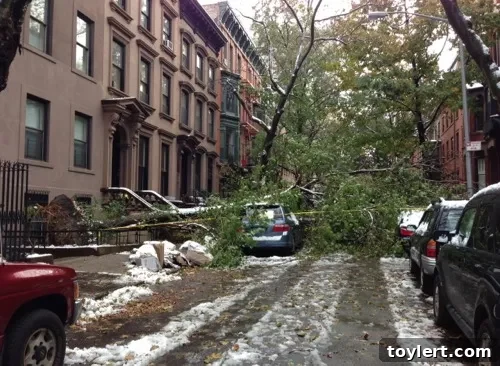
Navigating the Aftermath: A Fallen Tree Blocks Remsen Street in Brooklyn Heights Following Dual Storms
The serene, historic streets of Brooklyn Heights often tell tales of timeless elegance and urban tranquility. However, on a recent crisp morning, a dramatic scene unfolded at 30 Remsen Street, painting a stark picture of nature’s raw power intersecting with urban life. The street found itself entirely impassable, choked by the colossal bulk of a fallen tree, its branches and trunk heavily blanketed in a fresh layer of snow. This wasn’t merely an isolated incident but a poignant consequence, widely believed to be the cumulative damage inflicted first by the formidable Hurricane Sandy, and then conclusively by the subsequent nor’easter that swept through the region just last night. The visual was undeniably sobering, a clear indication of significant disruption and the challenges posed by extreme weather events in this iconic New York City neighborhood.
The Immediate Scene: Disruption at 30 Remsen Street
The sight at 30 Remsen was one of immediate and undeniable chaos. What was once a picturesque, tree-lined thoroughfare, central to one of New York City’s most coveted neighborhoods, transformed overnight into an obstacle course. The sheer size of the fallen tree meant that not only the sidewalk but the entire width of the street was rendered inaccessible to vehicles and pedestrians alike. Local residents, accustomed to their quiet morning routines, were greeted by an unexpected spectacle of downed timber and fresh snow, a stark reminder of the recent meteorological turmoil. The snow, clinging to every branch and covering the street, added an almost surreal stillness to the scene, highlighting the severity of the dual weather assaults. Emergency services and local authorities were undoubtedly already coordinating their response to this significant obstruction, which impacted traffic flow and daily commutes throughout this tightly-knit Brooklyn Heights community.
For those living directly on Remsen Street, or needing to access it, the fallen tree posed an immediate logistical challenge. Deliveries were delayed, commuters found their routes blocked, and the typically vibrant morning rhythm of the neighborhood was abruptly interrupted. The magnitude of the tree’s fall suggested not just a simple break, but a deep-rooted upheaval, signaling a significant event that would require substantial effort to resolve. The scene became a focal point, drawing curious onlookers and concerned residents alike, all grappling with the tangible impact of nature’s relentless force.
The Perfect Storm: Sandy’s Legacy and the Nor’easter’s Final Blow
Understanding the full scope of the incident at 30 Remsen requires looking back at the preceding weeks, specifically to the devastating impact of Superstorm Sandy. While Sandy, a post-tropical cyclone, made landfall weeks earlier, its immense power left a lasting legacy of damage, particularly to urban infrastructure and natural landscapes across the entire tri-state area. It’s highly probable that Sandy’s relentless winds, reaching hurricane-force gusts, and torrential rains, which saturated the ground, significantly compromised the structural integrity of many trees across the city, including the one that now lay across Remsen Street. The storm’s deep saturation of the soil would have loosened root systems, making it easier for trees to topple, and its powerful gusts would have weakened branches and trunks, making them dangerously susceptible to subsequent weather events. This foundational damage set the stage for the nor’easter.
The nor’easter, a classic winter storm characterized by strong winds, heavy precipitation (often snow), and coastal flooding, delivered the final, decisive blow. Even though it might not have been as historically significant or widespread as Sandy, its timing and specific characteristics were devastating for already weakened structures and trees. The combination of sustained high winds, likely exceeding the tree’s compromised tolerance, and the added weight of new snow accumulating on its already stressed branches proved to be too much. The heavy, wet snow, in particular, can exert tremendous pressure on branches, especially those already damaged or weakened by a previous storm. It was the meteorological one-two punch that many experts had predicted for vulnerable trees in the metropolitan area: Sandy’s initial weakening followed by the nor’easter’s powerful finish. This sequence of events underscores the complex and cumulative nature of storm damage, especially in dense urban environments where trees are a cherished but often stressed component of the landscape.
Brooklyn Heights: A Neighborhood Grappling with Nature’s Fury
The Iconic Urban Canopy of Brooklyn Heights
Brooklyn Heights is renowned for its stunning architecture, cobblestone streets, and perhaps most notably, its magnificent tree-lined avenues. These mature trees are not just aesthetic assets; they are vital components of the neighborhood’s ecosystem, providing essential shade during hot summers, improving air quality by filtering pollutants, and contributing significantly to the overall quality of life and the distinctive character of the area. Many of these trees have stood for decades, even centuries, bearing witness to the area’s rich history and becoming beloved landmarks in their own right. However, their age and grandeur, while beautiful, also make them inherently vulnerable.
Over time, urban trees face unique challenges that rural trees typically do not. These include compacted soil, which restricts root growth and nutrient absorption; limited root space due to surrounding infrastructure like sidewalks, foundations, and underground utilities; chronic exposure to urban pollution; and the constant stress of human activity. These factors can collectively weaken trees, making them more susceptible to disease, pest infestations, and, crucially, to the destructive forces of extreme weather. The sight of a fallen giant on Remsen Street serves as a potent reminder of the delicate balance between urban development and natural preservation. While residents cherish their leafy surroundings, incidents like this highlight the ongoing need for vigilant urban forestry management. Regular inspections, proactive pruning, and strategic planting of appropriate species are essential to maintain the health and safety of the urban canopy and to preserve the timeless charm of Brooklyn Heights.
Community Resilience and Response
In the wake of such disruptive events, the spirit of community in Brooklyn Heights typically shines through. Neighbors often come together to assist one another, sharing vital information about street closures or power outages, offering help to those most affected, and collectively navigating the challenges. From coordinating with city services to simply checking on elderly residents or ensuring children can safely get to school, the community’s response is a testament to its strong bonds and collective resilience. When a major thoroughfare like Remsen Street is blocked, it affects countless daily routines—commutes to Manhattan, school drop-offs, local business access, and even emergency vehicle routes. This necessitates swift and coordinated action from municipal departments, including the Department of Parks and Recreation, which is often responsible for tree removal, and the Department of Sanitation, for clearing debris. The coordination between city agencies and the patience and understanding of the residents are key to restoring normalcy and ensuring public safety in the aftermath of such an event.
Beyond Remsen Street: Broader Implications for Urban Infrastructure
Lessons Learned from Superstorm Sandy and Subsequent Storms
Superstorm Sandy was a watershed moment for urban infrastructure and disaster preparedness in the Northeast. Its widespread devastation, from widespread power outages that lasted for weeks to subway tunnels flooding and extensive tree damage across all five boroughs, prompted a comprehensive reevaluation of existing protocols and spurred significant investment in resilience projects. The incident on Remsen Street, occurring after Sandy, serves as a crucial reminder that the impacts of major storms can linger and even be compounded by subsequent weather events. Cities learned that preparation must extend beyond immediate emergency response to include long-term strategies for infrastructure hardening, such as elevating critical equipment, building protective barriers, and enhancing drainage systems. Furthermore, community education and sophisticated environmental management practices became paramount in fostering a more resilient urban landscape.
For urban foresters and city planners, the aftermath of Sandy and events like the Remsen Street tree fall highlighted the critical need for comprehensive tree inventories, detailed risk assessments, and targeted mitigation efforts. Identifying vulnerable trees before they become hazards is paramount not only for public safety but also for the long-term health of the urban forest. This involves not only assessing individual tree health through expert evaluation but also understanding the systemic impact of saturated soils and high winds on specific tree species and their complex root systems within a confined urban context. Integrating climate change projections into urban planning also becomes vital to anticipate future risks and build more adaptable cities.
Proactive Urban Forestry Management and Preparedness
To minimize the impact of future storms and protect both residents and the valuable urban canopy, cities must adopt comprehensive and proactive urban forestry practices. This includes:
- Regular Tree Health Assessments: Routine and thorough inspections by certified arborists to identify diseased, dead, or structurally compromised trees that pose a risk. Early detection allows for timely intervention.
- Strategic Pruning: Implementing systematic pruning programs to remove weak, dead, or overgrown branches. This reduces wind resistance, improves tree stability, and promotes healthier growth, making trees more resilient to storms.
- Appropriate Species Selection: Prioritizing the planting of resilient, native tree species that are well-suited to urban conditions, local soil types, and resistant to common pests and diseases. Diversity in tree species also helps prevent widespread damage from specific threats.
- Root System Management: Ensuring adequate soil volume and aeration for healthy root development, potentially using advanced techniques like structural soils or root barriers to prevent conflicts with underground utilities and sidewalks while providing stability.
- Emergency Preparedness Plans: Developing clear, well-communicated protocols for rapid response, efficient debris removal, and ensuring public safety during and immediately after severe weather events. This includes pre-identifying staging areas and resource allocation.
- Public Education and Engagement: Informing residents about the importance of tree care, how to report potential tree hazards, and understanding the critical role that trees play in urban resilience, environmental health, and quality of life.
The incident on Remsen Street, while disruptive, underscores the ongoing dialogue between urban development and environmental stewardship. While fallen trees represent immediate challenges and symbolize the raw power of nature, they also offer valuable opportunities for communities to reflect on their relationship with nature, enhance their resilience strategies, and reaffirm their commitment to maintaining safe, beautiful, and sustainable urban environments for generations to come.
Restoration and Moving Forward
The process of clearing a large fallen tree like the one at 30 Remsen Street is a significant undertaking, requiring specialized equipment and skilled personnel. It’s not just about cutting up the tree; it involves carefully sectioning and removing massive pieces without causing further damage to surrounding property, vehicles, or vital underground utilities. Public safety is paramount throughout this process, often requiring temporary street closures and cordoning off the area. This multi-stage operation can take several hours, or even days, depending on the tree’s size, its specific location, the complexity of its entanglement with other structures, and the availability of resources, especially after widespread storm damage.
Once the tree is cleared, the focus shifts to restoring the street and assessing any damage to sidewalks, streetlights, power lines, or underground infrastructure that might have occurred during the tree’s fall. This often involves detailed inspections and potential repair work. For the residents of Brooklyn Heights, witnessing the removal process is often a symbolic and tangible step towards recovery and the slow return to normalcy. It’s a moment that bridges the disruption of the past with the promise of future resilience, as the community collectively works to heal and rebuild.
While the immediate impact of the fallen tree on Remsen Street was undoubtedly inconvenient and visually striking, it serves as a powerful microcosm of the broader challenges faced by urban areas in an era of increasingly unpredictable and intense weather patterns. It reinforces the importance of robust urban planning, proactive environmental management, and strong community ties in navigating the complex interplay between nature and our built environment. The enduring spirit of Brooklyn Heights, known for its timeless charm and community strength, will undoubtedly prevail as it addresses this temporary setback and continues to thrive, learning valuable lessons with each challenge.