1301 Grand Street: Unveiling Brooklyn’s Enduring Industrial Heritage
Brooklyn, New York, is a borough defined by its rich history, diverse communities, and an architectural tapestry that tells countless stories. Among its myriad structures, 1301 Grand Street stands as a silent, yet powerful, testament to Brooklyn’s industrial past. This commanding edifice, once the bustling hub of Louis Bossert & Son Co. and later reborn as Charles J. King Iron and Scrap, embodies the spirit of enterprise and transformation that has shaped this vibrant city. Join us as we explore the profound legacy of this iconic address, delving into its architectural significance, the businesses it housed, and its enduring place in the narrative of Brooklyn’s evolution.
The Foundations of Industry: Louis Bossert & Son Co.
To truly appreciate 1301 Grand Street, one must first understand the powerhouse that was Louis Bossert & Son Co. Flourishing in the late 19th and early 20th centuries, a period of unprecedented growth and development for Brooklyn, Louis Bossert established himself as a prominent figure in the lumber and millwork industry. The company was more than just a supplier; it was an integral part of Brooklyn’s burgeoning construction boom, providing high-quality building materials, intricate millwork, and even prefabricated housing components that helped shape the borough’s distinctive streetscapes. From elegant brownstones to sprawling industrial complexes, Bossert’s materials were the backbone of countless projects, making their mark on the very fabric of New York City.
The facility at 1301 Grand Street, under Bossert’s proprietorship, would have been a hive of activity. Imagine large timber shipments arriving, skilled craftsmen meticulously shaping wood, and a constant flow of wagons and trucks distributing finished products across the city. This era was characterized by a robust local economy, driven by manufacturing, trade, and an ever-increasing population demanding new homes and infrastructure. Louis Bossert & Son Co. was a beacon of this prosperity, contributing significantly to the economic vitality and architectural identity of areas like Williamsburg and Bushwick, neighborhoods that were rapidly transitioning from rural outposts to bustling industrial and residential districts.
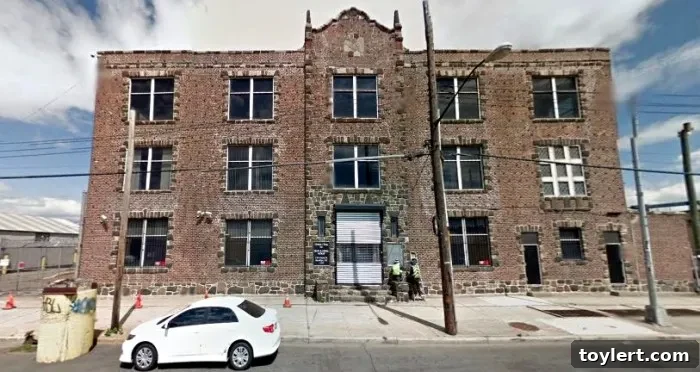
The original design of the building likely reflected its purpose: a sturdy, functional structure built to withstand the rigors of industrial operations. Large loading bays, ample storage space, and robust construction would have been paramount. While specific architectural details from its earliest days might be veiled by time and subsequent modifications, the underlying strength and practical elegance of early 20th-century industrial architecture are still palpable in its sturdy brick facade and imposing presence. It was a place where raw materials were transformed into the components of urban dreams, a true testament to the industrious spirit of Brooklyn.
A New Chapter: Charles J. King Iron and Scrap
As the industrial landscape of Brooklyn shifted through the mid-20th century, so too did the purpose of 1301 Grand Street. The eventual transition saw the building become home to Charles J. King Iron and Scrap. This change was reflective of broader economic trends, moving from the production of new building materials to the critical business of recycling and material reclamation. In an age where resource efficiency and the repurposing of materials became increasingly vital, companies like Charles J. King Iron and Scrap played a crucial role in the industrial ecosystem.
The operations of an iron and scrap business would have brought a different kind of energy to the building. Instead of pristine lumber, the facility would have processed various metals, machinery, and discarded industrial components. This required a robust infrastructure, capable of handling heavy loads, sorting materials, and potentially housing machinery for cutting, crushing, or baling metals. The building’s inherent strength and spacious interiors, originally designed for lumber storage and millwork, proved adaptable for this new, equally demanding industrial use. Charles J. King Iron and Scrap became a vital link in the supply chain, converting waste into reusable resources, thereby supporting other manufacturing sectors and contributing to the circular economy long before the term became mainstream.
This evolution highlights the resilience and adaptability of industrial buildings in Brooklyn. Structures originally conceived for one specific purpose often found new life as economic conditions and technological advancements dictated new needs. The story of 1301 Grand Street is a microcosm of this larger narrative, illustrating how Brooklyn’s industrial heart continued to beat, albeit with changing rhythms and functions, throughout the 20th century. The building stood as a constant, witnessing the ebb and flow of industry, technology, and the communities surrounding it.
Architectural Splendor in Utility: The Design of 1301 Grand Street
The architecture of 1301 Grand Street, while undeniably industrial and utilitarian, possesses a distinctive character that speaks volumes about its era. Constructed primarily of robust red brick, a common and durable material for industrial buildings of the time, the structure exudes an air of permanence and strength. Its design likely incorporates elements characteristic of early 20th-century factory architecture: large, multi-paned windows would have been strategically placed to maximize natural light, illuminating expansive interior spaces where craftsmen and laborers worked. This emphasis on natural light was not just an aesthetic choice; it was a practical necessity, reducing reliance on artificial lighting and creating healthier working environments.
Beyond its functional aspects, the building’s scale and massing give it a commanding presence on Grand Street. High ceilings within would have accommodated tall machinery, large stacks of materials, and efficient movement of goods. The structural integrity, likely featuring heavy timber or steel framing, underscores its capacity to handle significant industrial loads over decades. While not adorned with intricate historical ornamentation found in residential or public buildings, its beauty lies in its honest expression of purpose – a monument to efficiency and enduring construction.
The facade, with its rhythmic arrangement of windows and solid brickwork, demonstrates a subtle balance and proportion that elevates it beyond mere utility. Such buildings are increasingly recognized for their architectural merit, representing a significant period in urban and industrial design history. They serve as tangible links to a bygone era of manufacturing and craftsmanship, offering insights into the ingenuity and practical considerations that shaped the built environment of industrial cities.
1301 Grand Street: A Neighborhood Anchor in East Williamsburg
The strategic location of 1301 Grand Street is crucial to understanding its historical significance. Situated in a section of Brooklyn that straddles the borders of East Williamsburg and Bushwick, Grand Street itself has long been a vital artery for commerce and industry. Historically, this area benefited immensely from its proximity to Newtown Creek, a major industrial waterway, and extensive rail networks. This access to transportation infrastructure made it an ideal location for businesses requiring efficient movement of raw materials in and finished products out.
The neighborhood surrounding 1301 Grand Street has a rich industrial legacy, characterized by factories, warehouses, and workshops that fueled Brooklyn’s economy for over a century. Today, while many industrial operations have scaled back or moved, pockets of traditional industry persist alongside a dynamic transformation. The area has seen a significant influx of artists, creative businesses, and residential development, leading to a unique blend of old and new. Yet, structures like 1301 Grand Street remain, acting as anchors to the past, reminding residents and visitors of the area’s formidable industrial roots.
These buildings are not just relics; they are integral parts of the urban fabric, contributing to the character and authenticity of East Williamsburg. They offer a tangible connection to the generations of workers and entrepreneurs who built and sustained Brooklyn. Their continued presence provides historical context for a neighborhood in constant evolution, highlighting the layers of history that make Brooklyn such a compelling place.
Preserving Brooklyn’s Industrial Soul: The Enduring Legacy of 1301 Grand Street
The story of 1301 Grand Street is more than just a recounting of businesses; it is a narrative of resilience, adaptability, and the enduring spirit of Brooklyn. It stands as an important example of the borough’s industrial heritage, a type of architecture that is increasingly valued for its historical and cultural significance. As Brooklyn continues its rapid development, preserving buildings like this becomes paramount. They are not merely old structures; they are living artifacts that tell the story of how a city was built, how its economy thrived, and how its communities evolved.
These industrial relics offer immense potential for adaptive reuse, transforming them into new residential spaces, creative offices, art studios, or retail establishments, all while maintaining their historic character. By repurposing these structures, we honor their past while giving them a vibrant future, ensuring that the unique architectural legacy of Brooklyn continues to thrive. The narrative of 1301 Grand Street, from lumber to scrap metal, is a testament to the cycles of industry and the capacity of a building to transform with the times.
In the grand tapestry of “Brooklyn, one building at a time,” 1301 Grand Street holds a distinctive thread. It symbolizes the ingenuity of its original builders, the entrepreneurial spirit of Louis Bossert and Charles J. King, and the countless individuals who passed through its doors. It is a powerful reminder that every brick, every beam, and every window pane has a story to tell about the borough’s rich and complex history. As we look at this building today, we don’t just see a structure; we see a piece of Brooklyn’s enduring industrial soul, standing strong against the march of time, ready to inspire future generations with its remarkable narrative.