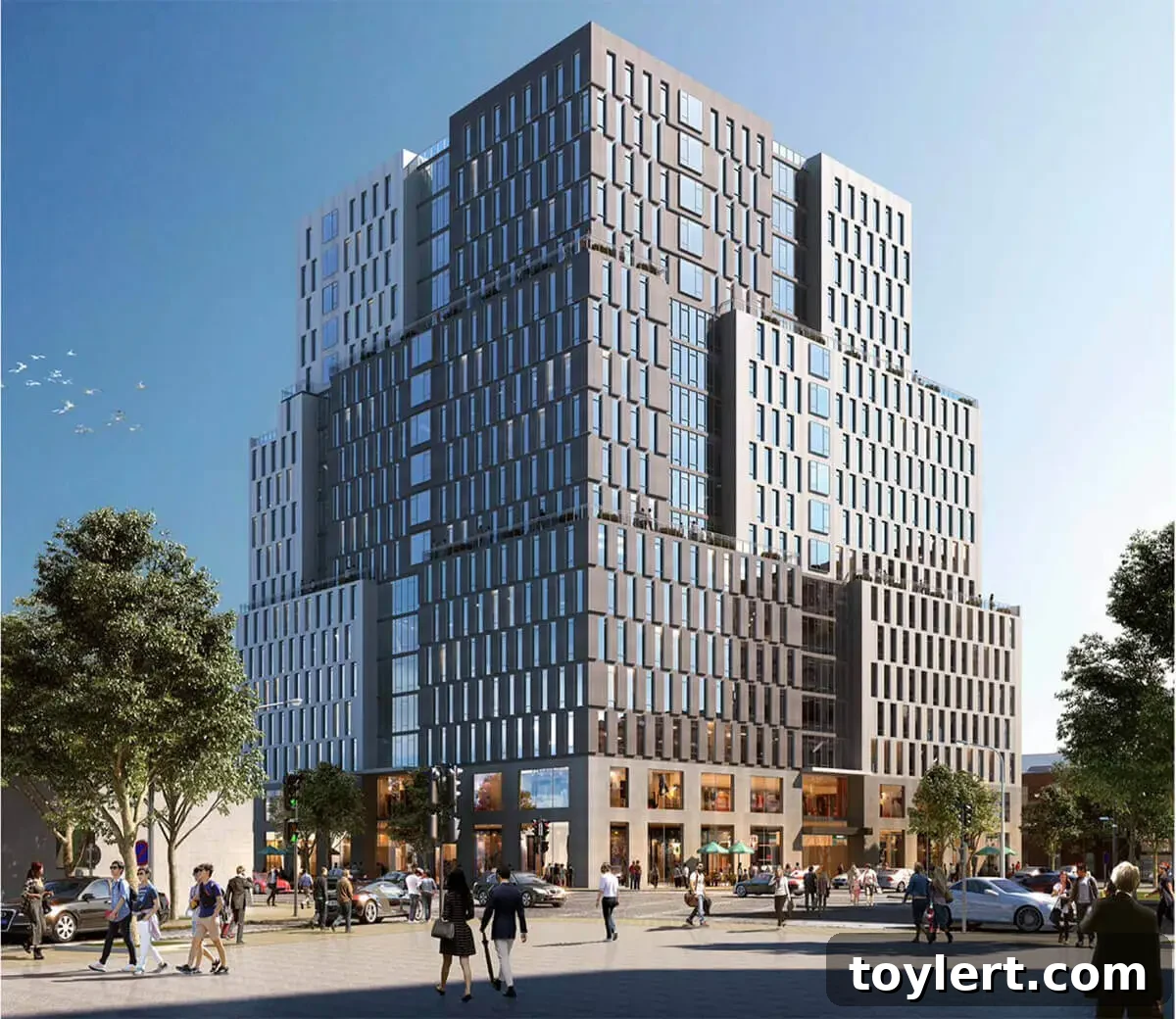
Prospect Heights Residents Challenge McDonald’s Redevelopment: A Battle for Neighborhood Vision at Atlantic & Vanderbilt
The vibrant and historically rich neighborhood of Prospect Heights, Brooklyn, finds itself at a pivotal crossroads as residents scrutinize a developer’s ambitious plans to transform the former suburban-style McDonald’s site at the prominent corner of Atlantic and Vanderbilt avenues. The community’s primary demand is clear: any new development must seamlessly integrate with, and genuinely reflect, their collective vision for an ongoing neighborhood upzoning initiative. This isn’t just about a new building; it’s about the very character and future trajectory of Prospect Heights.
This contested site, long a familiar landmark with its drive-thru layout, is slated for a significant residential tower. Developer Atlantic-Vanderbilt Holdings, tasked with navigating this sensitive urban transformation, recently presented an alternative iteration of their proposed structure to concerned community members on May 6. This revised plan specifically focused on reducing the building’s density along Atlantic Avenue, a direct response to vocal community feedback.
The Heart of the Debate: Density, Scale, and Community Character
The discussion surrounding the Atlantic and Vanderbilt development encapsulates broader themes inherent in urban growth within established neighborhoods. Residents of Prospect Heights are not inherently opposed to new development; rather, their concerns center on preserving the existing fabric of their community while accommodating progress. The proposed upzoning for the area aims to facilitate growth, often by allowing taller buildings and more residential units, but residents insist this growth must be managed thoughtfully.
Ben Stark, a representative for Atlantic-Vanderbilt Holdings, acknowledged the palpable tension during the community meeting. “We have heard the concerns of this community regarding density, regarding the projects that are coming behind us,” Stark stated, signaling the developer’s awareness of the delicate balance required. This acknowledgment is crucial, as it suggests an openness to dialogue, even if the ultimate resolution remains elusive.
Understanding the Community’s Vision for Upzoning
The ongoing neighborhood upzoning in Prospect Heights is a complex process designed to reshape the area, encouraging more residential and commercial activity. While the intention is often to address housing shortages and stimulate local economies, the community’s vision goes beyond mere numbers. They envision a future where increased density is balanced with:
- Appropriate Building Scale: New constructions that respect the existing low-to-mid-rise character of many blocks, avoiding overwhelming structures that cast significant shadows or dominate the skyline.
- Enhanced Public Spaces: Developments that contribute to, rather than detract from, pedestrian-friendly streets, green spaces, and community amenities.
- Improved Infrastructure: Ensuring that increased population density is supported by robust public transport, adequate school capacity, and maintained utilities.
- Local Business Integration: Ground-floor retail that caters to local needs and supports small businesses, avoiding generic chain stores that might dilute neighborhood identity.
- Affordable Housing: A genuine commitment to incorporating affordable housing units into new developments, ensuring that the neighborhood remains accessible to a diverse range of income levels and preventing rapid gentrification.
For many residents, the McDonald’s site represents a critical test case. Its prominent location means that whatever rises there will profoundly influence the visual and functional character of a key intersection, potentially setting a precedent for future developments along Atlantic Avenue and beyond.
Atlantic-Vanderbilt Holdings Responds: The Density Reduction Proposal
The developer’s presentation of an alternative design on May 6, featuring a reduction in density along Atlantic Avenue, demonstrates a clear attempt to address some of the most pressing community concerns. While specific details of the initial and revised plans, such as exact unit counts or building heights, were not fully detailed in initial reports, the focus on “density reduction” suggests a strategic concession.
Density is a multifaceted issue for urban residents. Higher density can lead to increased traffic congestion, strained parking resources, louder street noise, and greater demand on local public services like schools and sanitation. Visually, excessively dense buildings can create a sense of being hemmed in, reduce access to natural light, and fundamentally alter the aesthetic of a streetscape.
By proposing a less dense configuration on one side of the building, Atlantic-Vanderbilt Holdings aims to mitigate some of these impacts, particularly along Atlantic Avenue, a major arterial road that already experiences significant vehicular and pedestrian traffic. This revised approach signals a willingness to engage with community feedback, a crucial element in achieving successful urban development projects that integrate well into existing communities.
The Broader Context: Prospect Heights’ Evolving Urban Landscape
Prospect Heights, like many Brooklyn neighborhoods, is experiencing intense developmental pressure. Its desirable location, proximity to cultural institutions like the Brooklyn Museum and Prospect Park, and excellent transit links make it highly attractive to developers. The municipal push for upzoning in areas like Prospect Heights is often driven by a city-wide need to increase housing supply and foster economic growth. However, this macro-level planning frequently clashes with micro-level community aspirations.
The debate over the McDonald’s site is not an isolated incident but a microcosm of the larger challenges facing urban planning today. How does a city grow sustainably? How can new development enhance rather than erode the unique identities of its neighborhoods? These are questions that demand nuanced answers and robust public engagement.
The process of upzoning itself, while intended to be a tool for managed growth, can be a source of anxiety. Residents worry about potential gentrification, displacement of long-term residents and businesses, and the loss of the very qualities that make their neighborhood desirable. Therefore, when a specific development comes forward under the umbrella of upzoning, it’s often viewed through this lens of hope and apprehension.
The Importance of Community Engagement in Development
The ongoing dialogue between Atlantic-Vanderbilt Holdings and the Prospect Heights community underscores the vital role of civic participation in shaping urban environments. Public hearings, community board meetings, and neighborhood associations serve as crucial platforms where residents can voice their concerns, propose alternatives, and hold developers and city planners accountable. This iterative process of proposal, feedback, revision, and further discussion is fundamental to democratic urban planning.
For development projects to truly succeed, they must not only be economically viable but also socially responsible and environmentally sustainable. This requires developers to listen actively, be transparent about their plans, and demonstrate genuine flexibility. Similarly, communities must articulate their visions clearly and be prepared to engage constructively.
The outcome of the Atlantic and Vanderbilt project will undoubtedly influence future development patterns in Prospect Heights. A successful resolution, one that genuinely satisfies both the need for new housing and the community’s desire for thoughtful, integrated growth, could serve as a model for how complex urban development challenges can be met with collaboration and mutual respect.
Charting the Future for Atlantic Avenue
Atlantic Avenue, a major artery spanning much of Brooklyn, has long been a corridor of transformation. From its industrial past to its current mix of residential, commercial, and transport uses, the avenue is constantly evolving. The stretch through Prospect Heights, particularly around Vanderbilt, holds significant potential for vibrant street life and enhanced pedestrian experience.
The redevelopment of the McDonald’s site offers an opportunity to either reinforce or detract from this potential. Residents hope that the final design will not only address concerns about density but also contribute positively to the street-level experience. This could involve attractive retail spaces, thoughtful architectural design, and public realm improvements that make Atlantic Avenue a more inviting and integrated part of the neighborhood.
As discussions continue, the focus remains on finding a harmonious balance. The goal is to ensure that the new residential tower at Atlantic and Vanderbilt avenues does not merely add housing units, but rather enriches the community, aligning with the carefully considered vision of Prospect Heights residents for a future that is both progressive and authentically local.