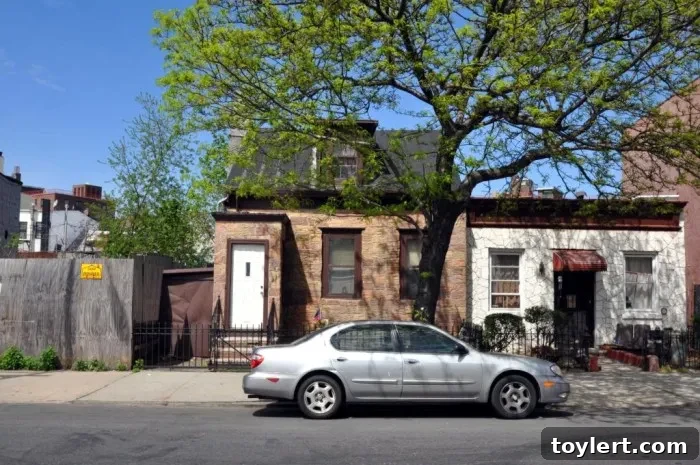
An Enduring Legacy: Exploring Brooklyn’s Semi-Detached Brick Houses on Herkimer Street
Brooklyn, one building at a time, reveals its rich tapestry of history and architectural innovation. This journey often takes us down charming tree-lined streets, where each structure tells a story of generations past and present. Today, we turn our attention to the distinctive allure of semi-detached brick houses, specifically highlighting the residential gems found at and around 897 Herkimer Street. These buildings are more than just homes; they are vital pieces of Brooklyn’s enduring architectural legacy, embodying a unique blend of urban living and suburban aspiration from a bygone era.
Name: Semi-detached brick houses
The Distinctive Charm of Semi-Detached Brick Architecture
Semi-detached houses represent a fascinating architectural compromise, offering more space and light than a typical row house while maintaining the efficient footprint of urban development. In Brooklyn, particularly within neighborhoods like Bedford-Stuyvesant and Crown Heights where Herkimer Street resides, these brick structures became popular in the late 19th and early 20th centuries. Builders aimed to provide an attractive option for the burgeoning middle class, who desired a sense of individuality and a connection to outdoor space, without the full expense or upkeep of a detached single-family home.
What truly sets these semi-detached brick houses apart is their inherent design. Unlike contiguous row houses that share walls on both sides, a semi-detached property shares only one common wall with an adjacent dwelling, allowing for windows on three sides. This design significantly enhances natural light and ventilation, creating brighter, more airy interiors. The use of brick as the primary construction material speaks volumes about the era. Brick was not only durable and fire-resistant but also afforded a classic, sturdy aesthetic that has gracefully withstood the test of time. The varied colors and patterns of brickwork, from deep reds to earthy browns, add texture and character to the streetscape, each facade contributing to a cohesive yet diverse visual narrative.
Many of these homes feature characteristic stoops, grand entrances that elevate the main living floor above street level, providing a sense of privacy and a natural gathering spot for residents. Ornate cornices, decorative lintels above windows, and finely crafted railings are common embellishments, showcasing the meticulous craftsmanship prevalent during their construction. These details, often overlooked in the rush of modern life, are key to understanding the architectural ambition and aesthetic values of the period.
Herkimer Street: A Glimpse into Brooklyn’s Historic Heartbeat
Herkimer Street, stretching through significant portions of Brooklyn, is a testament to the borough’s rapid expansion and development during the late 19th century. As New York City grew, Brooklyn emerged as a residential haven, attracting families seeking more spacious and comfortable living conditions away from the dense core of Manhattan. Areas along Herkimer Street were meticulously planned to accommodate this influx, resulting in the construction of thousands of homes, including the distinctive semi-detached brick houses we admire today.
The history of Herkimer Street is intertwined with the broader narrative of Brooklyn’s urban growth. Initially, these neighborhoods were developed to house professionals, merchants, and skilled workers. The architecture reflected the Victorian era’s diverse styles, from the geometric patterns of Neo-Grec to the robust forms of Romanesque Revival, and the more whimsical flourishes of Queen Anne. While the image provided suggests a more understated, classic brick design, it is part of a larger architectural conversation that defines these historic districts. The street itself developed into a vibrant corridor, with local businesses, churches, and community spaces flourishing alongside its residential blocks, fostering a strong sense of neighborhood identity that persists to this day.
Walking down Herkimer Street is like stepping back in time, offering a tangible connection to Brooklyn’s past. The rhythm of the street, defined by these historic homes, provides a sense of permanence and continuity in an ever-evolving city. Each house, with its unique story and individual character, contributes to the collective memory and charm of the neighborhood, making it a truly special place to live and explore.
Architectural Details and Enduring Craftsmanship at 897 Herkimer Street
While specific interior details of 897 Herkimer Street are not explicitly visible, we can infer much about its original construction and design principles from its exterior and the general characteristics of semi-detached brick houses from the era. These homes were typically built with robust structural integrity, using solid brick walls that offered excellent insulation and durability. The foundations were often stone, providing a strong base for the multi-story structures.
Exterior details would have included thoughtfully designed window frames, often in wood, with intricate sash patterns that allowed for both aesthetic appeal and practical ventilation. The main entrance, a focal point, would likely feature an impressive wooden door, perhaps adorned with stained glass transoms or sidelights, adding a touch of elegance. The stoops, often made of brownstone or granite, provided a grand approach to the front door, serving as transitional spaces between the public street and the private residence. These were not merely functional stairs but integral design elements, often featuring decorative railings made of wrought iron or carved wood, reflecting the popular styles of the time.
The roofs, typically flat or low-pitched, would have been concealed by a decorative cornice, which served both an aesthetic purpose, by framing the top of the facade, and a practical one, by directing rainwater away from the walls. Chimneys, often symmetrically placed, would have hinted at the multiple fireplaces within, a common feature in homes of this period for heating and ambiance. The exterior brickwork itself would have been laid in specific bonds, such as common bond or Flemish bond, showcasing the bricklayer’s skill and adding subtle decorative patterns to the facade. The very fact that these houses stand strong today, over a century later, is a testament to the superior craftsmanship and quality materials used in their original construction.
Living History: The Enduring Appeal of Historic Brooklyn Homes
Today, historic semi-detached brick houses like those on Herkimer Street are highly coveted. Modern residents are drawn to their generous proportions, classic architectural details, and the unique sense of character that mass-produced contemporary homes often lack. Living in such a dwelling offers a tangible connection to history, an opportunity to reside within walls that have witnessed decades of Brooklyn’s evolution. Homeowners often undertake careful renovations, balancing the desire for modern amenities and conveniences with a deep respect for the original architectural integrity of the house. This dedication ensures that the historical essence of these properties is preserved for future generations, while adapting them for 21st-century living.
The process of restoring a historic Brooklyn home can be a labor of love, requiring meticulous attention to detail and often a deep dive into historical research to ensure accuracy. From repairing original plasterwork and restoring hardwood floors to updating antiquated plumbing and electrical systems, the journey transforms these houses into comfortable, stylish residences that honor their past. The result is a unique living experience, where contemporary comfort meets timeless elegance. Furthermore, owning a home in a historic district like Herkimer Street often means being part of a vibrant, engaged community that values its heritage and works collectively to maintain the beauty and character of its surroundings.
Preserving Brooklyn’s Architectural Tapestry
The continuous focus on “Brooklyn, one building at a time” underscores the critical importance of historic preservation. Each semi-detached brick house on Herkimer Street, whether impeccably restored or awaiting its revitalization, plays a crucial role in maintaining the architectural diversity and historical authenticity of Brooklyn. These buildings are not merely static structures; they are living monuments that contribute to the borough’s unique identity and sense of place. Preservation efforts ensure that the stories embedded within their walls are not lost, but rather continue to inform and inspire new generations.
Understanding and appreciating the nuances of these historic homes helps us to value the urban landscape around us. It encourages a mindful approach to development, advocating for the careful integration of new structures that complement, rather than detract from, existing historical fabric. The semi-detached brick houses of Herkimer Street are prime examples of sustainable architecture; built to last, they offer a foundation for contemporary living while minimizing the environmental impact associated with entirely new construction. Their continued existence is a testament to their inherent quality and the dedication of those who care for them.
Conclusion: More Than Just Buildings, They Are Stories
The semi-detached brick houses on Herkimer Street are more than just architectural forms; they are repositories of countless stories, dreams, and memories. They stand as proud symbols of Brooklyn’s rich past, its dynamic present, and its promising future. By spotlighting these individual structures, we gain a deeper appreciation for the intricate details, historical contexts, and enduring craftsmanship that collectively define the borough’s distinctive urban landscape. As we continue to explore Brooklyn, building by building, we uncover the layers of history that make this corner of New York City truly unparalleled. These homes invite us to pause, observe, and connect with the profound beauty and resilience of Brooklyn’s architectural heritage, inspiring us to cherish and protect these irreplaceable treasures for generations to come.