Park Slope Real Estate Review: A Six-Month Retrospective on Historic Brooklyn Brownstones
The allure of Brooklyn’s historic homes, particularly the iconic brownstones of Park Slope, remains as strong as ever. In a constantly evolving real estate landscape, understanding market performance is crucial for both prospective buyers and sellers. This week, we delve into a fascinating six-month retrospective, revisiting two of our previously featured listings to analyze how these distinctive properties fared on the competitive open market. This review offers invaluable insights into the enduring appeal of architectural heritage, strategic modernizations, and the factors that drive significant value in one of New York City’s most desirable neighborhoods.
Park Slope, renowned for its tree-lined streets, stunning Victorian-era architecture, and vibrant community, consistently ranks as a prime location for those seeking both an upscale lifestyle and a sound investment. The properties we’re examining today are more than just houses; they are pieces of Brooklyn’s rich history, meticulously preserved and thoughtfully adapted for contemporary living. Their journey through the real estate market provides a microcosm of broader trends affecting luxury homes and historic districts throughout the borough.
The Enduring Allure of Park Slope Brownstones
Park Slope’s architectural grandeur is largely defined by its magnificent brownstones and limestones, built primarily in the late 19th and early 20th centuries. These homes are celebrated for their intricate detailing, robust construction, and stately presence. Living in a Park Slope brownstone means owning a piece of history, often accompanied by elegant stoops, bay windows, high ceilings, original wood paneling, and decorative fireplaces. The neighborhood itself enhances this appeal, offering immediate proximity to the expansive beauty of Prospect Park, a plethora of acclaimed restaurants, boutique shops, and excellent schools. This combination of historic charm, modern amenities, and community vibrancy solidifies Park Slope’s status as a top-tier residential destination, consistently attracting discerning buyers from around the globe.
The intrinsic value of these properties is further bolstered by their location within designated historic districts, such as the Park Slope Historic District and the Park Slope Extension Historic District. These designations protect the architectural integrity of the neighborhood, ensuring that renovations and new constructions adhere to strict aesthetic guidelines. While this can sometimes add complexity to property ownership, it ultimately preserves the unique character of the area, which in turn safeguards and often enhances property values. Buyers in these districts are not just purchasing a home; they are investing in a legacy and a meticulously maintained urban environment.
Case Study 1: The Grand 1885 Park Slope Brownstone at 56 8th Avenue
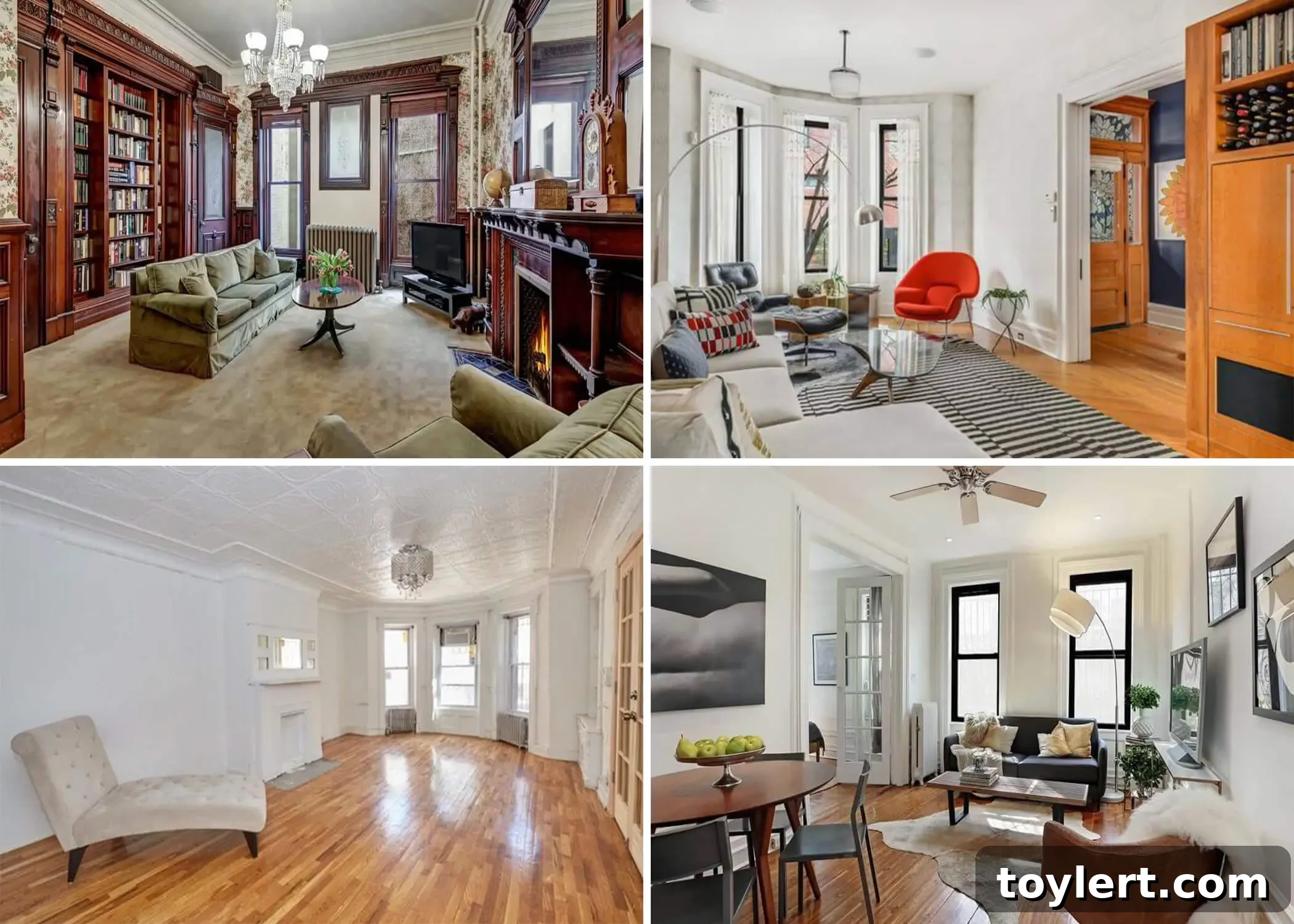
Our first property is an extraordinary example of Gilded Age craftsmanship: an 1885 Park Slope brownstone located at 56 8th Avenue, nestled between Union Street and Berkeley Place within the esteemed Park Slope Historic District. From the moment one lays eyes on its imposing facade, it’s clear this residence is a true eye-catcher, standing proudly amidst many of the Slope’s most impressive manses. This home is a veritable museum of elegant original details, showcasing the opulence and artistry of its era.
The interior of this magnificent home was a testament to historical grandeur. One of its most striking features was the presence of seven distinct mantels, each likely a unique work of art crafted from materials such as marble, intricately carved wood, or a combination thereof. These mantels served not only as focal points for fireplaces but also as expressions of the period’s interior design sensibilities, reflecting different styles and craftsmanship techniques. Imagine the warmth and character these original elements brought to each room, connecting residents to over a century of history.
Beyond the mantels, the brownstone boasted “loads of carved mahogany,” a clear indicator of the home’s original luxury. Mahogany, prized for its durability, rich color, and exquisite grain, would have been extensively used for grand staircases, elaborate paneling in reception rooms, stately doors, and intricate trim work throughout the property. Such extensive use of a premium material speaks volumes about the original owners’ status and the unparalleled quality of construction. The dark, lustrous wood would have created an atmosphere of refined elegance and timeless sophistication, a characteristic deeply cherished by discerning buyers of historic properties.
Perhaps the crown jewel of this property’s interior was a “lovely stained glass atrium at the top of the staircase.” This feature would have been nothing short of breathtaking, serving as a dramatic architectural element that floods the upper levels with natural light, filtering it through a kaleidoscope of colors. Stained glass was a hallmark of Victorian and Edwardian design, often depicting intricate patterns, floral motifs, or even narrative scenes. An atrium of this kind would not only enhance the aesthetic appeal but also create a unique ambiance, transforming a functional staircase into an artistic focal point and a truly memorable space within the home.
Given its unparalleled historical features, prime location within a protected historic district, and general architectural significance, it comes as no surprise that this House of the Day is no longer available as of June. While the precise details of its market outcome (whether it sold, was withdrawn, or entered a private transaction) are not public, its swift departure from the active listings underscores the intense demand for meticulously preserved, high-quality historic properties in Park Slope. Such homes often attract serious buyers who appreciate and are willing to invest in their unique character and heritage.
Case Study 2: The Versatile 1899 Two-Family Brownstone at 510 7th Street
Our second featured property offers a different, yet equally compelling, narrative from the Park Slope market. This circa 1899 two-family brownstone, located at 510 7th Street, between 7th and 8th avenues, presented a fetching blend of original details and modern updating. Situated just a block and a half from the iconic Prospect Park and within the desirable Park Slope Extension Historic District, this home offered both historical charm and contemporary convenience, making it a highly attractive prospect for a diverse range of buyers.
The “fetching blend of original details and modern updating” is a key aspect of this property’s success. While the previous brownstone showcased pure historical grandeur, this home demonstrated how strategic renovations can enhance livability without compromising historical integrity. Original details like ornate moldings, pristine hardwood floors, functioning pocket doors, and decorative fireplace surrounds would have been carefully preserved, celebrating the home’s heritage. Simultaneously, modern updates likely included state-of-the-art kitchens with high-end appliances, renovated bathrooms featuring contemporary fixtures, and possibly updated electrical, plumbing, and HVAC systems. This thoughtful integration caters to today’s buyer who desires the character of an old home but expects the comfort and efficiency of modern living.
Furthermore, the designation of this home as “in prime condition” suggests that it was meticulously maintained and move-in ready, requiring little to no immediate work from a new owner. This factor significantly boosts a property’s appeal, especially in a competitive market where buyers often seek hassle-free transactions. A well-maintained home signals responsible ownership and a greater potential for long-term value retention.
The two-family configuration also added significant value and versatility. This setup appeals to various buyer profiles: an owner-occupant looking to generate rental income from a separate unit, a multi-generational family seeking independent living spaces under one roof, or even an investor looking for a high-yield property in a premium location. The flexibility offered by a two-family home in a sought-after neighborhood like Park Slope is a powerful market differentiator, contributing to broader appeal and stronger bidding.
The market outcome for this House of the Day was exceptionally strong: it sold in June for an impressive $3.25 million, a remarkable $260,000 above its asking price. This robust sale price is a clear indicator of the property’s desirability, the effectiveness of its blend of old and new, and the intense buyer competition in the Park Slope market. Selling significantly above ask often points to competitive bidding wars, where multiple interested parties drive up the price due to the property’s unique attributes and limited inventory. It reflects both a shrewd pricing strategy by the seller and a strong perceived value by the buyers.
Broader Market Insights: What These Sales Tell Us
The performance of these two distinct Park Slope brownstones offers compelling insights into the broader Brooklyn real estate market. Firstly, the unwavering demand for historic properties, particularly those within established historic districts, remains a defining characteristic. Buyers are willing to pay a premium for homes that offer unique architectural character, a sense of history, and the prestige associated with living in a protected and aesthetically cohesive neighborhood.
Secondly, while pristine original details (as seen in the 1885 brownstone) command top dollar, there is also significant appreciation for homes that successfully marry historic charm with modern functionality. The 1899 two-family brownstone’s success demonstrates that thoughtful, high-quality renovations that respect the home’s original character can yield exceptional returns. This balance is crucial for sellers looking to maximize their property’s value in today’s market.
Thirdly, location continues to be paramount. Both properties are situated in prime Park Slope areas, one directly on 8th Avenue and the other a mere block and a half from Prospect Park. These coveted locations, coupled with access to excellent amenities and transportation, contribute substantially to their market value and rapid absorption rates. Proximity to green spaces like Prospect Park, in particular, has become an even greater draw in recent years, further fueling demand for nearby residences.
Finally, these sales underscore a competitive market environment where well-presented, desirable properties often attract multiple bidders, leading to sales significantly above the asking price. This indicates low inventory relative to buyer demand, strong buyer confidence, and potentially advantageous financing conditions during the period these homes were active. For sellers, this environment represents an opportune time to list, provided their property is strategically prepared and priced. For buyers, it highlights the need for decisive action and often, pre-approved financing to stand out in bidding wars.
Investing in Brooklyn’s Heritage: Tips for Buyers and Sellers
For those contemplating entering the Park Slope real estate market, whether as a buyer or a seller, these case studies provide valuable lessons.
Tips for Buyers:
- Be Prepared for Competition: The market for desirable brownstones in Park Slope is robust. Be ready to act quickly and potentially engage in competitive bidding.
- Understand Value Beyond Price: Recognize the long-term investment in a historic property. Factors like architectural integrity, location within a historic district, and quality renovations add significant enduring value.
- Work with Experts: Partner with real estate agents who specialize in historic homes and possess deep knowledge of the Park Slope market. They can provide crucial insights and guidance.
- Assess Renovation Potential: If considering a home needing work, understand the costs and complexities associated with renovating historic properties, especially in a historic district.
- Pre-Approval is Key: Secure financing pre-approval to strengthen your offer and demonstrate serious intent.
Tips for Sellers:
- Highlight Unique Features: Showcase every original detail – the mantels, mahogany, stained glass, moldings. These are often the key selling points for historic home enthusiasts.
- Strategic Modernization: Invest in updates that enhance functionality (kitchens, bathrooms, infrastructure) while respecting the home’s original character. A seamless blend is highly valued.
- Professional Presentation: High-quality photography and professional staging are non-negotiable. They create a compelling first impression and help buyers visualize the home’s full potential.
- Accurate Pricing Strategy: Work with your agent to price the property competitively to attract initial interest, understanding that a desirable home in this market may generate offers above asking.
- Be Transparent: Provide thorough documentation of any renovations or historical details to build buyer confidence.
Conclusion
The recent market performance of these two stunning Park Slope brownstones unequivocally affirms the enduring strength and unique appeal of Brooklyn’s historic real estate. Whether it’s a grand 1885 masterpiece boasting unparalleled original details or a thoughtfully updated 1899 two-family home expertly blending past and present, properties in Park Slope continue to command significant attention and premium prices. These homes are more than just dwellings; they are cherished pieces of urban heritage that offer an exceptional quality of life and robust investment potential. As the Brooklyn real estate market continues its dynamic trajectory, the timeless elegance and intrinsic value of these historic brownstones will undoubtedly remain a cornerstone of its appeal, cementing Park Slope’s reputation as a jewel in the crown of New York City.